WORXMATE
What Are Continuous Feedback Examples? 10 Smart Phrases
Actionable insights to align your OKRs with everyday performance management-from proven frameworks to the tools that power them.
Summary
Continuous feedback examples are real-time, actionable communications provided to employees to guide performance, recognize achievements, and course-correct behaviors outside of traditional annual reviews. According to Gallup, employees who receive daily feedback from their managers are three times more likely to be engaged at work than those who receive it once a year. By implementing structured continuous feedback examples, organizations can foster a culture of high performance, agility, and transparent communication that directly supports long-term business goals.
What are continuous feedback examples? These are specific instances of verbal or written input shared immediately after a task or behavior occurs, replacing the lag time of traditional performance cycles. They serve as the backbone of a modern performance management strategy, ensuring that employee growth is a daily priority rather than a yearly event. By focusing on real-time feedback for employees, managers can bridge the gap between strategy and execution.
In this guide, we explore why the shift to ongoing dialogue is critical for organizational growth. We will provide 10 specific continuous feedback examples categorized by recognition, performance improvement, and leadership development, while demonstrating how these feedback loops integrate with your broader strategy.
The Shift from Annual Reviews to Continuous Feedback
For decades, the annual performance review was the standard for corporate evaluation. However, the modern workplace moves too fast for a 12-month feedback cycle. Major entities like Adobe and Deloitte famously abolished their annual review systems in favor of more frequent check-ins after finding that the traditional model was often demotivating and inaccurate. Continuous feedback examples represent the shift toward a more agile, human-centric approach to management.
This is because understanding employee satisfaction requires a constant pulse on the workforce. When managers utilize continuous feedback examples, they address issues before they snowball and reinforce positive behaviors while they are still fresh in the employee’s mind.
This transition is not just about frequency; it is about the quality of the interaction. Continuous performance management focuses on development rather than just assessment. By integrating task management with real-time dialogue, teams stay aligned with their goal setting frameworks, ensuring that every piece of feedback serves a strategic purpose.
| Feature | Annual Performance Reviews | Continuous Feedback Model |
|---|---|---|
| Frequency | Once or twice per year | Real-time, weekly, or monthly |
| Focus | Past performance and ratings | Future growth and development |
| Engagement | Often stressful and formal | Conversational and supportive |
| Alignment | Static goals (often outdated) | Dynamic alignment with OKRs |
Positive Continuous Feedback Examples for Recognition
Recognition is one of the most powerful drivers of employee retention. However, generic praise like “good job” lacks the impact of specific continuous feedback examples. To make recognition effective, it must be timely, specific, and tied to a measurable outcome.
-
Example 1: Project Milestone Achievement
“I noticed how you handled the client presentation today. Your ability to simplify the technical data into actionable insights was impressive and directly led to the client’s approval of the next phase. This is a great example of our commitment to excellence.”
-
Example 2: Cross-Team Collaboration
“Thank you for stepping in to help the marketing team with the technical documentation last week. Your proactive approach ensured the launch stayed on schedule, demonstrating the collaborative spirit we value.”
-
Example 3: Problem-Solving Under Pressure
“I was impressed by how you navigated the server outage yesterday. Your calm communication with the stakeholders kept everyone informed, and your quick troubleshooting minimized our downtime significantly.”
-
Example 4: Consistent Quality and Reliability
“Your last three reports have been flawless. I appreciate the attention to detail you put into the data validation process; it makes our quarterly planning much more efficient.”
-
Example 5: Demonstrating Core Values
“The way you mentored the new intern this week perfectly reflects our value of ‘Growing Together.’ Your patience and clear instruction helped them get up to speed much faster than expected.”
Constructive Feedback Examples for Performance Improvement
Corrective input is often the most difficult part of management, yet it is essential for growth. According to a study published in the Harvard Business Review, 72% of employees believe their performance would improve if their managers provided corrective feedback. The key is to use continuous feedback examples that focus on the behavior and the impact, rather than the person.
-
Example 6: Improving Meeting Contribution
“I’ve noticed you’ve been quiet during our strategy sessions lately. Your perspective on market trends is valuable, and I’d like to see you share your thoughts more frequently to help the team diversify its thinking.”
-
Example 7: Addressing Missed Deadlines
“We missed the deadline for the preliminary design draft this week. Let’s look at your current workload and see where the bottlenecks are so we can ensure the final delivery stays on track.”
-
Example 8: Refining Communication Style
“In our last team meeting, the tone of your feedback to Sarah seemed a bit dismissive. To maintain our culture of psychological safety, let’s try to frame critiques as ‘how can we improve’ rather than pointing out errors.”
-
Example 9: Enhancing Technical Precision
“I noticed a few inconsistencies in the latest code review. I’d like you to spend an extra 10 minutes on self-review before submitting, as this will help us maintain our deployment speed without sacrificing quality.”
-
Example 10: Time Management Adjustments
“While the quality of your work is high, the delay in response to internal emails is starting to slow down the project workflow. Can we set a goal to acknowledge internal requests within four business hours?”
Examples of Continuous Feedback for Soft Skills and Leadership
As employees progress, feedback should shift from technical output to leadership behaviors and emotional intelligence. Using continuous feedback examples for soft skills helps high-potential employees prepare for management roles. This is a critical component of organizational growth.
For instance, if a senior lead is struggling with delegation, a manager might say: “You are doing a great job managing the project details, but I’d like to see you delegate the reporting tasks to your juniors. This will give you more space for strategic planning and help them grow their skills.” This type of employee growth feedback is essential for building a leadership pipeline.
Furthermore, leadership feedback should focus on influence and empathy. “I noticed how you facilitated the conflict between the design and engineering teams. Your ability to find common ground helped us reach a solution without escalating the issue. That kind of mediation is a core leadership trait we want to see more of.”
How to Deliver Real-Time Feedback: The SBI Model
To ensure your continuous feedback examples are effective, many consultants recommend the SBI (Situation, Behavior, Impact) model. This structure removes ambiguity and reduces defensiveness. By following this framework, real-time feedback for employees becomes a data-driven conversation rather than a subjective opinion.
1. Situation: Define the “when” and “where.” (e.g., “During this morning’s stand-up meeting…”)
2. Behavior: Describe the specific action without judgment. (e.g., “…you interrupted Mark three times while he was explaining his progress…”)
3. Impact: Explain the result of that behavior. (e.g., “…this led to Mark losing his train of thought and prevented us from getting the full update on the API integration.”)
Using the SBI model consistently ensures that your performance management system remains objective. It allows managers to provide constructive feedback examples that are grounded in reality, making it easier for employees to accept and act upon the advice.
How Worxmate Simplifies Continuous Feedback Loops
Providing continuous feedback examples consistently across a large organization is a logistical challenge. This is where technology becomes an enabler. Worxmate’s Performance Management software is designed to facilitate these feedback loops in the workplace by integrating them into the daily flow of work.
With Worxmate, feedback isn’t a separate task; it’s a feature of your project management and goal-tracking environment. Managers can give “Nudges” or “High-Fives” directly linked to specific OKRs. This ensures that every piece of feedback is contextualized. When an employee receives a notification, they don’t just see praise; they see how their specific action contributed to a company objective.
The platform also allows for 360-degree feedback, enabling peers to share continuous feedback examples with each other. This democratizes the feedback process and provides a more holistic view of performance, which is vital for modern, flat organizational structures.
Unlock Goal Clarity and Accelerate Employee Growth
Looking to drive goal clarity and employee growth? Discover how Worxmate’s AI-powered Performance Management Software can help.
Measuring the Impact of Continuous Feedback on OKRs
The ultimate goal of using continuous feedback examples is to drive results. When feedback is disconnected from strategy, it becomes noise. However, when integrated with Objectives and Key Results (OKRs), feedback becomes a catalyst for execution. Managers should use OKR consulting principles to ensure their feedback helps employees prioritize the right tasks.
For example, if an employee’s Key Result is to “Increase lead conversion by 15%,” the manager’s continuous feedback examples should focus on the specific behaviors driving that metric. “I noticed your follow-up time on new leads has dropped to 2 hours. That’s exactly the behavior we need to hit our 15% conversion target. Keep it up!”
By measuring the correlation between feedback frequency and OKR attainment, leadership can see the tangible ROI of their performance management efforts. This data-driven approach transforms feedback from a “soft” HR initiative into a “hard” business driver that fuels organizational growth.
Ready to accelerate your continuous feedback journey? Start your free trial with Worxmate today and discover how our Performance Management software can transform your strategy into measurable results.

Written by
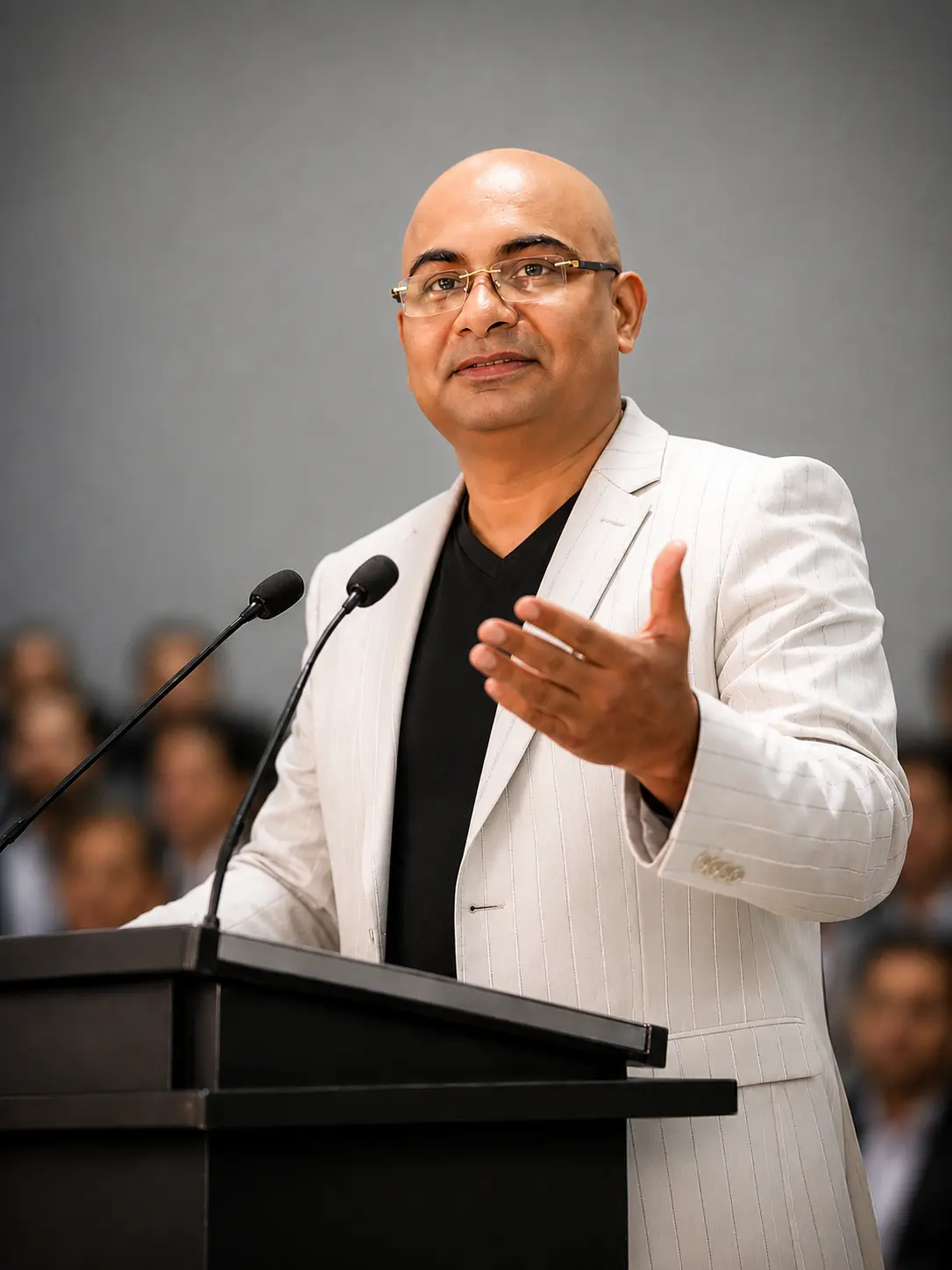
An OKR Coach with 20+ years of implementation experience, Madhusudan has guided over 50 organisations through successful OKR transformations, training more than 500 leaders. Learn more about Worxmate.
Frequently Asked Questions
The best way to provide continuous feedback is to be specific, timely, and future-oriented using the SBI (Situation, Behavior, Impact) model. According to Gallup, daily feedback can triple employee engagement compared to annual reviews, making it a vital tool for modern managers.
To write constructive feedback, focus on a specific behavior and its impact on the team or goal rather than the individual’s personality. For example: “During the client call (Situation), the technical explanation was too complex (Behavior), which caused the client to ask for a delay in the decision (Impact).”
Yes, because it prevents small performance issues from becoming major problems and reinforces high-performance habits immediately. While it requires more frequent interactions, the ROI is seen in higher engagement, better OKR attainment, and significantly reduced turnover costs.
Common mistakes include being too vague (e.g., “good job”), waiting too long to deliver the message, or only providing negative feedback. A healthy feedback loop should balance recognition and correction to maintain employee motivation and psychological safety.