Summary
Achieving effective cross-functional team alignment involves identifying and dismantling organizational silos, establishing shared strategic objectives, and fostering a culture of collaborative goal setting. Successful cross-functional team alignment hinges on transparent communication, shared accountability, and leveraging technology to integrate diverse departmental efforts towards common outcomes.
Mid-market companies often struggle with fragmented efforts and misaligned priorities, leading to inefficiencies. This guide provides a practical, step-by-step approach to cultivate robust cross-functional team alignment, ensuring all departments pull in the same strategic direction.
In today’s dynamic business environment, achieving true strategic alignment is paramount for growth-stage companies. Often, the biggest hurdle isn’t a lack of talent or resources, but a breakdown in communication and collaboration between departments. This is where robust cross-functional team alignment becomes critical. Without it, even the most brilliant individual teams can work at cross-purposes, diluting impact and wasting valuable resources.
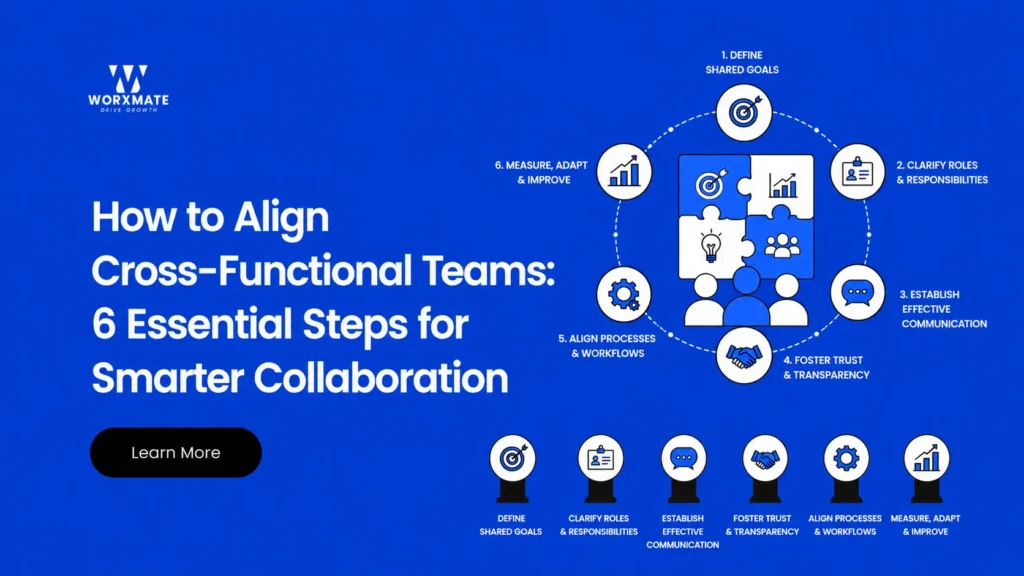
Effective cross-functional team alignment ensures that every department, from marketing to product development to HR, understands and contributes to overarching organizational goals. It moves companies beyond isolated efforts towards a unified, outcome-driven approach. This article will guide you through 6 essential steps to achieve powerful cross-functional team alignment, breaking down barriers and fostering a culture of shared success.
Step 1: Identify the Costs of Silos to Drive Cross-Functional Team Alignment
Begin by thoroughly assessing the current state of inter-departmental collaboration and pinpointing where silos exist. This involves evaluating communication flows, shared projects, and instances of duplicated effort or missed opportunities due to lack of coordination.
Understanding the tangible and intangible costs of these silos is crucial for building a compelling case for improved cross-functional team alignment. According to a Gallup study, highly engaged teams, which often exhibit strong cross-functional collaboration, show 21% greater profitability. Conversely, poor alignment can lead to significant financial drain and employee disengagement.
Pro Tip: Conduct a “silo audit” using surveys, interviews, and process mapping to identify bottlenecks and areas where teams operate in isolation. Quantify the impact on project timelines, budget overruns, or customer satisfaction.
Step 2: Define Strategic Imperatives for Cross-Functional Team Alignment
Clearly articulate the overarching strategic goals and priorities that necessitate organizational alignment across functions. This involves leadership defining a clear vision that transcends departmental boundaries and communicates why these goals require collective effort.
When every team understands how their work contributes to the larger company mission, it naturally fosters a sense of shared purpose and facilitates robust cross-functional team alignment. A McKinsey report highlights that companies with a clearly articulated purpose outperform those without, particularly in employee motivation and strategic execution.
Pro Tip: Hold workshops involving leaders from all key departments to collectively define the top 3-5 strategic imperatives. Ensure these are specific, measurable, and directly tied to desired business outcomes, laying the groundwork for effective cross-functional team alignment.
Step 3: Establish Shared OKRs for Cross-Functional Team Alignment
Leverage Objectives and Key Results (OKRs) as a powerful framework to create common goals that require genuine OKR alignment and collaboration across teams. Each Objective should be ambitious and inspiring, with Key Results that are measurable and contribute to the overall cross-functional team alignment.
Google famously adopted OKRs, and a core principle of their success is the emphasis on shared OKRs, where multiple teams contribute to the same Key Result. This forces cross-departmental collaboration and ensures that success metrics are truly interdependent, driving greater cross-functional team alignment.
Pro Tip: Designate “linking Key Results” where one team’s Objective becomes another team’s Key Result, or where multiple teams share responsibility for a single Key Result. This inherently builds interdependency and reinforces cross-functional team alignment.
Unlock Goal Clarity and Accelerate Employee Growth
Looking to drive goal clarity and employee growth? Discover how Worxmate’s AI-powered Performance Management Software can help.
Step 4: Cultivate a Culture of Accountability in Cross-Functional Teams
Beyond setting shared goals, it’s essential to establish clear roles, responsibilities, and accountability mechanisms for cross-functional initiatives. This involves defining who owns which part of a shared Key Result and how progress will be reported and reviewed collectively.
A culture where teams feel mutually accountable for shared outcomes prevents “passing the buck” and encourages proactive problem-solving. A Harvard Business Review article points out that high-trust organizations, characterized by strong accountability, experience 50% higher productivity.
Pro Tip: Implement regular performance management cycle check-ins for cross-functional teams, not just individual departments. Use these sessions to discuss progress on shared OKRs, address challenges, and celebrate collective achievements in cross-functional team alignment.
Step 5: Address Roadblocks to Enhance Cross-Departmental Collaboration
Proactively identify and address common barriers to effective cross-functional collaboration. These can include conflicting priorities, communication gaps, resource constraints, or differing departmental incentives. Openly discuss these challenges and work together to find solutions.
Successful cross-functional team alignment requires continuous effort to remove friction points. Often, a lack of understanding of other departments’ constraints or objectives can lead to misunderstandings. Fostering empathy and transparency helps overcome these hurdles.
Pro Tip: Create a dedicated forum or working group for cross-functional leaders to regularly discuss inter-departmental issues and resource allocation. Empower them to make joint decisions that prioritize overall company objectives over individual departmental interests.
Step 6: Streamline Performance Management for Cross-Functional Team Alignment
Integrate cross-functional goals into your overall performance management software and processes. This means tracking progress on shared OKRs, providing feedback that considers inter-team contributions, and recognizing collective achievements.
A unified platform that visualizes cross-functional progress makes it easier for everyone to see how their efforts contribute to the larger picture, reinforcing cross-functional team alignment. Worxmate’s performance management capabilities allow you to track shared OKRs seamlessly, providing real-time insights into how different teams are collaborating towards common objectives, thereby enhancing overall employee engagement and goal setting.
Pro Tip: Utilize a platform like Worxmate to create dashboards that display progress on cross-functional OKRs, making it visible to all relevant teams. This transparency fosters a sense of collective ownership and drives consistent cross-functional team alignment.
Achieving robust cross-functional team alignment is not a one-time project but an ongoing commitment to collaboration and shared purpose. By following these steps, your organization can break down silos, enhance communication, and drive collective success, ensuring every team contributes meaningfully to strategic outcomes. Ready to accelerate your cross-functional team alignment journey? Start your free trial with Worxmate today and discover how our Performance Management software can transform your strategy into measurable results.