 WORXMATE
What are Operations OKR Examples? 10 Proven Effective Strategies
Actionable insights to align your OKRs with everyday performance management-from proven frameworks to the tools that power them.
Summary
Operations OKR examples are strategic goal-setting frameworks used by operations leaders to bridge the gap between high-level company vision and daily tactical execution. These examples focus on measurable outcomes such as reducing lead times, optimizing unit costs, improving supply chain reliability, and ensuring 100% regulatory compliance.
By adopting structured operations OKR examples, organizations can shift from simply managing tasks to driving high-impact results. This framework enables Chief Operating Officers (COOs) and operations managers to create a culture of transparency and accountability, ensuring that every internal process improvement directly contributes to the company’s bottom line.
Understanding operations OKR examples is essential for any organization looking to scale without losing efficiency. For mid-market companies, the “operations engine” is often the difference between a successful product launch and a costly bottleneck. While Objectives and Key Results (OKRs) are often associated with tech teams at companies like Google and Adobe, they are arguably most powerful when applied to the complex, moving parts of a business operations department.
The primary challenge for most COOs is not a lack of data, but a lack of focus. Operations teams are frequently buried under a mountain of Key Performance Indicators (KPIs) that track everything but improve nothing. Transitioning to an OKR-based model allows these teams to prioritize operational excellence OKRs that move the needle on growth and stability. According to Harvard Business Review, a staggering 95% of employees are unaware of or do not understand their company’s strategy.
What are Operations OKRs?
Operations OKRs are a goal-setting methodology specifically designed to enhance the efficiency, reliability, and scalability of an organization’s internal functions. Unlike traditional management styles that focus on “business as usual,” OKRs push teams to achieve strategic excellence in operations through ambitious objectives and quantifiable results. This framework was popularized by John Doerr in his book Measure What Matters, where he detailed how companies like Intel used OKRs to dominate the semiconductor market.
In a typical operations environment, the “Objective” defines what you want to achieve (e.g., “Build a world-class supply chain”), while the “Key Results” define how you will measure that achievement (e.g., “Reduce shipping lead time from 5 days to 3 days”). These operations OKR examples serve as a lighthouse, ensuring that even in the chaos of daily logistics or manufacturing, the team remains aligned with the long-term strategic alignment of the business.
The Importance of OKRs in Operational Excellence
Operational excellence is not a destination but a continuous process of improvement. According to McKinsey & Company, companies that prioritize operations-driven strategies see a 30% higher total return to shareholders compared to their peers. Implementing operations OKR examples is the most effective way to institutionalize this advantage.
The importance of this framework lies in its ability to foster business performance management. Without OKRs, operations teams often fall into the trap of “firefighting”—reacting to problems as they arise rather than building systems to prevent them. By setting internal process improvement OKRs, leaders can shift the focus toward proactive system design and resource optimization. This shift is critical for achieving organizational growth, especially in competitive mid-market sectors where margins are tight.
Supply Chain and Logistics operations OKR examples
For companies in manufacturing or retail, the supply chain is the backbone of the business. Effective supply chain OKRs must balance speed, cost, and reliability. Below are three operations OKR examples focused on logistics:
-
Objective: Optimize Global Supply Chain Efficiency
Key Result 1: Reduce average order-to-delivery time from 12 days to 8 days.
Key Result 2: Decrease shipping-related costs per unit by 15% through carrier renegotiation.
Key Result 3: Maintain inventory accuracy of 99.5% across all regional distribution centers.
-
Objective: Enhance Supplier Reliability and Resilience
Key Result 1: Increase the percentage of “On-Time In-Full” (OTIF) deliveries from 85% to 95%.
Key Result 2: Successfully onboard 2 alternative suppliers for all Tier-1 critical components.
Key Result 3: Reduce supplier lead time variability by 20% through automated forecasting.
-
Objective: Achieve Sustainable Logistics Operations
Key Result 1: Reduce carbon footprint per delivery by 10% through route optimization.
Key Result 2: Transition 30% of the last-mile delivery fleet to electric vehicles.
Internal Process and Efficiency operations OKR examples
Internal processes are the “hidden” drivers of profitability. When these processes are sluggish, the entire organization slows down. These operations OKR examples focus on efficiency metrics for operations:
-
Objective: Streamline Internal Procurement Workflows
Key Result 1: Reduce the average purchase order (PO) approval cycle from 7 days to 48 hours.
Key Result 2: Implement an automated procurement system to eliminate manual data entry for 90% of requests.
Key Result 3: Achieve a 20% reduction in “maverick” spending outside of preferred vendor contracts.
-
Objective: Maximize Operational Resource Utilization
Key Result 1: Increase warehouse floor space utilization from 75% to 90% through re-slotting.
Key Result 2: Improve labor productivity (units per man-hour) by 12% via lean training.
Key Result 3: Reduce idle equipment time by 25% through predictive maintenance scheduling.
Quality Control and Compliance operations OKR examples
In highly regulated industries like healthcare or finance, compliance is not optional. These operations OKR examples ensure that speed does not come at the expense of quality or safety:
-
Objective: Attain Gold-Standard Quality Assurance
Key Result 1: Reduce the manufacturing defect rate from 1,200 PPM to under 500 PPM.
Key Result 2: Complete 100% of monthly quality audits with zero “Critical” findings.
Key Result 3: Decrease customer return rate due to quality issues by 30%.
-
Objective: Ensure 100% Regulatory and Safety Compliance
Key Result 1: Achieve zero “Lost Time Injuries” (LTI) across all operational facilities.
Key Result 2: Ensure 100% of employees complete mandatory safety and compliance training within 30 days of hire.
Key Result 3: Pass the ISO 9001 certification audit with zero major non-conformities.
Unlock Goal Clarity and Accelerate Employee Growth
Looking to drive goal clarity and employee growth? Discover how Worxmate’s AI-powered Performance Management Software can help.
Infrastructure and Scalability operations OKR examples
As a company grows, its infrastructure must grow with it. These operations OKR examples are designed for the COO OKR examples portfolio to ensure the business can handle increased demand:
-
Objective: Build Scalable Digital Operations Infrastructure
Key Result 1: Migrate 100% of local server data to a cloud-based ERP system.
Key Result 2: Achieve 99.99% uptime for internal production management systems.
Key Result 3: Reduce IT support ticket response time for operational staff by 40%.
-
Objective: Expand Operational Capacity for Market Growth
Key Result 1: Successfully launch 2 new regional distribution centers on time and under budget.
Key Result 2: Increase total production capacity by 50% without increasing fixed overhead costs.
How to Write Measurable Key Results for operations OKR examples
The secret to successful OKRs is distinguishing between outcomes vs outputs. An output is a task (e.g., “Hire 5 people”), while an outcome is the result of that task (e.g., “Reduce hiring lag by 20%”). When drafting your own operations OKR examples, always aim for the latter.
To ensure your business operations key results are effective, use the following comparison table as a guide:
| Operational Focus | Weak Key Result (Output-Based) | Strong Key Result (Outcome-Based) |
|---|---|---|
| Process Improvement | Install new warehouse software. | Reduce picking errors by 40% using the new software. |
| Supply Chain | Talk to three new vendors. | Secure 15% lower raw material costs from new vendors. |
| Compliance | Run a safety workshop. | Achieve a 50% reduction in safety incidents post-workshop. |
| Efficiency | Review the production line. | Increase throughput by 20 units per hour. |
By focusing on measurable goals, you provide your team with clarity. They aren’t just checking boxes; they are solving problems. This is the hallmark of actionable goals that drive real-world impact.
Tracking Operations Performance with Worxmate
Even the best operations OKR examples will fail if they are hidden in a spreadsheet that no one opens. Gartner reports that by 2025, 70% of organizations will use digital strategy execution platforms to manage their goals. This is where a dedicated performance management software becomes indispensable.
Managing operations OKR examples requires real-time visibility into leading indicators. If your supply chain is slowing down, you need to know in week two, not at the end of the quarter. Worxmate allows COOs to visualize the entire operational hierarchy, from high-level strategic goals down to individual team tasks. This level of transparency ensures that every team member understands the difference between OKRs and KPIs and how their specific work contributes to the broader mission.
Furthermore, using a platform like Worxmate helps institutionalize a strategic performance management system. It automates the check-in process, provides AI-driven insights into goal progress, and ensures that operations OKR examples remain top-of-mind for the entire workforce. This reduces the administrative burden on managers and allows them to focus on what they do best: optimizing the business.
Successfully implementing operations OKR examples is a journey toward clarity and efficiency. By moving away from static KPIs and embracing a dynamic, outcome-oriented framework, operations leaders can transform their departments from cost centers into competitive advantages. Whether you are focused on supply chain resilience or internal process speed, the key is to set ambitious objectives and measure them with unwavering precision.
Ready to accelerate your operational excellence journey? Start your free trial with Worxmate today and discover how our Performance Management software can transform your strategy into measurable results.

Written by
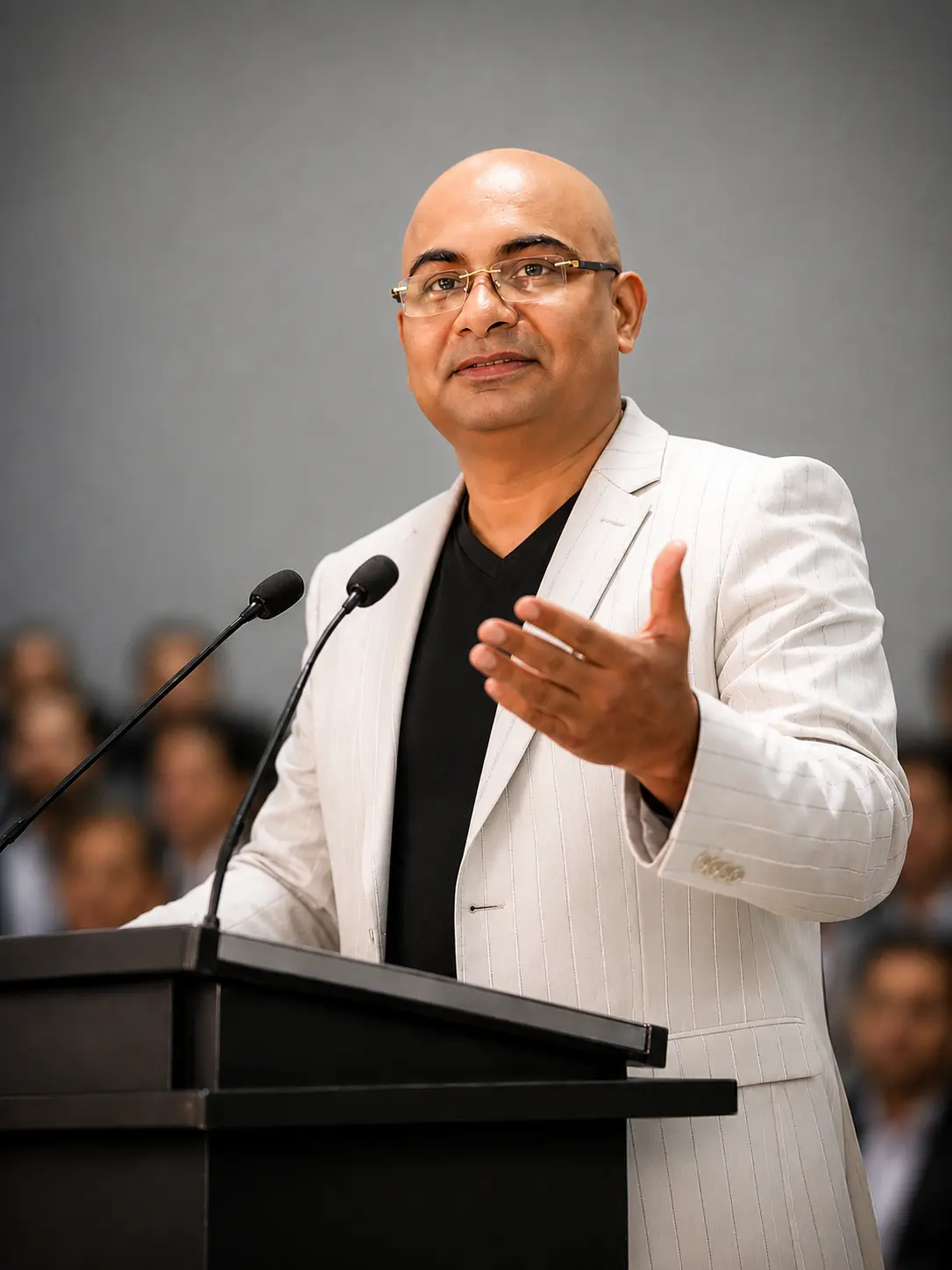
An OKR Coach with 20+ years of implementation experience, Madhusudan has guided over 50 organisations through successful OKR transformations, training more than 500 leaders. Learn more about Worxmate.
Frequently Asked Questions
Common operations OKR examples include reducing order-to-delivery lead times, decreasing unit manufacturing costs, and achieving 100% regulatory compliance. According to McKinsey, companies that focus on these operational outcomes can see up to 30% higher shareholder returns.
Effective key results for operations must be quantitative and outcome-oriented rather than task-based. Instead of saying “Implement a new inventory system,” a strong key result would be “Reduce inventory carrying costs by 15% through the implementation of a new tracking system.”
KPIs (Key Performance Indicators) measure the ongoing health of a process, such as current daily output. Operations OKRs are used to drive specific improvements or changes, such as increasing that daily output by 20% over the next quarter.
A COO should use OKRs because they foster better alignment and transparency across complex departments. Research by HBR shows that 95% of employees don’t understand company strategy; OKRs bridge this gap by connecting high-level objectives to measurable daily work.
The most common mistake is setting too many objectives or focusing on “business as usual” tasks. Operations OKRs should focus on transformational changes and process improvements that move the business forward, rather than just maintaining the status quo.