5 Benefits of Cross-Team Alignment to Drive Performance (2026 Playbook)
Actionable insights to align your OKRs with everyday performance management-from proven frameworks to the tools that power them.
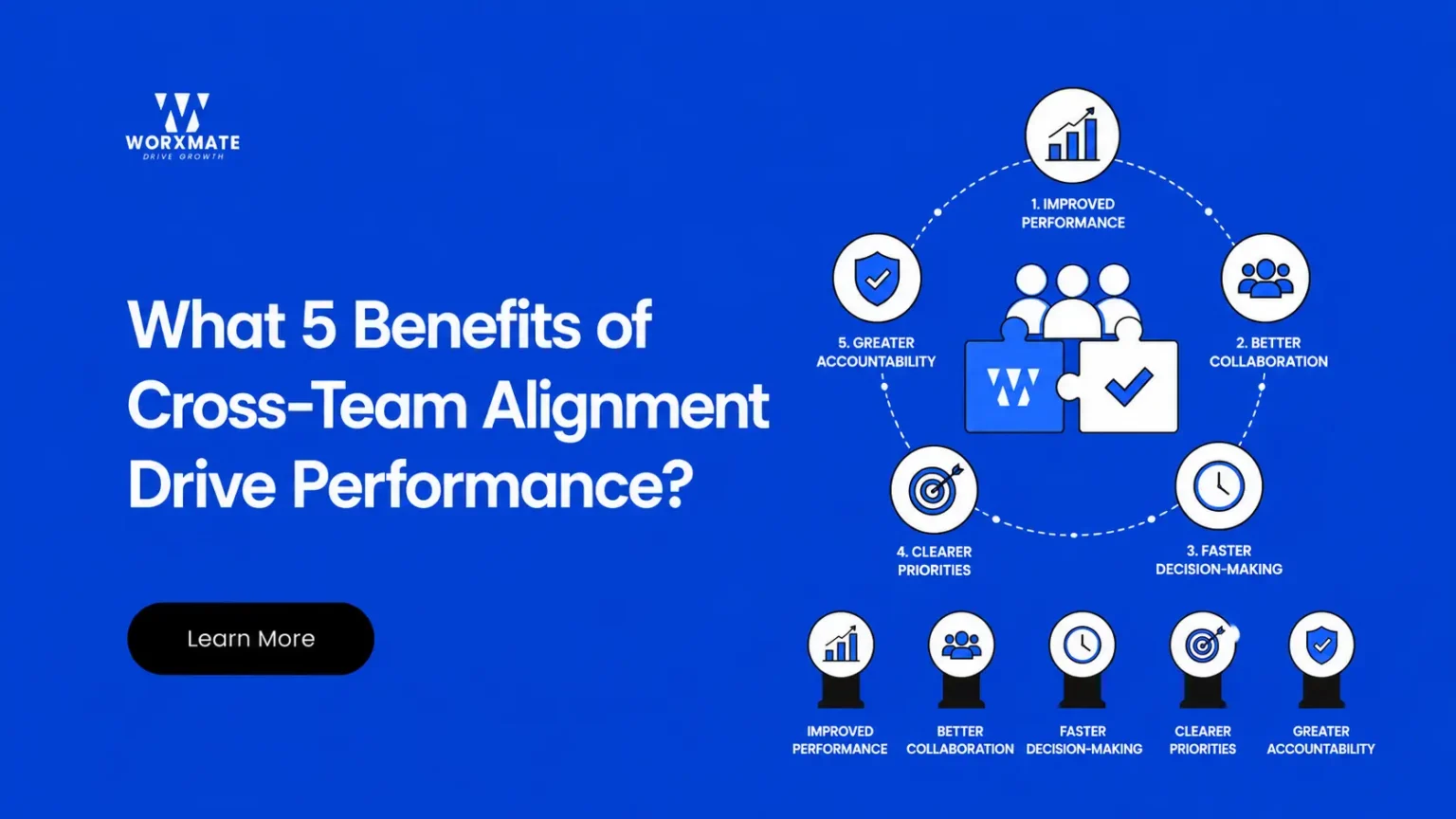
5 Benefits of Cross-Team Alignment to Drive Performance: Unifying departmental goals through a modern OKR tool eliminates operational silos, connects frontline execution directly to board strategy, and accelerates organizational velocity without enterprise software bloat.
Introduction: Navigating Tool Sprawl and Broken Workflows
For many growing enterprises, scaling up often introduces an unintended byproduct: severe operational fragmentation. As departments expand into specialized silos, they naturally build walls around their data, metrics, and daily workflows. Marketing chases lead volume, Sales focuses strictly on quota attainment, and Engineering buries itself in product roadmaps without a clear line of sight into customer feedback. This disconnect creates a massive drag on organizational productivity.
To survive and scale in a competitive market, organizations must master cross-team alignment. When leadership successfully bridges the gap between high-level strategy and frontline execution, teams stop competing against each other and start compounding their collective impact. Yet, achieving this alignment requires moving away from clunky, overpriced enterprise suites and adopting agile platforms built for modern workforces.
When coaching executive teams through multi-business unit rollouts, I see the same operational fracture time and again. Leaders assume that publishing quarterly goals on a shared spreadsheet equals alignment. In reality, marketing chases lead volume while engineering builds roadmaps detached from sales pipeline realities. Without an operational bridge, cross-functional collaboration collapses under the weight of departmental silos and conflicting performance metrics.
At a Glance: Worxmate vs. Lattice
Choosing the right platform for performance management and departmental cohesion is crucial for mid-market scale. Below is an objective comparison highlighting how Worxmate delivers superior value, agility, and native operational alignment compared to legacy enterprise alternatives like lattice.com.
| Feature | Lattice | Worxmate |
|---|---|---|
| Primary Philosophy | Legacy HR review cycles bolted onto bolt-on OKR add-ons. | Unified OKRs, continuous feedback, and talent alignment. |
| AI Capabilities | Expensive AI credit add-ons and gated analytics tiers. | Native predictive analytics and smart weekly check-ins included. |
| Performance Management | Rigid annual and quarterly review templates. | Agile performance management approaches designed for speed. |
| Goal-to-Task Link | High-level strategic views disconnected from daily frontline execution. | Granular line of sight connecting OKRs to operational tasks. |
| Ease of Use | Steep learning curve requiring extensive administrative overhead. | Intuitive, self-serve interface with zero-friction adoption. |
| Pricing Model | High per-user fees plus mandatory platform and module minimums. | Transparent, cost-effective pricing with no hidden seat fees. |
| Best For | Enterprise HR teams with massive administrative budgets. | Agile mid-market companies and operational frontline teams. |
Unlock Goal Clarity & Accelerate Employee Growth
Looking to drive goal clarity and employee growth? Discover how Worxmate’s AI-powered Performance Management Software can help.
The Integration Nightmare
The Point: Enterprise HR platforms often promise seamless connectivity while burying critical data behind complex, custom-coded API integrations and expensive middleware.
Many organizations attempting cross-team alignment rely on legacy tools that demand endless Zapier configurations or custom webhook pipelines just to sync OKRs with performance reviews. When goals live in one silo and feedback lives in another, managers waste valuable hours hunting for baseline metrics across disconnected tabs. This fragmentation defeats the entire purpose of adopting digital enablement software.
The Worxmate Advantage: Worxmate eliminates integration friction completely. By unifying goal tracking, peer recognition, and cross-functional collaboration under a single roof, our platform ensures your departments speak the exact same language from day one—no third-party connectors required.
Continuous Feedback vs. Annual Reviews
The Point: Stale annual review cycles cannot support modern agile business environments where strategic priorities shift on a monthly or quarterly basis.
Relying on once-a-year performance evaluations guarantees that employee misalignment goes unaddressed for months. By the time a manager identifies a strategic drift during an annual review, the market opportunity has already vanished. Continuous feedback loops, regular 1:1 check-ins, and transparent confidence scores are vital for maintaining agility.
The Worxmate Advantage: Worxmate embeds continuous performance management directly into daily routines. Weekly check-ins, real-time sentiment tracking, and frictionless performance metrics empower managers to catch blockers immediately and realign teams before productivity drops.
Strategic Alignment vs. Task Tracking
The Point: True cross-team alignment requires clear visibility from lofty corporate vision down to individual operational tasks.
Many platforms excel at tracking basic tasks or complex OKRs individually, but fail to connect the two. When an engineer completes a ticket or a salesperson closes a deal, they need to see how that specific milestone directly fuels quarterly company key results.
The Worxmate Advantage: Our dependency mapping and OKR tree structures provide complete line of sight. Teams instantly visualize how departmental outputs affect neighboring business units, turning isolated task execution into synchronized corporate momentum.
Pricing Transparency and Total Cost of Ownership
The Point: Enterprise HR tools often lure buyers in with low base rates before scaling up costs through mandatory platform fees, feature gating, and expensive seat minimums.
Mid-market organizations often find themselves locked into vendor contracts that penalize growth. As headcount fluctuates, bloated software bills drain operating budgets that should be allocated toward core innovation and market expansion.
The Worxmate Advantage: We believe powerful performance software should be accessible without enterprise bloat. Worxmate provides transparent pricing models with zero hidden module fees, ensuring high ROI whether you are scaling a remote tech team or coordinating frontline operations.
Unlock Goal Clarity & Accelerate Employee Growth
Looking to drive goal clarity and employee growth? Discover how Worxmate’s AI-powered Performance Management Software can help.
Scenario Decision Trees: Choosing Your Path
When to Choose Lattice: Enterprise HR teams with massive administrative budgets, rigid traditional review cycles, and extensive IT resources to manage complex integration suites may find legacy enterprise platforms suitable for their corporate overhead.
When to Choose Worxmate: Mid-market organizations, high-growth tech companies, and distributed operational workforces needing a nimble, cost-effective alternative that unifies OKRs, reviews, and frontline execution without complex setup choose Worxmate.
Bottom Line
Cross-team alignment is no longer optional for organizations striving to lead their respective markets. By eliminating silos, embracing transparent OKRs, and ditching overpriced HR bloat, companies can unlock unprecedented operational speed and employee engagement. This directly accelerates measurable key results across the entire organization. Tracking a real-time confidence score helps identify at-risk targets before quarter-end. Seamless cascading ensures department milestones stay synchronized with company strategy. Strong goal alignment eliminates siloed efforts and connects daily work to strategic outcomes.
Ready to move off legacy platforms and build real organizational alignment? Stop letting valuable opportunities slip through the cracks and transform your workforce productivity today.
👉 Schedule your Worxmate demo today and align your entire enterprise for high-impact growth.


Written by
An OKR Coach with 20+ years of implementation experience, Madhusudan has guided over 50 organisations through successful OKR transformations, training more than 500 leaders. Learn more about Worxmate.
Frequently Asked Questions
Cross-team alignment eliminates redundant effort and strategic drift by ensuring that every departmental key result ladders up directly to top-line company objectives. When teams share transparent metrics and weekly check-in rhythms, operational blockers are surfaced and resolved before quarter-end.
Legacy platforms treat OKRs as a static add-on bolted onto rigid annual review cycles. This creates data fragmentation where strategic goals live in one silo and daily execution lives in another, forcing managers to rely on manual spreadsheets and custom API integrations.
Task tracking focuses purely on the completion of operational tickets or daily deliverables without context. Strategic alignment connects those frontline tasks directly to quarterly company milestones, giving individual contributors a clear line of sight into how their daily work drives revenue.
While Lattice caters to enterprise HR teams with high per-user pricing and rigid annual review templates, Worxmate delivers unified OKRs, continuous feedback, and frontline operational tracking for a fraction of the total cost and zero administrative bloat.
Continuous feedback replaces sluggish annual appraisals with weekly 1:1 check-ins and real-time confidence scores. This allows leaders to catch strategic misalignment immediately and recalibrate execution rhythms on a monthly basis.
Distributed and frontline teams in logistics, healthcare, and IT often lack visibility into corporate headquarters. Agile performance platforms provide field force visibility, connecting frontline task execution directly to regional and enterprise-wide targets.
Enterprise HR tools often lure buyers in with low base rates before scaling up costs through mandatory platform fees, feature gating, expensive seat minimums, and costly AI credit add-ons.
Migrating to a streamlined platform like Worxmate involves consolidating disparate goal-tracking spreadsheets and review tools into a single self-serve interface with zero-friction adoption and transparent pricing.
A robust accountability model distributes focus across leadership tiers: C-Suite leaders maintain 100% OKR focus, middle managers operate on a 40% OKR and 60% KRA split, and individual contributors balance 20% OKRs with 80% KRAs.
Advanced AI engines automate goal authoring, monitor employee performance sentiment, detect burnout risks, and surface cross-functional dependencies without requiring expensive enterprise AI credit tiers.