
PMS Software: 5 Strategic Planning Pillars for 2026 Execution
Actionable insights to align your OKRs with everyday performance management-from proven frameworks to the tools that power them.
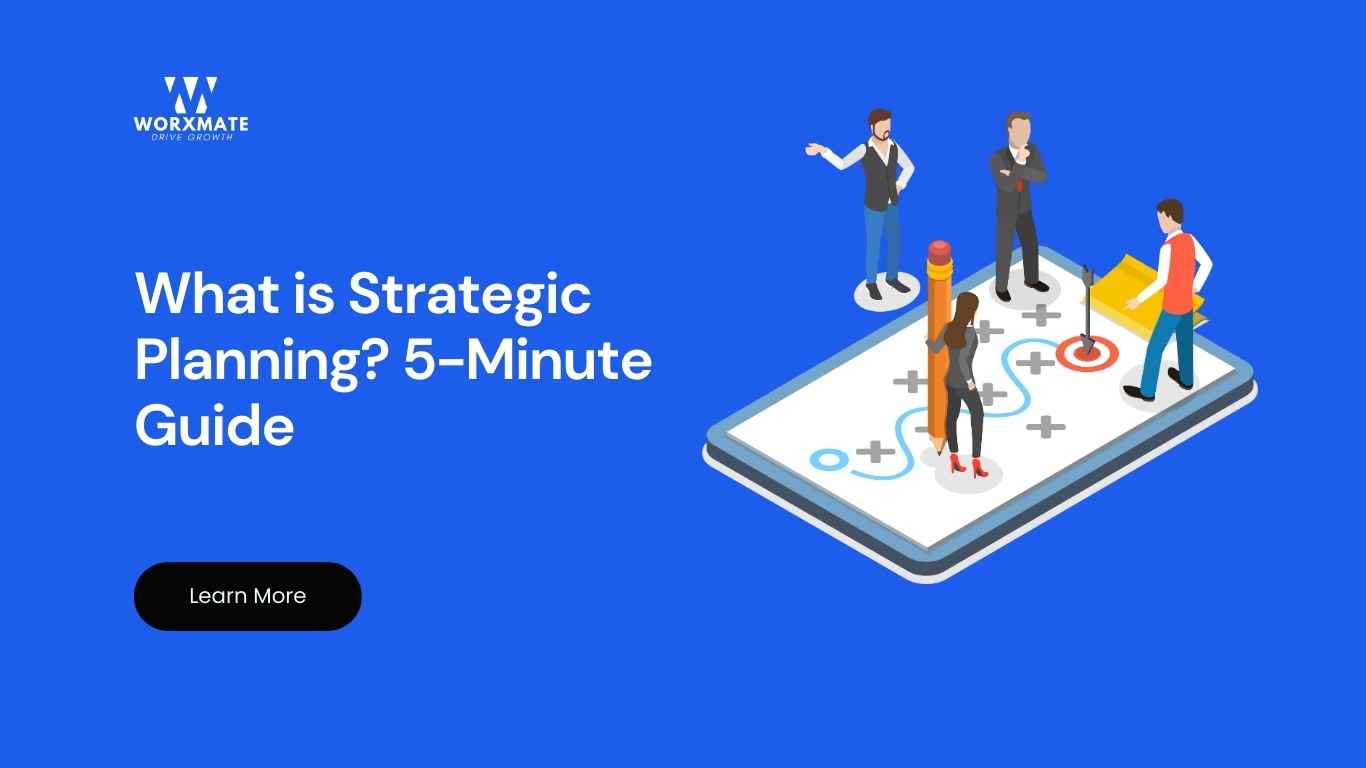
Strategic Planning: A systematic architecture for translating long-term vision into high-integrity execution. Modern leaders utilize PMS software to move beyond static documents, ensuring every frontline task aligns with boardroom priorities through real-time data and AI-driven predictive insights.
Did you know that 48% of companies fail to meet half their strategic targets? In today’s fast-paced business world, strategic planning isn’t just a buzzword-it’s the backbone of sustainable success.
Whether you’re a startup or a Fortune 500 enterprise, a well-crafted strategic plan aligns teams, optimizes resources, and turns vision into action.
What is Strategic Planning?
Strategic planning is the systematic process of defining an organization’s direction, allocating resources, and setting measurable goals. It bridges the gap between where you are and where you want to be.
Unlike traditional business planning, which focuses on short-term goals, strategic planning emphasizes long-term success by aligning resources with overarching ambitions.
The result is a strategic plan, a roadmap that guides decision-making and ensures alignment across all levels of the organization.
https://youtu.be/3hNzqW01uwE?si=sF52PBIZWMLRnOtj
Why is Strategic Planning Important?
Strategic planning is a fundamental process that underpins an organization’s ability to succeed and grow over time. It offers several key advantages, each addressing critical areas of business operations:
Direction and Focus:
Most strategic plans die in a drawer because they lack a pulse. When I coach C-suite teams, the breakdown isn’t the vision—it’s the visibility. Without a live connection between high-level intent and daily output, your strategy is just a wish list. You need a system that flags friction before it hits the P&L.
This clarity ensures that all efforts are concentrated on initiatives that drive the company forward. For instance, when a company establishes a strategic plan, it outlines specific targets and milestones, which serve as a roadmap for progress. This focus is essential to avoid distractions and maintain a steady course toward success.
Alignment:
A well-crafted strategic plan aligns all stakeholders-executives, employees, investors, and partners-around common goals. This collective focus minimizes internal inefficiencies and conflicting priorities.
When every department understands its role in the larger strategy, coordination improves, leading to streamlined processes and better resource utilization. For example, regular strategic reviews ensure that projects and initiatives are consistent with the organization’s overall mission.
Adaptability:
In today’s dynamic market environment, adaptability is crucial. Strategic planning enables businesses to anticipate potential risks and identify emerging opportunities.
By continuously analyzing market trends and internal performance, organizations can adjust their strategies proactively. This flexibility is vital for staying competitive, especially in industries subject to rapid changes in technology or consumer behavior.
Performance Measurement:
Another significant benefit of strategic planning is the establishment of clear metrics for tracking progress. By setting measurable objectives, companies can evaluate performance through defined key performance indicators (KPIs).
This approach allows for ongoing monitoring and timely adjustments, ensuring that the business remains on track toward its strategic goals.
Without strategic planning, businesses risk losing direction, misallocating resources, and falling behind competitors. In essence, strategic planning is the backbone that supports decision-making, fosters unity, and drives sustainable growth.
Achieve Your Goals Faster
See how Worxmate can help your team set clear goals and achieve faster results. Book your free demo today and experience the power of AI-driven OKRs in action.
The Execution Gap: Lessons from a Multi-Billion Dollar Mining Group
In a recent enterprise engagement with a Multi-billion dollar Mining Engineering group (Middle East & Europe division), we found a classic strategic failure mode. They had a brilliant 5-year strategy development plan, but market share was eroding. Why? Because leaders were tracking lagging KPIs—financial reports that only told them they had lost the quarter after it was already over.
The intervention required a shift from static planning to an active execution cadence. We mapped the unbroken operational chain connecting ground-level daily machine service delivery directly to regional renewal and expansion targets. By using PMS software to visualize these dependencies, the leadership moved from reactive crisis management to acting on leading indicators three months before they hit the balance sheet.
The Point:
Strategy isn’t a document; it’s a rhythm of alignment. If your frontline doesn’t see how their Tuesday morning task moves the needle on a strategic priority, your plan is already failing.
The Strategic Planning Process: 4 Key Steps
Creating a strategic plan involves several structured steps. Here’s an overview of the 4 steps of strategic planning:
Assess Your Current Position
- Conduct a SWOT analysis (Strengths, Weaknesses, Opportunities, Threats) or PEST analysis (Political, Economic, Socio-cultural, Technological) to evaluate internal capabilities and external challenges.
- Define your mission and vision statements for clarity on purpose.
Set Priorities
- Identify long-term objectives aligned with your mission.
- Use SMART goals (Specific, Measurable, Achievable, Relevant, Time-bound) for effective prioritization1.
Develop Action Plans
- Break down objectives into actionable initiatives.
- Allocate resources such as budgets and manpower effectively.
Implement and Monitor Progress
- Communicate the plan across teams to ensure buy-in.
- Track performance using KPIs (Key Performance Indicators) and adjust strategies as needed.
Levels of Strategic Planning
Levels of strategic planning occurs on three distinct levels within an organization: the corporate level, which sets the overall direction and long-term vision; the business level, which develops competitive strategies for individual markets or product lines; and the functional level, which aligns specific departmental goals and operations with the broader strategic objectives
Corporate Level Strategy
At the corporate level, the focus is on establishing the overall direction and long-term vision for the entire organization. Here, top management defines broad goals that determine which business units or product lines to invest in and how to allocate resources among them.
This level ensures that all parts of the organization work towards a common purpose. For instance, a diversified company might decide to enter new markets or divest underperforming segments. The strategic decisions made at this level set the foundation for subsequent planning at more specific tiers.
Business Level Strategy
Business-level strategy zooms in on the competitive positioning of each individual business unit or division. This level is concerned with how a specific unit can secure a competitive edge in its market.
The strategies here include decisions on product differentiation, pricing, market segmentation, and customer engagement tailored to the industry dynamics.
For example, a smartphone division may focus on innovation and brand loyalty to outcompete rivals. The goal is to respond effectively to competitive forces and market opportunities within the unit’s operating environment.
Functional Level Strategy
At the functional level, strategic planning occurs within specific departments, such as marketing, finance, or operations. This level aligns departmental goals and processes with the overall corporate and business strategies.
The emphasis is on the practical execution of strategies through streamlined operations, performance management, and resource allocation.
For example, the marketing team may design targeted campaigns that support a new product launch defined by the business-level strategy. This ensures that every function contributes directly to achieving the organization’s broader objectives.
Understanding these three levels helps ensure that every aspect of the business-from overarching vision to daily operations-contributes cohesively to the strategic plan.
Types of Strategic Planning
Strategic planning can take different forms depending on an organization’s goals, industry, and competitive landscape. Here’s a closer look at the most common types:
Growth Strategies
Growth strategies are designed to expand a company’s reach, revenue, or market share. Businesses pursuing growth may do so through market penetration (increasing sales in existing markets), market development (expanding into new regions or demographics), product diversification (introducing new offerings), or mergers and acquisitions. A well-executed growth strategy ensures sustainable expansion while maintaining profitability.
- Operational Strategies
Operational strategies focus on improving efficiency and effectiveness within a company’s processes, resources, and supply chains. This type of strategic planning ensures that day-to-day operations align with long-term business goals.
Key elements include cost reduction, workflow automation, lean manufacturing, and optimizing logistics. By refining operations, businesses can reduce waste, enhance productivity, and improve customer satisfaction.
Innovation Strategies
Innovation strategies are centered around creating new products, services, or business models to stay ahead of the competition. Companies adopting this approach invest heavily in research and development (R&D), encourage a culture of creativity, and leverage emerging technologies.
Examples include tech companies launching breakthrough software, automobile brands shifting to electric vehicles, and pharmaceutical firms developing groundbreaking treatments.
Achieve Your Goals Faster
See how Worxmate can help your team set clear goals and achieve faster results. Book your free demo today and experience the power of AI-driven OKRs in action.
Unified Architecture vs. Disjointed Tool Stacks
Many organizations attempt strategic planning using a fragmented mess of spreadsheets, slide decks, and third-party API connectors. This creates data silos and ‘strategy drift.’ To maintain organizational alignment, your infrastructure must be unified.
| Feature Comparison | Traditional Disjointed Stack | Worxmate Unified Architecture |
|---|---|---|
| Primary Philosophy | Static documentation and annual reviews. | Continuous execution and weekly rhythms. |
| AI Capabilities | Basic generative text or none. | Predictive execution and flight-risk detection. |
| Performance Management | Disconnected annual appraisals. | Integrated Continuous Performance Management. |
| Goal-to-Task Link | Manual updates across 3+ tools. | Native Axis AI™ bridging tasks to goals. |
| Ease of Use | High friction; requires API maintenance. | Single source of truth; zero-code setup. |
| Pricing Model | Multiple subscriptions and hidden costs. | Transparent, all-in-one enterprise pricing. |
| Best For | Small teams with low complexity. | Scaling enterprises requiring high-integrity execution. |
Why It Matters:
When your strategy execution is decoupled from your PMS software, you lose the ability to see cross-functional dependencies. Worxmate’s Nexus AI™ uncovers these silos automatically, ensuring that functional level strategy actually supports the corporate vision.
Case Study: Real-World Strategic Planning Examples: Lessons from Starbucks
In 2008, Starbucks faced a severe crisis marked by declining sales, plummeting stock prices, and the closure of hundreds of stores.
The company’s rapid expansion had diluted its core values, leading to a diminished customer experience. Howard Schultz, the company’s founder, returned as CEO to spearhead a strategic turnaround that revitalized Starbucks and set it on a path to sustained growth.
Customer Experience Overhaul
Schultz prioritized restoring Starbucks’ focus on quality and customer experience. In a bold move, he temporarily closed 7,100 U.S. stores to retrain baristas on making the perfect espresso.
This symbolic gesture underscored the company’s commitment to excellence and helped rebuild trust with loyal customers. Additionally, Starbucks revamped store designs to recapture the inviting “coffeehouse feel,†incorporating softer colors, unique lighting, and strategically placed furniture.
Product Innovation
Starbucks introduced new offerings like Pike Place Roast and expanded its menu to include snacks and sandwiches. The company also launched mobile ordering, enhancing operational efficiency and customer convenience.
Global Expansion
Targeting high-growth markets like China, Starbucks adapted its offerings to local preferences while maintaining its global brand identity. This strategic expansion helped tap into emerging markets.
Results:
These strategic initiatives yielded remarkable results. Starbucks’ revenue surged from $9.8 billion in 2009 to $26.5 billion by 2019.
The company also achieved double-digit growth for five consecutive years and significantly increased its stock price. Schultz’s strategic planning not only rescued Starbucks from collapse but also re-established it as a global leader in the coffee industry.
Advantages of Strategic Planning
Strategic planning offers tangible benefits:
- Enhances decision-making by providing a clear framework.
- Improves resource allocation by focusing on high-priority initiatives.
- Boosts employee engagement through alignment with organizational goals.
- Reduces crisis management by anticipating potential disruptions.
Who Are the Main Targets of Strategic Planning?
Strategic planning targets various stakeholders:
- Employees: Ensures alignment with organizational goals.
- Customers: Improves product/service offerings based on market needs.
- Investors: Provides confidence in long-term growth potential.
By addressing these groups effectively, businesses can foster trust and collaboration.
Predictive Execution: The Future of Strategic Alignment
The biggest risk to any strategic plan isn’t a bad idea—it’s the ‘silent failure’ of execution. Traditional planning tools tell you what happened. Modern PMS software tells you what is going to happen. By leveraging Orbit AI™, leaders can monitor engagement signals and performance rhythms to detect ‘flight risks’ or project stalls before they become irreversible.
Strategic priorities require more than just tracking; they require high-integrity metric design. Using our AI-driven goal authoring, teams can ensure that every OKR is measurable, ambitious, and perfectly aligned with the broader organizational strategy framework.
Conclusion:
Strategic planning is more than just setting goals-it’s about aligning your vision, people, and processes to drive measurable results. As we’ve seen through the Starbucks case and proven frameworks, businesses that commit to clear, adaptable strategies are the ones that thrive.
Strategic planning is more than just setting goals-it’s about aligning your vision, people, and processes to drive measurable results.
As we’ve seen through the Starbucks case and proven frameworks, businesses that commit to clear, adaptable strategies are the ones that thrive.
The software is the infrastructure. The coaching is the capability. You need both—and in the right order. If you are tired of strategic plans that fail to launch, it’s time to change the engine. Implementing continuous feedback replaces lagging reviews with timely coaching. Structured 1:1 check-ins provide managers and reports with a dedicated space to align on priorities. This strengthens continuous feedback and team alignment throughout every review cycle. This strengthens continuous feedback and team alignment throughout every review cycle. This strengthens continuous feedback and team alignment throughout every review cycle. This strengthens continuous feedback and team alignment throughout every review cycle.
Path 1 (The Platform): For teams ready to automate their execution cadence with AI-powered PMS software. Schedule a platform walkthrough.
Path 2 (The Coaching): For leadership teams whose barrier is execution capability and alignment. Explore executive coaching.


Written by
An OKR Coach with 20+ years of implementation experience, Madhusudan has guided over 50 organisations through successful OKR transformations, training more than 500 leaders. Learn more about Worxmate.
Frequently Asked Questions
PMS software bridges the gap between high-level strategy and daily operations by providing a real-time source of truth. It automates progress tracking, identifies blockers through AI, and ensures that every employee’s goals are aligned with the organization’s strategic priorities.
Strategic planning defines the long-term direction and ‘where’ the company is going. OKRs (Objectives and Key Results) are the execution framework that defines ‘how’ you will get there in shorter, agile cycles, ensuring the strategy remains actionable and measurable.
Yes. Advanced platforms like Worxmate use predictive AI to analyze performance rhythms and engagement signals. By detecting early warning signs like declining confidence scores or stalled check-ins, the system can flag ‘flight risks’ in your strategy before they impact financial results.
Most fail due to ‘strategy drift,’ where daily tasks become disconnected from long-term goals. Without a unified architecture to link frontline work to boardroom priorities, visibility is lost, and teams revert to reactive crisis management instead of proactive execution.
The three levels are Corporate (overall direction), Business (competitive positioning in specific markets), and Functional (departmental alignment). A unified PMS software ensures these levels remain synchronized rather than operating in silos.
While the vision may be multi-year, the execution should be reviewed quarterly through OKR retrospectives and weekly through performance check-ins. This continuous cadence allows for agile recalibration in response to market changes.
The execution gap is the disconnect between the goals set by leadership and the actual output of the workforce. It is typically caused by poor communication, lack of measurable KPIs, and the absence of a live tracking system.
Axis AI™ is Worxmate’s proprietary engine that automatically bridges frontline tactical tasks to boardroom strategic goals, ensuring that every hour of work contributes to a high-level objective.
KPIs (Key Performance Indicators) act as the health monitors of your strategy. While OKRs drive change and growth, KPIs ensure that the baseline business operations remain stable and support the strategic initiatives.
Yes. A unified architecture eliminates data silos, reduces the need for fragile API connectors, and provides a single source of truth for performance and strategy, which is critical for scaling enterprises.