 WORXMATE
Master OKRs: How to Implement OKRs in Indian Organizations: Step-by-Step 2026
Actionable insights to align your OKRs with everyday performance management-from proven frameworks to the tools that power them.
Summary
Learning how to implement OKRs in India effectively is the single most important skill for leaders aiming to close the gap between strategy and execution. OKRs (Objectives and Key Results) provide a framework that transforms ambitious vision into measurable, daily action. For Indian organizations navigating rapid growth and a diverse workforce, mastering how to implement OKRs ensures teams remain aligned, focused, and accountable. This guide walks you through the phased approach to OKR adoption, helping you move from theory to tangible business results without the usual friction.
Introduction
It’s a scene played out in conference rooms from Bengaluru to Mumbai every quarter: leadership spends days crafting a brilliant strategy, only to watch it dissolve into confusion by the time it reaches the front lines. Spreadsheets multiply, email chains go stale, and by the end of the quarter, nobody can agree on what was actually achieved.
If this feels familiar, you are not alone. Recent research reveals a startling gap: according to KNOLSKAPE’s L&D Predictions Report 2026, which surveyed over 100 Indian organizations representing more than 500,000 respondents, only 30–35 percent of Indian companies can link learning outcomes directly to business OKRs . Most organizations continue to measure participation and completion rather than whether work actually improves performance, decision-making, or execution.
As Indian enterprises scale rapidly in 2026, the gap between strategy and execution has become the biggest bottleneck to growth. This is where OKRs come in. Unlike traditional performance management that looks backward, OKRs create a north star for everyone in the company.
Learning how to implement OKR in India requires more than just copying Silicon Valley templates. It demands a process that respects the unique hierarchical structures, the rapid pace of digital adoption, and the diverse cultural landscape of Indian organizations. This guide provides a phased, practical roadmap for a successful okr implementation india journey, ensuring your goals don’t just sound good on paper but actually get done.
Achieve Your Goals Faster
See how Worxmate can help your team set clear goals and achieve faster results. Book your free demo today and experience the power of AI-driven OKRs in action.
Why 2026 is the Year for OKRs in India
The urgency for structured execution frameworks like OKRs has never been higher. According to PwC’s 28th Annual Global CEO Survey (India perspective), a staggering 87% of Indian CEOs expect domestic economic growth to accelerate in the coming year, and 74% are confident about their companies’ revenue growth . However, confidence alone doesn’t move markets—execution does.
Simultaneously, India is grappling with a widening digital skills gap. NASSCOM projects the digital talent deficit will widen from approximately 25% currently to about 28-29% by 2028 . With talent stretched thin, alignment becomes critical. You cannot afford to have your best engineers or marketers working on the wrong priorities.
Further compounding the challenge, the global OKR software market is projected to reach $8.5 billion by 2033, growing at over 23% annually . This surge is fueled by the need for transparency in hybrid work models and a relentless focus on data-driven results. An okr rollout guide provides the necessary discipline to ensure every resource is firing in the same direction, maximizing output without burning out your top performers.
The Anatomy of an OKR (Refresher)
Before diving into the rollout, it’s vital to ensure your team understands the difference between the “what” and the “how.”
- Objective: This is the qualitative, inspiring “What.” It should be bold and action-oriented.
- Example: “Dominate the Indian EdTech space in Southern markets.”
- Key Results (KRs): These are the quantitative, measurable “How.” They are the benchmarks of success.
- Example: “Achieve a market share of 25% in Tamil Nadu.”
- Example: “Launch 3 new Tamil-language course modules.”
- Example: “Maintain a 4.8/5 rating on the Chennai app store.”
Important Note: OKRs are not KPIs. KPIs measure ongoing health (like churn rate). OKRs are ambitious goals designed to move the company forward. KPIs often become the Key Results within an OKR .
From Strategy to Execution: How to Implement OKRs in India (2026)
Implementing OKRs isn’t an event; it’s a journey. Based on industry best practices, a successful rollout takes about four quarters to mature.
Phase 1: The Learning Quarter (Laying the Foundation)
Goal: 50% alignment and basic understanding.
- Executive Buy-in: This must start at the top. The C-suite must write their own OKRs first. If leaders don’t use the framework, neither will the teams.
- Training: Partner with experts or use internal champions to conduct workshops. The OKR Institute has delivered more than 12,000 OKR courses and workshops, reaching over 70,000 professionals worldwide . Certified training helps bridge the knowledge gap specific to the Indian enterprise context.
- Collaborative Planning: Don’t dictate team OKRs from the boardroom. Bring leadership together to define the company OKRs, then let teams develop their own that ladder up. This creates shared ownership.
Phase 2: The Momentum Quarter (Refinement)
Goal: Refine quality and drive engagement.
- Tighten the Language: Your first OKRs will likely be clunky. Vague objectives or unmeasurable KRs need to be refined. Use retrospectives to ask, “Did this actually drive value?”
- Increase Visibility: Break down silos. Once teams can see each other’s goals, coordination happens naturally. A developer in Pune can see that the Chennai sales team needs a specific feature to hit their KR.
Phase 3: The Execution Quarter (Driving Results)
*Goal: Consistent check-ins and healthy scores (0.6-0.8).*
- Operationalize Cadence: By now, weekly check-ins should be habit. These aren’t status updates for the boss; they are opportunities to flag risks early.
- Data-Driven Conversations: Move from “I think we’re doing well” to “The dashboard shows we’re yellow on this KR. What help do you need?”
Phase 4: The Scaling Quarter (Culture)
Goal: Embed OKRs into the operating rhythm.
- Establish a Center of Excellence (CoE): As you scale, designate a small group or an OKR coach to maintain standards and coach new joiners.
- Reward and Recognize: Publicly celebrate wins when teams achieve meaningful OKRs. This reinforces the behavior you want to see.
Case Study: Quick Heal Technologies
To understand the real-world challenges and triumphs of okr implementation india, we can look at the documented experience of Quick Heal Technologies, a prominent Indian cybersecurity company.
- The Problem: Before 2024, Quick Heal used a traditional, rigid top-down performance management system. There was little room for frequent feedback, and individual goals were often disconnected from the overall company strategy. It was difficult to differentiate high performers, and the company felt it was missing growth opportunities. According to Gallup, 54% of employees in India feel their company’s performance management system is ineffective . Quick Heal was determined to change that.
- The Catalyst: The CHRO, Ms. Reetu Raina, identified these loopholes and championed the shift to an OKR-based Performance Management System (PMS). The goal was to create a more agile and aligned organization.
- The Challenge: The transition was far from smooth. The organization faced significant employee resistance to change. In the post-pandemic world, employees questioned the relevance of a new system. Mixed reviews from department heads left the leadership puzzled about whether the new system would actually work. This highlights a critical truth: software alone isn’t the answer; managing the human side of change is paramount.
- The Outcome: While the transition required patience, Quick Heal’s quest is a powerful reminder that the friction experienced during the first two quarters is normal and necessary for building a robust performance culture. According to McKinsey, change management programs are 70% more likely to succeed when leaders communicate the vision consistently . Quick Heal’s journey underscores that persistence and communication are key.
Achieve Your Goals Faster
See how Worxmate can help your team set clear goals and achieve faster results. Book your free demo today and experience the power of AI-driven OKRs in action.
Case Study: Deloitte India’s AI Integration in Performance Management
When discussing the future of OKRs, we have to look at how industry giants are leveraging technology. A prime example is Deloitte India. They recently tackled a major challenge faced by a leading e-commerce giant: scaling personalized professional development.
The client’s HR team was manually processing feedback from disparate sources—a time-consuming task prone to bias. Deloitte stepped in to leverage Generative AI (using Anthropic Claude 2) to transform this chaos into clarity .
The Solution: The AI summarized tabular data (engagement scores) and textual feedback (verbatim comments) to create actionable insights.
The Results:
- Customized Leadership Reports: Leaders received summaries of strengths and weaknesses tailored to them.
- Year-over-Year Analysis: The system identified top and bottom performers by analyzing performance trends.
- Automated Growth Plans: Managers were provided with key action steps to improve their focus areas.
This integration of AI with performance tools shows where the industry is headed. The best OKR software in 2026 won’t just track progress; it will suggest how to improve it.
Why Software is the Backbone of Your Rollout
You cannot scale OKRs on spreadsheets. The global OKR software market was valued at $1.5 billion in 2024 and is projected to reach $8.5 billion by 2033 . Once your company crosses the 100-employee mark, spreadsheets break down. Progress gets lost in email threads, version control becomes a nightmare, and visibility vanishes.
Here’s how the right tool transforms your rollout:
- Centralized Visibility: Every goal, from the CEO to the intern, lives in one place.
- Real-time Tracking: Progress updates happen as work happens.
- Alignment: See exactly how a junior developer’s task connects to the company’s revenue goal.
- Reduced Overhead: Automated dashboards replace manual compilation of status reports.
Why Worxmate is the Solution for Indian Teams
Navigating the complexities of an OKR rollout requires a partner who understands the nuances of execution. Worxmate is designed to turn your goals into day-to-day action, making it the perfect fit for Indian SMEs and enterprises looking to implement the framework discussed above.
Worxmate’s OKR & PMS features solve the specific problems highlighted in this guide:
- Structured Roll-out: Worxmate allows you to set up your quarterly cycles with ease, mirroring the phased approach we discussed.
- Clear Line-of-Sight: It eliminates silos by linking key results to higher-level objectives.
- Lightweight Progress Updates: With low-friction check-ins, teams can keep their metrics current without the administrative burden of spreadsheets.
- Execution Focus: Unlike bulky enterprise tools, Worxmate ties daily tasks to quarterly goals, ensuring that strategy isn’t just a document, but a living part of your workflow.
Common Mistakes to Avoid
- Treating OKRs as a To-Do List: If your key results are just tasks (e.g., “Call 10 clients”), you’re doing it wrong. Key results must be outcomes (e.g., “Sign 3 new clients”).
- Too Many OKRs: Focus is everything. Limit OKRs to 3-5 per team per quarter.
- Lack of Leadership Commitment: If the CEO doesn’t reference OKRs in all-hands meetings, the framework will die.
- Making it Punitive: OKRs are about setting ambitious goals. If you punish teams for missing a stretch goal, they will sandbag and set easy targets.
- No Link to Business Outcomes: Remember, only 30-35% of Indian organizations successfully link learning and goals to business results . Don’t be part of the majority that fails here.
Ready to Bridge the Strategy-Execution Gap?
Implementing OKRs in India is a journey of discipline, alignment, and cultural shift. It requires moving away from rigid, top-down directives to a collaborative, transparent way of working. As we’ve seen, the rewards—focus, agility, and measurable growth—are well worth the effort.
But you don’t have to do it alone. Worxmate provides the digital infrastructure to make your okr implementation India journey smooth and successful. From aligning your leadership team’s vision to tracking the daily tasks that drive results, Worxmate keeps everyone moving in the same direction.
Ready to turn your strategy into action?
👉 Sign up for a free demo of Worxmate today and see how our OKR & PMS features can transform your organization’s performance.

Written by
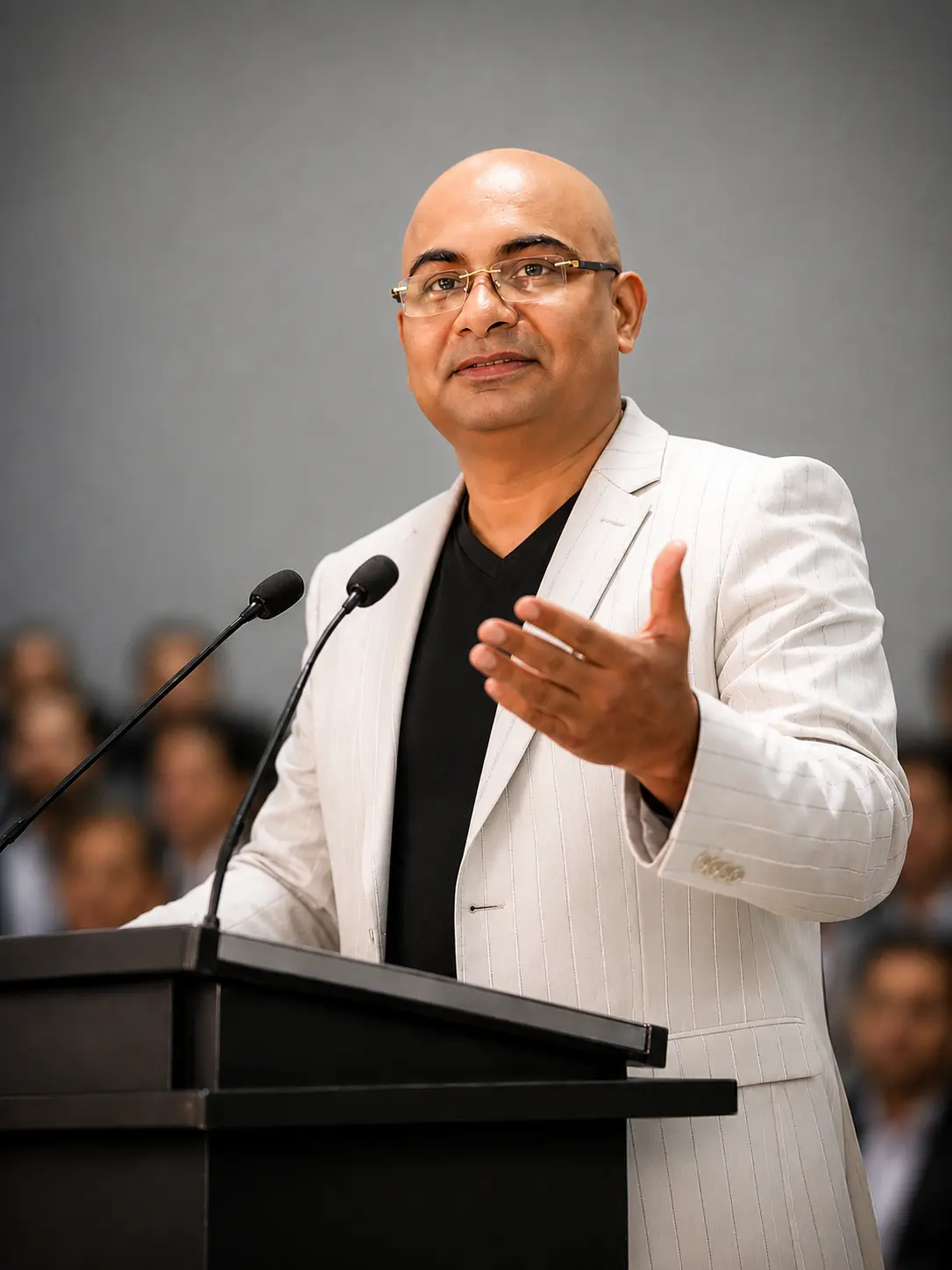
An OKR Coach with 20+ years of implementation experience, Madhusudan has guided over 50 organisations through successful OKR transformations, training more than 500 leaders. Learn more about Worxmate.
Frequently Asked Questions
Most organizations see structured maturity within 3-4 quarters. Real cultural integration, where OKRs become the “operating rhythm,” typically takes about 12 months.
The most common reasons include lack of executive sponsorship, treating OKRs as a mere reporting exercise rather than an execution framework, and failure to link goals to actual business outcomes—a problem affecting 65-70% of Indian firms.
This is debated. Directly linking OKRs to compensation can encourage sandbagging (setting easy goals). Many experts suggest using OKRs to inform performance conversations but keeping them separate from strict financial formulas.
According to McKinsey, change management programs are 70% more likely to succeed when leaders communicate the vision consistently . Start with a pilot group of champions, celebrate early wins, and link the framework to tangible benefits like career growth, not just managerial oversight.