 WORXMATE
OKR Alignment: How to Cascade Goals Across Indian Enterprise Teams
Actionable insights to align your OKRs with everyday performance management-from proven frameworks to the tools that power them.
Summary
In the context of large organizations, OKR Alignment is the process of linking an individual’s daily tasks back to the company’s top-level strategic vision. It answers the question, “Does my work matter to the CEO?” For Indian enterprises facing rapid scaling and diverse teams, proper alignment eliminates silos, ensuring that the Sales, Product, and HR departments are not pulling in opposite directions but rowing together toward the same Quarterly Objectives.
Introduction: The Indian Enterprise Execution Gap
India Inc. is at a fascinating crossroads. With the digital economy booming, Indian enterprises are moving faster than ever. Yet, according to the PwC 28th Annual Global CEO Survey, while 87% of Indian CEOs expect growth to accelerate, scaling strategy into action remains a persistent hurdle . Why is there often a massive gap between the boardroom vision and the ground-level reality?
The culprit is often a lack of OKR Alignment.
You can have the most ambitious “North Star” metric, but if your engineering team in Pune is prioritizing bug fixes while the sales team in Mumbai is promising new features to close deals, you have chaos. OKR Alignment is the glue that holds modern Indian enterprises together. It transforms a top-down mandate into a bottom-up movement.
In this guide, we will explore goal cascading best practices for India Inc. , navigate unique OKR rollout challenges in Indian enterprises, and look at a real-world case study of a global giant succeeding in India.
Achieve Your Goals Faster
See how Worxmate can help your team set clear goals and achieve faster results. Book your free demo today and experience the power of AI-driven OKRs in action.
Book a DemoWhy Traditional Goal Setting Fails in the Indian Subsidiary Context
Many Indian subsidiaries of global MNCs, as well as homegrown conglomerates, operate in silos. Often, the leadership team returns from a strategic offsite with a “secret” list of goals. These goals are then trickled down as KPIs, often losing context along the way.
According to Kanvic Consulting, the greatest barrier to performance improvement in Indian companies is the persistent gap between strategy and execution . Without a structured framework for Aligning departmental OKRs to company strategy in India, teams suffer from “availability bias”—they work on whatever is urgent, not what is strategically important.
The Core Concepts: Top-Down vs. Bottom-Up OKR Alignment for Indian Teams
When implementing OKRs, Indian enterprises often debate the direction of the flow. Should goals be assigned by the CEO, or should teams create their own? The reality is that a hybrid model works best for the Indian cultural context, which traditionally respects hierarchy but thrives on innovation.
Top-Down Alignment (The “Cascade”)
This is the classic model. The Company OKRs are set, and then every department aligns their OKRs to support them.
-
Example: If the Company sets an OKR to “Increase NPS to 70,” the Support team aligns with “Reduce response time,” and the Product team aligns with “Launch Feature X.”
-
Best for: Ensuring compliance and strategic focus.
Bottom-Up Alignment (The “Autonomy”)
About 30-40% of OKRs in a healthy system should be bottom-up. Teams ask, “How can we improve the company that leadership hasn’t thought of?”
-
Example: The engineering team decides to “Refactor legacy code” to improve deployment speed, something leadership doesn’t micromanage.
-
Best for: Innovation and employee engagement.
For Indian teams, Top-down vs bottom-up OKR alignment for Indian teams must be balanced. Too much top-down creates “zombie OKRs” (employees just going through the motions). Too much bottom-up leads to anarchy.
Overcoming Common OKR Rollout Challenges in Indian Enterprises
Rolling out OKRs in India comes with unique cultural and operational challenges. Based on insights from OKR International, nearly 70% of OKR programs stall within two cycles due to human factors, not the framework itself .
Here are the top three OKR rollout challenges in Indian enterprises and how to solve them:
1. The “Jugaad” Mentality & Activity Traps
Indian teams are masters of “Jugaad” (hacks), which often leads to focusing on activities rather than outcomes.
-
Solution: Train teams to differentiate between Outputs (Ship code) and Outcomes (Increase load speed by 20%).
2. Hierarchical Fear (Saving Face)
In many Indian corporate cultures, missing a target is seen as failure. This leads to “sandbagging” (setting easy goals).
-
Solution: Leaders must decouple OKRs from bonuses and performance reviews for the first two quarters. Treat OKRs as a learning tool.
3. The Middle Manager Tug-of-War
Middle managers in India are often caught between executive orders and team reality.
-
Solution: As noted by OKR International, skipping the middle manager layer is a fatal mistake. They need dedicated OKR coaching to connect the two worlds .
Case Study: Toyota Connected India (TCIN)
To understand OKR Alignment done right, we look at Toyota Connected India (TCIN), a technology-driven organization focused on connected mobility.
The Challenge
TCIN was growing fast but lacked a structured, organization-wide goal-setting framework. They had limited visibility into team progress and struggled to link daily coding tasks to the massive “Toyota Vision.” Employee participation in structured goal setting was stagnating .
The Solution: Structured Alignment
TCIN adopted a dedicated OKR platform to enforce OKR Alignment. They moved from spreadsheets to a system where every team’s OKRs were public and linked.
-
The Framework: Company OKRs were set first. Then, departments like Engineering and Product created aligned OKRs, followed by individuals.
-
The Cadence: They established regular check-ins to discuss progress, not just report status.
The Results
The impact of this structured alignment was quantifiable:
-
Employee Participation in goal setting rose from 60% to 80% .
-
Performance Review Turnaround decreased by 40% .
-
Managers reported greater clarity in evaluating performance based on measurable outcomes rather than gut feel .
Achieve Your Goals Faster
See how Worxmate can help your team set clear goals and achieve faster results. Book your free demo today and experience the power of AI-driven OKRs in action.
Book a DemoAn OKR Alignment Framework for Distributed Enterprise Teams in India
With the rise of hybrid work, your tech team might be in Bengaluru, sales in Delhi, and operations in a Tier-2 city. Creating an OKR alignment framework for distributed enterprise teams in India requires a “Single Source of Truth.”
Here is a 4-step framework to ensure seamless alignment:
Step 1: The Weekly “Alignment Pulse”
Don’t wait for the quarter to end. Use a tool that integrates with Slack or Teams. A simple check-in: “What is your progress on KR 1.2?”
Step 2: The Alignment Matrix
Visual mapping is crucial. Every team OKR should “link” to a Company OKR. If an OKR exists that doesn’t link to a Company OKR, ask: “Does this need to exist right now?”
Step 3: The Quarterly “Town Hall” Decode
Leaders must present the “Why” behind the Company OKRs. For distributed teams, record a video walking through the OKRs so that night-shift or remote workers understand the context.
Step 4: The Cross-Functional Connect
In Indian enterprises, dependencies kill velocity. Ensure that for every Key Result, the owner lists dependencies (e.g., “KR depends on Marketing providing leads”).
How Worxmate.ai Solves the Alignment Puzzle
Bridging the gap between spreadsheets and strategy execution requires more than willpower; it requires the right technology. This is where Worxmate comes in.
While many tools track tasks, Worxmate is built specifically to solve the Indian enterprise paradox: How to maintain hierarchical discipline while fostering agile innovation.
Worxmate’s OKR & PMS features are designed to solve the specific challenges discussed above:
-
Visual Goal Cascading: Our platform allows you to visually map the chain of command. See instantly how an individual contributor’s task in Mumbai impacts the Corporate KPI in real-time. This solves the Alignment issue perfectly.
-
AI-Driven Insights: Worxmate uses an “AI Third Eye” to analyze the health of your OKRs. It flags misaligned objectives and suggests connections automatically, ensuring no department goes rogue.
-
Continuous Performance Management: Unlike rigid annual review systems, Worxmate integrates daily tasks with quarterly OKRs, encouraging the agility that modern Indian teams need to adapt to market changes.
Stop managing strategy in a silo. Worxmate bridges the gap between the boardroom and the breakroom.
👉 Try Worxmate for Free or Schedule a Demo to see how we help Indian enterprises turn vision into reality.

Written by
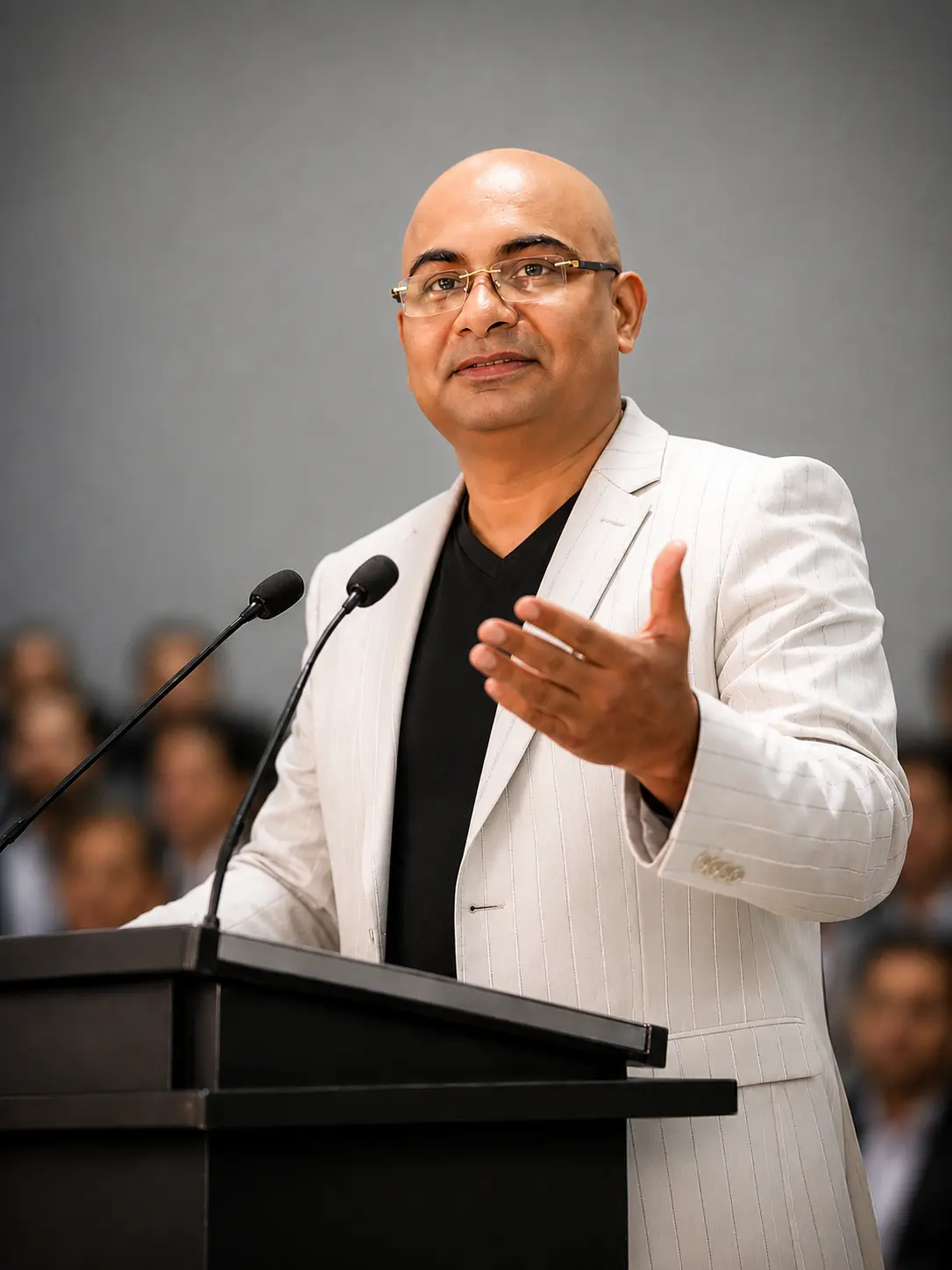
An OKR Coach with 20+ years of implementation experience, Madhusudan has guided over 50 organisations through successful OKR transformations, training more than 500 leaders. Learn more about Worxmate.
Frequently Asked Questions
KPIs (Key Performance Indicators) measure the health of ongoing operations (e.g., “Maintain 99% uptime”). OKRs (Objectives and Key Results) drive change and transformation (e.g., “Launch new payment gateway to reduce cart abandonment by 15%”). Indian enterprises need both, but OKRs provide the “direction” for growth.
Quarterly cycles work best for most Indian enterprises, especially in tech and services. However, for manufacturing or long-cycle sales teams, annual OKRs with quarterly checkpoints are often more practical to allow for seasonal business fluctuations in India.
Initially, yes. However, research suggests that once you have over 50 employees, spreadsheets break down. An OKR alignment framework requires real-time visibility and check-ins. Tools like Worxmate automate the process, send reminders, and provide heat maps that Excel cannot.
OKRs are agile. If a regulatory change (like a new tax law) shifts your priority, you should be willing to abort or change an OKR mid-quarter. The key is to document the reason for the change. This is a strength of OKRs over rigid annual plans.