5 SaaS Performance Management Pricing Factors Impacting ROI
Actionable insights to align your OKRs with everyday performance management-from proven frameworks to the tools that power them.
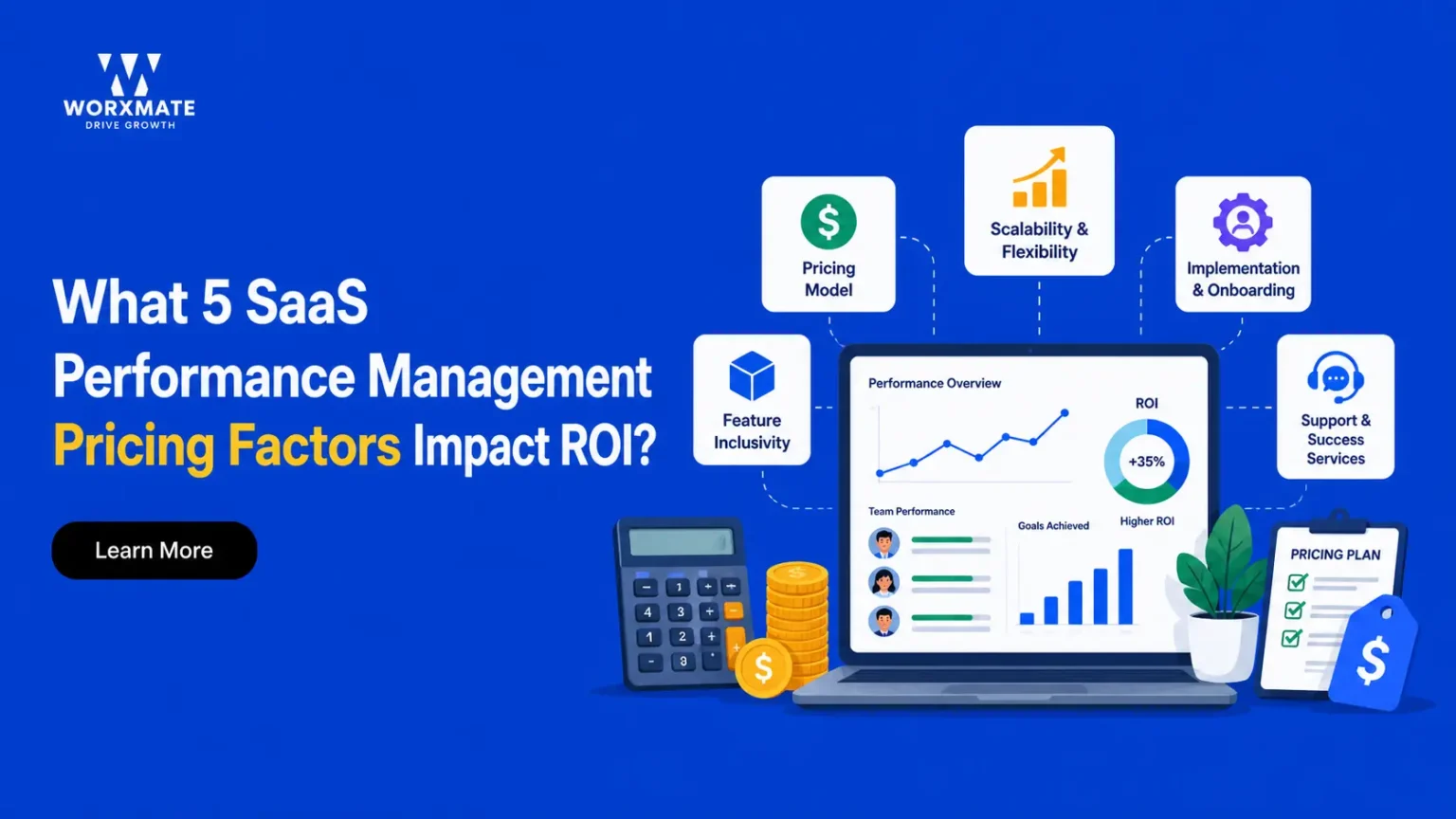
SaaS Performance Management Pricing: Evaluating enterprise top performance review tools requires analyzing user scale, implementation fees, and hidden integration surcharges. Mid-market leaders can achieve superior performance management approaches by selecting agile platforms that combine OKRs and continuous feedback for half the total investment.
According to research from Gartner, HR technology spending continues to rise as companies prioritize employee experience and data-driven decision-making. Yet, many organizations struggle to reconcile the sticker price of a platform with the total cost of ownership. Navigating SaaS performance management pricing requires more than just looking at a price-per-head; it demands a deep dive into how the software scales with your growth, the cost of data migration, and the potential for long-term value creation through improved employee engagement and alignment.
In this analysis, we will deconstruct the primary pricing archetypes in the performance management space, examine the “hidden” costs that often surface after the contract is signed, and provide a roadmap for CFOs and HR Directors to build a sustainable budget. By the end of this article, you will have a comprehensive understanding of how to evaluate SaaS performance management pricing to ensure your organization achieves the highest possible return on its human capital investment.
Understanding Common SaaS Performance Management Pricing Models
When comparing enterprise pricing models, organizations often find that legacy tools like Lattice impose steep platform fees alongside per-user costs, pushing total expenditures past $11+ per user monthly. For lean, scaling organizations, this creates unnecessary budget bloat without delivering operational agility across remote or frontline workforces.
The Point:
Enterprise HR suites frequently bolt legacy review cycles onto rigid goal-tracking frameworks, failing to support fast-moving operational execution.
The Worxmate Advantage:
Worxmate delivers a unified suite combining OKRs, continuous performance management, and frontline task tracking at a fraction of enterprise software costs. By streamlining strategy execution and weekly check-ins, HR directors eliminate redundant tool overhead while maximizing organizational ROI.
The market for HR technology has matured, leading to several standardized approaches to SaaS performance management pricing. Most vendors categorize their offerings based on the depth of functionality, moving from basic goal-tracking tools to comprehensive suites that include 360-degree feedback, AI-driven analytics, and deep integrations with HRIS platforms. For a VP of People, understanding these categories is the first step in narrowing down a shortlist of vendors that fit both the functional requirements and the fiscal reality of the business.
The most prevalent model is the per-user, per-month subscription. This approach aligns the cost directly with the size of the workforce, making it highly predictable for scaling companies. However, SaaS performance management pricing in this category often features “seat minimums,” meaning a company with 150 employees might still have to pay for a 200-seat baseline. This is common among enterprise-grade solutions that require a certain scale to justify the dedicated support and infrastructure provided to each client.
Another common structure is tiered pricing, where features are bundled into “Standard,” “Professional,” or “Enterprise” packages. In this scenario, SaaS performance management pricing is determined by which bucket of features you need rather than just the number of users. For example, a standard tier might offer basic OKR tracking, while the enterprise tier adds advanced performance analytics and custom reporting. This model allows companies to start small and upgrade as their performance management maturity grows, though it can lead to “feature bloat” if a company is forced into a higher tier just for one specific integration.
Flat-fee models are less common but still exist, particularly for specialized or boutique solutions. Here, the SaaS performance management pricing is a set annual or monthly cost regardless of the number of users, up to a certain limit. This can be highly advantageous for rapidly growing mid-market firms, as it provides a “buffer” where new hires do not immediately trigger a change in the software budget. However, these models often have lower levels of personalized support compared to per-user contracts.
Per-User vs. Tiered Pricing: Which SaaS Performance Management Pricing Model Fits Your Organization?
Deciding between per-user and tiered SaaS performance management pricing requires a thorough audit of your current and future headcount. For a mid-market company expecting 20% year-over-year growth, a per-user model ensures that you only pay for what you use. This elasticity is a hallmark of modern cloud software, allowing HR teams to manage the performance management cycle without worrying about massive upfront licensing fees that were typical of legacy on-premise systems.
However, tiered SaaS performance management pricing can often be more cost-effective if your organization requires specific high-end features like AI-assisted feedback or complex linking performance management to compensation and rewards. In a per-user model, these “premium” features might be offered as individual add-ons, which can quickly inflate the monthly bill. In contrast, a tiered package might bundle these together at a lower effective rate per user. When evaluating these options, it is vital to perform a three-year cost projection to see where the “break-even” point lies between the two models.
Consider the following comparison table to understand the trade-offs in SaaS performance management pricing:
| Pricing Model | Ideal For | Pros | Cons |
|---|---|---|---|
| Per-User / Per-Month | Scaling SMEs and mid-market firms | Highly predictable; scales with headcount | Can become expensive as the team grows; seat minimums |
| Tiered Bundles | Organizations with specific feature needs | Clear feature sets; easier to budget for specific capabilities | Risk of paying for unused features; upgrade “cliffs” |
| Flat-Fee Annual | Rapidly growing startups | No cost increase for new hires; simplified billing | Less flexibility; often lacks high-touch support |
Ultimately, the choice of SaaS performance management pricing should reflect your organizational culture. If you prioritize a “lean” approach where every tool must be justified by active usage, the per-user model is superior. If you are undergoing a major cultural shift that requires a wide array of tools—such as 360-degree feedback and real-time dashboards—a tiered enterprise bundle might provide better long-term stability.
Hidden Costs to Watch for in SaaS Performance Management Pricing Contracts
The “sticker price” of a software solution is rarely the total cost. When reviewing SaaS performance management pricing, procurement officers must look for auxiliary expenses that can add 10% to 30% to the initial estimate. One of the most significant hidden costs is the implementation and onboarding fee. Unlike simpler productivity apps, performance management software requires deep configuration to match your company’s unique competencies, review cycles, and organizational hierarchy. Vendors often charge a one-time fee to ensure a successful performance management system implementation.
Data migration is another area where SaaS performance management pricing can escalate. Moving years of historical performance data from spreadsheets or a legacy HRIS into a new platform is a complex technical task. Some vendors include a basic migration in their standard package, but others charge by the record or by the hour for data cleansing and mapping. Without clean data, the advanced analytics promised by the platform will be useless, making this an “optional” cost that is actually mandatory for success.
Furthermore, consider the cost of integrations. To truly drive value, your performance software should talk to your Slack, Microsoft Teams, and payroll systems. While many platforms offer “native” integrations, some specialized connectors or custom API work may incur additional SaaS performance management pricing surcharges. It is also wise to inquire about “customer success” tiers. While basic email support might be included, having a dedicated account manager to help with pms adoption challenges often comes at a premium cost.
Finally, do not overlook the cost of internal time. A new software rollout requires hours of training for managers and employees. While this isn’t a direct line item in the vendor’s SaaS performance management pricing, it is a real cost to the business. Choosing a platform with a high degree of “intuitiveness” can drastically reduce these indirect costs by shortening the learning curve and increasing the boost performance management efforts across the board.
Calculating the ROI: Why SaaS Performance Management Pricing Isn’t the Only Factor
Focusing solely on SaaS performance management pricing is a mistake if it leads to the selection of a tool that fails to drive engagement. The true cost of a system includes the cost of poor performance management, which manifests as high turnover, low productivity, and strategic misalignment. McKinsey research indicates that companies with effective performance management systems are 1.4 times more likely to outperform their peers financially.
When presenting a budget to the CFO, the conversation should shift from “What does it cost?” to “What does it save?” For instance, if a platform reduces employee turnover by just 2%, the savings in recruitment and onboarding costs can often pay for the entire SaaS performance management pricing for the year. Additionally, modern systems facilitate better goal alignment. When employees understand how their work contributes to the company’s “North Star” goals, productivity increases. This is why many leaders look at performance management software roi as the primary metric of success, rather than the monthly subscription fee.
Another factor in the ROI equation is manager efficiency. Legacy review processes are notorious for consuming hundreds of hours of manager time. Modern software automates the collection of feedback and the generation of reports, freeing up leadership to focus on coaching rather than administration. By quantifying the hours saved across the management layer and multiplying that by their average hourly rate, you can build a compelling case that justifies even a premium SaaS performance management pricing tier.
Consider the cost of employee disengagement. According to Gallup, disengaged employees cost the global economy trillions in lost productivity. A platform that encourages continuous feedback and recognition can move the needle on engagement scores. In this context, the SaaS performance management pricing becomes an investment in the company’s most valuable asset—its people. When you factor in the long-term gains in retention and output, the “expensive” platform often turns out to be the most economical choice.
How to Budget for Performance Management and OKR Software: 5 Key Factors
Creating a realistic budget for HR technology requires a multi-faceted approach. You cannot simply look at the SaaS performance management pricing of a single vendor and call it a day. Instead, you must account for the entire ecosystem of the rollout. Here are five factors to include in your budgetary planning:
1. Total Headcount and Growth Projections
Ensure your budget accounts for your maximum expected headcount over the next 12–24 months. Many SaaS performance management pricing contracts are billed annually, so underestimating your growth could lead to unexpected mid-year invoices as you add more seats.
2. Implementation and Consulting Services
Allocate funds for professional services. Whether it is the vendor’s own team or an external consultant, having expert help to set up your okr tool comparison and framework is essential for long-term adoption. This is often a one-time cost that pays dividends in system accuracy.
3. Integration and Technical Overhead
Budget for the technical time required to sync your performance data with other systems. While modern SaaS performance management pricing often includes standard connectors, your internal IT team may need “man-hours” to ensure security compliance and data integrity across the tech stack.
4. Training and Change Management
A tool is only as good as its users. Budget for internal workshops, training materials, and perhaps even “internal champions” who can help overcome resistance. This investment ensures that the money spent on SaaS performance management pricing isn’t wasted on a tool that no one knows how to use.
5. Contingency for Add-ons
As you use the system, you may discover a need for advanced features like 360-degree reviews or custom survey modules. Build a 10% “buffer” into your SaaS performance management pricing budget to allow for these upgrades without needing to go back to the board for additional funding.
By taking this comprehensive view, you avoid the “budget shock” that often occurs six months after a software purchase. A well-planned budget considers the SaaS performance management pricing as just one component of a larger strategic initiative to improve organizational health.
Worxmate’s Value-Based Pricing Approach
At Worxmate, we recognize that SaaS performance management pricing must be transparent and aligned with the actual value delivered to the organization. We have designed our pricing models specifically for mid-market companies that need enterprise-grade power without the “black box” pricing typical of legacy vendors. Our approach focuses on scalability, ensuring that as your team grows, your costs remain predictable and manageable.
We believe that every organization should have access to high-impact tools like OKR tracking and real-time feedback without being nickel-and-dimed for every integration. Our SaaS performance management pricing is built around the philosophy that the software should be an enabler of growth, not a barrier to it. By offering a platform that combines goal management, performance reviews, and employee engagement into a single, cohesive experience, we help companies consolidate their HR tech spend while increasing the quality of their performance data.
Whether you are looking for okr software pricing india specific contexts or global enterprise solutions, Worxmate provides a clear path to ROI. We work closely with our clients during the discovery phase to ensure that the chosen SaaS performance management pricing tier matches their specific organizational maturity and strategic goals. This consultative approach ensures that you aren’t just buying a subscription; you are investing in a partnership dedicated to your team’s success.
Case Study: Adobe — Transitioning from Legacy Costs to Scalable Impact
The Challenge
Adobe previously utilized a traditional, annual performance review system that was both time-consuming and costly. Managers spent over 80,000 hours per year on administrative tasks related to stack-ranking and annual appraisals, which often resulted in high voluntary turnover and a lack of real-time alignment with the company’s fast-moving digital goals.
The Solution
The company moved away from the rigid annual cycle and adopted a “Check-in” model focused on continuous feedback and frequent goal adjustments. This shift required moving from a legacy licensing mindset to a more fluid, scalable performance management framework that prioritized manager-employee conversations over bureaucratic documentation.
Results and Impact
By eliminating the annual review process and the associated administrative overhead, Adobe saw a 30% decrease in voluntary turnover. Furthermore, the shift to a more agile performance framework allowed the company to better align individual efforts with corporate strategy, contributing to a significant period of market cap growth.
The lessons from Adobe’s transition are clear: the value of a performance system is found in its ability to foster culture and alignment, not in its administrative complexity. When evaluating SaaS performance management pricing, companies should look for platforms that facilitate these “Adobe-style” frequent check-ins, as the ROI from reduced turnover and increased agility far outweighs the base cost of the software.
As you finalize your search for the right platform, remember that SaaS performance management pricing is a reflection of a vendor’s commitment to your success. A transparent, scalable model suggests a partner that is confident in their product’s ability to grow with you. By accounting for hidden costs, focusing on ROI, and budgeting for the entire lifecycle of the software, you can transform your performance management from a cost center into a powerful engine for organizational growth.
Navigating the world of SaaS performance management pricing doesn’t have to be a daunting task. With the right data and a strategic mindset, you can secure a solution that empowers your managers, engages your employees, and provides the CFO with the clear financial justification they require. The future of work is continuous, agile, and data-driven—and your performance management budget should be, too.
Ready to transform your SaaS performance management pricing from a hope into a measurable, company-wide achievement? Stop letting valuable opportunities slip through the cracks. This directly accelerates measurable key results across the entire organization. Tracking a real-time confidence score helps identify at-risk targets before quarter-end. Surfacing operational blockers early ensures leadership can clear obstacles quickly. Seamless cascading ensures department milestones stay synchronized with company strategy.
👉 Start your free trial of Worxmate today and align your team to build consistent, high-impact outcomes.


Written by
An OKR Coach with 20+ years of implementation experience, Madhusudan has guided over 50 organisations through successful OKR transformations, training more than 500 leaders. Learn more about Worxmate.
Frequently Asked Questions
The core pricing factors include user seat counts and minimums, implementation and onboarding fees, data migration costs, integration surcharges for Slack and HRIS tools, and tier-based feature bundling for advanced analytics and rewards.
While legacy platforms charge $11+ per user monthly plus mandatory platform fees, Worxmate provides unified OKRs and continuous performance management at half the total investment with transparent, scalable pricing.
CFOs must watch for mandatory professional services fees, per-record data migration charges, custom API integration expenses, and upgrade tiers required to unlock core analytics and continuous feedback modules.
Per-user models scale directly with headcount and offer predictable monthly billing, whereas tiered bundles group features into standard or enterprise packages, which can lead to feature bloat if you only need specific capabilities.
ROI is calculated by factoring in reductions in voluntary employee turnover, hours saved in administrative review time across management, and productivity gains achieved through clear strategic alignment of key results.
Rarely. Most SaaS performance management vendors bill professional services, setup, and administrator training as one-time separate line items ranging from 10% to 30% of the initial contract value.
Many enterprise tools are built exclusively for desk workers, forcing companies to pay for bloated features they cannot deploy across logistics, healthcare, or field operations. Worxmate natively supports frontline task tracking without extra fees.
Seat minimums require companies to pay for a baseline number of users (e.g., 200 seats) even if their active headcount is lower, resulting in wasted software spend during early scaling phases.
Continuous check-ins and weekly updates replace time-consuming annual reviews, boosting employee engagement and ensuring real-time alignment with strategic priorities.
By partnering with agile platforms like Worxmate that offer transparent pricing, predictable seat scaling, and comprehensive onboarding support to consolidate HR tech stack spend.