 WORXMATE
What Is EOS Model? Discover How It Transforms Any Business!
Actionable insights to align your OKRs with everyday performance management-from proven frameworks to the tools that power them.
Summary
The EOS Model, or Entrepreneurial Operating System, is a comprehensive business management framework that helps entrepreneurs and leadership teams align their organizations around a shared vision and execute their strategies with discipline and accountability. Developed by Gino Wickman and documented in his bestselling book Traction, EOS provides six interconnected components—Vision, People, Data, Issues, Process, and Traction—that work together to simplify business operations, reduce chaos, and drive sustainable growth. Whether you’re a startup struggling with misalignment or a mid-sized company hitting growth plateaus, the EOS Business Model offers practical tools and processes to transform how you run your business and achieve your most ambitious goals.
Have you ever felt like your team is working in different directions? Like your business has great momentum one quarter, then inexplicably plateaus the next? You’re not alone.
According to Harvard Business Review, approximately 90% of strategic plans go unexecuted—and the reason isn’t usually a lack of strategy or talent. It’s a lack of system.
This is where the EOS Model becomes a game-changer. The Entrepreneurial Operating System provides a structured, proven framework that transforms how companies run. Over 170,000 businesses worldwide have adopted EOS, with many reporting 20-30% year-over-year growth rates and significantly improved team alignment.
Unlike abstract management theories, EOS delivers tangible, practical tools that leadership teams can implement immediately to create clarity, align their people, and execute their vision with precision.
The question isn’t whether your organization needs better systems—it’s whether you’re ready to implement them.
What is the EOS Model? Understanding the Basics
The EOS Model stands for the Entrepreneurial Operating System—a comprehensive, integrated system designed specifically for entrepreneurs and leaders managing small to mid-sized organizations (typically 10-250 employees).
Think of it as an operating system for your business, much like Windows or macOS manages how your computer functions.
Developed by Gino Wickman in his influential book Traction, the EOS Model isn’t just a goal setting tool or a strategic planning framework.
It’s a complete operating system that addresses every critical aspect of running a business: how you define your direction, build your team, make data-driven decisions, execute flawlessly, solve problems systematically, and maintain momentum.
The fundamental principle behind EOS is elegantly simple: clarity, simplicity, and focus drive business success.
When every member of your organization understands where the company is headed, why it matters, and what their specific role is in getting there, magic happens. Confusion dissolves. Accountability emerges. Progress accelerates.
The Six Key Components of the EOS Model
The EOS Model rests on six interconnected pillars. Each component is essential, and weakness in any single area creates vulnerability across your entire organization. Think of it as a wheel—if one spoke is broken, the whole wheel doesn’t turn properly.
1. Vision
Vision is the foundation of everything. It answers the fundamental questions: Where is our company headed? Why does it exist? What do we stand for?
Within the EOS framework, Vision encompasses eight critical questions that clarify your organization’s direction:
-
- Core Values: What principles define how we operate?
- Core Focus: What is our unique niche and competitive advantage?
- 10-Year Target: Where do we aspire to be in a decade?
- Marketing Strategy: How do we reach and win our ideal customers?
- 3-Year Picture: What does success look like in three years?
- 1-Year Plan: What are our specific annual objectives?
- Rocks: What are our critical quarterly priorities?
- Issues List: What challenges must we overcome?
The power of the Vision component lies in moving beyond a generic mission statement that sits in a binder and collects dust.
EOS demands that your vision be Shared by All—activated through rituals and artifacts that constantly remind every team member of the organization’s purpose and direction. This creates genuine alignment, not just compliance.
2. People
People is the recognition that your team is your greatest asset—but only if you have the right people in the right seats.
The People component focuses on three critical elements:
-
- Right People: Do you have individuals whose values align with your core values?
- Right Seats: Are they in roles that match their skills, strengths, and passions?
- Development: Are you investing in their growth and addressing performance gaps?
EOS tools like the People Analyzer and GWC™ (a framework evaluating skill, will, and fit) help leaders move beyond emotional hiring and subjective performance reviews.
Instead of keeping someone in the wrong role because they’re a nice person, EOS empowers you to make decisions based on data: Does this person fit our culture? Can they perform in this specific role? Are they willing to grow?
Companies implementing this component often discover that moving one person into a more suitable role or removing a talented-but-misaligned individual dramatically improves team performance and culture.
3. Data
Data eliminates guesswork from decision making. In the EOS Model, Data means using measurable metrics and key performance indicators (KPIs) to understand your business’s health and trajectory.
The primary data tool in EOS is the Scorecard—a simple dashboard tracking 5-15 key metrics that reveal your business’s performance.
Rather than tracking hundreds of metrics and getting lost in complexity, the EOS approach focuses on leading indicators: the measurements that actually predict future success.
For example, a sales team might track metrics like:
-
- Number of proposals submitted per week
- Average sales cycle length
- Customer acquisition cost
- Net Promoter Score
By reviewing these metrics weekly during leadership meetings, teams make faster, smarter decisions. Problems surface before they become crises. Trends become visible. Success becomes measurable.
4. Process
Process is about systematizing your business so it runs consistently and scalably, regardless of who’s involved.
The Process component involves documenting your core business processes—the essential workflows that drive your business forward. For most organizations, this includes:
-
- Sales Process (lead to customer)
- Operations/Delivery Process (how you fulfill promises)
- HR Process (hiring to retirement)
- Customer Service Process
- Accounting/Financial Process
The goal isn’t to create overwhelming documentation. The EOS philosophy is the 20/80 rule: document the 20% of your process that delivers 80% of the results. This creates consistency, reduces training time, and enables faster scaling.
When a team member leaves, their departure doesn’t paralyze the business because the process lives in the system, not in their head.
5. Traction
Traction is the momentum that keeps your vision from becoming a daydream. It’s about execution with discipline and accountability.
The Traction component includes:
-
- Rocks: Critical 90-day priorities that move the needle toward your 1-year and 3-year plans
- Meeting Pulse: The structured rhythm of weekly Level 10 meetings and quarterly reviews
- Accountability: A culture where progress is tracked, reported, and celebrated
Setting Rocks (quarterly goals) keeps your team focused on what truly matters. Most organizations are tempted to pursue 10-15 priorities simultaneously, which dilutes effort and leads to partial completion of everything. EOS recommends 3-5 company Rocks per quarter—ambitious, achievable objectives that require focused effort.
Weekly Level 10 meetings (90-minute structured sessions) maintain momentum by reviewing metrics, discussing progress on Rocks, solving problems, and cascading information. Teams that implement this reporting structure often report 88-90% Rock completion rates—compared to 60-70% under their previous systems.
6. Issues
Issues recognizes that problems are inevitable—but how you address them determines your success.
Rather than allowing problems to fester or avoiding difficult conversations, the Issues component systematizes problem-solving through the IDS process:
-
- Identify: Surface the real problem (not a symptom)
- Discuss: Explore the issue from multiple perspectives
- Solve: Commit to a specific action plan and owner
Level 10 meetings include dedicated time for IDS, ensuring that obstacles don’t become ongoing frustrations. By addressing issues regularly and systematically, organizations build a culture of transparency and continuous improvement.
Achieve Your Goals Faster
See how Worxmate can help your team set clear goals and achieve faster results. Book your free demo today and experience the power of AI-driven OKRs in action.
EOS Model vs. OKRs: How They Compare
If you’ve explored modern management frameworks, you’ve likely encountered both the EOS Model and OKRs (Objectives and Key Results). While both aim to drive alignment and execution, they work quite differently—and the choice between them (or using them together) depends on your organization’s stage and needs.
Key Differences
-
Scope and Approach
EOS is a complete operating system that addresses every aspect of running a business: vision, people, processes, culture, and execution. It provides an integrated ecosystem of tools and practices designed to work together.
OKRs are a goal-setting framework focused specifically on defining ambitious objectives and measurable key results. They excel at driving clear, measurable outcomes but don’t encompass broader organizational management.
-
Structure and Flexibility
EOS follows a fixed quarterly rhythm with built-in tools (Level 10 meetings, Accountability Chart, Scorecard, Rocks). This structure is its strength for companies seeking a comprehensive system, but it can feel rigid for organizations wanting flexibility.
OKRs are more flexible. Goals can be quarterly, half-yearly, or annual. Teams adapt the framework to their needs. This flexibility appeals to highly agile organizations and startups navigating uncertain markets.
-
Target Audience
EOS is specifically designed for entrepreneurs and leaders of small to mid-sized companies looking to systemize their entire organization. It’s popular in the SMB space and among companies with 50-250 employees.
OKRs are universal—they work at any company size, at any department level, and even for individuals. Companies like Google, Intel, and Genentech have adopted OKRs with great success.
-
Problem-Solving Approach
EOS includes built-in mechanisms for addressing obstacles. The Issues component and weekly Level 10 meetings create a systematic approach to problem-solving.
OKRs focus on outcomes, not the organizational infrastructure needed to achieve them. They can feel incomplete if your organization lacks clear processes, defined roles, or data discipline.
Can EOS and OKRs Work Together?
Absolutely. In fact, many organizations successfully blend both frameworks. Some use EOS as their operating system foundation while adopting OKR-style thinking for their quarterly Rocks.
This hybrid approach combines the comprehensive organizational focus of EOS with the ambitious, stretch goal mentality of OKRs.
The combination works particularly well for:
- Organizations transitioning from chaos to systems
- Companies scaling rapidly
- Businesses wanting both operational excellence and aggressive growth
- Teams spread across multiple departments with distinct objectives
The EOS Model in Action: Real-World Case Studies
Theory is valuable, but results speak louder. Here’s how organizations across industries have transformed using the EOS Model:
-
Valiant Technology: Building a Performance Culture
Georg Dauterman came from an engineering background and accidentally became an entrepreneur. Like many technical founders, he struggled with business management for years, prioritizing technical excellence over operational systems.
“We had a very different culture prior to EOS—not a performance culture at all,” Dauterman explained. “Putting in place metrics, KPIs, and standards really made us into a better company.”
By implementing EOS, particularly the Data and Traction components, Valiant Technology transformed into a more profitable, strategically focused organization.
The culture shift—from chaotic to metric-driven, from everyone shooting from the hip to surgical execution—came through disciplined implementation of scorecards, defined roles, and the accountability system.
-
Meridian Cooperative: Alignment Across the Enterprise
After one year of EOS implementation, Chris Haas, CEO of Meridian Cooperative (a nationwide software and IT service company), reflected on the impact:
“Today, when you compare us to the past, we are more aligned at all levels with the things that are truly important to the business. Our communication is a lot better. We are setting rocks and tracking metrics. We’re having those hard conversations that drive success. And finally, we’re celebrating our wins.”
The transformation wasn’t overnight. But by working systematically through each of EOS’s components and maintaining discipline with weekly Level 10 meetings and quarterly planning, the entire leadership team shifted from being siloed to being genuinely aligned.
-
Industry Results: Statistical Evidence
Research from implementation studies shows consistent results across organizations:
-
- Companies implementing EOS report 48% improvement in team alignment and goal clarity within the first 90 days
- Organizations using EOS for two years report improved financial performance and operational efficiency
- Rock completion rates increase to 88-90% (compared to 60-70% under previous systems)
- EOS-run companies typically experience 20-30% year-over-year growth rates
The EOS Strategic Planning Framework
One of EOS’s most powerful elements is how it connects long term vision to weekly execution. This hierarchy creates clarity at every level:
-
The Planning Hierarchy
10-Year Target: Your “Big Audacious Goal”—the vision that inspires your organization and guides all decisions.
3-Year Picture: What success looks like in three years. This translates your 10-year target into a more tangible milestone.
1-Year Plan: Your annual strategic objectives, including annual Rocks and key initiatives.
Quarterly Rocks: 3-5 critical priorities for the next 90 days. These break down your annual objectives into manageable, achievable pieces.
Weekly Execution: Daily and weekly activities that move each Rock forward, tracked through the Scorecard and discussed in Level 10 meetings.
This hierarchy ensures that everything from a team member’s daily tasks to the CEO’s strategic focus connects back to the organization’s fundamental 10-year vision. When someone at any level can trace their work back to the company’s big picture, engagement and motivation skyrocket.
-
EOS Model and OKR Software: Automating Your System
While EOS can be implemented with basic tools (spreadsheets, whiteboards, documents), digital platforms accelerate adoption and improve consistency. OKR management software and EOS-specific tools provide:
-
- Centralized repositories for your V/TO, Scorecard, Rocks, and accountability data
- Real-time progress tracking visible to the entire organization
- Automated meeting preparation and agendas
- Historical data enabling better planning each quarter
- Integration of OKR goal-setting with EOS operational discipline
By leveraging the right OKR software, organizations see 40% faster adoption of EOS practices and significantly higher tool utilization. The technology removes friction from the system, allowing teams to focus on strategic thinking and execution rather than administrative burden.
Organizations seeking to blend OKRs with EOS often benefit from platforms that support both frameworks—using OKRs for ambitious goal-setting while maintaining EOS’s operational structure and problem-solving discipline.
Conclusion
The EOS Model represents a fundamental shift in how entrepreneurs and business leaders approach organizational management.
Rather than relying on leadership hunches, scattered spreadsheets, and reactive problem-solving, EOS provides a comprehensive, integrated system that drives clarity, alignment, and execution.
By implementing the six key components—Vision, People, Data, Issues, Process, and Traction—your organization transforms from chaotic and reactive to disciplined and strategic.
Team members understand the company’s direction. Leadership makes decisions based on data, not intuition. Problems are solved systematically. Momentum builds quarter after quarter.
The relationship between EOS and OKRs shows how modern organizations blend frameworks for maximum impact: EOS provides the operational foundation and structural discipline, while OKRs bring ambitious goal-setting and transparency.
This hybrid approach—often supported by integrated OKR software—creates organizations that are both operationally excellent and growth-focused.
Whether you’re struggling with team misalignment, hitting growth plateaus, or simply seeking a better way to run your business, the EOS Model offers a proven path.
Over 170,000 organizations worldwide have made this choice—and the consistent results speak for themselves.
The question isn’t whether EOS works; it’s whether you’re ready to implement it and transform your organization’s potential into tangible results.
Ready to gain clarity, build accountability, and achieve your vision? Explore dedicated OKR software solutions that integrate with EOS principles, providing your team with the tools to set ambitious goals, track progress, and execute with discipline. The systems you implement today determine the organization you build tomorrow.

Written by
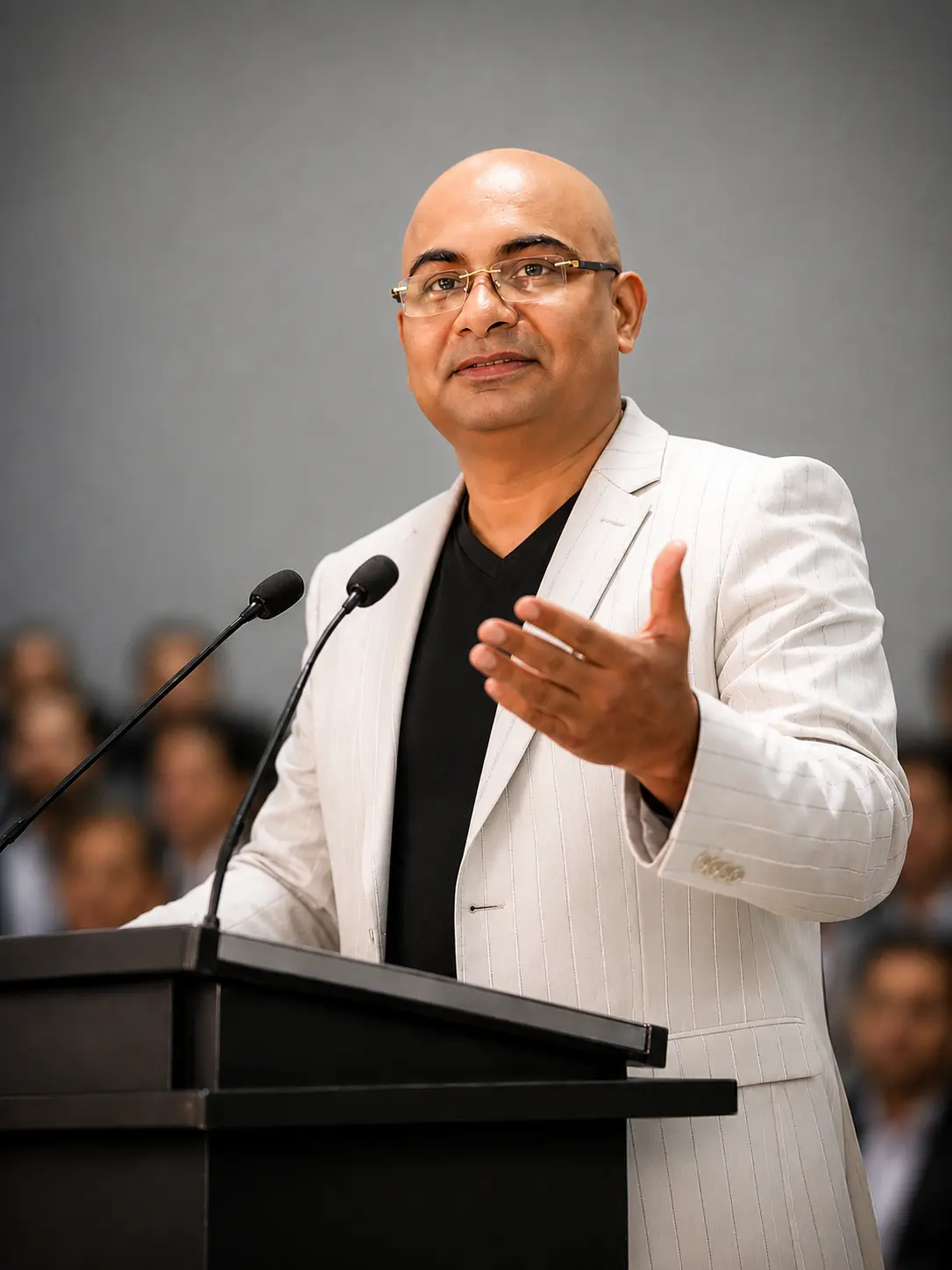
An OKR Coach with 20+ years of implementation experience, Madhusudan has guided over 50 organisations through successful OKR transformations, training more than 500 leaders. Learn more about Worxmate.
Frequently Asked Questions
Real transformation typically takes 90 days to identify benefits, 6-12 months to see significant results, and 18-24 months to achieve mastery. However, benefits appear much faster with professional guidance. Many organizations see team alignment improvements within the first 90 days, while leadership usually notices smoother execution within 6 months.
Many organizations use EOS as their operating system while adopting OKR-style thinking for quarterly Rocks. This combines EOS’s comprehensive organizational focus with OKRs’ ambitious, stretch-goal mentality. Some use OKR software to track Rocks, creating an integrated system for goal-setting and execution.
Employees engage more deeply when they understand the company’s vision, clearly see how their role contributes to company objectives, receive regular feedback on progress, and work within a culture of accountability and transparency. EOS’s systematic approach to communication, clarity, and problem-solving creates these conditions organically.
EOS is specifically designed for small to mid-sized organizations (typically 10-250 employees) where leadership can gather regularly and implement system-wide changes. While some large divisions have adapted EOS principles, the system works best for companies where direct communication and cultural cohesion are achievable.
EOS Rocks are 3-9 practical, quarterly priorities designed for operational execution and accountability within a small-to-mid-sized leadership team. In contrast, OKRs (Objectives and Key Results) offer a broader agile framework emphasizing ambitious, stretch-goal cascading across all enterprise levels, making platforms like Worxmate essential for alignment.
The six components—Vision, People, Data, Issues, Process, and Traction—interlock like the spokes of a wheel to eliminate organizational chaos and bridge the gap between abstract strategy and day-to-day execution. If any single component is neglected, the entire system loses momentum, leading to strategic misalignment and unexecuted plans.
Yes, while EOS relies heavily on scorecards and measurable metrics for accountability, many scaling companies use dedicated execution platforms like Worxmate to seamlessly track goals, metrics, and quarterly priorities. Centralizing this data ensures leadership teams can identify and solve issues faster without getting bogged down in spreadsheets.
EOS handles operational friction through the ‘Issues’ component, utilizing an ‘IDS’ framework—Identify, Discuss, and Solve—to root out systemic obstacles permanently. This structured problem-solving approach prevents leadership teams from treating mere symptoms and fosters a transparent culture of accountability.
The EOS People component ensures you have ‘the right people in the right seats’ by evaluating staff against core values and specific role accountabilities using tools like the Accountability Chart. Pairing this clarity with regular check-ins and performance scorecards guarantees every team member drives sustainable business growth.