 WORXMATE

High-Impact Strategy Development is a continuous execution framework that aligns corporate vision with daily operations. By utilizing a strategic execution platform, organizations bridge the execution gap through real-time OKR tracking, predictive AI risk detection, and agile governance rhythms that ensure strategic priorities remain the focus of every team.
Most executive teams spend 90% of their time crafting strategy and less than 10% ensuring it actually happens. This “execution gap” is where billions in market value evaporate annually. In an era of tool sprawl, where teams are drowning in disconnected spreadsheets and fragmented task managers, the ability to maintain a single line of sight from the boardroom to the front line is no longer a luxury—it is a survival requirement for 2026.
The Strategy-Execution Gap: Why Traditional Plans Fail
The traditional strategic planning model is broken. Organizations often treat strategy as a static event—an annual retreat followed by a 50-page PowerPoint deck that gathers digital dust. This approach fails to account for operational realities, market volatility, and the inherent friction of human execution. When strategy is disconnected from the daily workflow, “strategic drift” occurs, where teams remain busy but fail to move the needle on corporate objectives.
Research indicates that 67% of well-formulated strategies fail due to poor execution. This isn’t a failure of vision; it’s a failure of alignment. Without a unified system to track strategic priorities and milestones, leadership loses visibility into whether the organization is actually moving toward its North Star. High-impact strategy development requires moving from a “set and forget” mindset to a continuous execution cadence.

Anatomy of High-Impact Strategy: Diagnosis, Policy, and Action
To build a strategy that survives the first contact with reality, leaders must adopt a more rigorous organizational strategy framework. High-impact strategy is not a wish list of goals; it is a coherent set of choices. It consists of three critical components:
1. The Diagnosis: An honest assessment of the challenges facing the organization. This goes beyond SWOT analysis to identify the specific obstacles preventing growth or efficiency.
2. The Guiding Policy: An overall approach chosen to cope with or overcome the obstacles identified in the diagnosis. It provides the “guardrails” for decision-making across the enterprise.
3. Coherent Tactical Actions: A set of coordinated steps designed to carry out the guiding policy. This is where strategy meets the ground, translated into key results and measurable milestones.
The Point: Strategy without action is a hallucination. Action without strategy is a nightmare. High-impact development ensures that every weekly check-in and resource allocation decision is rooted in the overarching guiding policy.
Achieve Your Goals Faster
See how Worxmate can help your team set clear goals and achieve faster results. Book your free demo today and experience the power of AI-driven OKRs in action.
Ruthless Prioritization: The Art of Strategic Tradeoffs
One of the primary reasons strategies fail is the inability to say “no.” High-impact organizations understand that strategy is as much about what you don’t do as what you do. In 2026, the sheer volume of data and opportunities can lead to “initiative overload,” where the organization’s resources are spread too thin to achieve meaningful impact on any single front.
Ruthless prioritization involves identifying the 3-5 strategic priorities that will truly move the needle. These priorities must be communicated clearly down the chain of command, ensuring that every department understands where to focus their limited time and capital. This clarity reduces blockers and empowers middle management to make autonomous decisions that align with the executive vision.
The Worxmate Advantage: Our platform uses AI-driven confidence scores to highlight which initiatives are actually contributing to strategic goals, allowing leaders to reallocate resources from low-impact tasks to high-priority objectives in real-time.
Operationalizing Strategy via OKRs
Objectives and Key Results (OKRs) serve as the connective tissue between high-level strategy and daily execution. While the strategy defines the direction, OKRs define the measurable progress. By cascading executive objectives into quarterly key results, organizations create a transparent map of how individual efforts contribute to the whole.
This alignment ensures that every employee understands their role in the strategy execution process. It moves the conversation from “What did you do this week?” to “How did your work move our key results?” This shift is fundamental to building a high-performance culture where accountability is built into the architecture of the work itself.
The Point: OKRs are not just a goal-setting tool; they are a strategic alignment engine. When integrated into a unified platform, they provide the data necessary for predictive execution, identifying risks before they become failures.
Governance & Agile Rhythms: Beyond the Annual Review
The pace of business in 2026 demands a shift from annual post-mortems to agile quarterly check-ins and recalibration. High-impact strategy development relies on a governance structure that prioritizes continuous feedback and real-time data. This allows the organization to pivot quickly when market conditions change or when a specific tactic is not yielding the expected results.
Agile rhythms include:
- Weekly Check-ins: Brief updates on progress, confidence scores, and immediate blockers.
- Monthly Strategic Reviews: A deeper dive into whether the current tactics are still aligned with the guiding policy.
- Quarterly OKR Recalibration: Assessing the previous quarter’s performance and setting new key results based on current realities.
The Worxmate Advantage: By automating these rhythms, Worxmate ensures that 1:1 check-ins and 360-degree feedback are naturally woven into the strategic cycle, reducing administrative burden while increasing execution velocity.
Case Study: The Digital Pivot of a Global Retailer
Consider a global retail giant facing a 15% decline in brick-and-mortar sales. Their traditional strategy was to cut costs and increase local marketing. However, a high-impact diagnostic revealed that the real obstacle was a fragmented customer experience between online and offline channels.
The Guiding Policy: Transition from a “store-first” to an “omnichannel-first” organization within 18 months.
Coherent Actions: They implemented a strategic execution platform to align their IT, Marketing, and Operations departments. They set key results around mobile app adoption, in-store pickup speed, and inventory synchronization. By moving to a weekly check-in cadence, they identified blockers in their legacy API stack early, allowing them to pivot their engineering resources and complete the transition three months ahead of schedule.
Result: A 22% increase in total revenue and a 40% improvement in customer lifetime value, driven by strategic alignment across all functions.
Achieve Your Goals Faster
See how Worxmate can help your team set clear goals and achieve faster results. Book your free demo today and experience the power of AI-driven OKRs in action.
At a Glance: Static Planning vs. Agile High-Impact Execution
| Feature | Traditional Static Planning | Worxmate Agile Execution |
|---|---|---|
| Primary Philosophy | Documentation & Compliance | Continuous Alignment & Action |
| AI Capabilities | Manual Data Entry / None | Predictive Risk & Flight Detection |
| Performance Data | Annual Post-Mortems | Real-Time Continuous Feedback |
| Tool Integration | Fragmented (Zapier/Middleware) | Native Unified Architecture |
| Visibility | Siloed Departmental Reports | Single Line-of-Sight Dashboard |
| Governance | Static Annual Reviews | Agile Quarterly Recalibration |
| Best For | Low-Growth Stable Markets | High-Growth Agile Enterprises |
My Take: Why Unified Architecture Wins in 2026
In my experience consulting with high-growth firms, the “Silent Killers of Strategy”—operational silos, lack of buy-in, and static planning—are almost always caused by fragmented data. When HR, IT, and Sales operate in isolation, they often pursue conflicting goals. A unified architecture solves this by creating a single source of truth. By integrating OKRs with real-time performance data, you eliminate the “execution gap.” You move from a world of “what happened?” to a world of “what is going to happen?” This shift from reactive to predictive execution is the hallmark of high-impact strategy development. Tracking a real-time confidence score helps identify at-risk targets before quarter-end. Strong goal alignment eliminates siloed efforts and connects daily work to strategic outcomes.
Bottom Line: A strategy is only as good as its execution. With continuous performance management and the right software to support it, you can ensure that your organization moves as one, turning high-level concepts into measurable, high-impact reality.
Ready to turn high-level strategy into measurable execution? Stop letting your strategy gather dust. Empower your teams with the right tools to align, track, and achieve your most ambitious goals. Book an executive strategy walkthrough

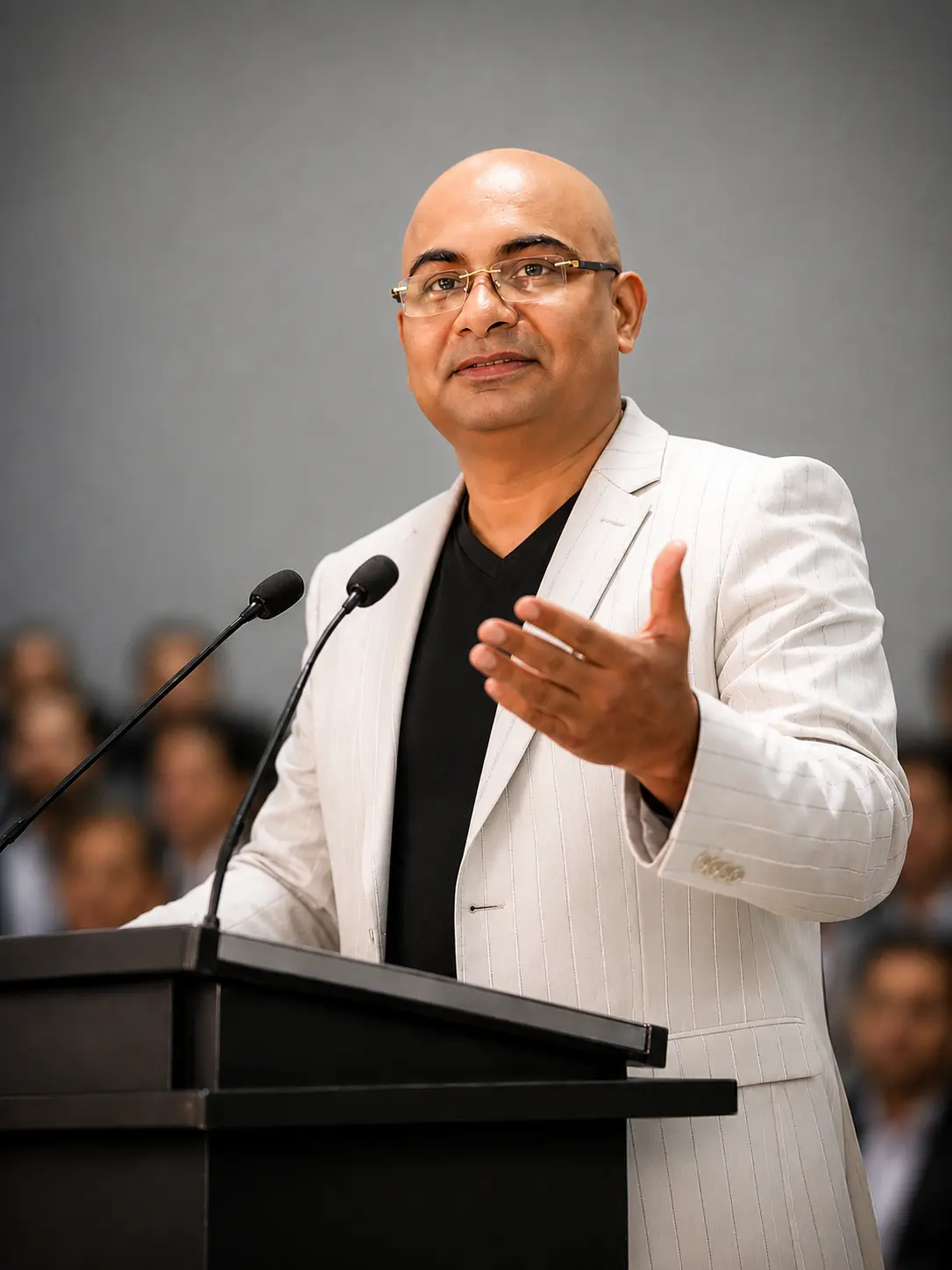
Written by
An OKR Coach with 20+ years of implementation experience, Madhusudan has guided over 50 organisations through successful OKR transformations, training more than 500 leaders. Learn more about Worxmate.