 WORXMATE

Summary
OKRs (Objectives and Key Results) represent a paradigm shift from traditional goal-setting methodologies by emphasizing ambitious, outcome-focused objectives with measurable key results. Unlike traditional approaches such as SMART goals that prioritize achievable, specific targets, OKRs encourage stretch goals that inspire innovation and align teams around strategic priorities. The key differences lie in their scope (strategic vs. tactical), frequency (quarterly vs. annual), transparency (public vs. private), and philosophy (aspirational vs. conservative). This modern framework transforms how organizations approach goal setting by promoting alignment, agility, and continuous improvement across all levels.
In today’s rapidly evolving business landscape, organizations are questioning whether traditional goal-setting methods can keep pace with the demands of modern strategy execution.
While conventional approaches like SMART goals have served businesses for decades, a growing number of companies are discovering that How Do OKRs Differ from Traditional Goal Setting Methods represents a fundamental shift in how we think about organizational objectives.
The statistics are compelling: companies using OKR report a 10-15% improvement in ROI when alignment and priorities are clearly defined, while 83% of organizations see positive impact from implementing the framework.
This isn’t just about changing processes—it’s about transforming organizational culture from activity-focused to outcome-driven performance.
What Are OKRs and How Do They Work?
OKRs (Objectives and Key Results) consist of two fundamental components that work together to drive strategic execution:
Objectives are qualitative, inspirational goals that define what you want to achieve. They should be ambitious, time-bound, and actionable, answering the question “Where do we want to go?”
Key Results are quantitative, measurable outcomes that track progress toward objectives. They answer “How will we know we’ve arrived?” and typically include 2-4 specific metrics per objective.
This framework originated at Intel in the 1970s under Andy Grove’s leadership and gained widespread recognition when John Doerr introduced it to Google in 1999. Today, companies like Google, LinkedIn, Netflix, and Intel continue to use OKRs to drive alignment and performance at scale.
Traditional Goal-Setting Methods Explained
Traditional goal-setting approaches have dominated organizational planning for decades, with several established methodologies:
SMART Goals remain the most widely adopted framework, requiring goals to be Specific, Measurable, Achievable, Relevant, and Time-bound. This approach emphasizes clarity and realistic target-setting.
Management by Objectives (MBO) focuses on collaborative goal-setting between managers and employees, with annual review cycles and individual accountability.
Key Performance Indicators (KPIs) serve as ongoing metrics to measure operational performance and business health, typically tracking current state rather than driving change.
These methods share common characteristics: they tend to be conservative, individually focused, and designed for stable environments where predictability is valued over agility.
Achieve Your Goals Faster
See how Worxmate can help your team set clear goals and achieve faster results. Book your free demo today and experience the power of AI-driven OKRs in action.
Key Differences Between OKRs and Traditional Goal-Setting
-
Philosophy and Ambition Level
The most fundamental difference lies in philosophy. How Do OKRs Differ from Traditional Goal-Setting Methods becomes clear when examining their core approach to target-setting:
-
- OKRs embrace stretch goals: Teams aim for 70% achievement as success, encouraging ambitious thinking beyond comfort zones
- Traditional methods prioritize achievability: SMART goals emphasize realistic, 100% achievable targets to ensure consistent delivery
-
Frequency and Agility
OKRs operate on a quarterly cadence with weekly check-ins, enabling rapid adaptation to changing circumstances. Traditional approaches typically follow annual cycles with periodic reviews, making mid-course corrections more difficult.
-
Transparency and Alignment
OKRs promote organization-wide transparency, with all objectives visible across teams and levels. This creates alignment and breaks down silos that traditional goal-setting often perpetuates. Traditional methods frequently remain private between managers and individual employees.
-
Structure and Scope
While traditional goals often focus on individual tasks and activities, OKRs emphasize outcomes and strategic impact.
The hierarchical structure of OKRs—from company to team to individual—ensures coordinated effort toward shared objectives.

Case Study: Google’s OKR Transformation
Google provides the most compelling real-world example of How Do OKRs Differ from Traditional Goal-Setting Methods in practice:
The Challenge: In 1999, Google was a 40-employee startup needing a scalable framework to manage rapid growth while maintaining focus and alignment.
Implementation: John Doerr introduced OKRs, establishing quarterly goal-setting cycles with transparent, ambitious objectives. Every employee’s OKRs became visible company-wide.
-
Results:
-
- Scaled from 40 to over 140,000 employees while maintaining strategic alignment
- Quarterly OKR scoring between 0.6-0.7 considered successful, encouraging stretch thinking
- Culture of innovation supported by ambitious goal-setting that accepts “productive failure”
-
Key Success Factors:
-
- Leadership commitment to transparency and stretch goals
- Regular OKR check ins and progress reviews
- Integration with company culture and values
- Focus on learning from partially achieved objectives
According to industry research, Google’s approach demonstrates how OKRs can maintain organizational agility while scaling rapidly—something traditional annual goal-setting struggles to achieve.
Additional enterprise success stories show similar patterns. LinkedIn uses OKRs to align teams around user engagement objectives, while Intel (the framework’s originator) leveraged OKRs to transition from memory company to microprocessor leader.
These cases illustrate that How Do OKRs Differ from Traditional Goal-Setting Methods extends beyond process changes to fundamental cultural transformation.
When to Use OKRs vs Traditional Goal-Setting
-
OKRs Work Best When:
-
- Rapid change and innovation are priorities for your organization
- Cross-functional alignment is critical for achieving strategic objectives
- Scaling operations while maintaining focus and clarity
- Cultural transformation toward outcome-driven performance is desired
- Quarterly adaptation to market conditions provides competitive advantage
-
Traditional Methods Excel When:
-
- Operational consistency and predictable delivery are paramount
- Individual accountability for specific tasks is the primary focus
- Stable environments with well-established processes
- Compliance and risk management require conservative target-setting
- Simple project management without complex interdependencies
Benefits and Challenges of Each Approach
-
OKR Advantages:
-
- Enhanced alignment: 72% of employees feel more aligned with company goals
- Increased engagement: Organizations report 30% year-over-year growth improvement
- Strategic agility: Quarterly cycles enable faster response to market changes
- Innovation culture: Stretch goals encourage breakthrough thinking
-
OKR Challenges:
-
- Implementation complexity: Requires cultural change and ongoing commitment
- Learning curve: Teams need training on writing effective objectives and key results
- Resistance to transparency: Some organizations struggle with open goal-sharing
-
Traditional Method Benefits:
-
- Clarity and specificity: SMART goals provide clear, actionable targets
- Proven track record: Decades of successful implementation across industries
- Individual focus: Strong accountability for personal performance
- Low complexity: Easy to understand and implement
-
Traditional Method Limitations:
-
- Limited agility: Annual cycles slow response to changing conditions
- Siloed thinking: Lack of cross-functional alignment
- Conservative outcomes: Focus on achievability limits breakthrough results
Achieve Your Goals Faster
See how Worxmate can help your team set clear goals and achieve faster results. Book your free demo today and experience the power of AI-driven OKRs in action.
How Worxmate Transforms Your OKR Journey
Worxmate revolutionizes your OKR journey by providing an AI-powered platform that simplifies goal setting, aligns teams, and drives results.
Its DEEP-AI Strategy Execution framework ensures objectives are ambitious yet actionable, while real-time dashboards offer total transparency and progress tracking.
Worxmate fosters collaboration across departments with seamless integrations into communication tools, breaking down silos often created by traditional methods.
Automated insights help fine-tune strategies on the fly, ensuring continuous improvement. By bridging the gap between strategy and execution, Worxmate OKR Software empowers organizations to achieve exceptional alignment, agility, and performance—making it the ultimate solution for any business ready to move beyond traditional goal setting.
Conclusion
The fundamental question of How Do OKRs Differ from Traditional Goal-Setting Methods reveals a critical choice facing modern organizations.
OKRs represent more than just a new framework—they embody a shift toward transparency, ambition, and agility that traditional methods struggle to provide.
While conventional approaches like SMART goals remain valuable for operational consistency, OKRs excel in dynamic environments requiring strategic alignment and breakthrough performance.
The evidence from companies like Google, LinkedIn, and Intel demonstrates that organizations embracing OKRs can achieve remarkable growth while maintaining focus and innovation.
Success depends on choosing the right approach for your context and implementing it with commitment to cultural transformation.
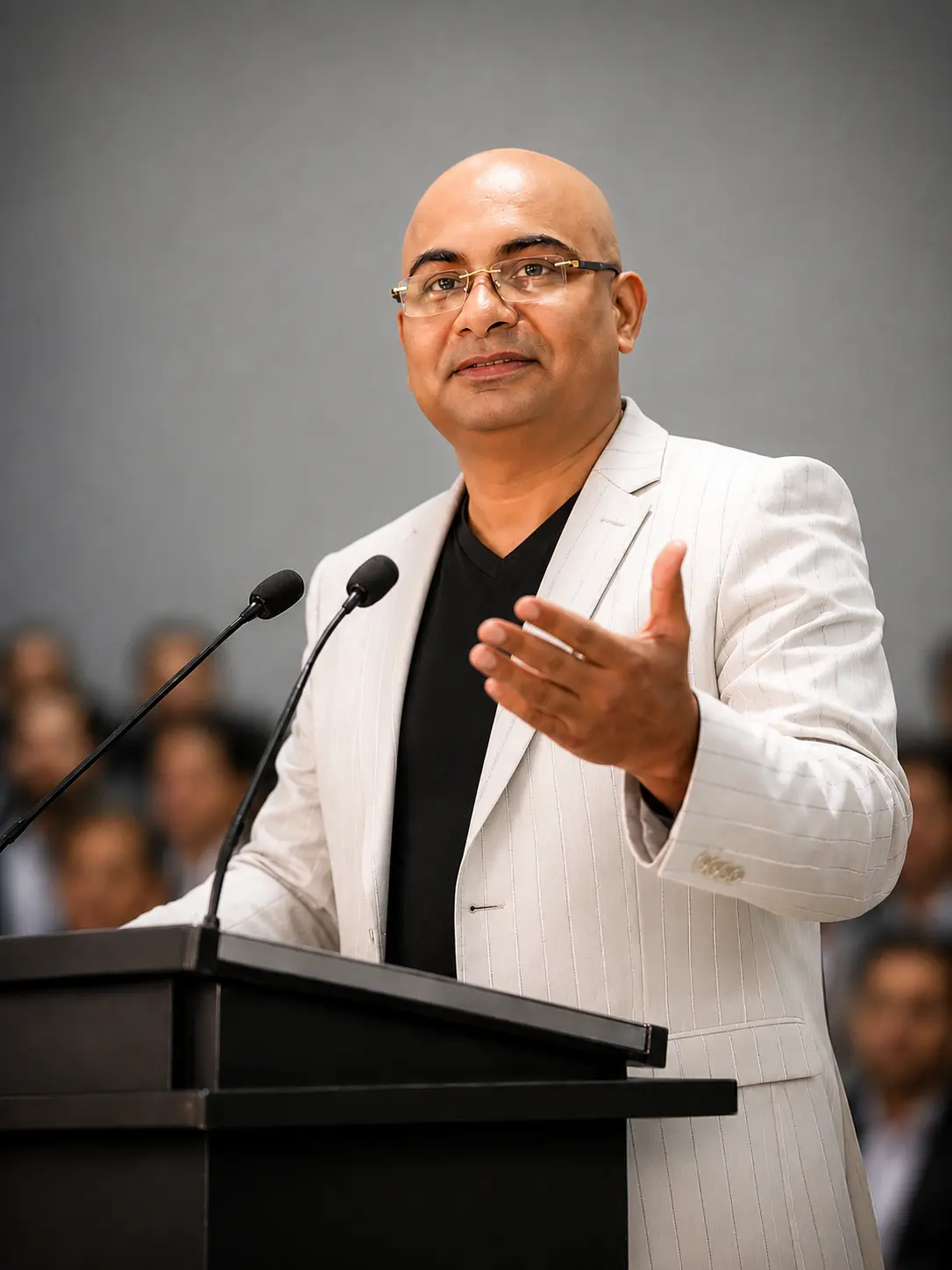
Written by
An OKR Coach with 20+ years of implementation experience, Madhusudan has guided over 50 organisations through successful OKR transformations, training more than 500 leaders. Learn more about Worxmate.