4 Pillars of IT Performance Management for Tech Growth
Actionable insights to align your OKRs with everyday performance management-from proven frameworks to the tools that power them.
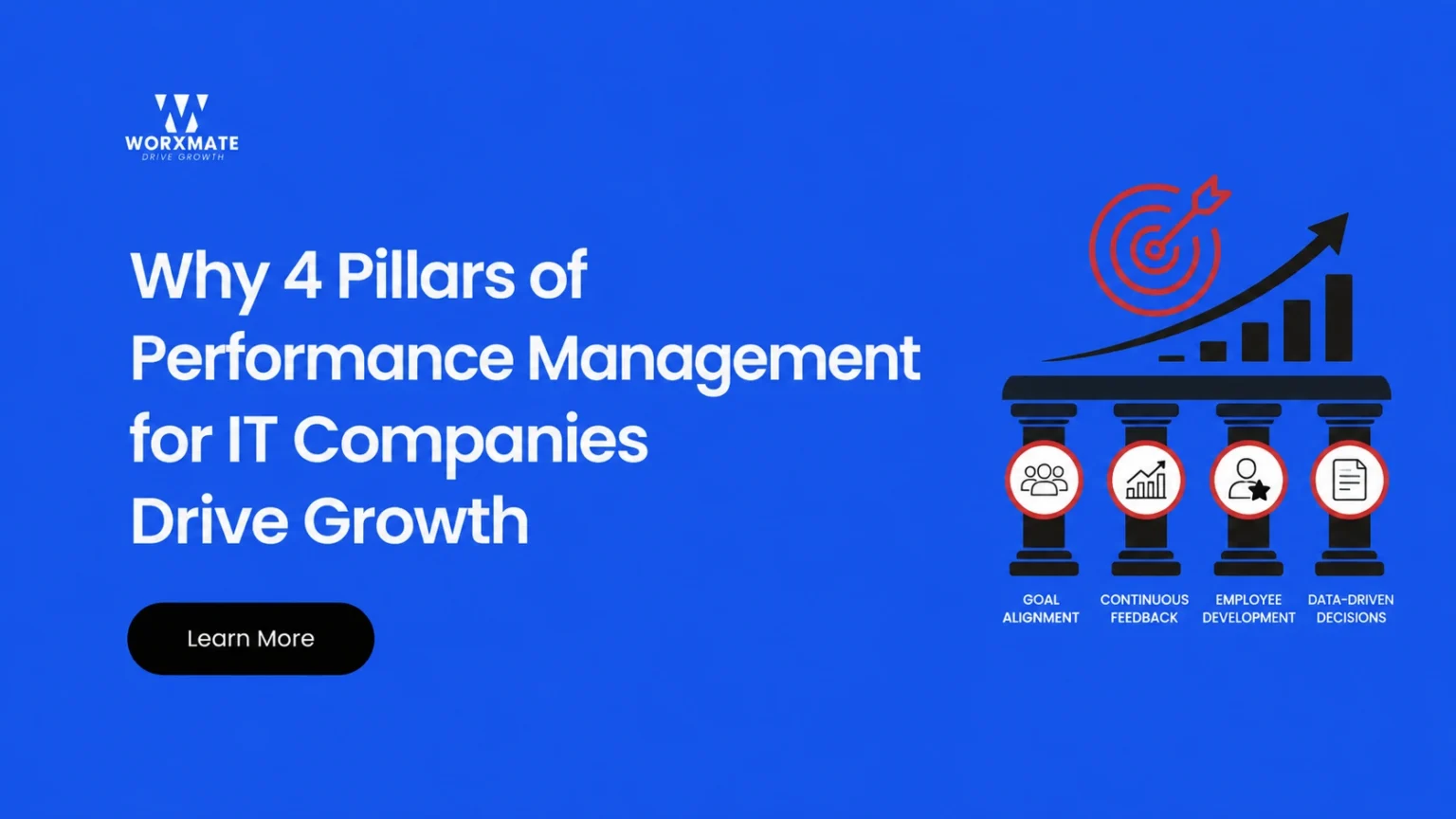
Performance management for IT companies: Effective tech leadership requires agile goal setting, continuous feedback, and modern employee performance software to navigate rapid technological shifts and drive sustainable growth without rigid enterprise HR bloat.
Effective performance management for IT companies is crucial for navigating rapid technological change and fostering innovation. This article outlines four essential pillars for modern performance management for IT companies, moving beyond outdated annual reviews.
Effective performance management for IT companies is not merely an HR function; it’s a strategic imperative for innovation, agility, and sustained growth. In a sector defined by rapid change and specialized skill sets, traditional, often rigid, performance review systems frequently fall short. This article explores why a tailored approach to performance management approaches is essential and outlines the pillars that drive success, from setting clear, dynamic goals to fostering continuous development and leveraging technology.
Introduction: The Unique Landscape of IT Performance Management
The information technology (IT) sector operates at an accelerated pace, characterized by continuous innovation, project-based work, and a constant demand for specialized skills. Unlike more traditional industries, IT companies must manage teams that are often distributed, highly autonomous, and driven by problem-solving and creativity. This unique environment necessitates a distinct approach to performance management for IT companies, one that can keep pace with agile development cycles and the evolving nature of tech roles. A robust framework for performance management for IT companies must adapt to these dynamics, ensuring that individual developer performance metrics contribute directly to strategic business outcomes while nurturing a culture of continuous learning and engagement.
Why Traditional Performance Management Fails in IT
Traditional performance management systems, typically built around annual reviews, cascaded objectives, and backward-looking appraisals, are ill-suited for the modern IT landscape. These systems often:
Lack Agility and Relevance
In an agile development environment, project goals and priorities can shift weekly or even daily. Annual reviews provide feedback long after it’s actionable, rendering it largely irrelevant. This disconnect makes traditional performance management for IT companies ineffective in addressing immediate needs or celebrating timely successes.
Overemphasize Individual Output Over Team Collaboration
Many IT projects, especially in software development, are highly collaborative. Traditional systems often struggle to accurately assess contributions within complex team structures, potentially penalizing individuals for collective challenges or failing to recognize cross-functional impact. Effective performance management for IT companies must account for team dynamics and shared success.
Fail to Support Continuous Skill Development
The half-life of a technical skill is shrinking rapidly. An annual check-in is insufficient for identifying and addressing urgent skill gaps or supporting the continuous learning necessary for IT professionals to remain competitive. This oversight directly impacts IT employee performance and organizational capability.
Demotivate and Disengage Tech Talent
Highly skilled tech professionals often thrive on autonomy, mastery, and purpose. Bureaucratic, compliance-driven reviews can feel detached from their daily work, leading to disengagement and increased turnover. According to a Gallup report, only 14% of employees strongly agree their performance reviews inspire them to improve, a statistic particularly concerning for the innovation-driven IT sector.
Unlock Goal Clarity & Accelerate Employee Growth
Looking to drive goal clarity and employee growth? Discover how Worxmate’s AI-powered Performance Management Software can help.
Key Challenges in IT Performance Management
Implementing effective performance management for IT companies comes with its own set of unique hurdles across engineering, product, and distributed operational groups:
Rapid Technological Change
The pace of technological evolution means that skill sets can become outdated quickly. Performance frameworks must be flexible enough to incorporate new competencies and provide pathways for continuous reskilling and upskilling. This constant evolution makes traditional performance appraisal software IT solutions, if not designed for adaptability, quickly obsolete.
Addressing Skill Gaps and Specialization
IT teams comprise highly specialized roles, from backend developers and data scientists to cybersecurity experts. Measuring performance across such diverse functions requires nuanced metrics and a deep understanding of each role’s contribution. Developing relevant developer performance metrics is critical for accurate evaluation.
Managing Remote and Hybrid Workforces
Many IT companies operate with distributed or hybrid teams. This setup introduces challenges in fostering team cohesion, ensuring visibility of work, and providing consistent feedback. Robust performance management for IT companies must integrate tools and practices that support remote collaboration and engagement.
Balancing Innovation with Delivery
IT professionals are expected to innovate while also delivering on tight project deadlines. Performance systems must balance the need for creative exploration with the imperative for timely, high-quality output, recognizing that innovation often involves experimentation and occasional failures.
Pillars of Effective Performance Management for IT Companies
To overcome these challenges, a modern approach to performance management for IT companies rests on four interconnected pillars designed to boost employee engagement:
1. Agile, Outcome-Oriented Goal Setting
Moving away from static goals, IT companies benefit from dynamic goal-setting frameworks like OKRs (Objectives and Key Results). These allow for quarterly or even monthly cycles, ensuring goals remain relevant to fast-changing project priorities and market demands. This approach fosters clear alignment and measurable outcomes for tech teams.
2. Continuous Feedback and Coaching
Regular, informal feedback replaces annual reviews. This involves frequent 1:1s, peer feedback, and real-time recognition. A culture of constructive feedback helps IT employees address issues promptly, learn continuously, and feel valued. This is vital for improving IT employee performance.
3. Growth-Focused Performance Reviews
Reviews should be forward-looking and developmental, focusing on growth opportunities rather than solely past performance. They should integrate self-reflection, peer input, and manager coaching to create personalized development plans, making performance management for IT companies a driver of career progression.
4. Strategic Skill Development and Career Pathing
Proactive identification of skill gaps and robust learning and development programs are crucial. Performance management should tie directly into career progression frameworks, offering clear pathways for IT professionals to grow within the organization.
Setting Clear Goals: OKRs and KPIs for Tech Roles
For IT companies, setting clear, measurable goals is foundational to effective performance management for IT companies. Objectives and Key Results (OKRs) have become a popular framework for tech teams due to their agile nature and focus on ambitious, measurable outcomes. OKRs help align individual, team, and company goals, ensuring everyone is pulling in the same direction. For instance, an Objective might be “Enhance product stability for key enterprise clients,” with Key Results like “Reduce critical bug reports by 30%” or “Achieve 99.9% uptime for core services.”
Alongside OKRs, Key Performance Indicators (KPIs) provide crucial developer performance metrics. While OKRs focus on aspirational outcomes, KPIs track ongoing health and efficiency. Examples of relevant KPIs for tech roles include:
Code Quality Metrics
e.g., code complexity, test coverage, and defect density.
Deployment Frequency and Lead Time
Reflecting agile delivery efficiency.
System Uptime and Response Times
Critical for SRE and operations teams.
Security Vulnerabilities Identified and Resolved
For cybersecurity teams.
Customer Satisfaction (CSAT) for Product Features
Linking development to user experience.
The combination of OKRs for strategic alignment and KPIs for operational excellence provides a comprehensive view of IT employee performance. This dual approach ensures that performance management for IT companies is both outcome-driven and grounded in tangible metrics.
Learn more about effective goal setting and how it integrates with a robust performance framework.
Continuous Feedback and Coaching in Agile Environments
The fast-paced, iterative nature of IT development demands continuous feedback. Annual reviews are simply too slow. Instead, agile performance management IT emphasizes frequent, informal check-ins and coaching conversations. This approach fosters a culture of ongoing learning and improvement, where issues can be addressed in real-time and successes celebrated immediately. Key components include:
Frequent 1:1 Meetings
Regular, structured conversations between managers and their direct reports are critical. These aren’t just status updates but opportunities for coaching, discussing challenges, setting micro-goals, and providing constructive feedback. This is a cornerstone of effective performance management for IT companies.
Peer Feedback Mechanisms
In highly collaborative tech teams, peers often have the best insight into an individual’s contributions and challenges. Implementing tools and processes for peer-to-peer feedback, such as 360-degree feedback, can provide a holistic view of IT employee performance. This enhances the overall quality of performance management for IT companies.
Real-time Recognition
Acknowledging achievements promptly, whether big or small, significantly boosts morale and reinforces desired behaviors. Simple tools or platforms can facilitate this, making recognition a continuous part of the workflow. This directly impacts employee engagement IT sector.
Constructive Feedback Training
Managers and employees need training on how to give and receive feedback effectively. This ensures that feedback is actionable, respectful, and focused on growth. This continuous feedback loop is essential for agile performance management IT.
This shift from episodic evaluation to ongoing dialogue transforms performance management into a dynamic process that supports the rapid iteration inherent in tech work. Explore the benefits of real-time feedback for your teams.
Unlock Goal Clarity & Accelerate Employee Growth
Looking to drive goal clarity and employee growth? Discover how Worxmate’s AI-powered Performance Management Software can help.
Performance Reviews that Drive Growth, Not Just Evaluation
While continuous feedback is vital, structured performance reviews still have a place in performance management for IT companies, but their purpose must evolve. Modern tech company performance reviews should focus on development and growth rather than merely assessing past performance or justifying compensation. Key characteristics include:
Forward-Looking Discussions
Reviews should emphasize future goals, skill development, and career aspirations. What new technologies can the employee learn? What stretch assignments will help them grow? This makes performance management for IT companies a tool for talent development.
Multi-Source Feedback Integration
Beyond manager input, reviews should incorporate self-assessments, peer feedback, and even project-specific feedback. This provides a more balanced and comprehensive view of IT employee performance.
Focus on Strengths and Development Areas
Instead of dwelling on weaknesses, reviews should identify strengths to leverage and specific areas for development, linking them to learning resources or mentorship opportunities. This ensures that performance management for IT companies is constructive.
Regularity, Not Just Annually
While not continuous, these more formal reviews can happen quarterly or bi-annually, aligning with sprint cycles or major project milestones, making them more relevant to the work. This agile performance management IT approach keeps reviews timely.
By shifting the focus, these reviews become powerful tools for employee growth and retention within the IT sector. Understand the full performance management cycle for success.
Developing Skills and Career Paths for IT Professionals
The rapid evolution of technology means that investing in employee skill development is not optional; it’s a critical component of performance management for IT companies. Tech professionals are highly motivated by opportunities to learn new technologies and advance their careers. An effective system:
Identifies Skill Gaps Systematically
Through performance reviews, 1:1s, and project needs, companies should proactively identify current and future skill requirements. This helps in planning targeted training and development programs.
Offers Clear Career Progression Frameworks
IT professionals often seek clear pathways for advancement, whether into technical leadership (e.g., Staff Engineer, Architect) or management roles. Documented career ladders provide transparency and motivation. This is a key aspect of IT employee performance management.
Provides Access to Learning Resources
This includes internal training, external courses, certifications, and mentorship programs. Encouraging time for learning within work hours demonstrates commitment to employee growth. This enhances employee engagement IT sector.
Promotes Internal Mobility and Stretch Assignments
Allowing employees to work on diverse projects or even move between teams can broaden their skill sets and keep them engaged. This flexible approach to growth is vital for performance management for IT companies.
By prioritizing skill development and clear career paths, IT companies can significantly improve retention and foster a highly capable workforce. Discover more about employee skill development.
Leveraging Technology: How Performance Management Software Transforms IT
Modern performance management for IT companies is virtually impossible without the right technological infrastructure. Performance management software IT solutions are no longer just for HR; they are strategic tools that integrate goal setting, feedback, reviews, and development plans into a cohesive, accessible platform. Key benefits include:
Centralized Goal Tracking
Platforms can host OKRs and KPIs, making it easy for individuals, teams, and leadership to track progress against objectives in real-time. This enhances transparency and accountability.
Streamlined Feedback Mechanisms
Software facilitates continuous feedback, peer reviews, and 1:1 meeting notes, ensuring that valuable insights are captured and accessible. This greatly improves the efficiency of performance management for IT companies.
Data-Driven Insights
Advanced platforms offer analytics on IT employee performance, engagement trends, and skill development, providing HR and leadership with actionable data to make informed decisions. This allows for more strategic performance management for IT companies.
Automation of Administrative Tasks
Automating reminders for check-ins, feedback requests, and review cycles frees up managers and HR to focus on strategic initiatives rather than paperwork. This improves the overall efficiency of tech company performance reviews.
Integration with Existing Tools
Many performance management solutions can integrate with project management tools (Jira, Asana), communication platforms (Slack, Teams), and HRIS, creating a seamless experience for IT professionals.
A well-chosen performance management system can transform how IT companies manage and develop their talent. Consider our performance management software comparison to streamline your processes and find the right fit for engineering-heavy teams.
Best Practices for Implementing Performance Management in IT Companies
Successfully implementing a new or improved performance management for IT companies system requires a strategic approach. Here are best practices:
Secure Leadership Buy-in
Top-down commitment, especially from CTOs, CIOs, and VPs of Engineering, is critical. Leaders must champion the new approach and actively participate to demonstrate its value. This sets the tone for effective agile performance management IT.
Pilot Programs and Iterative Rollout
Instead of a big-bang launch, pilot the new system with a smaller team. Gather feedback, refine processes, and then gradually roll out to other teams. This iterative approach mirrors agile development principles.
Clear Communication and Training
Educate all stakeholders – managers and employees – on the ‘why’ and ‘how’ of the new system. Provide training on goal setting, giving and receiving feedback, and using any new performance appraisal software IT. This ensures widespread understanding and adoption of performance management for IT companies.
Foster a Culture of Trust and Transparency
Performance management should be seen as a supportive process for growth, not a punitive one. Encourage open dialogue, psychological safety, and transparency in goal setting and feedback. This is crucial for employee engagement IT sector.
Regular Review and Adjustment
The performance management system itself should be continuously reviewed and adjusted based on feedback and organizational needs. What works today might need tweaking tomorrow in the dynamic IT environment. This continuous improvement is key to successful performance management for IT companies.
For guidance on setting up ambitious goals, explore OKR examples relevant to tech teams.
Measuring Success: Key Metrics for IT Performance Management
To truly understand the impact of your performance management for IT companies, you need to measure more than just individual outputs. Consider these key metrics:
| Metric Category | Specific Metrics | Why it Matters for IT Performance Management |
|---|---|---|
| Productivity & Quality | Deployment Frequency, Lead Time for Changes, Change Failure Rate, Mean Time to Recovery (MTTR), Bug Fix Rate, Code Review Coverage | These developer performance metrics directly reflect the efficiency and quality of software delivery, aligning with agile principles. |
| Employee Engagement & Retention | Employee Net Promoter Score (eNPS), Turnover Rate (especially within tech roles), Participation in Learning & Development, Feedback Engagement Rate | High engagement and retention indicate a healthy work environment and effective talent management, crucial for the competitive IT sector. According to Deloitte, companies with continuous performance management see a 30% higher employee engagement. |
| Goal Achievement & Alignment | OKR Achievement Rate, Goal Alignment Score, Project Success Rate | Measures how effectively teams and individuals are contributing to strategic objectives, highlighting the impact of performance management for IT companies on business outcomes. |
| Skill Development | Training Completion Rates, Skill Gap Reduction, Internal Promotion Rate, Number of Certifications Earned | Shows the organization’s investment in its people and the growth of its collective technical capabilities. |
By tracking these metrics, IT leaders can gain a holistic view of how their performance management for IT companies initiatives are contributing to both individual IT employee performance and broader organizational success. This data-driven approach is vital for continuous improvement.
Case Study: InnovateTech Solutions — Aligning Agility with Growth
The Challenge
InnovateTech Solutions, a mid-sized software development company with 250 employees, struggled with misaligned individual developer goals and overall company objectives. Their traditional annual review process was slow, disconnected from agile sprints, and failed to provide meaningful career development paths for their tech teams. This led to fluctuating IT employee performance, decreased employee engagement IT sector, and a higher-than-average turnover rate among their skilled developers and engineers, impacting project delivery timelines and product quality.
The Solution
Recognizing the need for a more dynamic approach, InnovateTech Solutions adopted a continuous performance management system centered around OKRs and regular 1:1 check-ins. They implemented quarterly OKR cycles for all engineering teams, linking individual developer performance metrics directly to overarching product and company objectives. Managers were trained in continuous feedback techniques and growth-oriented coaching. The new system also incorporated peer feedback and clear, documented career progression frameworks for various tech roles, making performance management for IT companies a tool for development.
Results and Impact
Within 18 months of implementing the new system, InnovateTech Solutions saw a significant transformation. Project delivery improved by 25% due to clearer goal alignment and more agile performance management IT. Employee retention in their engineering department increased by 15%, reducing recruitment costs and preserving institutional knowledge. A subsequent internal survey revealed a 20% rise in employee engagement IT sector, with developers reporting a clearer understanding of their career paths and a greater sense of contribution to the company’s success. (Source: Internal InnovateTech Solutions Report, 2023)
Conclusion: Building a High-Performing Culture in IT
The imperative for effective performance management for IT companies cannot be overstated. In an industry that thrives on innovation and speed, outdated performance practices are not just inefficient; they are detrimental to growth and talent retention. By embracing agile goal setting, continuous feedback, growth-focused reviews, and strategic skill development, IT companies can cultivate a high-performing culture where every tech professional feels aligned, engaged, and empowered to contribute their best. Leveraging modern performance appraisal software IT solutions further streamlines these processes, providing the insights and automation needed to thrive. This forward-thinking approach to performance management for IT companies ensures that your organization remains competitive, agile, and an employer of choice for top tech talent. Tracking a real-time confidence score helps identify at-risk targets before quarter-end. Surfacing operational blockers early ensures leadership can clear obstacles quickly. Seamless cascading ensures department milestones stay synchronized with company strategy.
Ready to transform your employee performance from a hope into a measurable, company-wide achievement? Stop letting valuable opportunities slip through the cracks.
👉 Explore Worxmate and align your team to build consistent, high-impact outcomes.


Written by
An OKR Coach with 20+ years of implementation experience, Madhusudan has guided over 50 organisations through successful OKR transformations, training more than 500 leaders. Learn more about Worxmate.
Frequently Asked Questions
Traditional annual reviews lack the agility needed for fast-paced development cycles, failing to provide actionable feedback while neglecting collaborative teamwork and rapid skill shifts.
OKRs (Objectives and Key Results) align engineering outputs with business strategy through transparent, quarterly cycles that adapt to shifting technical priorities.
Continuous feedback via regular 1:1s and peer reviews allows technical teams to address blockers immediately, iterate faster, and maintain high engagement.
By focusing on output metrics, code quality KPIs, and transparent goal tracking rather than physical seat time, distributed engineering teams remain aligned and accountable.
Key metrics include deployment frequency, lead time for changes, code review coverage, defect density, and system uptime alongside strategic OKR achievement rates.
Growth-focused reviews identify skill gaps and provide clear progression ladders into technical leadership, architecture, or engineering management.
Legacy enterprise platforms often feature inflated seat minimums, expensive mandatory platform fees, and rigid review structures that slow down agile tech teams.
Worxmate provides a nimble, cost-effective alternative combining agile OKRs, continuous reviews, and frontline or remote operations tracking for half the total investment of legacy platforms.
Combining goals and reviews in one platform bridges the gap between strategic direction and individual development, ensuring transparent accountability across sprints.
Leaders can run a pilot program with a single engineering pod, introducing quarterly OKRs and weekly 1:1 check-ins iteratively before scaling company-wide.