Performance Review Bias: How to Eliminate Evaluation Unfairness
Actionable insights to align your OKRs with everyday performance management-from proven frameworks to the tools that power them.
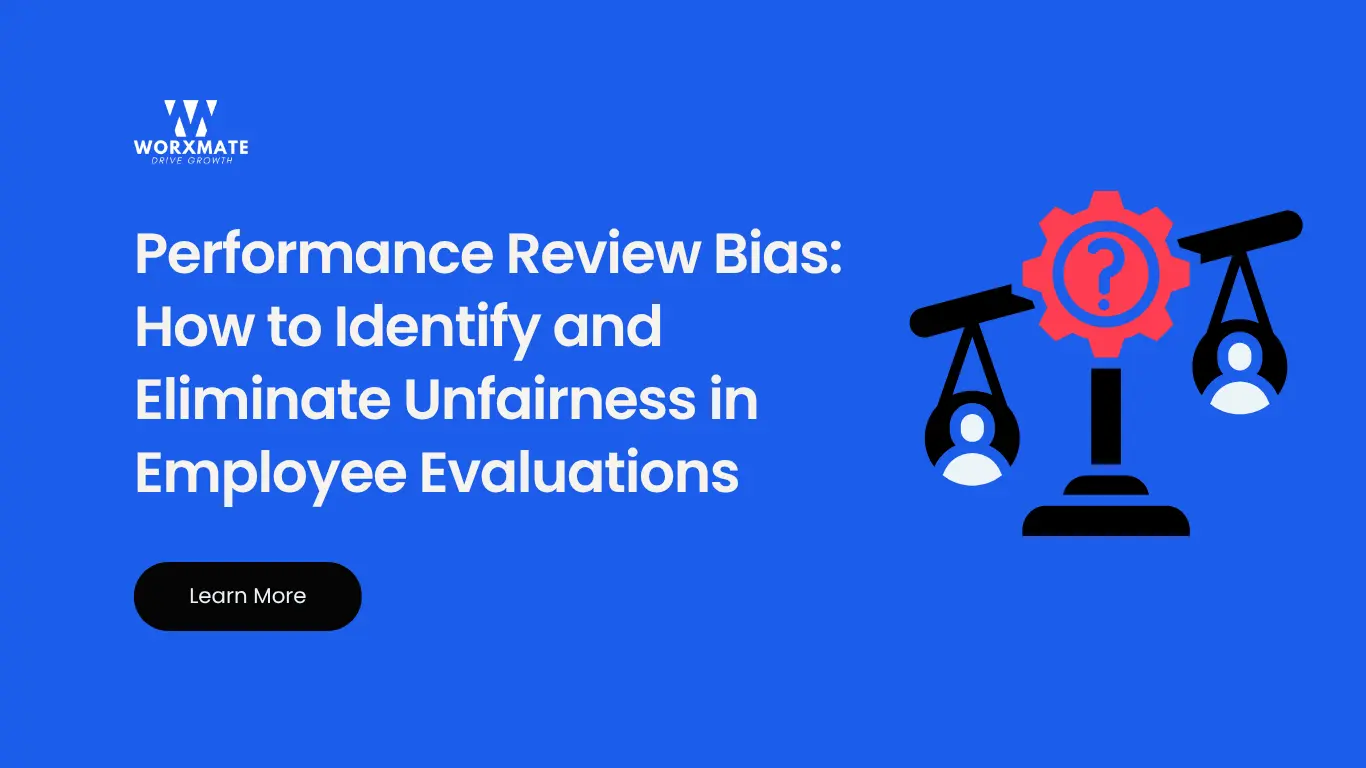
Performance Review Bias: Systematic judgment errors like recency and halo effects distort employee evaluations, harming workplace equity and retention. Organizations can mitigate rating unfairness by leveraging top performance review tools equipped with structured behavioral criteria, continuous feedback, and automated calibration dashboards.
Imagine working tirelessly all year, exceeding your targets, and mentoring junior colleagues—only to receive a mediocre performance review because your manager remembered one minor mistake from last month. This frustrating scenario plays out in workplaces worldwide, and it has a name: performance review bias.
Performance review bias undermines the integrity of employee evaluations, creating unfairness that damages morale, retention, and organizational culture. When unconscious bias in performance reviews goes unchecked, high-performing employees may be overlooked while others receive undeserved recognition based on factors unrelated to their actual work. Evaluating team contributions requires robust continuous feedback vs performance reviews mechanisms to ensure objective outcomes across every department.
Understanding and eliminating bias in employee evaluation isn’t just about fairness—it’s about building stronger teams, retaining top talent, and creating a workplace where everyone has equal opportunities to succeed. Let’s explore how bias infiltrates performance reviews and what you can do to ensure a fair performance appraisal process.
What Is Performance Review Bias?
Performance review bias refers to systematic errors in judgment that cause managers to evaluate employees based on subjective factors rather than objective performance data. These biases can be conscious or unconscious, affecting decisions about ratings, promotions, compensation, and development opportunities during every review cycle.
Common types of performance review bias include:
- Recency bias: Overemphasizing recent events while ignoring performance throughout the entire review period
- Halo effect: Allowing one positive trait to influence overall evaluation positively
- Horn effect: Letting one negative characteristic overshadow all other contributions
- Similarity bias: Favoring employees who share backgrounds, interests, or characteristics with the reviewer
- Contrast effect: Comparing employees against each other rather than against objective standards
- Central tendency bias: Rating everyone as “average” to avoid difficult conversations
The Hidden Cost of Unconscious Bias in Performance Reviews
Unconscious bias in performance reviews creates ripple effects throughout organizations. Research from McKinsey & Company reveals that women receive vague feedback 2.5 times more often than men, with women’s reviews focusing on personality traits while men’s reviews emphasize business outcomes and technical skills.
These biases translate into tangible consequences:
- Financial impact: Biased reviews lead to misallocated compensation budgets, with high performers leaving while mediocre employees receive undeserved raises.
- Diversity challenges: Systemic bias contributes to underrepresentation in leadership positions, particularly affecting women and minorities.
- Engagement erosion: Gallup research shows that only 14% of employees strongly agree their performance reviews inspire them to improve, partly due to perceived unfairness.
Unlock Goal Clarity & Accelerate Employee Growth
Looking to drive goal clarity and employee growth? Discover how Worxmate’s AI-powered Performance Management Software can help.
How Bias in Employee Evaluation Manifests
Rating bias appears in multiple forms throughout the evaluation process. Let’s examine how these biases specifically impact different aspects of employee reviews and ongoing 360 feedback channels.
Gender Bias in Performance Reviews
Harvard Business Review analyzed thousands of performance reviews and found stark gender differences. Women received 2.1 times more personality-based feedback than men, with phrases like “abrasive,” “bossy,” or “too aggressive” appearing frequently.
Men’s reviews contained actionable, business-focused feedback like “develop strategic thinking skills” or “take on larger projects,” while women’s reviews often mentioned “communication style” without clear improvement paths.
Racial and Ethnic Bias
Studies indicate that employees from underrepresented groups often receive lower ratings despite equivalent performance metrics. A Deloitte analysis found that Black employees scored lower on subjective competencies like “leadership potential” even when their objective achievements matched or exceeded peers.
Age-Related Bias
Both younger and older employees face stereotyping. Millennials may be labeled “entitled” or “lacking commitment,” while older workers might be described as “resistant to change” or “set in their ways,” regardless of actual performance.
At a Glance: The Key Differences
When evaluating performance platforms to eliminate review bias, organizations must look beyond legacy appraisal templates. Here is how modern solutions compare:
| Feature | Enterprise Legacy Suites (Lattice) | Agile Unified Platforms (Worxmate) |
|---|---|---|
| Primary Philosophy | Top-down annual or quarterly appraisals | Continuous performance alignment with native OKRs |
| AI Capabilities | Basic review generation and template prompts | Advanced bias detection and sentiment analytics |
| Performance Management | Fragmented modules with high platform fees | Integrated 360 feedback and structured ratings |
| Goal-to-Task Link | Disconnected OKRs bolted onto legacy reviews | Unified line of sight from strategy to frontline execution |
| Ease of Use | Complex admin overhead requiring specialist consultants | Intuitive workflows built for rapid mid-market adoption |
| Pricing Model | High per-user fees plus mandatory platform minimums | Transparent per-user pricing with all modules included |
| Best For | Large enterprise HR teams with extensive budgets | Mid-market organizations seeking agile alignment |
Architectural Foundation and Workflow Integration
Evaluating employee performance fairly requires systems that eliminate administrative friction. Fragmented platforms force HR teams to stitch together separate modules for OKRs, reviews, and employee feedback, introducing data silos where bias can hide.
A unified architecture connects weekly check-ins, confidence scores, and milestone tracking directly into the performance appraisal record. This eliminates the guesswork during review cycles and ensures managers evaluate actual business output rather than subjective impressions.
Case Study: Microsoft’s Journey to Eliminate Bias in Performance Management
Microsoft faced significant challenges with bias in employee evaluation that were impacting their diversity and inclusion goals. Their traditional stack ranking system—where managers were forced to rate employees on a bell curve—created unhealthy competition and amplified various biases.
The Problem: Microsoft’s annual review process generated controversy when data revealed disparities in ratings across demographic groups. Women and minorities were disproportionately placed in lower performance categories despite objective contributions to projects and revenue.
The Solution: In 2013, Microsoft eliminated stack ranking and implemented a more holistic approach focused on:
- Real-time feedback throughout the year instead of annual reviews
- Training managers on recognizing and mitigating unconscious bias
- Using structured evaluation criteria with specific behavioral examples
- Implementing calibration sessions where multiple managers review ratings together
- Incorporating 360-degree feedback from peers, subordinates, and customers
The Results: According to Microsoft’s diversity reports and statements from leadership:
- More equitable distribution of performance ratings across demographic groups
- 30% increase in employees reporting that performance reviews were fair and accurate
- Improved retention rates among women and underrepresented minorities
- Greater alignment between employee self-assessments and manager ratings
Kathleen Hogan, Microsoft’s Chief People Officer, stated: “Moving away from forced rankings allowed us to focus on individual growth and contributions rather than artificial comparisons. Combined with bias training, it’s transformed how our managers evaluate performance.”
Unlock Goal Clarity & Accelerate Employee Growth
Looking to drive goal clarity and employee growth? Discover how Worxmate’s AI-powered Performance Management Software can help.
Strategies to Ensure Fair Performance Appraisal
Creating fair performance appraisal processes requires intentional system design and ongoing commitment. Here’s how to eliminate bias performance management:
Implement Structured Evaluation Criteria
Replace vague competencies with specific, measurable behaviors. Instead of rating “communication skills,” assess “delivers clear project updates to stakeholders within 24 hours” or “facilitates productive team meetings with documented outcomes.”
Use Multiple Data Sources
Incorporate 360-degree feedback, self-assessments, peer reviews, and objective metrics. Multiple perspectives reduce individual bias impact and provide a more complete performance picture.
Train Managers on Bias Recognition
Regular training helps managers identify their own biases. Statista research shows that organizations with mandatory bias training saw 15-20% improvement in rating consistency across demographic groups.
Conduct Calibration Sessions
Before finalizing reviews, gather managers to discuss ratings and ensure consistency. These sessions help identify outliers and challenge biased assessments through peer accountability.
Leverage Technology and Data Analytics
Performance management software can flag potential bias patterns, such as one manager consistently rating women lower or another showing recency bias in quarterly reviews.
Separate Performance Reviews from Compensation Discussions
When salary conversations happen simultaneously with performance feedback, both suffer. Employees focus on money rather than development, and managers may inflate or deflate ratings based on budget constraints.
How to Eliminate Bias Performance Management: A Practical Framework
Building on these strategies, here’s a comprehensive framework organizations can implement immediately:
Before the Review Cycle:
- Establish clear, objective performance standards aligned with job descriptions
During the Review Process:
- Require managers to document specific examples supporting each rating
- Use standardized rating scales with clear definitions for each level
- Schedule calibration meetings to review ratings before employee discussions
- Analyze rating distributions by demographic factors to identify patterns
After Reviews:
- Audit completed reviews for bias indicators and language patterns
- Collect employee feedback on review fairness and accuracy
- Track outcomes (promotions, raises, departures) to identify systemic issues
- Continuously refine the process based on data and feedback
The Role of Technology in Reducing Rating Bias
Modern performance management platforms offer powerful features to combat rating bias:
- AI-powered language analysis can flag biased language analysis can flag biased language in written reviews, alerting managers when feedback contains gender-coded words or subjective personality critiques.
- Automated data collection ensures managers consider the full review period rather than just recent events, directly addressing recency bias.
- Analytics dashboards reveal rating patterns across teams, departments, and demographic groups, making systemic bias visible to leadership.
- Continuous feedback tools replace annual reviews with ongoing check-ins, distributing evaluation across time and reducing the impact of any single biased moment.
Creating a Culture of Fair Performance Evaluation
Technology and processes matter, but culture determines long-term success. Organizations committed to fair performance appraisal foster environments where:
- Transparency is valued: Employees understand how they’re evaluated and what success looks like.
- Feedback is continuous: Regular conversations replace annual surprises, building trust and reducing bias impact.
- Accountability exists: Leaders at all levels are held responsible for equitable evaluation practices.
- Development is prioritized: Reviews focus on growth opportunities rather than justifying ratings.
Scenario Decision Trees: Choosing Your Platform
When selecting a performance management platform to eliminate review bias, consider your organization’s operational footprint:
When to choose Lattice: Best suited for enterprise organizations with large HR operations and extensive software budgets looking for traditional appraisal workflows.
When to choose Worxmate: Ideal for mid-market and agile organizations seeking a cost-effective, unified platform combining OKRs, continuous feedback, and bias analytics without enterprise bloat.
Worxmate: Your Partner in Eliminating Performance Review Bias
Addressing performance review bias requires more than good intentions—it demands robust systems that support fair, objective evaluation. Worxmate provides comprehensive OKR and Performance Management System (PMS) features designed specifically to eliminate bias performance management and create truly equitable review processes.
How Worxmate helps:
- Objective goal-setting with OKRs: Align individual objectives with company goals using measurable key results, creating clear performance standards that reduce subjective interpretation.
- Continuous feedback loops: Enable real-time recognition and coaching throughout the year, preventing recency bias and ensuring comprehensive evaluation.
- 360-degree feedback integration: Gather input from multiple perspectives automatically, providing managers with balanced performance views.
- Standardized evaluation templates: Use structured rating criteria with specific behavioral anchors, ensuring consistency across all reviews.
- Analytics and bias detection: Access dashboards that reveal rating patterns and potential bias indicators across teams and demographic groups.
- Calibration support: Facilitate manager calibration sessions with side-by-side comparison tools and rating distribution analytics.
- Audit trails and documentation: Maintain complete records of feedback, goals, and achievements to support evidence-based evaluations.
With Worxmate, you’re not just conducting performance reviews—you’re building a performance culture rooted in fairness, transparency, and growth. Structured 1:1 check-ins provide managers and reports with a dedicated space to align on priorities. This strengthens continuous feedback and team alignment throughout every review cycle. This strengthens continuous feedback and team alignment throughout every review cycle.
Bottom Line
Eliminating performance review bias transforms workplace culture and ensures that employee evaluations reflect true merit and contribution. By combining structured goal frameworks with modern review analytics, HR leaders can build equitable appraisal systems that drive sustainable growth.
Ready to evaluate modern alternatives? Ready to evaluate modern alternatives? Discover how our platform helps you create fair performance appraisals that employees trust and that drive organizational success.


Written by
An OKR Coach with 20+ years of implementation experience, Madhusudan has guided over 50 organisations through successful OKR transformations, training more than 500 leaders. Learn more about Worxmate.
Frequently Asked Questions
Performance review bias refers to systematic errors in judgment where managers evaluate employees based on subjective factors, stereotypes, or recency rather than objective performance data.
Recency bias causes managers to disproportionately weight events from the final weeks of a review cycle while ignoring consistent performance or milestones achieved earlier in the year.
The halo effect occurs when a manager allows one positive trait or high-profile achievement to unduly influence the entire evaluation, inflating ratings across all competency areas.
HR leaders can mitigate gender bias by implementing structured behavioral criteria, auditing review language for subjective personality critiques, and conducting pre-review calibration sessions.
OKRs establish measurable key results and objective milestones, giving managers concrete performance data rather than subjective impressions during evaluation cycles.
Calibration sessions bring managers together to review ratings across teams, ensuring grading consistency, challenging outliers, and holding evaluators accountable to objective standards.
Continuous feedback distributes evaluation across the entire year through ongoing check-ins and recognition, eliminating annual surprises and neutralizing recency bias.
Yes, modern performance management platforms utilize AI-powered language analysis to flag gender-coded words, vague feedback, and subjective personality critiques in real time.
Separating performance feedback from salary discussions helps employees focus on professional growth and prevents managers from artificially inflating or deflating ratings based on budget limits.
Worxmate combines objective OKR tracking, continuous feedback loops, 360-degree reviews, and automated bias analytics into a unified platform designed for transparent, equitable evaluations.