 WORXMATE

Continuous learning requires more than just goal-setting; it demands a feedback loop integrated into your daily workflow. By utilizing modern performance management tools, organizations can align individual development with strategic outcomes, ensuring that every skill acquired directly contributes to business growth and long-term retention.
Continuous learning and development isn’t just a nice-to-have—it’s what employees expect. Millennials Want Jobs to Be Development Opportunities! This isn’t just a statement-it’s the title of a Gallup report revealing that 59% of millennials consider opportunities to learn and grow as extremely important. In comparison, 44% of Gen Xers and 41% of baby boomers share the same sentiment about workplace continuous learning and development opportunities.
LinkedIn’s 2024 Workplace Learning Report adds another layer to this by highlighting that learners who set career goals engage with learning four times more than those who don’t set goals.
Why are these reports significant?
They underscore two critical pain points: the lack of learning and development opportunities and the absence of goal-setting.
How can employees, managers, HR professionals, and leaders help their organizations overcome these challenges? The answer lies in one powerful tool-OKR Software!
In this blog, we’ll explore how OKRs contribute to continuous learning and development in the workplace and how you can leverage OKRs for learning and development to build a growth-oriented culture.
Leveraging OKRs for Continuous Development
| Feature | Static Spreadsheets | Worxmate AI Platform |
|---|---|---|
| Goal Alignment | Manual/Disconnected | Automated/Real-time |
| Performance Tracking | Lagging Indicators | Predictive Analytics |
| Learning Integration | None | Embedded in Check-ins |
| Security | Low/Risk-prone | SOC2 Enterprise Grade |
| Feedback Loops | Ad-hoc | Continuous/Automated |
OKRs have become an essential tool for driving organizational and team success. Organizations effectively using OKRs are more likely to achieve their business goals.
Employees across various industries often report feeling more empowered and motivated when working towards OKRs, leading to notable improvements in cross-functional communication and employee engagement. These outcomes highlight the impact of OKRs in empowering teams and driving continuous development.
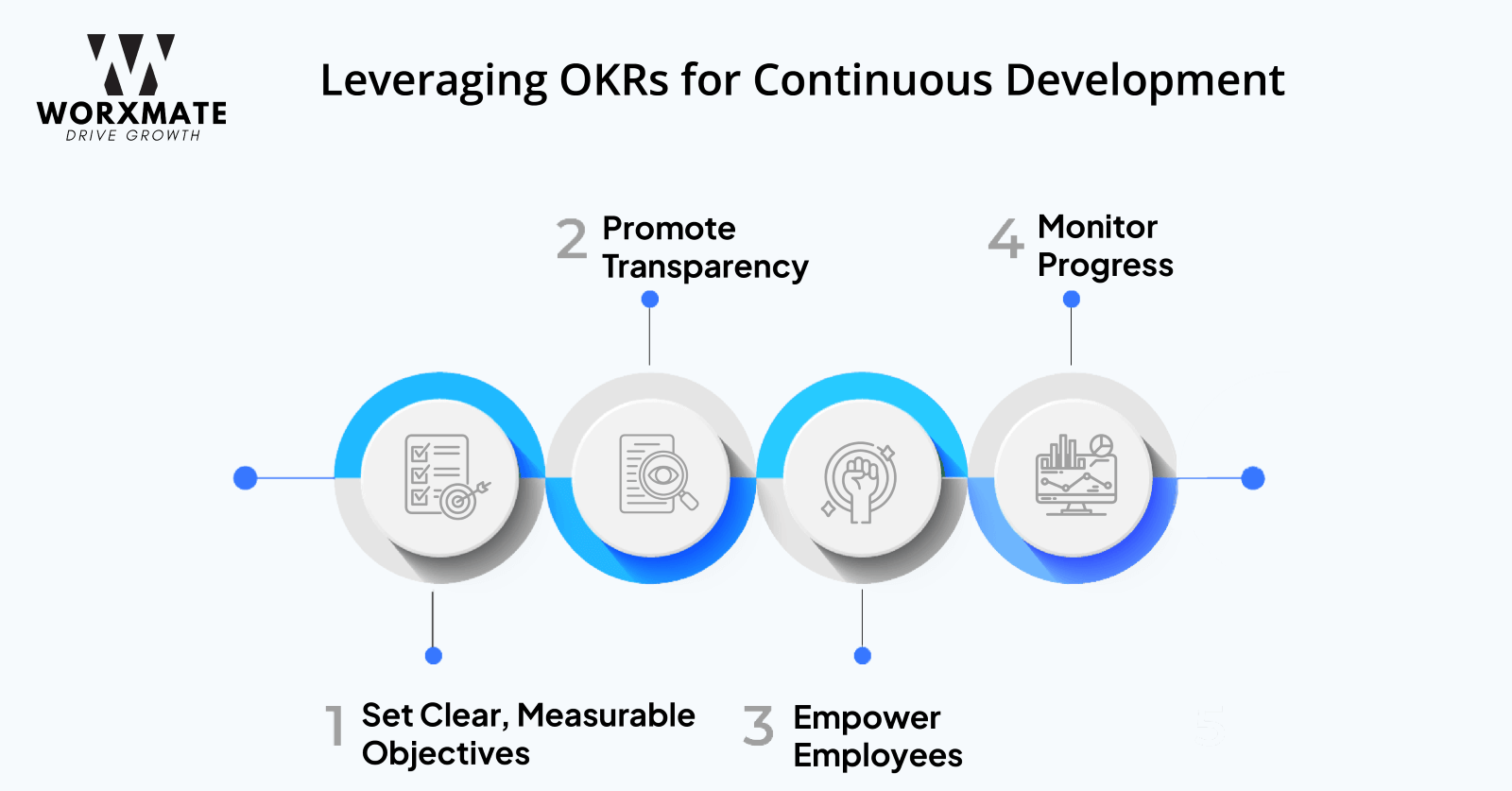
Strategy:
- Set Clear, Measurable Objectives: Ensure OKRs are specific and measurable to guide teams effectively.
- Promote Transparency: Use OKRs to align team efforts and improve communication across functions.
- Empower Employees: Leverage OKRs to give teams a sense of purpose and direction, boosting motivation.
- Monitor Progress: Regularly track key results to ensure continuous development and adjust strategies as needed.
The Power of OKRs in Learning Cultures
The Pattern: In a recent enterprise engagement with a European Fintech scaleup (~100 people) experiencing product demo conversion drops, we found that goals were tracking vanity KPIs without fixing root operational friction. Sales and Product teams were operating in complete functional silos.
The Intervention: We pushed the team through rigorous ‘so what’ inquiry sequences and mandated cross-functional co-ownership of a single Key Result between the Product Lead and the Account Executive.
The
Result: This eliminated blame culture, aligned commercial and product teams on demo-to-conversion rates, and accelerated annual growth delivery. This is why modern performance management tools are essential for breaking down departmental silos.
OKRs are recognized as a powerful tool for fostering innovation and adaptability in organizations. Implementing OKRs can lead to significant improvements in product development efficiency and employee engagement.
Employees often feel more empowered to take risks, which can enhance client satisfaction. These outcomes demonstrate the transformative power of OKRs in creating a culture of continuous learning and growth.
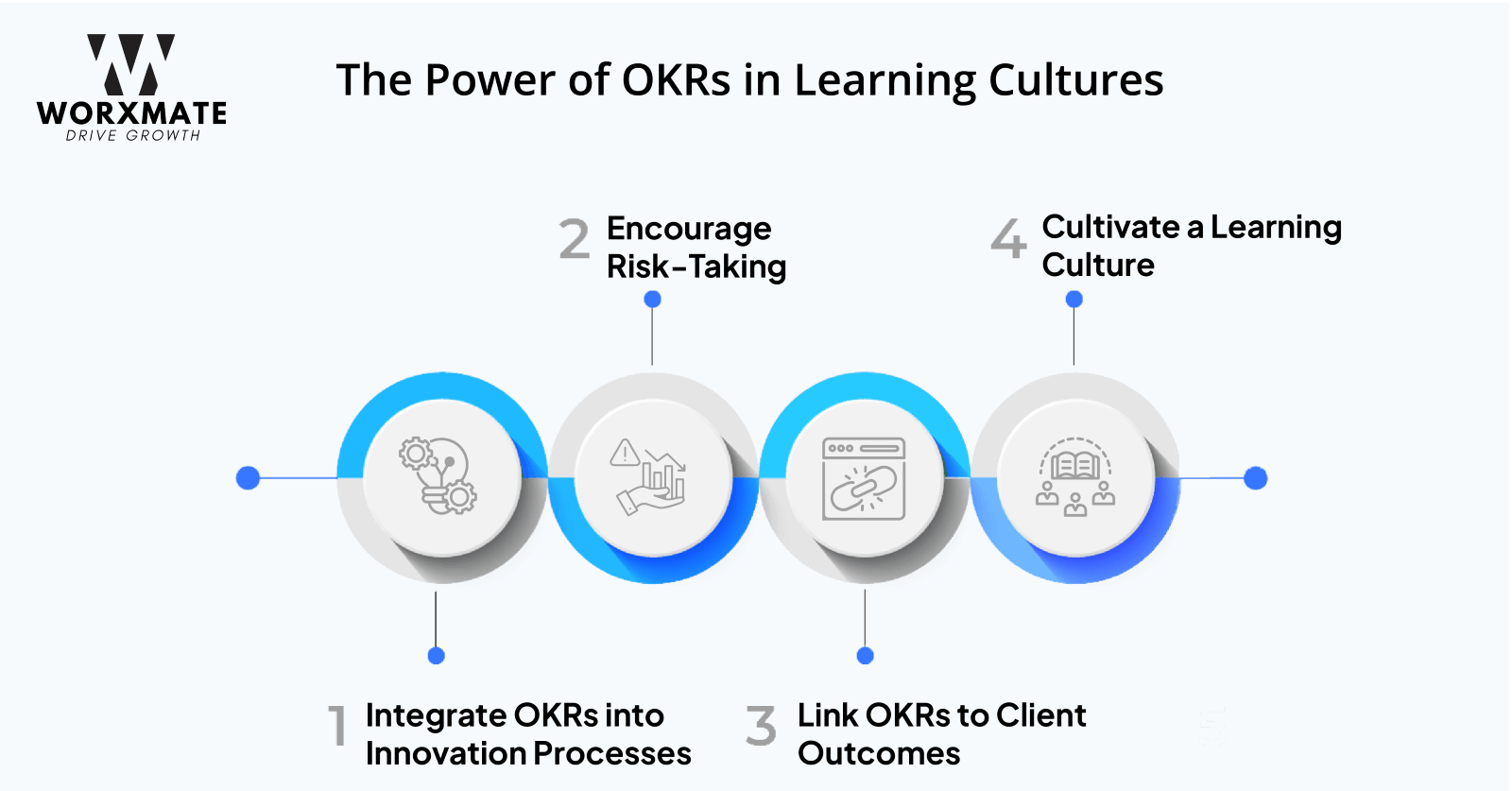
Strategy:
- Integrate OKRs into Innovation Processes: Use OKRs to drive product development and foster a culture of innovation.
- Encourage Risk-Taking: Align OKRs with goals that promote calculated risks and adaptability.
- Link OKRs to Client Outcomes: Focus on OKRs that directly impact client satisfaction and business results.
- Cultivate a Learning Culture: Ensure OKRs support continuous learning and adaptability within teams.
OKRs Fueling Professional Development
OKRs are a powerful tool for driving professional development. Implementing OKRs often leads to increased employee engagement and productivity, along with reduced turnover.
Additionally, integrating OKRs into goal-setting processes can contribute to significant revenue growth. These examples highlight the impact of OKRs on both personal and organizational success.
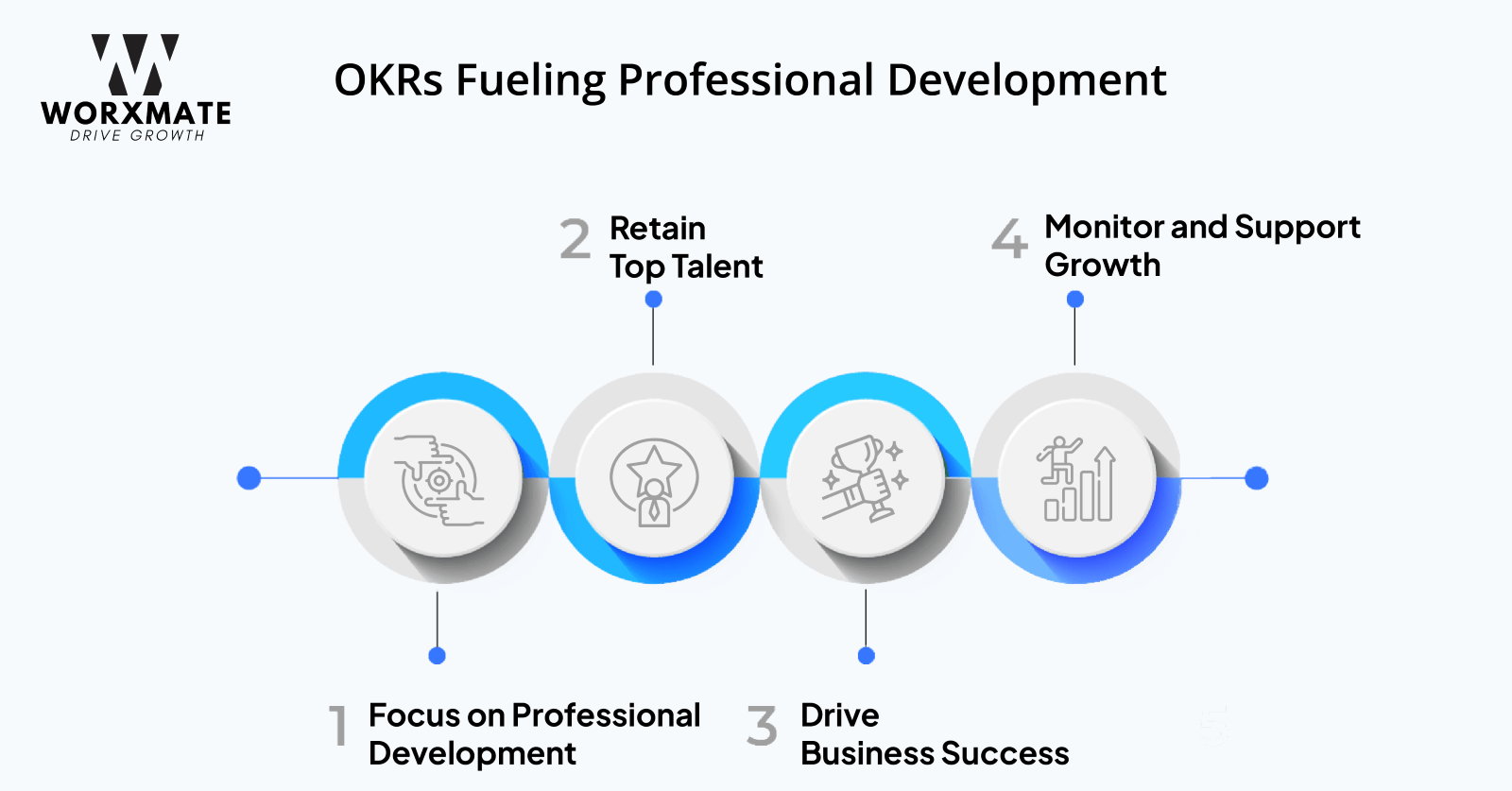
Strategy:
- Focus on Professional Development: Use OKRs to set clear development goals that enhance employee skills and engagement.
- Retain Top Talent: Implement OKRs to reduce turnover by aligning employee growth with organizational objectives.
- Drive Business Success: Leverage OKRs to link professional development with revenue and performance goals.
- Monitor and Support Growth: Regularly review OKRs to ensure they are driving continuous professional development.
A Blueprint for Lifelong Learning: Harnessing OKRs in the Workplace
Leveraging OKRs in the workplace serves as a powerful blueprint for fostering a culture of lifelong learning. Companies that prioritize learning through OKRs are more likely to innovate and stay competitive.
Employees often feel more motivated when their learning objectives are aligned with company OKRs. Effective OKR implementation can also lead to increased productivity and reduced turnover. These outcomes highlight the critical role of OKRs in promoting lifelong learning and sustainable growth.
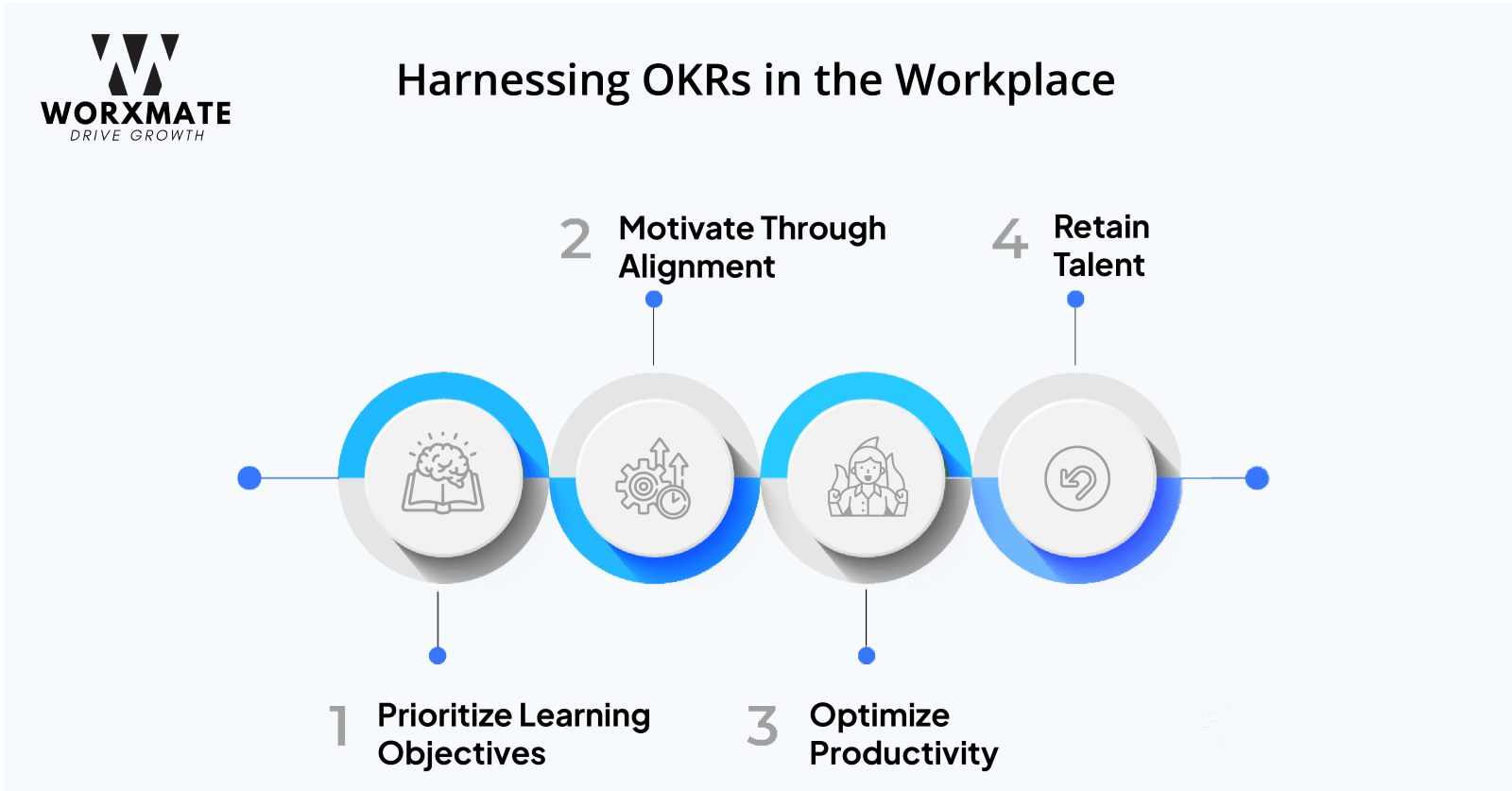
Strategy:
- Prioritize Learning Objectives: Align OKRs with continuous learning goals to drive innovation and growth.
- Motivate Through Alignment: Ensure employee learning objectives are tied to broader company OKRs.
- Optimize Productivity: Use OKRs to enhance productivity by focusing on skill development and learning.
- Retain Talent: Leverage OKRs to reduce turnover by fostering a culture of continuous learning.
Looking to supercharge your Learning and Development initiative? This directly accelerates measurable key results across the entire organization. Regular check-ins maintain momentum and keep strategic priorities front of mind. Tracking a real-time confidence score helps identify at-risk targets before quarter-end. Surfacing operational blockers early ensures leadership can clear obstacles quickly. Seamless cascading ensures department milestones stay synchronized with company strategy. Strong goal alignment eliminates siloed efforts and connects daily work to strategic outcomes.
Let’s chat about how aligning OKRs can make a real difference for your team.
See how Worxmate’s OKR solutions can help you fuel professional development.


Written by
An OKR Coach with 20+ years of implementation experience, Madhusudan has guided over 50 organisations through successful OKR transformations, training more than 500 leaders. Learn more about Worxmate.