
7 Steps to Outcome-Driven Performance Management (2026 Guide)
Actionable insights to align your OKRs with everyday performance management-from proven frameworks to the tools that power them.
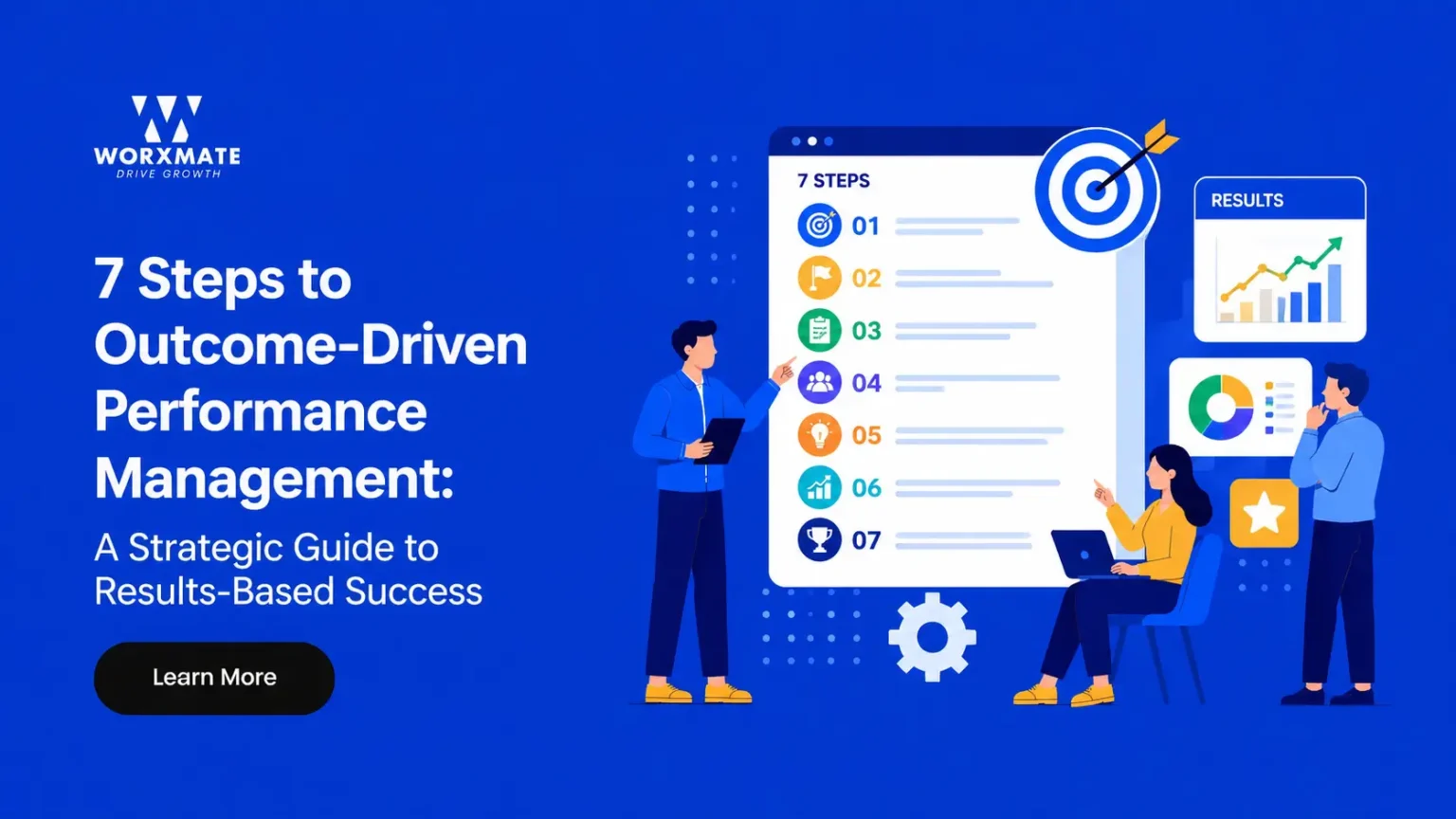
Outcome-driven performance management is a strategic methodology that shifts organizational focus from tracking activity inputs to measuring actual business results and strategic impact. By utilizing employee performance software to align daily work with enterprise goals, growing organizations eliminate busywork and accelerate sustainable growth.
Are your employees merely busy, or are they truly productive? In modern business, mistaking motion for progress is one of the most common silent killers of operational efficiency. Traditional systems often celebrate hours logged and tasks checked off, completely ignoring whether those activities actually move the needle for your bottom line.
Transitioning to an outcome-driven framework flips this outdated model on its head. Instead of policing effort, leaders measure tangible achievements. By deploying robust performance management approaches that combine OKRs and continuous feedback, mid-market organizations can eliminate administrative bloat and drive execution at half the cost of legacy enterprise platforms.
What Is Outcome-Driven Performance Management?
Outcome-driven performance management represents a fundamental paradigm shift in how modern enterprises evaluate, support, and develop their talent. Rather than focusing on processes, paperwork, or time spent sitting at a desk, this methodology prioritizes the actual value delivered by employees.
At its core, business outcome performance connects individual contributions directly to measurable organizational objectives. When a sales representative is evaluated on revenue expansion rather than call volume, or when a customer success team is measured on retention rates rather than tickets closed, you are witnessing this methodology in action.
This approach creates absolute transparency and accountability. Employees understand precisely what success looks like, allowing them to invest their time and energy where it matters most.
Why Traditional Performance Reviews Fail
The annual appraisal cycle has long been corporate America’s least favorite ritual. Traditional systems consistently fall short due to structural design flaws that inhibit agility and demoralize high performers:
- Backward-looking focus: Evaluating past behavior during an annual review does nothing to influence future performance or real-time project execution.
- Subjectivity bias: Manager opinions, recency bias, and office politics frequently overshadow objective achievement and quantitative key results.
- Activity worship: Rewarding mere compliance and effort rather than strategic impact creates perverse incentives across teams.
- Disconnected metrics: Individual goals rarely synchronize with shifting corporate strategic priorities.
According to workplace research, the vast majority of executives believe traditional appraisal frameworks fail to drive true engagement or organizational growth. Organizations must adopt continuous performance management models to maintain a competitive edge.
Unlock Goal Clarity & Accelerate Employee Growth
Looking to drive goal clarity and employee growth? Discover how Worxmate’s AI-powered Performance Management Software can help.
Core Principles of Results-Based Success
Implementing a high-performing outcome-driven framework requires strict adherence to several foundational principles:
Strategic Alignment
Every individual objective must connect directly to broader organizational goals. When employees clearly see how their daily tasks contribute to company success, intrinsic motivation and engagement surge.
Measurable Key Results
Vague aspirations like “improve customer satisfaction” must be translated into concrete metrics such as “achieve a 90% CSAT rating within Q2.” Specificity drives executive accountability.
Continuous Feedback Loops
Rather than relying on retroactive annual reviews, outcome-driven systems embrace ongoing 1:1 check-ins. Regular conversations allow for immediate course correction and real-time recognition.
Flexibility and Adaptation
Business environments shift rapidly. Effective frameworks allow for agile goal adjustment when market conditions change or new strategic priorities emerge mid-cycle.
Data-Driven Decision Making
Objective performance metrics replace subjective opinions during review cycles. When discussions center on concrete data, bias decreases and fairness increases across departments.
The 7-Step Implementation Framework
Transitioning your organization to a results-based performance management system requires a thoughtful, phased rollout. Follow these seven strategic steps to ensure seamless adoption:
Step 1: Define Clear Business Outcomes
Start at the executive level. What are your company’s primary strategic priorities for the next 12 to 18 months? Whether your focus is revenue expansion, customer retention, or operational efficiency, crystal-clear targets set the stage for all downstream execution.
Step 2: Cascade Goals Throughout the Enterprise
Break enterprise-level objectives down into departmental milestones and individual key results. This cascade ensures every single team member recognizes their specific part in achieving broader company milestones.
Step 3: Establish Quantifiable Metrics
For every major outcome, identify two to four measurable indicators of success. These quantifiable benchmarks provide objective evaluation criteria during ongoing performance reviews and check-ins.
Step 4: Implement Regular Check-In Cadences
Replace burdensome annual assessments with lightweight monthly or quarterly check-ins. These focused conversations center on current progress, active blockers, and the support needed to hit targets.
Step 5: Train Leaders on Outcome Coaching
Managers must transition from activity policing to outcome-based coaching. Invest in leadership development so supervisors know how to guide conversations toward strategic milestones rather than minor administrative tasks.
Step 6: Leverage Agile Technology Platforms
Manual tracking of complex OKRs and performance metrics quickly becomes overwhelming. Modern platforms automate progress tracking, making performance reviews seamless for both HR leaders and frontline managers.
Step 7: Review, Refine, and Scale
Continuously evaluate your performance management framework at the conclusion of each review cycle. Gather employee feedback, analyze completion data, and refine your approach to support long-term business growth.
Overcoming Common Implementation Obstacles
Organizations frequently encounter predictable hurdles when shifting from activity-based tracking to outcome-driven management:
- Resistance to Change: Employees accustomed to traditional annual appraisals may push back. Address this by communicating the strategic ‘why’ behind the transition.
- Defining Metrics for Support Roles: Not every operational position has immediate numerical output. For support functions, focus on enabling outcomes—evaluating how effectively their work supports revenue-generating teams.
- Initial Performance Dips: Teams adapting to new goal-setting frameworks may experience a temporary adjustment period. Build in learning curves and celebrate small wins.
- Technology Fragmentation: Ensure your performance management tools integrate smoothly with existing HR tech stacks to prevent administrative fatigue.
How Worxmate Powers Outcome-Driven Success
Implementing a results-based performance system does not require bloated enterprise software or exorbitant seat fees. Worxmate’s unified platform combines OKRs and continuous performance management to make outcome-driven execution accessible for mid-market organizations.
The Point: Enterprise HR platforms often saddle growing companies with heavy platform fees, rigid annual contracts, and clunky OKRs bolted onto legacy review cycles.
The Worxmate Advantage: Worxmate delivers a streamlined, agile platform combining strategic goal alignment, real-time progress dashboards, and lightweight check-ins at half the investment of legacy vendors—empowering remote, hybrid, and frontline teams alike. Tracking a real-time confidence score helps identify at-risk targets before quarter-end. Seamless cascading ensures department milestones stay synchronized with company strategy.
Ready to transform how your organization drives execution? Schedule a platform walkthrough today and experience the power of outcome-driven performance management firsthand.
Bottom Line
Moving from activity tracking to outcome-driven performance management is no longer optional for competitive organizations. By establishing clear strategic alignment, embracing continuous feedback, and leveraging agile technology, leaders can eliminate busywork and foster a culture of true accountability.


Written by
An OKR Coach with 20+ years of implementation experience, Madhusudan has guided over 50 organisations through successful OKR transformations, training more than 500 leaders. Learn more about Worxmate.
Frequently Asked Questions
Outcome-driven performance management is a strategic methodology that shifts focus from tracking activities and inputs to measuring actual business results and impact. It aligns employee objectives with organizational goals.
Traditional annual reviews fail because they rely on backward-looking evaluations, suffer from subjectivity bias, reward effort over impact, and feature goals that rarely align with strategic priorities.
The core principles include strategic alignment, measurable key results, continuous feedback loops, flexibility to adapt to market shifts, and data-driven decision-making.
Transitioning involves a 7-step process: defining clear business outcomes, cascading goals throughout the enterprise, establishing quantifiable metrics, implementing regular check-in cadences, training leaders on coaching, leveraging technology, and refining the process.
OKRs (Objectives and Key Results) provide a structured framework for setting ambitious qualitative goals paired with measurable quantitative targets, ensuring daily work ties directly to strategic outcomes.
In an outcome-driven system, performance check-ins should occur monthly or quarterly, replacing the outdated annual review cycle with ongoing feedback and real-time course correction.
Outputs represent the volume of work completed (such as calls made or tickets closed), while outcomes measure the actual business impact and value delivered (such as revenue generated or customer satisfaction achieved).
Strategic alignment connects individual daily tasks to broader company goals, giving employees a clear understanding of their impact and increasing intrinsic motivation and engagement.
Worxmate combines OKRs, continuous check-ins, and performance reviews into a single agile platform, helping mid-market organizations track business outcomes without enterprise HR bloat.
Yes. By focusing entirely on measurable results rather than physical presence or time spent at a desk, outcome-driven management is ideal for distributed, remote, and operational frontline workforces.