 WORXMATE

Sales performance is often stifled by misaligned goals and lack of visibility. By deploying modern performance management tools, leaders can bridge the gap between strategy and execution, ensuring sales teams remain focused on high-impact outcomes rather than vanity metrics.
Sales challenges are inevitable obstacles that every sales professional and organization faces in today’s competitive business landscape.
Whether you’re dealing with longer sales cycles, difficulty generating qualified leads, or struggling to close deals, these challenges can significantly impact your revenue growth and team performance.
However, with the right strategies, tools, and mindset, these obstacles become opportunities for improvement and growth.
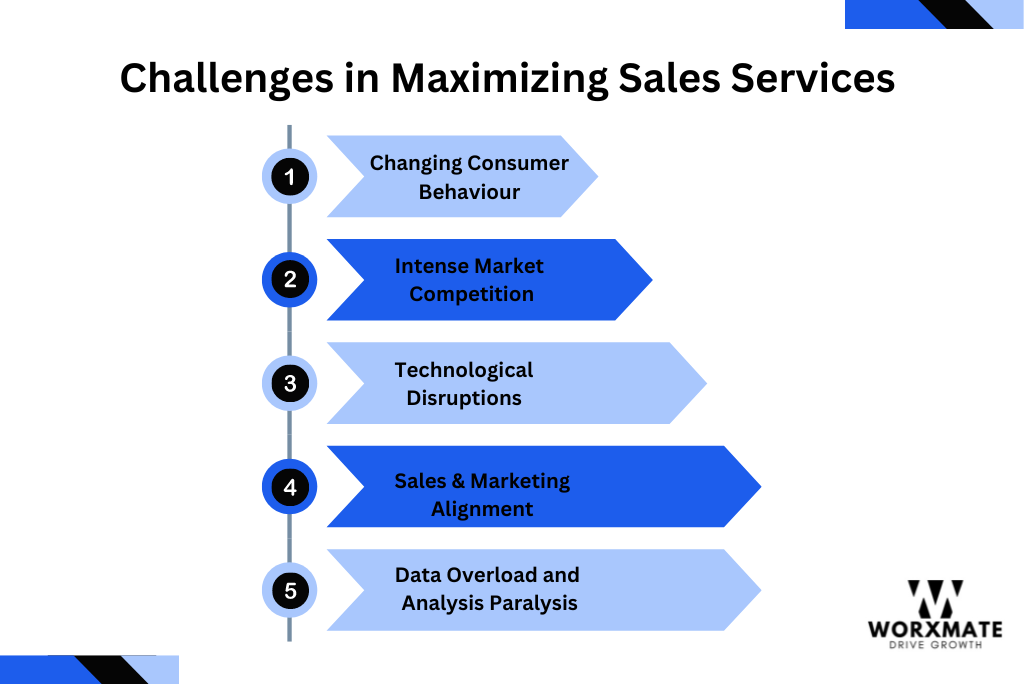
The Current Sales Landscape: Understanding Modern Challenges
Performance Management Tools: A Strategic Comparison
Choosing the right infrastructure is the difference between a scaling team and a stagnant one. Below is how modern platforms compare in driving actual business outcomes.
| Feature | Legacy CRM | Worxmate |
|---|---|---|
| Goal Alignment | Manual/Siloed | Automated/Unified |
| AI Predictive Execution | None | Native Deep AI |
| Performance Reviews | Annual/Static | Continuous/Real-time |
| Cross-functional Visibility | Limited | Nexus AI Engine |
| Implementation Speed | Months | Weeks |
The sales environment has undergone dramatic transformation in recent years. According to recent research, 42% of salespeople rank prospecting as the hardest part of their job, while 75% of B2B buyers prefer a completely rep-free sales experience. These statistics highlight the fundamental shift in how buyers interact with sales teams.
Economic and Market Pressures
Economic uncertainties have led to extended sales cycles and increased pricing scrutiny. Companies are investing an average of 8% of revenue in their sales teams, yet less than 50% of sales teams meet their quotas. This disconnect between investment and results underscores the critical need for addressing core sales challenges.
Evolving Customer Expectations
Modern buyers demand granular-level personalization and value-driven interactions. They conduct extensive research before engaging with sales representatives, with 70% of the buyer’s journey complete before they contact a sales rep. This shift requires sales teams to adapt their approach and provide immediate value.
Read More: How B2B Sales Leaders Elevate Team Performance Through Critical Sales Coaching
Achieve Your Goals Faster
See how Worxmate can help your team set clear goals and achieve faster results. Book your free demo today and experience the power of AI-driven OKRs in action.
The Most Common Sales Challenges
1. Long Sales Cycles
The Challenge: Extended sales cycles drain resources and morale while increasing costs without guaranteed outcomes.
The Solution:
-
- Implement Assignment Selling by providing prospects with educational content before meetings
- Eliminate unnecessary meetings and clarify the buying process early
- Focus on being proactive rather than reactive in your approach
2. Insufficient Lead Generation
The Challenge: A lack of qualified leads stalls the sales pipeline, making it difficult to meet revenue targets.
The Solution:
-
- Develop high-quality, educational content addressing customer pain points
- Collaborate with marketing to ensure content accessibility across appropriate channels
- Focus on lead quality over quantity to improve conversion rates
3. Sales and Marketing Misalignment
The Challenge: Disjointed efforts between sales and marketing result in inconsistent messaging and missed opportunities.
The Solution:
-
- Establish regular communication and shared goals between teams
- Create feedback loops to ensure unified messaging
- Use integrated systems to prevent data loss and duplication
Read More: Scaling Success in B2B Tech Marketing: Strategic Insights from Leadership
4. Difficulty Getting Prospect Responses
The Challenge: Prospects stop responding after initial interactions, leading to abandoned opportunities.
The Solution:
-
- Use multi-channel outreach including calls, emails, text messages, and social media
- Set up automated follow-up sequences to maintain engagement
- Connect with different stakeholders within the prospect’s organization
5. Lack of Personalization
The Challenge: Generic approaches fail to resonate with today’s informed buyers who expect tailored experiences.
The Solution:
-
- Develop detailed buyer personas and segment your customer base
- Use CRM and analytics to understand customer behavior patterns
- Practice active listening during discovery calls to propose personalized solutions
6. Inadequate Sales Training
The Challenge: Without ongoing training, sales reps struggle to adapt to changing buyer behaviors and market conditions.
The Solution:
-
- Implement continuous training programs with role-playing and call reviews
- Focus on developing consultative selling and objection handling skills
- Provide regular coaching rather than one-time training events
7. Competition and Pricing Pressure
The Challenge: Competitors offering lower prices or additional incentives create negotiation leverage for buyers.
The Solution:
-
- Conduct thorough competitive analysis using sales battle cards
- Focus on unique value propositions rather than price competition
- Share case studies and testimonials that demonstrate superior outcomes
Read More: How B2B Sales Leaders Elevate Team Performance
Case Study: McKinsey’s Data-Driven Sales Transformation Success
A compelling example of overcoming sales challenges comes from McKinsey’s research on B2B sales transformation. Companies implementing data-driven B2B sales-growth engines report above-market growth and EBITDA increases of 15 to 25 percent.
The Challenge
An automotive original-equipment manufacturer was launching a new model while older models declined in popularity. Their lead generation plan relied heavily on existing customers, limiting growth potential.
The Solution
The company used machine learning to combine five different data sources, including:
- Previous ownership data
- Demographics
- Service history
- Customer behavior patterns
- Market trends
The Results
This approach enabled them to:
-
- Identify 30 specific characteristics defining ideal buyers
- Create 10,000 lead profiles with individual purchase readiness scores
- Achieve 10% higher conversion rates
- Generate 5% overall sales uplift
This case demonstrates how leveraging data analytics and customer insights can transform sales challenges into competitive advantages.
Technology Solutions for Sales Challenges
CRM and Sales Automation
Modern sales teams require robust technology stacks to overcome common challenges. Top-performing sales teams use nearly three times more sales technology than underperforming teams.
Key technologies include:
- Lead management systems for organizing and segmenting prospects
- Sales automation tools for streamlining repetitive tasks
- AI integration for email drafting, response generation, and meeting scheduling
- Analytics platforms for data-driven decision making
Social Selling Integration
72% of social sellers who leverage social media meet their sales quota, yet many teams underutilize these platforms. Effective social selling involves:
-
- Building personal brands on relevant platforms
- Sharing valuable content that demonstrates thought leadership
- Practicing social listening to understand customer needs
- Using social selling tools to track metrics and optimize ROI
Building a Buyer-Centric Sales Process
Understanding the Modern Buyer Journey
Today’s buyers are more informed than ever, often completing significant research before engaging with sales representatives. Sales processes must align with this reality by:
- Mapping buyer stages to sales process steps
- Defining clear exit criteria based on buyer actions rather than seller activities
- Providing value at each touchpoint rather than pushing for premature closes
Implementing Consultative Selling
The shift from product-focused to solution-focused selling requires:
-
- Active listening to understand true customer needs
- Value-based selling that connects features to business outcomes
- Educational content that helps buyers make informed decisions
- Trust-building through honest, transparent communication
Achieve Your Goals Faster
See how Worxmate can help your team set clear goals and achieve faster results. Book your free demo today and experience the power of AI-driven OKRs in action.
Measuring and Improving Sales Performance
Key Performance Indicators
Effective sales challenge management requires tracking the right metrics:
- Lead-to-opportunity conversion rates to assess lead quality
- Sales cycle length to identify bottlenecks
- Win rates to evaluate closing effectiveness
- Customer acquisition cost to measure efficiency
Continuous Improvement Process
Organizations achieving sustained sales success follow a systematic improvement approach: This directly accelerates measurable key results across the entire organization. Regular check-ins maintain momentum and keep strategic priorities front of mind. Tracking a real-time confidence score helps identify at-risk targets before quarter-end. Surfacing operational blockers early ensures leadership can clear obstacles quickly. Seamless cascading ensures department milestones stay synchronized with company strategy.
-
- Analyze performance data to identify specific challenges
- Gather feedback from front-line sales representatives
- Implement targeted solutions based on data insights
- Monitor results and adjust strategies accordingly
Read more: OKRs for Sales: Tackle Challenges & Close More Deals
How Worxmate Addresses Sales Challenges
Worxmate’s OKR management software and Performance Management Software directly address many common sales challenges by providing:
Clear Goal Alignment: Our OKR framework ensures sales teams understand exactly what they need to achieve and how their individual contributions align with company objectives, eliminating confusion about priorities and expectations.
Performance Tracking: Real-time dashboards and progress monitoring help sales managers identify challenges early and provide timely coaching support, addressing the training and development gap that many teams face.
Team Collaboration: By connecting sales goals with marketing objectives and overall business strategy, Worxmate breaks down silos and improves alignment between departments, solving the common challenge of sales and marketing misalignment.
Data-Driven Insights: Our analytics capabilities help sales leaders make informed decisions about resource allocation, territory management, and performance optimization, directly addressing the challenge of insufficient data for strategic planning.
This integrated approach ensures sales challenges are addressed systematically rather than reactively, leading to sustained performance improvements.
Conclusion
Overcoming sales challenges requires a comprehensive approach that combines strategic thinking, technological enablement, and human-centered execution.
The most successful organizations treat these challenges as opportunities for transformation rather than obstacles to endure. By implementing buyer-centric processes, leveraging data analytics, investing in continuous training, and maintaining alignment across teams, sales organizations can transform challenges into competitive advantages.
Remember, the goal isn’t to eliminate all challenges but to build resilient systems and capabilities that help your team navigate obstacles effectively while consistently delivering value to customers.
Success in sales comes from understanding that every challenge presents an opportunity to strengthen relationships, improve processes, and drive sustainable growth.


Written by
An OKR Coach with 20+ years of implementation experience, Madhusudan has guided over 50 organisations through successful OKR transformations, training more than 500 leaders. Learn more about Worxmate.