 WORXMATE
Summary:
Business strategy is a comprehensive plan that guides an organization’s actions and decisions to achieve long-term objectives and maintain a competitive edge. It involves analyzing market conditions, leveraging strengths, addressing weaknesses, and identifying opportunities for growth. An effective business strategy helps companies adapt to change, allocate resources wisely, and differentiate themselves in the marketplace. Ultimately, a strong business strategy is essential for sustained success, innovation, and meeting stakeholder expectations.
To have a successful business, adapting according to the current scenario is very crucial. To fulfil the customer demands company must adopt effective organizational strategies. Corporate strategies help to identify the growth opportunities in the market and eliminates weaknesses.
For example, during covid Netflix offered an enormous value to their clients. They reduced the price of the subscription which increased their viewership. The initial subscription plan for only mobile was 199 INR/month but during covid it was reduced to ₹149 INR/month. Profit making was not finance driven.
The sole purpose of a business strategy should be customer satisfaction and setting right directions, focus to business operations. Such successful business tactics instances define the priority of business strategies that a company must adopt.
Let us understand what a business strategy is, why is it important and some of its relevant examples.
What is a Business Strategy?
Business Strategy is a series of planned actions and decisions made by an organisation to achieve their objectives. It is a detailed plan that works as a roadmap on how to use their resources, compete in the market and satisfy their stakeholders.
It gives various teams a clear direction on how to combine their talents to serve the objectives of the firm. It helps in choosing where to compete, how to set products or services apart, and how to maintain a competitive edge are all part of business strategy.
Importance of Business Strategy
Business Strategy is very important in an organization as it gives a vision. It helps organizations to achieve a competitive edge by making the most of their advantages, distributing resources effectively, and adjusting to changing conditions.
There must be an innovation in business tactics that will be different from the competitors and will attract customers. A well-planned strategy makes decision making easier, encourages teamwork and guarantees long term sustainability.
It carefully reviews the organization’s SWOT analysis (strengths, weaknesses, opportunities, and threats) and allocates resources in a way that supports its goals and adjusts to shifting market conditions. It also gives an idea regarding the performance of the company and its growth.
Achieve Your Goals Faster
See how Worxmate can help your team set clear goals and achieve faster results. Book your free demo today and experience the power of AI-driven OKRs in action.
Business Strategy Examples:
A business plan can help you to identify the advantages that will make your goods and services stand out from the competition. The strategies mostly vary depending on the current market scenario and the objective of the companies.
Let us learn about few common strategic planning examples used by companies:
-
Cost Leadership Strategy:
The term of cost leadership refers to any company that sets the standard for lower prices in its industry. If they can successfully manage their expenses by cutting their cost in marketing, distribution, and packaging without reducing their revenue is then known as a Cost Leadership Strategy.
-
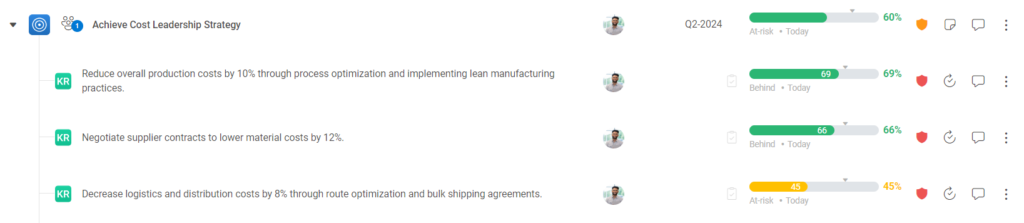
- Example: We all know that the best of all in cost leadership is Walmart. They are offering products at lower prices than most of their competitors. This is achieved through supply chain improvement, buying in bulk, and operational efficiency. Walmart’s product prices were 20% less than that of their competitors thus there was an increase in the rural customers who were price conscious. Example objective and key results for cost leadership.
-
Product Differentiation:
Product Differentiation is the process of identifying and communicating a product’s unique features while highlighting on how the product differs from its rivals. To appeal to the target audience a product must have an attracting value proposition and product uniqueness.
-
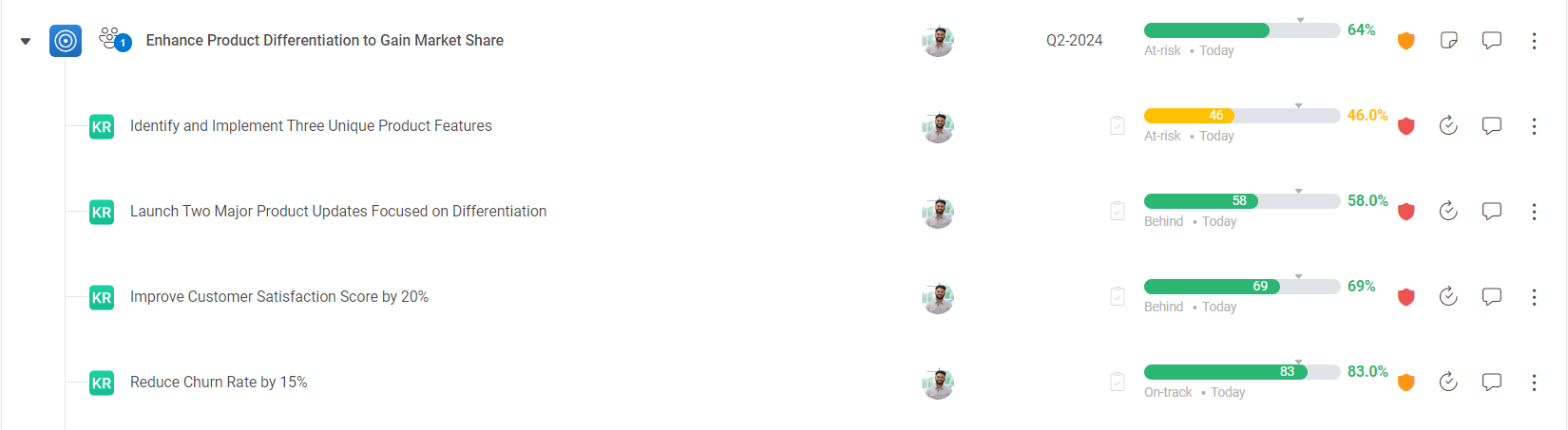
- Example: Apple uses the product differentiation strategy to stand out in the market from their customers. They use unique and appealing products to attract their customers. This is how they boost the demand for their products. They have always made products that were very technologically updated from their competitors.
- Example objective and key results for product differentiation.
-
Market Expansion:
Market Expansion strategy is one of the growth strategy models that pushes the existing products in new markets especially in other geographic regions which can be operated. This strategy aims to increase the company’s customer base, increase income, and raise its overall market.
-
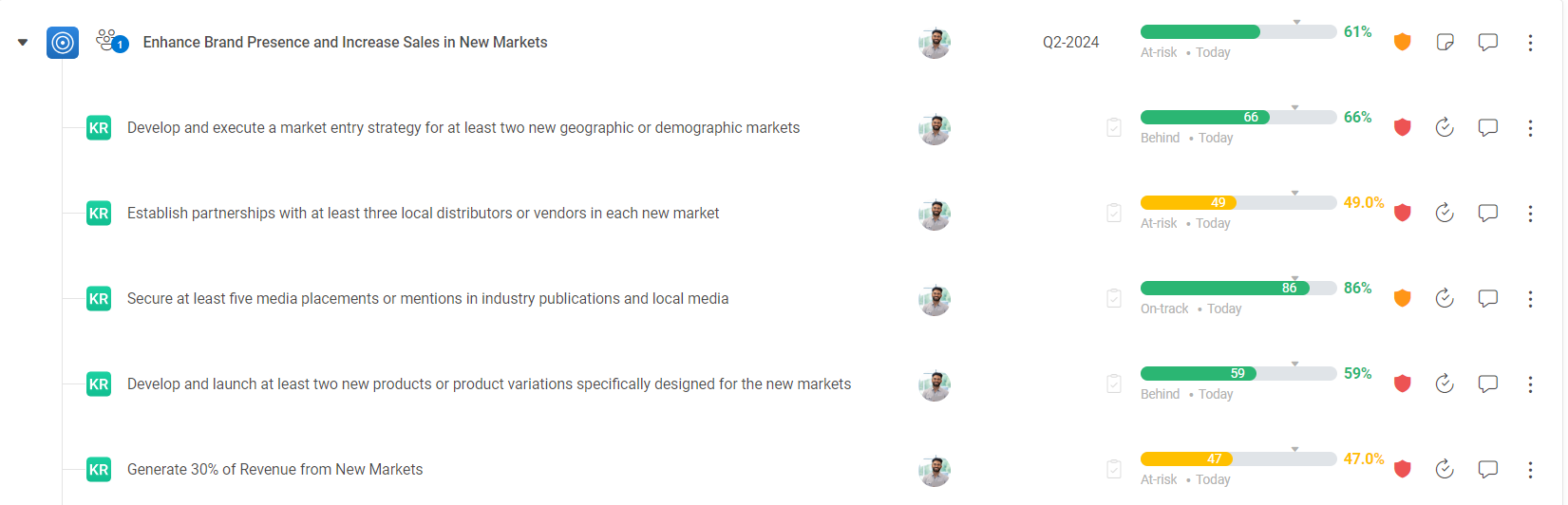
- Example: Starbucks entered international markets which was their market expansion plan. In 2022 Starbucks reached 35.7 thousand worldwide stores. They launched new coffee flavours as per the local taste. This strategy increased their revenue.
- Example objective and key results for market expansion.
-
Partnership and Collaboration:
A company’s conscious and planned efforts at creating relationships, partnerships  with other firms or organizations can be referred to as partnership and collaboration strategy. The approach involves working with other parties to meet shared objectives, combine assets, and capitalize on one another’s advantages.
-
- Example: In 2019, IBM bought Red Hat, an established supplier of open-source cloud computing technology. This collaboration was done to capitalize on each other’s strengths.
-
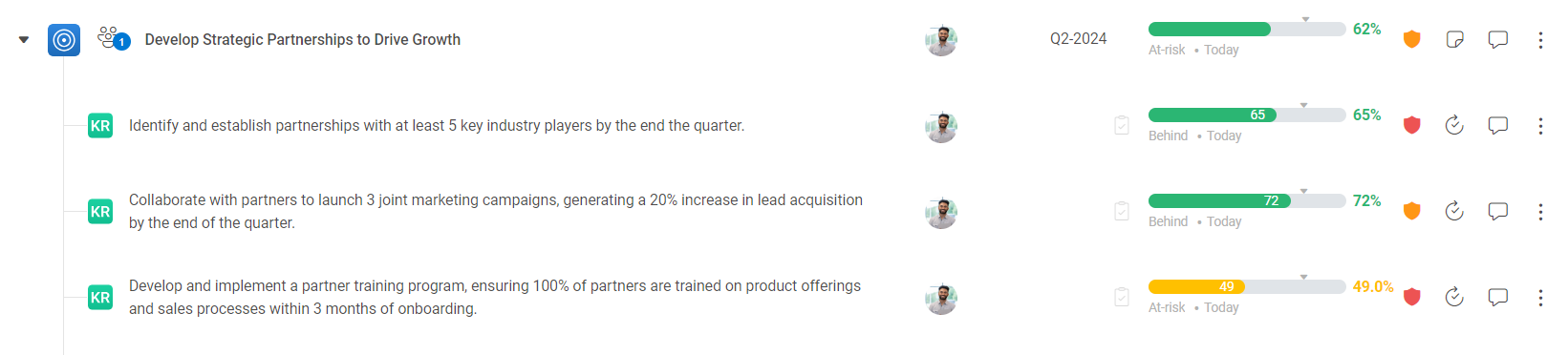
- Example objective and key results for partnership and collaboration.
-
Corporate Social Responsibility (CSR):
Corporate Social Responsibility is a self-monitoring business concept helps companies to be socially accountable to their stakeholders such as customers, suppliers, partners etc.
-
- Example: Unilever has adopted sustainable strategies as with their Sustainable Living Plan. They want to reduce their environmental impact while encouraging social impact and corporate work culture.
- Example objective and key results for corporate social responsibility.

Conclusion:
Thus, a well-planned business strategy establishes a foundation for decision making, encourages teamwork and provides knowledge about the company’s growth and performance.
Business Strategies helps a company to make their way towards achieving their goals with respect to the market dynamics. The strategic methods that have been presented are useful models for paving the way for long-term success in a world that is constantly changing as firms continue to innovate and adapt.
Given Business Strategy Examples will help you to understand how companies have paved their path towards success. This will give you insights and will inspire you to adapt innovative business strategies for your company.
Ready to turn your business strategy into measurable results? Discover how Worxmate OKR software can help you align your strategic goals, track progress, and drive success. Want to see how it works for your team? Try Worxmate.ai today!


Written by
An OKR Coach with 20+ years of implementation experience, Madhusudan has guided over 50 organisations through successful OKR transformations, training more than 500 leaders. Learn more about Worxmate.