Performance Calibration: Guide to Fair & Accurate Reviews
Actionable insights to align your OKRs with everyday performance management-from proven frameworks to the tools that power them.
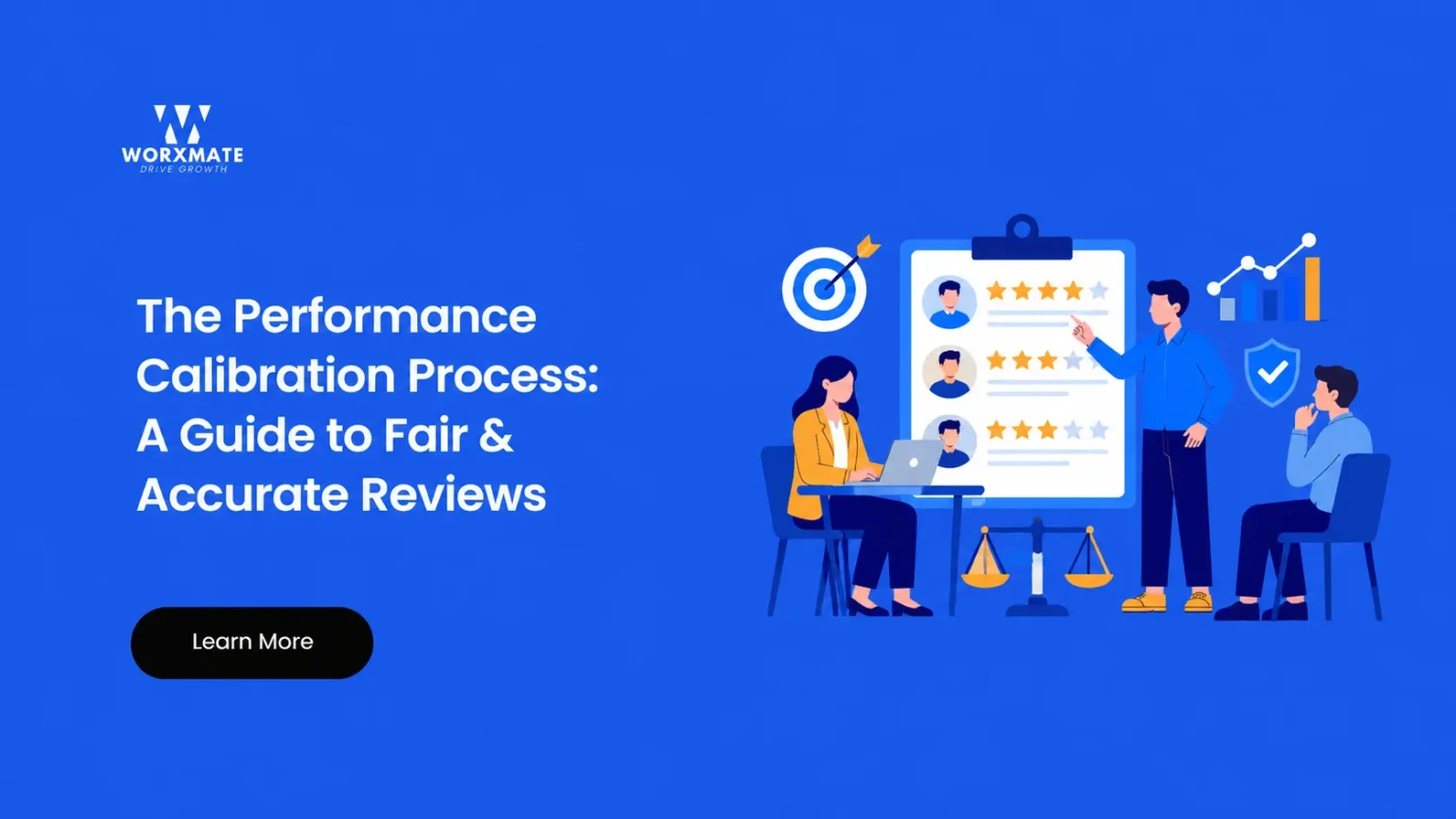
The performance calibration process is a collaborative alignment strategy where leadership standardizes evaluation criteria to eliminate manager bias. By unifying ratings across departments, organizations ensure equitable talent decisions, build employee trust, and identify critical skill gaps using modern top performance review tools.
In high-growth enterprises, scaling talent fairly is an operational battlefield. When managers evaluate teams in silos, subjective biases inevitably distort ratings, leading to disengagement and high-performer attrition. Standardizing evaluations across remote, frontline, and corporate teams requires a unified operational framework rather than fragmented spreadsheets.
You’ve spent weeks crafting performance reviews. Your managers have poured over achievements, projects, and behaviors. But when the ratings come in, a troubling pattern emerges. A “Meets Expectations” in one team looks like an “Exceeds” in another. High-potential employees feel overlooked, while inconsistent standards breed mistrust and disengagement.
This common scenario highlights a critical flaw in many performance management systems: the lack of alignment. Without a structured mechanism to ensure fairness, even the best-intentioned reviews can be undermined by inconsistency and unconscious bias. This is where the performance calibration process becomes indispensable. It’s not just another meeting; it’s the strategic linchpin that transforms subjective opinions into objective, equitable, and actionable talent insights. In this guide, we’ll demystify the calibration session and provide you with a clear roadmap to implement one that drives true organizational justice and growth.
What is the Performance Calibration Process?
The performance calibration process is a structured, collaborative meeting where managers and leaders review proposed employee performance ratings together. The goal is to align on evaluation standards, challenge assumptions, and adjust ratings to ensure they are fair, consistent, and based on evidence across teams and departments.
Think of it as quality control for your talent decisions. It moves performance management from a series of isolated managerial judgments to a unified organizational practice.
Why is the Performance Calibration Process Critical?
A well-executed performance calibration process is more than an HR checkbox; it is a strategic imperative that bridges the gap between continuous feedback vs performance reviews. By establishing a unified standard, organizations can deliver tangible benefits:
- Ensures Fair Ratings: Mitigates individual manager bias (like recency or halo effect) and creates a level playing field for all employees.
- Drives Rating Consistency: Establishes a common language and standard for what “Exceeds Expectations” truly means company-wide.
- Improves Talent Decisions: Provides reliable data for promotions, succession planning, and development investments.
- Builds Trust & Transparency: When employees see consistent standards, they are more likely to trust the system and their leadership.
- Identifies Talent Patterns: Reveals organizational strengths and skill gaps by looking at talent holistically.
Achieve Your Goals Faster
See how Worxmate can help your team set clear goals and achieve faster results. Book your free demo today and experience the power of AI-driven OKRs in action.
The Performance Calibration Methodology: A Step-by-Step Guide
A successful calibration methodology follows a clear, phased approach. Here is a proven framework to structure your sessions.
Phase 1: Pre-Calibration Preparation
The work done before the meeting dictates its success.
- Define Clear Criteria: Ensure all managers use the same competency framework and goal-setting (OKR) system, balancing continuous feedback vs performance reviews to eliminate ambiguity.
- Gather Structured Data: Managers must come prepared with employee self-assessments, performance data, project outcomes, and 360-feedback—not just gut feelings.
- Set the Attendee List: Include the calibrating managers, a senior leader as a moderator, and an HR business partner as a facilitator.
Phase 2: The Calibration Meeting Agenda
A focused agenda keeps the session on track. A typical calibration meeting agenda flows as follows:
- Kick-off & Norming (15 mins): The moderator reiterates the purpose, reviews the rating scale with concrete examples, and sets ground rules (e.g., “data-first discussions,” “respectful debate”).
- Talent Calibration Review (Core Session): Managers present their proposed ratings for employees, one by one or in talent groupings (e.g., all “High Potentials”). The group discusses, compares evidence, and debates discrepancies.
- Alignment & Adjustment: Through discussion, the group aligns on a final, calibrated rating for each employee. The focus is on the “why” behind the rating.
- Action Planning: Document outcomes, agreed-upon feedback messages, and identify any broader trends (e.g., a department-wide skill gap in analytics).
- Wrap-up & Next Steps: Confirm decisions, schedule manager-employee follow-ups, and note process improvements for next cycle.
Calibration Meeting Best Practices
Adhering to calibration meeting best practices transforms a good session into a great one.
- Anchor on Data, Not Personality: Keep discussions focused on observable behaviours and results.
- The Moderator is Key: Appoint a strong moderator to ensure everyone is heard, challenge groupthink, and enforce the process.
- Start with Extreme Ratings: Review proposed “Top Performers” and “Low Performers” first. These often reveal standards misalignment quickly.
- Practice “Roundtabling”: Give each manager a chance to speak before diving into debate to surface all perspectives.
- Document Everything: Use a shared tool or spreadsheet to track rating changes, rationale, and action items in real-time.
Unifying OKRs and Performance Reviews for Strategic Alignment
A common pitfall in talent management is treating goal setting and performance reviews as separate, disconnected processes. When OKRs are managed in one tool and performance reviews in another, managers lack the context needed for accurate calibration. This separation often leads to subjective ratings that ignore actual strategy execution and key results.
By unifying OKRs and reviews, Worxmate ensures that every calibration discussion is anchored in strategic priorities. During a calibration session, leaders can view an employee’s confidence score, completed milestones, and active blockers alongside peer feedback. This holistic view transforms the review cycle from an administrative chore into a powerful engine for strategic alignment.
The Worxmate Advantage: Instead of paying for a clunky OKR integration bolted onto legacy software, organizations get a single, cohesive platform that naturally links daily tasks to organizational key results.
Case Study: How Adobe Scaled Fairness with Calibration
Following its famous decision to abolish annual rankings in 2012, Adobe implemented a robust performance rating calibration process to support its new “Check-In” feedback model. The goal was to maintain fairness in compensation and promotion decisions without forced rankings.
The Challenge: With frequent, informal check-ins, there was a risk of significant inconsistency in how managers assessed potential and performance for critical talent decisions.
The Solution: Adobe introduced biannual calibration sessions where leaders across departments would review talent. They used a consistent framework focusing on impact and behaviors, not just completed tasks.
The Results: According to research and reports from Harvard Business Review on Adobe’s model, the process was pivotal. It ensured that rewards and advancements were distributed fairly based on calibrated, collective judgment. Leaders reported a stronger, shared understanding of talent across the organization, and employee trust in the fairness of the system increased significantly. This talent calibration approach is cited as a key reason Adobe’s performance management revolution has been so sustainable and effective.
Key Takeaway: As Adobe’s case shows, calibration is the engine of fairness in modern, continuous performance management systems.
Ensuring Fair Ratings and Overcoming Common Biases
The core mission of the performance calibration process is ensuring fair ratings. Be vigilant against these common biases during sessions:
- Recency Bias: Overweighting recent events. Solution: Require evidence from the entire review period.
- Halo/Horns Effect: Letting one positive or negative trait color the entire evaluation. Solution: Break down ratings by competency or goal.
- Groupthink: Going along with the senior person’s opinion. Solution: The moderator must solicit independent input.
- Central Tendency: Clustering ratings in the middle to avoid tough calls. Solution: Use a “forced distribution” as a discussion guide (not a rigid quota) to stretch thinking.
Calibrating Frontline and Remote Operational Teams
Most legacy performance review tools are built exclusively for desk-bound corporate employees. They fail to address the unique operational realities of frontline workers in logistics, healthcare, and IT services. Calibrating performance for these teams requires tracking real-time milestones, weekly check-ins, and operational task completion rather than just subjective annual goals.
Worxmate bridges this gap by integrating frontline task tracking directly into the performance calibration process. Managers can review concrete operational data alongside qualitative feedback, ensuring that field technicians, nurses, and logistics staff are evaluated on objective output. This eliminates the proximity bias that often penalizes remote or field-based employees during traditional calibration sessions.
The Point: Frontline calibration cannot rely on corporate-centric frameworks. It requires a system that connects daily operational milestones to strategic priorities, ensuring every worker’s contribution is visible and valued.
Achieve Your Goals Faster
See how Worxmate can help your team set clear goals and achieve faster results. Book your free demo today and experience the power of AI-driven OKRs in action.
Enterprise Bloat vs. Agile Calibration: A Strategic Comparison
When evaluating top performance review tools, mid-market organizations must weigh the total cost of ownership against actual operational utility. Legacy enterprise platforms often introduce administrative bloat without solving core alignment challenges. Structured 1:1 check-ins provide managers and reports with a dedicated space to align on priorities.
| Feature / Dimension | Worxmate.ai | Legacy Enterprise Platforms (e.g., Lattice) |
|---|---|---|
| Primary Philosophy | Agile, continuous alignment combining OKRs, task tracking, and reviews in one cost-effective workspace. | Rigid, annual or semi-annual review cycles with bolted-on goal modules. |
| AI Capabilities | Native AI-assisted writing, bias detection, and automated sentiment analysis across check-ins. | Basic generative text prompts with limited contextual understanding of operational tasks. |
| Performance Management | Continuous feedback loops, 1:1 check-ins, and real-time operational task tracking. | Heavy focus on formal, administrative review cycles with high overhead. |
| Goal-to-Task Link | Direct, native integration linking daily frontline tasks and strategic priorities to high-level OKRs. | Disconnected goal tracking that requires manual updates and separate platform configurations. |
| Ease of Use | Intuitive, mobile-first interface optimized for both deskless frontline workers and corporate staff. | Complex, multi-step workflows designed primarily for HR administrators and desk-bound employees. |
| Pricing Model | Transparent, flat-rate pricing at half the total investment of legacy systems, with no hidden platform fees. | High starting costs ($11+/user/month) plus mandatory platform fees and implementation surcharges. |
| Best For | Mid-market enterprises, logistics, healthcare, IT, and organizations with hybrid or frontline workforces. | Large, desk-bound enterprise corporations with massive HR budgets and dedicated administrative teams. |
How Worxmate Simplifies the Performance Calibration Process
Manually running a performance calibration process with spreadsheets, scattered PDFs, and fragmented data is a recipe for frustration. Consistency gets lost in the chaos, especially when compared to modern top performance review tools that streamline these workflows.
This is where Worxmate transforms the experience. Our integrated OKR & Performance Management System (PMS) is built to streamline and empower your calibration methodology.
- Single Source of Truth: All goals (OKRs), feedback, peer reviews, and manager evaluations live in one platform. Calibration attendees access unified employee profiles with complete data.
- Structured Calibration Workspace: Run your calibration session directly within Worxmate. View proposed ratings side-by-side, add discussion notes, and officially adjust ratings with full audit trails.
- Bias-Aware Insights: The system helps flag potential inconsistencies and provides analytics on rating distributions across teams, proactively supporting rating consistency.
- Seamless Integration: Calibrated ratings automatically flow into development plans, compensation discussions, and talent reviews, closing the loop.
Move from administrative overhead to strategic talent dialogue.
Ready to calibrate with confidence? Sign up for a free Worxmate demo and see how our platform can power a fairer, more efficient performance process for your organization.


Written by
An OKR Coach with 20+ years of implementation experience, Madhusudan has guided over 50 organisations through successful OKR transformations, training more than 500 leaders. Learn more about Worxmate.
Frequently Asked Questions
Mid-market organizations are increasingly migrating away from legacy platforms due to high starting costs (often exceeding $11/user/month), mandatory platform fees, and clunky OKR integrations that feel bolted onto rigid, outdated review cycles.
Worxmate combines OKRs, continuous feedback, and performance reviews into a single, cohesive platform for half the total investment of legacy enterprise systems, eliminating hidden platform fees and administrative overhead.
Yes. Unlike legacy tools that treat goal setting and reviews as separate modules, Worxmate natively integrates OKRs with the performance review cycle, allowing managers to view real-time key results and milestones during calibration.
Worxmate features native task tracking and mobile-first check-ins designed specifically for frontline industries like logistics, healthcare, and IT, ensuring remote and field-based employees are calibrated fairly based on objective output.
Worxmate provides a centralized, secure workspace where leaders can view proposed ratings side-by-side, access unified employee profiles, document discussion notes, and officially adjust ratings with full audit trails.
Worxmate’s bias-aware insights automatically flag potential inconsistencies, such as recency bias or central tendency, and provide real-time analytics on rating distributions across teams to support true rating consistency.
Bolted-on modules often require separate configurations, manual data syncing, and extra fees. A native integration ensures that daily tasks, weekly check-ins, and strategic priorities automatically inform the performance review cycle.
By connecting daily operational tasks and milestones to high-level strategic priorities, Worxmate ensures that deskless and frontline workers in logistics and healthcare remain aligned with corporate goals and are evaluated fairly.
Worxmate is designed for rapid deployment. Most mid-market organizations can migrate their existing OKRs, employee data, and review templates from legacy systems or spreadsheets in under two weeks with dedicated support.
Yes. Worxmate offers straightforward, transparent pricing with no mandatory platform fees, implementation surcharges, or hidden costs, making it highly predictable and cost-effective for growing businesses.