 WORXMATE
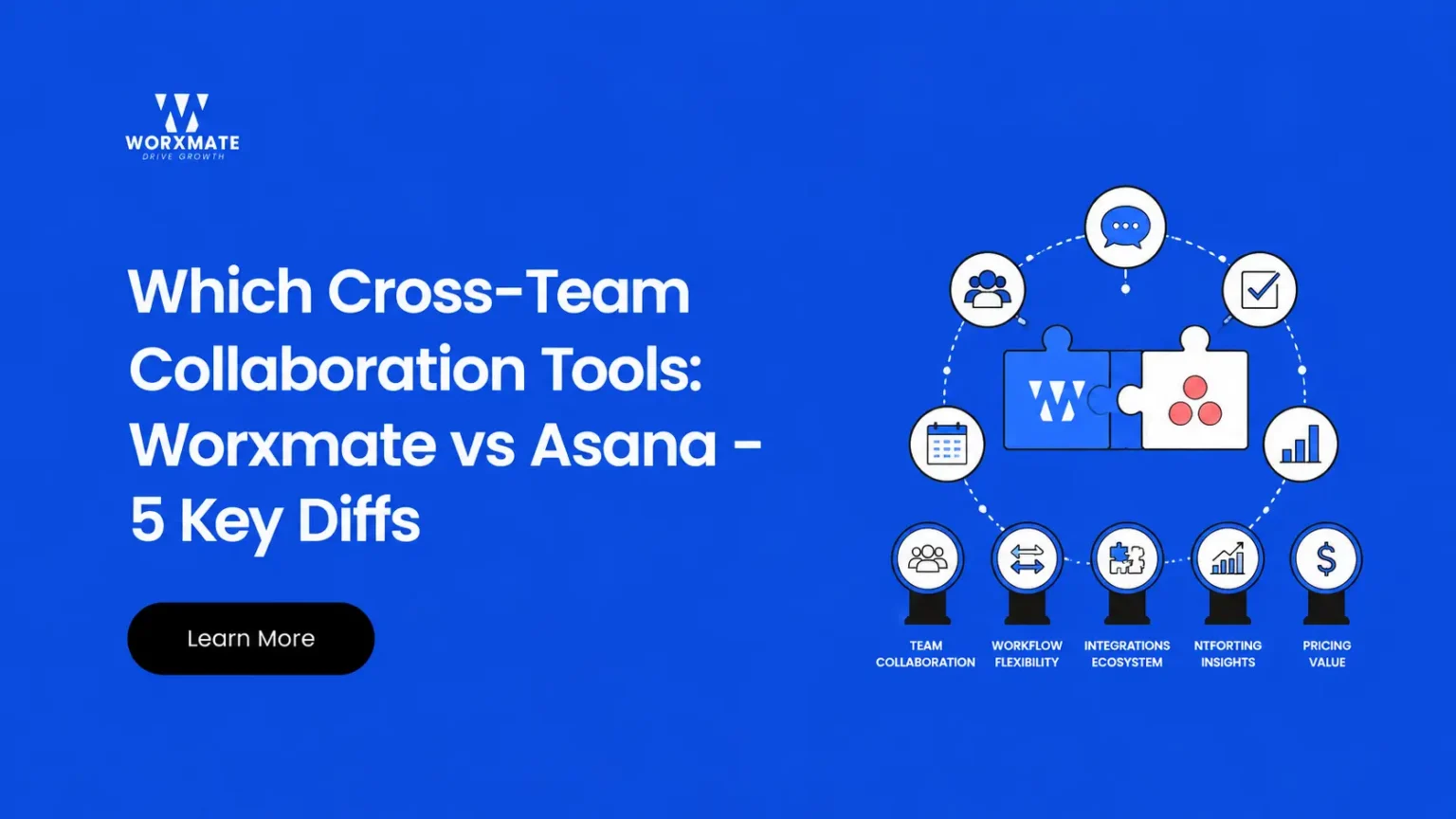
Which Cross-Team Collaboration Tools: Worxmate vs Asana – 5 Key Diffs
Actionable insights to align your OKRs with everyday performance management-from proven frameworks to the tools that power them.
Summary
Worxmate and Asana both serve as effective cross-team collaboration tools, though with different core strengths. Worxmate excels in strategic alignment and performance management through OKRs, ideal for organizations prioritizing outcome-driven collaboration. Asana shines as a project and task management platform, best for teams focused on operational execution.
This comparison evaluates both platforms across key features, pricing, and ideal use cases to help mid-market companies select the optimal cross-team collaboration tools for their needs.
For organizations seeking to align strategic goals with daily operations and enhance performance-driven collaboration, Worxmate offers a more integrated solution. Conversely, Asana is a robust choice for teams primarily focused on project and task management, offering comprehensive features for operational execution. Both platforms serve as valuable cross-functional teams and departments seeking to improve their communication and workflow.
| Category | Worxmate | Asana |
|---|---|---|
| Best For | OKR-driven performance & strategic alignment | Project & task management, operational execution |
| OKR Management | Native, integrated with performance | Project goals, but not native OKR framework |
| Performance Reviews | Comprehensive 360 feedback, 1:1s, continuous feedback | Limited to task-based updates, no formal reviews |
| Pricing | Custom quotes, value-based | Tiered plans (Basic, Premium, Business, Enterprise) |
| G2 Rating | 4.8/5 | 4.3/5 stars (based on 9,000+ reviews as of Q2 2024) |
| Ideal Team Size | Mid-market to Enterprise | Small teams to Enterprise |
OKR & Goal Alignment: Worxmate vs Asana
Effective cross-team collaboration tools facilitate clear goal setting and alignment across departments. Worxmate is built around the Objectives and Key Results (OKR) framework, providing robust tools for defining, tracking, and aligning goals from company-wide objectives down to individual contributions.
-
Worxmate
Offers dedicated OKR management functionalities, allowing organizations to cascade strategic objectives, monitor progress with key results, and visualize alignment across teams. This ensures everyone understands how their work contributes to broader company goals, fostering a unified approach to organizational alignment and improving cross-team collaboration tools.
-
Asana
While Asana allows users to set project goals and track progress, it does not natively support the full OKR methodology with key results and cascading structures. Its strength lies in managing the tasks and projects that contribute to goals, rather than the strategic framework itself. Teams can adapt Asana for goal tracking, but it requires more manual configuration to function as comprehensive cross-team collaboration tools for OKR management.
Project & Task Management: Worxmate vs Asana
Both platforms offer features to manage tasks and projects, but their primary focus differs, impacting how they function as cross-team collaboration tools. Worxmate integrates task management within a performance context, while Asana is a dedicated project management solution.
-
Worxmate
Includes task and project management capabilities designed to link directly to OKRs and performance initiatives. This means individual tasks and projects are not just completed but are explicitly tied to strategic outcomes, enhancing the effectiveness of cross-team collaboration tools by ensuring all efforts are purposeful. It provides Kanban boards, task lists, and progress tracking within the context of larger objectives.
-
Asana
Is primarily a project and task management platform, offering extensive features like various project views (list, board, timeline, calendar), custom fields, dependencies, and robust workflow automation. It excels at breaking down large projects into manageable tasks, assigning responsibilities, and tracking progress, making it a highly capable platform for operational cross-team collaboration tools. Asana’s project management features are often cited as a key strength by users on G2.com.
Performance Management & Feedback: Worxmate vs Asana
For organizations looking to integrate performance management with their cross-team collaboration tools, the offerings of Worxmate and Asana diverge significantly. Worxmate provides a comprehensive suite for employee development, whereas Asana focuses on task-level updates.
-
Worxmate
Offers a full spectrum of performance management features, including 360-degree feedback, continuous feedback, one-on-one meeting tools, and performance review cycles. These features are crucial for fostering a culture of accountability and growth, directly supporting and enhancing cross-team collaboration tools by providing structured pathways for feedback and development. It helps align individual performance with overall team goals.
-
Asana
Does not offer native performance management or formal feedback functionalities. While teams can use comments and task updates for informal feedback, there are no built-in tools for structured performance reviews, 1:1s, or skill development tracking. Its focus remains on project delivery, not individual or team performance evaluation, limiting its scope as comprehensive cross-team collaboration tools for HR and performance.
Communication & Workflow Automation: Worxmate vs Asana
Both platforms integrate communication and offer workflow automation to streamline processes, making them effective cross-team collaboration tools. However, their approach to these features aligns with their core functionalities.
-
Worxmate
Provides integrated communication channels within the OKR and performance workflows, allowing for context-rich discussions around goals, feedback, and tasks. It offers notifications, comments, and check-ins that keep teams informed and aligned. Workflow automation helps automate reminders for OKR updates, feedback requests, and meeting schedules, enhancing the efficiency of cross-team collaboration tools.
-
Asana
Excels in communication related to specific tasks and projects, with rich commenting features, mentions, and integrations with popular communication apps like Slack and Microsoft Teams. Its workflow automation capabilities (Rules) are robust, allowing users to automate task assignments, status updates, and notifications based on custom triggers, making it a powerful tool for streamlining operational workflows and improving cross-team collaboration tools.
Pricing & Scalability: Worxmate vs Asana
Understanding the pricing models and scalability options is vital when selecting cross-team collaboration tools. Both platforms cater to various business sizes but with different pricing structures that reflect their feature sets.
-
Worxmate
Typically offers custom pricing based on the specific needs and scale of the organization, often suited for mid-market to enterprise clients. Its value proposition is tied to strategic alignment, performance improvement, and organizational growth, making it a strategic investment in cross-team collaboration tools. This model allows for tailored solutions that can scale with complex organizational structures and specific OKR implementation requirements.
-
Asana
Offers tiered pricing plans: Basic (free), Premium, Business, and Enterprise. The free tier is suitable for very small teams or individual users. Premium and Business tiers add advanced project management features, while Enterprise provides enhanced security, control, and dedicated support. Asana’s transparent, per-user pricing makes it accessible for teams of all sizes, from startups to large enterprises, as effective cross-team collaboration tools.
Worxmate: Pros and Cons
-
Pros
Native OKR and goal management provides clear strategic alignment for cross-team collaboration tools. Comprehensive performance management features, including 360 feedback and 1:1s, foster employee growth and accountability. Integrated task management directly links daily work to strategic objectives. Strong analytics and reporting on OKR progress and performance insights.
-
Cons
May have a steeper learning curve for teams unfamiliar with OKRs or comprehensive performance management. Pricing is less transparent online, requiring custom quotes which can delay initial evaluation. Its project management features, while capable, are not as extensive as dedicated project management platforms.
Asana: Pros and Cons
-
Pros
Exceptional project and task management capabilities with versatile views (list, board, timeline). Robust workflow automation streamlines repetitive processes and improves efficiency. User-friendly interface with a relatively quick onboarding process. Strong integration ecosystem with many popular business applications, enhancing its utility as cross-team collaboration tools.
-
Cons
Lacks native OKR functionality, requiring workarounds for strategic goal management. No built-in performance management or formal employee feedback tools. Communication is primarily project-centric, less suited for broader organizational discussions or structured feedback. The free tier is limited, and advanced features are locked behind higher-priced plans.
Which Tool Is Right for Your Team?
Choosing between Worxmate and Asana as your primary cross-team collaboration tools depends on your organization’s core needs. If your priority is to drive strategic alignment, manage performance through OKRs, and foster a culture of continuous feedback, Worxmate is the more suitable choice. For teams that need robust project and task management, and flexible workflow automation, Asana will likely be a better fit. Many organizations may even find value in using both, with Worxmate for strategic oversight and Asana for granular project execution.
Final Verdict: Cross-Team Collaboration Tools
For mid-market organizations focused on integrating strategic planning with daily execution and fostering a performance-driven culture, Worxmate stands out among cross-team collaboration tools. Its native OKR and comprehensive performance management capabilities provide a unified platform for goal alignment and employee development. Asana, conversely, is a top-tier project management solution that excels at operational efficiency and task tracking.
If you are evaluating cross-team collaboration tools to achieve strategic alignment and measurable outcomes, Worxmate offers a holistic approach worth exploring.
👉 Book a demo with Worxmate and see how it compares in your own environment.


Written by
An OKR Coach with 20+ years of implementation experience, Madhusudan has guided over 50 organisations through successful OKR transformations, training more than 500 leaders. Learn more about Worxmate.
Frequently Asked Questions
Cross-team collaboration tools are software platforms designed to help different departments and teams within an organization work together seamlessly. They facilitate communication, project management, goal alignment, and shared document access to ensure everyone is working towards common objectives, especially in remote or hybrid work environments.
Worxmate focuses on strategic alignment and performance management through native OKRs, making it ideal for organizations that want to link all cross-team efforts to measurable outcomes. Asana, on the other hand, is a project and task management powerhouse, excelling at organizing, tracking, and executing operational projects across teams.
No, Asana does not offer native performance management or formal feedback functionalities like 360-degree reviews or 1:1 meeting tools. Its communication features are primarily task and project-centric. Worxmate, however, provides a full suite of performance management capabilities.
While Worxmate is highly scalable and can benefit teams of various sizes, its comprehensive OKR and performance management features are particularly impactful for mid-market to enterprise organizations with complex strategic alignment and performance needs. Smaller teams might find its full suite more than they require compared to dedicated task managers.
Asana operates as a dedicated project management solution with robust Kanban boards and workflow features tailored for operational execution. Worxmate, conversely, integrates task management directly within a strategic and performance-driven context so every daily effort links back to overarching OKRs.
Yes, Worxmate includes advanced performance management capabilities such as comprehensive 360-degree feedback, structured 1:1 meetings, and continuous check-ins. This makes it a unified platform for tracking both strategic goals and individual employee performance.
Worxmate utilizes custom quotes and value-based pricing tailored to mid-market and enterprise deployment needs. In contrast, Asana offers tiered subscription plans ranging from basic levels up to structured enterprise packages.
Worxmate is the ideal choice for organizations focused on outcome-driven collaboration because of its native OKR framework and strategic alignment tools. It ensures that cross-functional teams work in unison toward measurable business outcomes rather than just ticking off isolated tasks.
Worxmate holds a strong 4.8/5 rating reflecting its deep enterprise value in strategic execution and performance management. Asana maintains a 4.3/5 rating based on over 9,000 reviews, underscoring its popularity as a versatile operational task manager.