 WORXMATE

Many successful organizations use goal setting process based on the OKR methodology. Most common problems in organizations are alignment and achieving operational excellence for better results.
Before implementing OKRs there are few things that organizations need to know about. While implementing this methodology there are some important steps all must need to know about to fully take advantage of this framework.
Understanding important steps of OKR cycle will are important for organizations which want to apply this methodology.
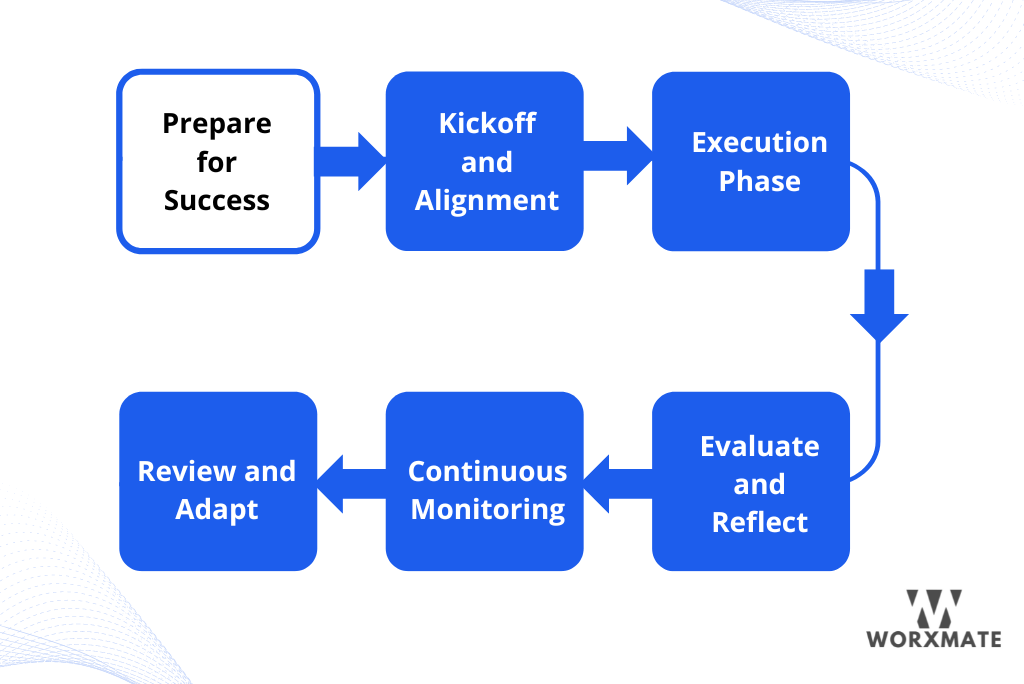
6 important steps for a typical OKR cycle.
Now, let’s understand the 6 important steps of a typical OKR cycle to understand how to make most out of this framework.
Step 1:  Preplanning
All teams discuss and set their goals and required results for the quarter in this first phase. This involves making sure these objectives are measurable, achievable, and aligning them with the broader company plan. Involve key stakeholders and identify key results that can be used to measure success.
Step 2: Establishing Alignment
It is important to share the finished OKRs with all stakeholders as the new quarter begins, resolve any questions, and make sure everyone knows their part in achieving the goals. Make sure that everyone in organization is aware of their responsibilities which helps to build strategies and collaborate, this is the stage where all the action items are set for quarter.
Step 3: Focus on OKR Execution
Teams should start working towards achieving their OKRs in the beginning of the quarter, decide the main key results, breakdown them into tasks. After this process, build a mechanism to track the progress and maintain check-ins. The main importance of this stage to set the pace and work towards achieving operational excellence.
Step 4: Track Progress
In the initial weeks of quarter, it is important to study the progress made and find out early difficulties, obstacles, further requirements, and take corrective actions to keep OKRs on track. This will help to maintain momentum and help solving problems effectively.
Step 5: Bring Consistency
To ensure that the OKRs remain relevant and achievable during the quarter, continuous evaluations, feedback, and course adjustments are necessary. Transparent communication, progress updates on a regular basis, and regular check-ins are essential for promoting responsibility and performance.
Step 6: Lessons Learned
All teams should deeply review their OKRs when the quarter comes to an end. Study the results achieved in comparison with defined goals, celebrate accomplishments and identify the opportunities for growth. To perform better next OKR cycle learning is important. To learn this framework of goal setting introspection is important.
Organizations have the liberty to choose a particular OKR cycle as per their operational requirements. For more important objectives, quarterly OKR cycle works best because it provides time, flexibility, efficiency and quicker feedback loops.
On the other hand, annual OKR cycle provides more time of achieving goals, making them more appropriate for bigger and strategic goals. Apart from these other OKR cycle which lasts for six weeks, or a month can be easily adjusted to fit needs of different business requirements and work environments.
Best suiting Cycle for Different Levels
- Quarterly OKRs Cycle – For Teams, departments, and individuals
- Annual OKR Cycle – Best for Organizations
- 1 Month Cycle – Who are already experiences an expert with OKR cycles
Achieve Your Goals Faster
See how Worxmate can help your team set clear goals and achieve faster results. Book your free demo today and experience the power of AI-driven OKRs in action.
Tips on using OKR methodology
- Keep objectives ambitious and achievable.
- Build alignment between individual and top level OKRs.
- Build a culture of transparency and continuous improvement.
- Revisit and adjust OKRs based on changing priorities.
- Encourage feedback and collaboration.
- Learning successes and failures.
Conclusion
Developing a solid understanding of the six crucial components of a standard OKR cycle can greatly improve organizational performance, encourage creativity, and promote a goal-oriented excellence culture.
Through commitment to these guidelines and the incorporation of optimal methodologies, organizations may maximize the potential of OKRs to achieve excellent results.
Organizations can fully utilize this methodology and drive themselves towards growth and higher efficiency, clarity by following these 6 important steps.
Transform the Way Your Teams Set and Achieve Goals!
Master every step of the OKR cycle with Worxmate, the best OKR software designed to drive alignment, execution, and performance.


Written by
An OKR Coach with 20+ years of implementation experience, Madhusudan has guided over 50 organisations through successful OKR transformations, training more than 500 leaders. Learn more about Worxmate.