10 Essential Staff Development Goals: How to Set Them for Success
Actionable insights to align your OKRs with everyday performance management-from proven frameworks to the tools that power them.

Summary:
Staff development goals are specific, measurable objectives designed to enhance employees’ skills, knowledge, and performance, aligning individual growth with organizational success. They are crucial for boosting engagement, retaining top talent, and driving business innovation. By setting clear development targets, companies empower their workforce, improve productivity, and build a resilient, future-ready organization.
Introduction
Imagine a high-performance race car. Even with the finest engineering, it will underperform without a skilled driver and a dedicated pit crew constantly tuning and improving it.
Your organization is that car, and your people are its most critical component. In today’s fiercely competitive landscape, talent is the ultimate differentiator. This is where well-crafted staff development goals become your strategic pit stop, fueling growth, innovation, and loyalty.
Without a clear roadmap for employee growth, you risk stagnation, high turnover, and missed opportunities. This article will guide you through creating impactful goals for staff development that unlock potential and propel your business forward.
Why Staff Development Goals Are Non-Negotiable
Investing in employee growth is no longer a perk; it’s a strategic imperative. A study by Gallup reveals that organizations with a strong learning culture have 30-50% higher engagement and retention rates. When employees see a clear path for growth, they are more motivated, productive, and loyal.
Beyond morale, staff development goals and objectives directly impact your bottom line. They close skill gaps, foster innovation, and create a leadership pipeline.
They signal to your team that you are invested in their future, transforming the workplace from a mere job site into a career-launching platform.
How to Set Effective Staff Development Goals and Objectives
Setting effective goals requires moving beyond vague intentions like “get better at leadership.” Follow this structured framework to create goals that stick and deliver results.
The SMART Framework for Development Goals
The SMART criteria are your best friend for crafting impactful objectives. Every staff development goal should be:
- Specific: Target a precise skill or competency.
- Measurable: Define how success will be quantified.
- Achievable: Be realistic given resources and time.
- Relevant: Align with both the employee’s career and company needs.
- Time-bound: Set a clear deadline for completion.
Aligning Individual and Organizational Goals
The magic happens when personal ambition meets business strategy. Managers should work with employees to connect their staff development goals to larger departmental or company-wide OKRs (Objectives and Key Results).
For example, an individual goal to “complete an advanced data analytics certification in Q3” directly supports an organizational objective to “improve data-driven decision-making.”
10 Powerful Staff Development Goals Examples
Let’s translate theory into practice. Here are actionable staff development goals examples across different career stages and functions.
- For Skill Enhancement:
Technical Proficiency: ”Complete the certified Google Cloud Architect course by Q4 and lead the migration of one legacy application by end of year.”
Soft Skills Mastery: ”Improve presentation skills by delivering at least three team-wide project briefings this quarter, incorporating feedback from a communication coach.”
- For Leadership & Management:
Mentorship: ”Formally mentor one junior team member this half, focusing on improving their project management skills, measured by the mentee’s 360-review feedback.“
Strategic Thinking: ”Develop and present a business case for a new process improvement by the end of Q2, outlining potential ROI and implementation steps.”
- For Career Advancement:Cross-Functional Knowledge: ”Gain working knowledge of the marketing team’s SEO process by shadowing the marketing lead for two campaigns and completing a foundational SEO course in Q3.”
Industry Expertise: ”Attend two major industry conferences this year and summarize key learnings and actionable insights for the team in a post-event report.”
- For Performance & Productivity:
Efficiency: ”Reduce time spent on monthly reporting by 20% within six months by automating two key report sections using Python scripts.”
Quality Improvement: ”Achieve a customer satisfaction score of 95% or above on handled support tickets by end of year, through advanced product training and active listening workshops.”
- For Innovation & Collaboration:
Innovation Contribution: ”Propose and prototype one new product feature idea per quarter based on direct customer feedback analysis.”
Collaboration: ”Initiate and co-lead a cross-departmental project with the sales team to improve the handoff process, implementing a new shared workflow by Q3.”
Case Study: How Unilever Transformed Leadership with Clear Development Goals
Global consumer goods giant Unilever provides a stellar example of strategic staff development goals in action. Facing the need to cultivate agile, future-ready leaders, they launched a comprehensive “Future-Fit Leadership” program.
- The Challenge: Unilever needed to accelerate leadership development to keep pace with digital transformation and changing market dynamics.
- The Strategy: They defined clear staff development goals and objectives focused on three pillars: Growth Mindset, Consumer Love, and Digital Mastery. These weren’t abstract concepts. For instance, a goal under “Digital Mastery” might be for a brand manager to “lead a pilot project using AI for consumer sentiment analysis within six months.”
- The Execution & Tools: Unilever leveraged digital platforms and personalized learning paths. As Paul Polman, former CEO, noted, “The leaders who will succeed are those who can develop themselves and others continuously.” They used data to track progress against these development goals, much like tracking business KPIs.
- The Results: The program yielded significant results. According to their reports and external analysis:
-
- 90% of their leaders felt more prepared for future business challenges.
-
- The company consistently ranks high in “best places to work” and leadership development indices.
-
- It created a robust internal pipeline, reducing external hiring needs for senior roles and saving millions in recruitment costs.
This case, supported by insights from McKinsey on leadership transitions and Gartner on HR trends, shows that when development goals are systemic, measurable, and tied to business outcomes, they drive tangible organizational success.
Implementing and Tracking Development Goals
Setting goals is only half the battle. Implementation and tracking are where many programs fail.
1. Regular Check-Ins: Move beyond the annual review. Schedule quarterly or even monthlyone-on-ones dedicated to development progress. These are coaching conversations, not evaluations.
2. Provide Resources: Goals fail without support. Allocate budgets for courses, conferences, and tools. Provide time during the workweek for learning.
3. Utilize Technology: Spreadsheets get messy. Use dedicated performance management software to track goals, log achievements, and maintain a continuous dialogue.
4. Celebrate Milestones: Recognize and reward progress. Completing a certification or successfully leading a new project deserves acknowledgment, reinforcing the value of growth.
Common Pitfalls to Avoid When Setting Development Goals
- The “Set-and-Forget” Trap: Goals are dynamic. Revisit and adjust them as projects and priorities shift.
- One-Size-Fits-All Approach: Development is personal. Goals must be co-created with the employee, not just assigned.
- Lack of Manager Support: Managers must be coaches, not just evaluators. Train them to support employee development effectively.
- Ignoring Career Aspirations: If an employee’s goal is to move into a different department, work with them on it. Retaining a skilled but re-skilled employee is better than losing them.
Achieve Your Staff Development Goals with Worxmate
Turning ambitious staff development goals into everyday reality requires the right platform. This is where Worxmate transforms your approach.
Worxmate’s integrated OKR & Performance Management System (PMS) is built to bridge the gap between organizational strategy and individual growth. Here’s how it solves the core challenges:
- Seamless Alignment: Easily cascade company objectives down to individual staff development goals and objectives, ensuring everyone’s growth contributes to the bigger picture.
- Continuous Tracking: Ditch the clunky spreadsheets. Worxmate provides a clear, visual dashboard for employees and managers to track progress in real-time, facilitating those crucial ongoing conversations.
- Centralized Resources: Link development goals directly to learning modules, course recommendations, and internal knowledge bases within Worxmate, providing employees with instant access to the tools they need to succeed.
Stop letting development goals live in a forgotten document. Make them a living, breathing part of your company’s success story.
Ready to build a future-ready workforce? Sign up for a free Worxmate demo today and see how easy it is to align, track, and achieve your most important staff development goals.
Written by
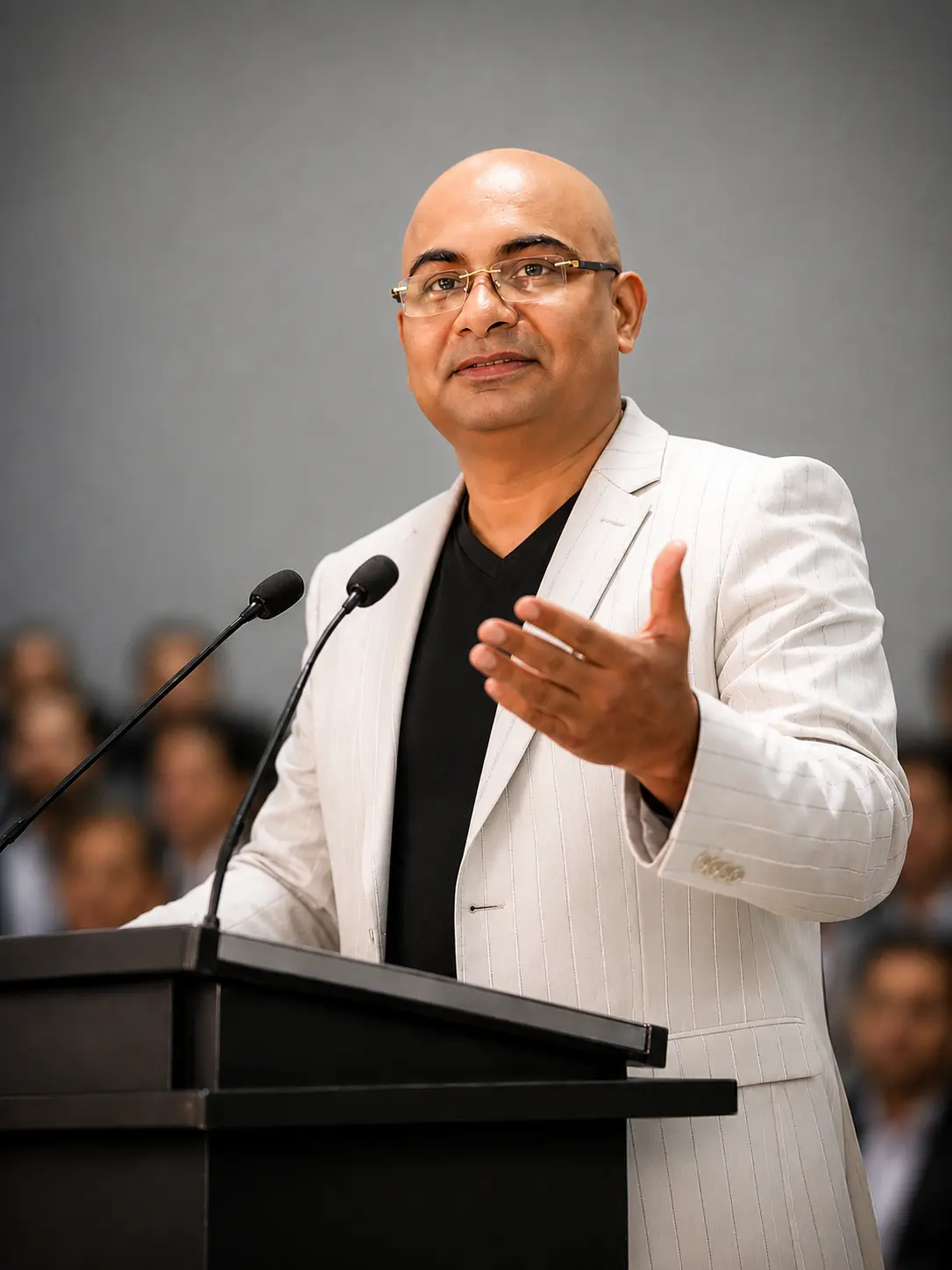
An OKR Coach with 20+ years of implementation experience, Madhusudan has guided over 50 organisations through successful OKR transformations, training more than 500 leaders. Learn more about Worxmate.
Frequently Asked Questions
Performance goals focus on what needs to be achieved in the current role (e.g., “increase sales by 15%”). Staff development goals focus on how the employee will grow to achieve more in the future (e.g., “develop negotiation skills to improve client contract outcomes”). They are complementary.
Quality over quantity. 2-3 focused, impactful goals for staff development are more effective than a long list of vague items. This allows for deep focus and meaningful progress.
Use behavioral indicators and 360-degree feedback. For a goal like “improve conflict resolution,” success could be measured by a reduction in escalated team disputes or positive feedback from peers on handled disagreements.
Treat it as a learning opportunity, not a failure. In the next check-in, discuss the obstacles: Was the goal unrealistic? Were resources lacking? Did priorities change? Use the insights to set a more achievable revised goal.
Managers should bridge personal career aspirations with broader departmental OKRs by connecting skill-building targets directly to measurable business outcomes. For instance, pairing a technical certification goal with a team-wide migration initiative ensures individual growth fuels organizational success. Platforms like Worxmate streamline this alignment by cascading macro goals down to granular development metrics.
Enterprise HR teams rely on dedicated strategy execution and OKR management platforms, such as Worxmate, to monitor development milestones alongside performance metrics. These tools replace fragmented spreadsheets with automated progress tracking, feedback loops, and real-time visibility into skill gaps across teams. This ensures development goals remain central to ongoing performance conversations rather than forgotten annual reviews.
A frequent pitfall is setting overly vague objectives or overwhelming employees with too many goals at once, which leads to execution fatigue. Leaders should enforce the SMART framework to ensure targets are specific and time-bound, while limiting employees to two or three high-impact objectives. Additionally, regular check-ins prevent goals from becoming static paperwork detached from daily workflows.
Investing in structured learning and clear career pathways directly signals to employees that the organization is committed to their professional future. Industry data shows that companies with strong learning cultures achieve significantly higher engagement and retention rates. Staff development goals transform the workplace from a temporary job site into a long-term career-launching platform.
Worxmate provides a unified AI-powered platform for strategy execution and goal cascading that connects individual employee development directly to enterprise-wide objectives. With automated tracking, seamless OKR integration, and intuitive performance analytics, Worxmate empowers HR and business leaders to scale meaningful learning cultures effortlessly. This eliminates administrative overhead and drives measurable business growth through workforce capability.