How to Select Performance Tracking Tools for Remote Teams
Actionable insights to align your OKRs with everyday performance management-from proven frameworks to the tools that power them.
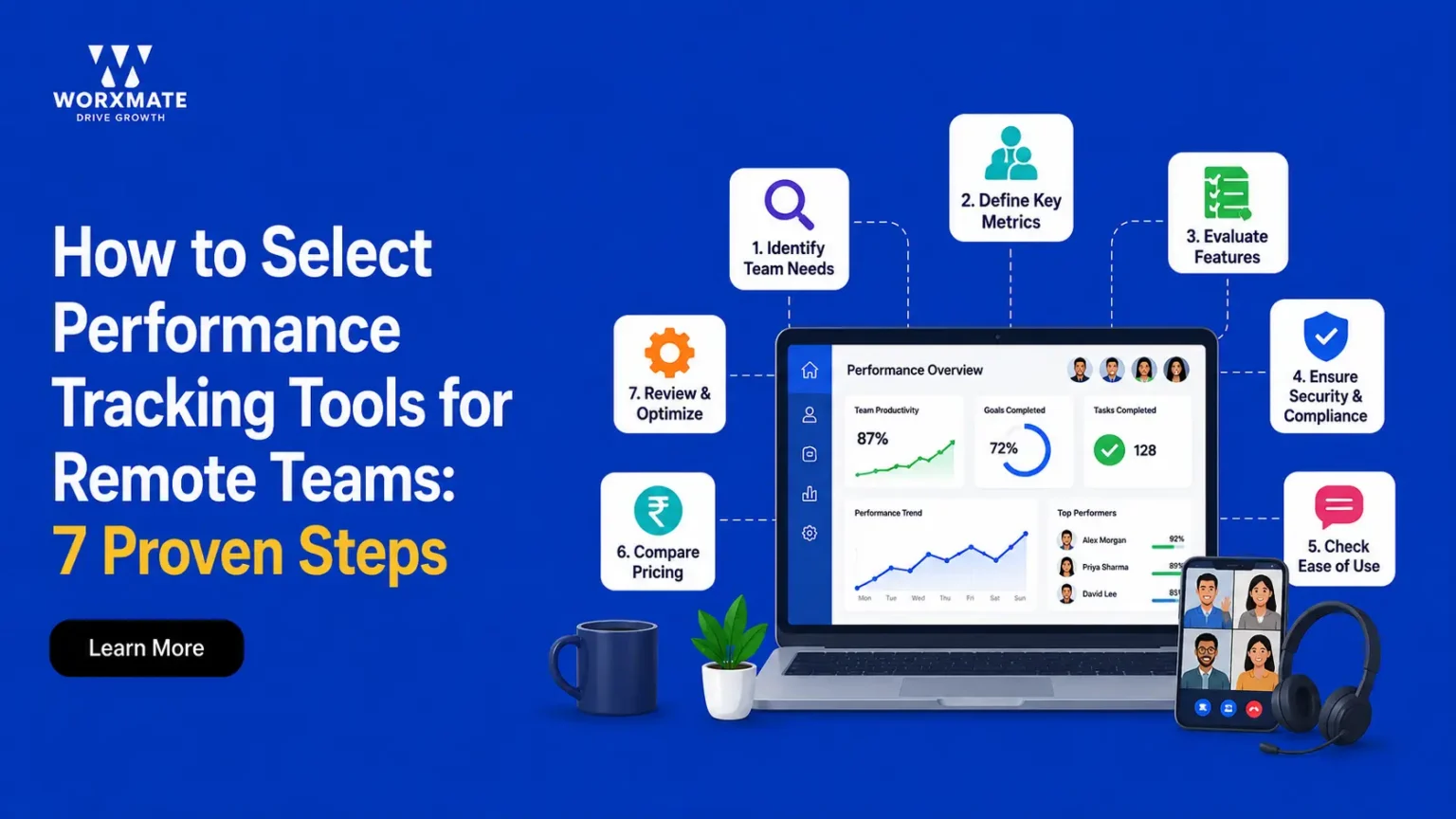
Performance tracking tools for remote teams: Selecting the right distributed workforce software requires balancing outcome-driven metrics with continuous feedback. By leveraging unified OKRs and top performance review tools, mid-market organizations can eliminate administrative friction and align daily task execution with strategic priorities without resorting to invasive monitoring.
Selecting effective performance tracking tools for remote teams is crucial for maintaining productivity, fostering accountability, and sustaining employee engagement in a distributed work environment. The right tools move beyond simple activity monitoring to focus on outcomes, aligning individual contributions with overarching strategic objectives. Evaluating these platforms effectively demands a rigorous, structured approach that protects employee trust while driving measurable performance management approaches across every organizational tier.
This guide provides a structured, seven-step approach to evaluating, implementing, and leveraging performance tracking tools for remote teams, ensuring your distributed workforce remains motivated and connected to company goals. It emphasizes balancing trust with necessary oversight, utilizing frameworks like OKRs, and measuring the real impact on retention and growth. As organizations scale, deploying continuous performance management solutions ensures that distance never dilutes alignment.
The shift to remote and hybrid work models has redefined how organizations approach employee performance. Without the traditional oversight of a physical office, HR Directors and Operations Managers are increasingly seeking robust remote performance management software to ensure accountability, drive productivity, and maintain strong organizational alignment. The challenge lies not just in tracking activity, but in understanding impact and fostering a culture of trust.
Choosing the right performance tracking tools for remote teams is no longer a luxury but a necessity for mid-market companies scaling their operations. It’s about empowering employees with clarity while providing leaders with the insights needed to make informed decisions. According to Gallup, engaged remote employees are 21% more productive, underscoring the importance of effective performance management.
At a Glance: The Key Differences
Evaluating enterprise-grade performance suites against agile mid-market alternatives requires a direct look at architectural foundations, pricing models, and operational capabilities. The following matrix contrasts traditional legacy platforms like Lattice with modern unified solutions like Worxmate.
| Evaluation Dimension | Traditional Enterprise Suites (e.g., Lattice) | Unified Agile Alternative (Worxmate) |
|---|---|---|
| Primary Philosophy | Heavy annual review cycles bolted onto separate modules. | Continuous alignment driven by agile OKRs and weekly check-ins. |
| AI Capabilities | Basic summarization and template generation features. | Predictive performance insights and real-time blocker detection. |
| Performance Management | Fragmented workflows requiring multiple module add-ons. | Native integration combining goals, reviews, and feedback. |
| Goal-to-Task Link | Disconnected milestones requiring manual progress updates. | Direct line-of-sight from company objectives to daily tasks. |
| Ease of Use | Steep learning curve with extensive administrator training. | Intuitive interface built for high remote adoption rates. |
| Pricing Model | High per-user monthly base plus mandatory platform fees. | Transparent, predictable tiers with zero hidden implementation bloat. |
| Best For | Large enterprises with dedicated HR admin teams. | Growing mid-market organizations seeking cost-effective execution. |
Step 1: Understand the Evolution of Remote Performance Tracking
Before selecting any performance tracking tools for remote teams, it’s vital to grasp how remote work has changed performance management. Traditional methods often focused on hours worked or observable presence, which are irrelevant in a distributed setting.
The “why it matters” is clear: the focus has shifted from input to output. Modern performance tracking tools for remote teams must support an outcome-driven approach, measuring impact rather than just activity. This ensures fairness and motivates employees by recognizing tangible contributions.
Pro tip: Research the history of remote work performance, noting the transition from basic time tracking to sophisticated OKR-based systems used by companies like Google and Spotify. Implementing a continuous performance management framework early prevents cultural silos.
Step 2: Identify Key Features in Effective Performance Tracking Tools for Remote Teams
Not all performance tracking tools for remote teams are created equal. Identify features that genuinely support remote performance without resorting to micromanagement. Look for tools that offer transparency, collaboration, and clear goal visualization.
Why it matters: The right features facilitate meaningful OKR check-ins and continuous feedback, which are critical for remote team success. Tools should enhance communication, not replace it, and provide insights into employee productivity without being intrusive.
Concrete example: Essential features include goal-setting capabilities (e.g., OKRs, SMART goals), progress dashboards, real-time feedback mechanisms, and integrations with communication platforms like Slack or Microsoft Teams. Robust performance reviews rely heavily on these integrated data streams.
Step 3: Evaluate and Select the Right Performance Tracking Tools for Remote Teams
With a clear understanding of your needs and desired features, begin evaluating potential performance tracking tools for remote teams. This involves comparing platforms based on functionality, user experience, scalability, and pricing.
Why it matters: A thorough evaluation prevents costly mistakes and ensures the chosen tool aligns with your company’s unique culture and technical infrastructure. Consider piloting a few options with a small team to gather practical feedback before a full rollout.
Pro tip: Create a scorecard with weighted criteria (e.g., OKR support, integration capabilities, ease of use, cost). Include platforms like Asana, Monday.com, and specialized OKR software for small businesses in your comparison.
Unlock Goal Clarity and Accelerate Employee Growth
Looking to drive goal clarity and employee growth? Discover how Worxmate’s AI-powered Performance Management Software can help.
Step 4: Leverage OKRs for Remote Performance Management
Objectives and Key Results (OKRs) are the gold standard for remote performance management because they inherently focus on outcomes. Integrate OKRs deeply into your chosen performance tracking tools for remote teams.
Why it matters: OKRs provide clarity, alignment, and measurable goals, which are paramount for distributed teams. John Doerr, who introduced OKRs to Google, highlights their power in driving focus and engagement across diverse teams. Regular 1:1 check-ins ensure that these strategic priorities remain front and center.
Concrete example: Set ambitious, time-bound Objectives and pair them with 2-4 quantifiable Key Results. Ensure every team member understands how their individual OKRs contribute to company-wide strategic goals.
Step 5: Balance Accountability and Trust with Remote Performance Monitoring
While performance tracking tools for remote teams provide valuable data, it’s crucial to balance accountability with trust. Avoid any perception of micromanagement, which can severely damage morale and lead to disengagement.
Why it matters: Harvard Business Review emphasizes that micromanagement leads to lower employee morale and higher turnover, especially in remote settings. Tools should facilitate transparency and self-management, not intrusive surveillance. Collecting constructive employee feedback through structured surveys prevents burnout.
Pro tip: Clearly communicate the purpose of the tools – to support, not to spy. Focus on outcome tracking and regular, constructive employee feedback sessions, rather than minute-by-minute activity logs.
Step 6: Implement Your Performance Tracking System Successfully
Successful implementation of performance tracking tools for remote teams requires more than just installing software. It involves comprehensive training, clear communication, and ongoing support for all users.
Why it matters: Poor implementation can lead to low adoption rates, frustration, and a failure to realize the benefits of the new system. Invest in change management to ensure a smooth transition and user buy-in. Continuous performance management thrives when internal champions drive adoption.
Concrete example: Conduct workshops on how to use the OKR software, explain the benefits, and establish clear guidelines for data privacy and usage. Designate internal champions to assist peers and collect feedback.
Step 7: Measure the ROI of Remote Performance Tracking on Retention
Finally, continuously monitor and measure the impact of your performance tracking tools for remote teams. Look beyond just productivity metrics to assess their effect on employee engagement, satisfaction, and retention.
Why it matters: Demonstrating a clear return on investment (ROI) justifies the resources allocated and provides data-driven insights for continuous improvement. Gartner suggests that effective performance management can improve employee retention by up to 30%. Analyzing comprehensive performance ratings over time validates the health of your organizational strategy.
Pro tip: Track key metrics like turnover rates, employee satisfaction scores, goal attainment rates, and the frequency of real-time feedback. Use this data to refine your strategy and optimize the use of your chosen tools.
Architectural Foundation: Native Unified Workflows vs Fragmented Legacy Modules
Choosing between legacy enterprise platforms and agile software centers on architectural design. Traditional tools often cobble together separate review modules and goal trackers through legacy acquisitions, resulting in fragmented user experiences.
The Point:
Fragmented systems force HR teams to manage multiple disconnected databases, inflating administrative overhead and reducing employee adoption.
The Worxmate Advantage:
Worxmate delivers a natively unified platform where OKRs, continuous performance management, and employee alignment operate within a single seamless interface, drastically reducing complexity and training time.
Operational Integration & Workflow Friction
Operational friction occurs when software requires expensive middleware or complex administrative maintenance just to keep core data synchronized across remote teams.
The Point:
Legacy systems often demand costly custom integrations and continuous IT oversight to connect basic HRIS data with performance metrics.
The Worxmate Advantage:
By offering streamlined native integrations and out-of-the-box communication tool connectors, Worxmate eliminates middleware maintenance, ensuring remote teams spend time executing strategy rather than managing software.
Strategic Alignment vs Disconnected Task Tracking
Remote teams frequently suffer from task isolation, where daily work bears little visible connection to overarching corporate objectives.
The Point:
Standard task managers track activity without connecting deliverables to high-level strategic priorities, leaving leadership blind to actual business impact.
The Worxmate Advantage:
Worxmate establishes an unshakeable goal-to-task line of sight, ensuring every remote employee’s weekly deliverables directly ladder up to departmental key results and company milestones.
Pricing Transparency & Total Cost of Ownership
Enterprise software pricing models frequently mask high baseline costs through mandatory platform fees, professional services add-ons, and steep minimum seat commitments.
The Point:
Hidden fees and rigid licensing tiers make legacy platforms cost-prohibitive for mid-market organizations looking to scale remote operations efficiently.
The Worxmate Advantage:
Worxmate provides transparent, predictable per-user pricing with zero hidden platform fees, delivering complete performance management functionality at a fraction of enterprise investment.
Scenario Decision Trees: Choosing the Right Platform
Selecting the ideal performance tracking ecosystem depends entirely on your organization’s scale, budget structure, and operational complexity. Evaluating specific organizational scenarios clarifies which platform delivers maximum return on investment.
When to Choose Lattice:
Select traditional legacy enterprise platforms if your organization possesses a dedicated enterprise HR operations team, extensive custom implementation budgets, and a preference for traditional annual review cycles.
When to Choose Worxmate:
Select Worxmate if your organization is a mid-market or growing enterprise seeking a cost-effective, agile platform that natively combines OKRs, continuous feedback, and remote operational alignment without administrative bloat.
Knowing how to select and implement effective performance tracking tools for remote teams gives HR leaders a repeatable system to connect daily execution to strategic outcomes. Whether your priority is enhancing employee performance, boosting retention, or fostering a culture of accountability, this process builds the discipline that keeps remote teams aligned and performance management on track. Tracking a real-time confidence score helps identify at-risk targets before quarter-end. Surfacing operational blockers early ensures leadership can clear obstacles quickly. Seamless cascading ensures department milestones stay synchronized with company strategy.
Teams that follow this process build stronger goal alignment across functions, maintain momentum through structured OKR tracking metrics, and power their performance management cycle with real data. The result is a team that moves from activity tracking to outcome ownership — exactly what a modern OKRs and performance management system is built for.
Bottom Line
Ready to put this remote performance tracking process into action? Explore how OKR software removes the manual effort from goal tracking, use OKR alignment to connect every step to company priorities, and manage progress inside a structured performance management framework. Ready to evaluate modern alternatives? Head over to our evaluation portal to explore how Worxmate redefines distributed team alignment. Schedule a personalized demo with Worxmate and turn this process into measurable results your team can own.


Written by
An OKR Coach with 20+ years of implementation experience, Madhusudan has guided over 50 organisations through successful OKR transformations, training more than 500 leaders. Learn more about Worxmate.
Frequently Asked Questions
Performance tracking tools for remote teams are digital platforms designed to monitor productivity, manage objectives, and facilitate continuous feedback in distributed work environments, replacing traditional physical oversight with outcome-driven metrics.
OKRs provide absolute goal clarity and measurable outcomes, ensuring remote team members understand how their daily tasks contribute directly to overarching company strategy without requiring intrusive activity monitoring.
Excessive surveillance and micromanagement damage employee morale, increase turnover, and suppress discretionary effort. Effective tools focus on outcome ownership rather than minute-by-minute activity logs.
While Lattice caters to large enterprises with complex modular pricing and mandatory platform fees, Worxmate provides an agile, cost-effective alternative combining native OKRs and continuous reviews for half the investment.
Essential features include goal-setting capabilities like OKRs, real-time feedback mechanisms, progress dashboards, transparent review cycles, and seamless integrations with communication hubs like Slack and Microsoft Teams.
ROI is measured by tracking improvements in employee retention, goal attainment rates, turnover reduction, satisfaction scores, and the frequency of constructive 1:1 check-ins across the organization.
Yes, unlike legacy office-bound platforms, agile tools like Worxmate support frontline and operational field tracking in sectors like logistics and healthcare alongside traditional remote desk workflows.
Low adoption typically stems from poor change management, complex user interfaces, lack of internal champion support, and failing to communicate the employee-centric benefits of the new platform.
Remote teams benefit most from weekly or bi-weekly check-ins combined with quarterly OKR reviews, maintaining continuous alignment and preventing performance surprises during annual appraisals.
Transitioning involves executive sponsorship, piloting agile OKR frameworks with select teams, training managers on constructive feedback, and adopting unified software that replaces cumbersome legacy modules.