Integrating L&D with Performance Management: 5 Smart Steps
Actionable insights to align your OKRs with everyday performance management-from proven frameworks to the tools that power them.
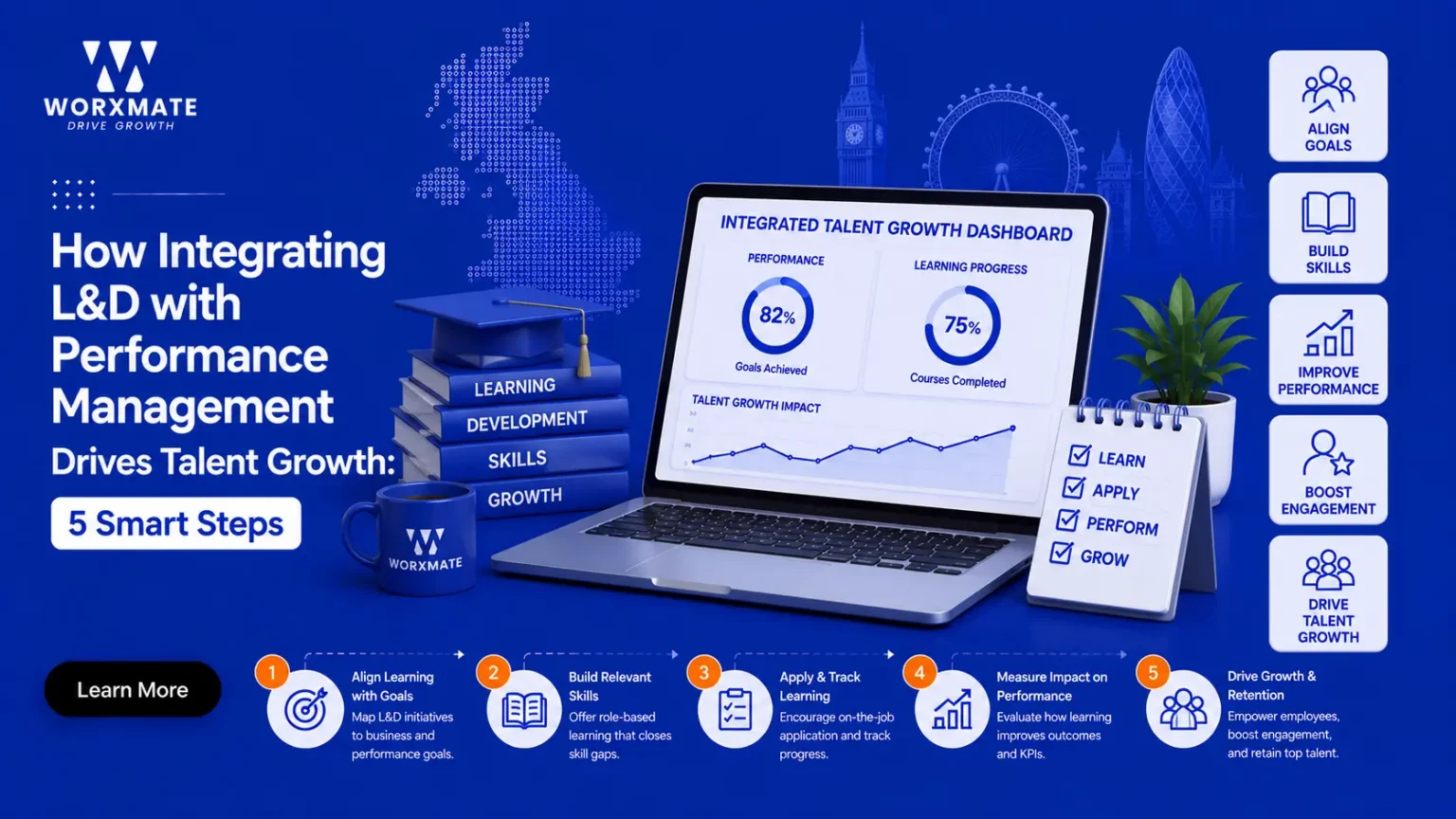
Integrating L&D with Performance Management: Bridging the traditional gap between learning initiatives and employee appraisals is essential for modern mid-market organizations. By embedding continuous feedback and skill development directly into employee performance software, HR leaders can align individual growth milestones with core OKRs and strategic business outcomes.
In today’s dynamic business environment, the traditional disconnect between Learning & Development (L&D) and performance management is no longer sustainable. Forward-thinking organizations are increasingly focused on integrating L&D with performance management to create a holistic ecosystem where growth is intertwined with everyday work. This strategic shift recognizes that performance isn’t just about evaluation; it’s about continuous improvement and skill enhancement.
Many mid-market companies struggle when their L&D initiatives operate in a silo, detached from actual performance needs. This leads to generic training, wasted resources, and a workforce ill-equipped to meet evolving business challenges. By proactively integrating L&D with performance management, organizations can ensure that every learning opportunity directly supports an employee’s ability to achieve their performance goals and contribute to broader strategic objectives.
This guide outlines five essential steps for successfully integrating L&D with performance management, helping your organization foster a culture of continuous learning and high performance. We’ll explore how to define your strategy, conduct skills gap analyses, design targeted learning, align development with OKRs, and measure your impact.
Strategic Framework Overview
To successfully merge training and evaluation, leadership teams must establish a coherent operational framework. The following table highlights the core components of an integrated ecosystem, contrasting traditional silos with modern continuous performance management practices.
| Strategic Dimension | Traditional Siloed Approach | Integrated L&D Ecosystem |
|---|---|---|
| Primary Philosophy | Annual retrospective scoring and compliance training. | Continuous skill building tied directly to ongoing OKRs. |
| Feedback Loop | Year-end reviews with minimal actionable coaching. | Weekly 1:1 check-ins and real-time skill adjustments. |
| Data Utilization | Isolated HR spreadsheets and static training logs. | Unified talent metrics and performance analytics. |
| Operational Focus | Desk-bound corporate staff only. | Agile support for multi-location and frontline teams. |
Step 1: Define Your Integrated L&D and Performance Management Strategy
Begin by clearly articulating why your organization needs to move towards integrating L&D with performance management and what outcomes you expect. This involves moving beyond the traditional annual review model to embrace a continuous feedback and development philosophy.
Why it matters: A well-defined strategy ensures that L&D initiatives are not ad-hoc but are purposefully designed to enhance performance. According to Gallup, employees who receive daily feedback from their managers are three times more likely to be engaged, highlighting the need for a continuous approach.
Pro tip: Involve key stakeholders from HR, L&D, and leadership in this initial phase to build consensus and ensure the strategy aligns with the overall organizational strategy.
Step 2: Conduct a Skills Gap Analysis to Inform Learning Pathways
Systematically identify the discrepancies between the skills your employees currently possess and the skills required to meet future business needs and performance expectations. This forms the foundation for targeted L&D interventions.
Why it matters: Without a clear understanding of skill gaps, L&D efforts can be misdirected and ineffective. A McKinsey study found that 87% of companies are aware they have skill gaps or expect to have them within a few years, yet many lack a clear strategy to address them.
Pro tip: Leverage employee feedback, performance data, and future strategic priorities to conduct a comprehensive skills gap analysis. Identify critical skills for each role and department.
Step 3: Design Performance-Linked Learning & Development Programs
Based on your skills gap analysis, create specific, actionable employee development plans and learning programs that directly address identified needs. These programs should be integrated into the ongoing performance management cycle.
Why it matters: Learning linked directly to performance ensures that training translates into tangible improvements in employee capabilities and business outcomes. This approach supports continuous performance management, making development an ongoing process.
Pro tip: Incorporate a blend of formal training, on-the-job learning, mentorship, and peer coaching. Use platforms that allow for personalized learning paths and easy tracking of progress against development goals.
Unlock Goal Clarity and Accelerate Employee Growth
Looking to drive goal clarity and employee growth? Explore Worxmate to align your OKRs and talent development effectively.
Step 4: Align Individual Learning Goals with Organizational OKRs
Ensure that individual learning objectives are not only tied to performance gaps but also cascade up to support team and organizational Objectives and Key Results (OKRs). This creates a powerful synergy when integrating L&D with performance management.
Why it matters: When learning directly impacts strategic outcomes, employees see the value and relevance of their development. This strengthens OKR alignment and fuels organizational growth. John Doerr, the venture capitalist who popularized OKRs at Google, emphasized that clear objectives drive focus and accountability.
Pro tip: During OKR planning cycles, encourage managers and employees to identify specific learning objectives that will enable them to achieve their Key Results. For example, if a KR is ‘Increase conversion rate by 15%’, a learning goal might be ‘Complete advanced sales negotiation course.’ This demonstrates a clear link to integrating L&D with performance management.
Step 5: Measure and Iterate on Your Integrated L&D with Performance Management Approach
Regularly track the effectiveness of your integrated L&D and performance management initiatives using relevant performance metrics and feedback loops. Use this data to continuously refine your strategy and programs.
Why it matters: Measurement is crucial for demonstrating ROI and ensuring that L&D efforts are truly impacting performance. A Harvard Business Review article stresses the importance of measuring outcomes, not just participation rates.
Pro tip: Track metrics such as skill proficiency gains, improvements in performance review scores, employee retention rates, and progress on specific OKRs. Gather real-time feedback from employees and managers to understand what’s working and what needs adjustment in your integrating L&D with performance management efforts.
Operational Workflows and Leadership Accountability
Successfully executing these five steps requires establishing repeatable operational cadences. Organizations must move beyond ad-hoc training sessions and build robust routines that support continuous growth across all departments.
Establishing regular feedback rhythms—such as weekly check-ins and quarterly review cycles—ensures that skills acquired through L&D programs are applied directly to live projects. Leaders must maintain accountability by monitoring key results and offering constructive guidance during every review stage.
What I’d Tell a Client
Knowing how to implement integrating L&D with performance management gives HR leaders a repeatable system to connect daily execution to strategic outcomes. Whether your priority is accelerating skill development, boosting employee engagement, or achieving ambitious OKRs, this process builds the discipline that keeps teams aligned and performance management on track. Tracking a real-time confidence score helps identify at-risk targets before quarter-end. Surfacing operational blockers early ensures leadership can clear obstacles quickly. Seamless cascading ensures department milestones stay synchronized with company strategy.
Teams that follow this process build stronger goal alignment across functions, maintain momentum through structured OKR check-ins, and power their performance management cycle with real data. The result is a team that moves from activity tracking to outcome ownership — exactly what a modern talent management system is built for.
Ready to put this integrating L&D with performance management process into action? Explore how performance management software removes the manual effort from goal tracking, use OKR tracking metrics to connect every step to company priorities, and manage progress inside a structured OKR software. Schedule a platform walkthrough with Worxmate and turn this process into measurable results your team can own.

Written by
An OKR Coach with 20+ years of implementation experience, Madhusudan has guided over 50 organisations through successful OKR transformations, training more than 500 leaders. Learn more about Worxmate.
Frequently Asked Questions
It means combining employee training and skill development directly with ongoing performance evaluations, reviews, and OKRs rather than running learning programs in isolated silos.
OKRs provide clear targets that reveal specific skill gaps, allowing employees and managers to tie targeted learning goals directly to key results.
A skills gap analysis identifies the exact discrepancies between current employee competencies and future business requirements, ensuring targeted and efficient training investments.
Progress should be reviewed continuously through weekly or bi-weekly 1:1 check-ins, supported by formal quarterly review cycles.
Key metrics include skill proficiency gains, improvement in performance review scores, employee retention rates, and measurable progress against department OKRs.
By adopting agile performance management software that unifies goal tracking, continuous feedback, and tailored development plans into a single platform.
Continuous feedback provides real-time coaching that helps employees course-correct and apply newly learned skills immediately to daily tasks.
Yes, modern platforms enable mobile-friendly tracking and operational task alignment that extends L&D and performance reviews to distributed and frontline personnel.
Development plans act as dynamic roadmaps updated during regular check-ins, rather than static documents reviewed only once a year.
The first step is defining clear strategic objectives and building internal consensus among HR, L&D, and executive leadership.