Which Wins: OKR Software vs ERP Goal Modules in 8 Areas (2026 Guide)
Actionable insights to align your OKRs with everyday performance management-from proven frameworks to the tools that power them.
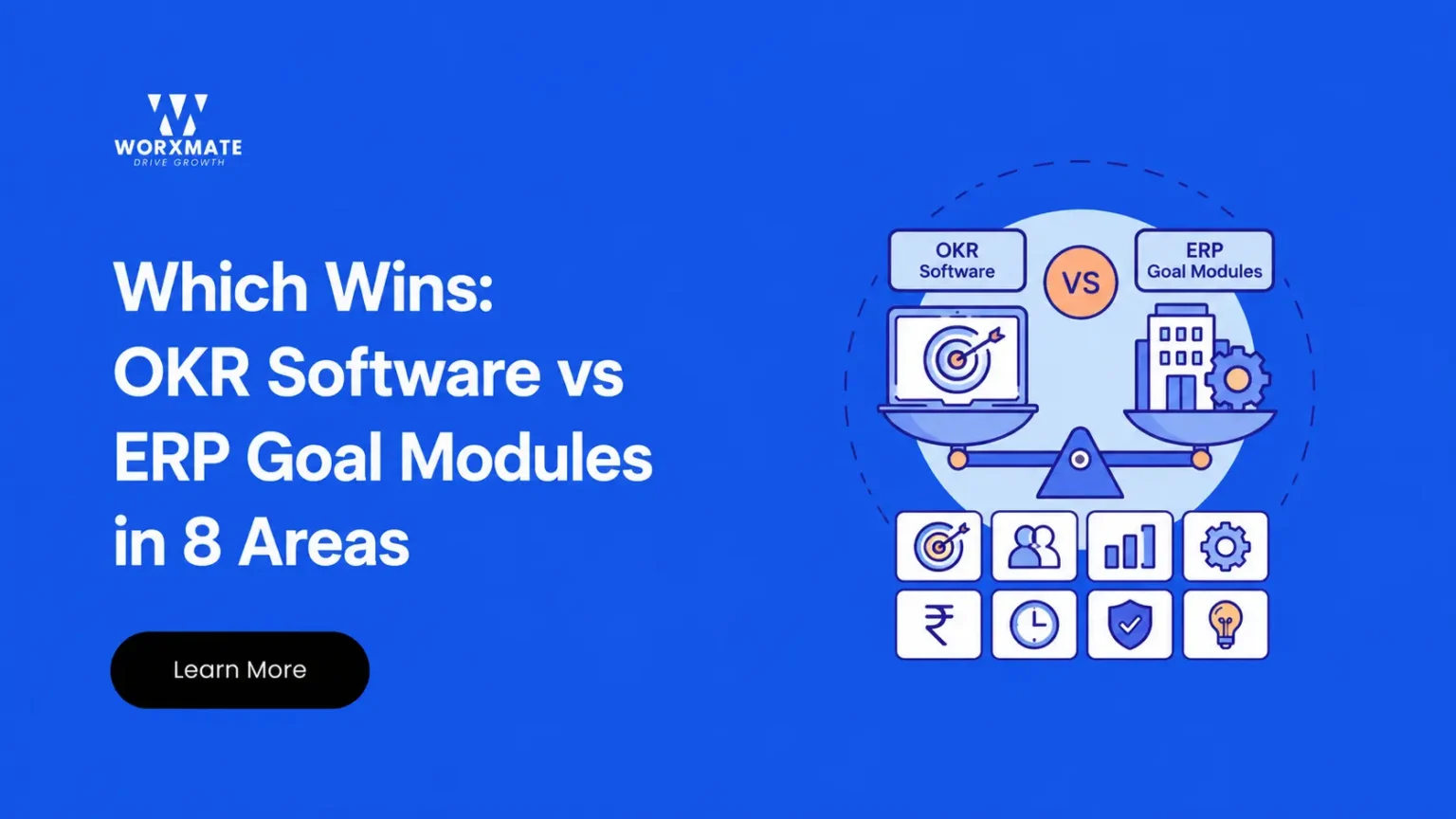
Which Wins: OKR Software vs ERP Goal Modules in 8 Areas: Choosing between dedicated OKR software and ERP goal modules defines whether your organization treats strategy execution as an agile cultural driver or a rigid compliance chore. When evaluating the top okr tool compared across 8 operational criteria, dedicated execution platforms consistently outperform ERP modules in user adoption, weekly check-in frequency, and strategic alignment.
| Category | Dedicated OKR Software | ERP Goal Modules |
|---|---|---|
| Best For | Strategy execution and cultural change | Administrative tracking and compliance |
| OKR Management | Advanced (Bidirectional alignment) | Basic (Top-down cascading) |
| User Adoption | High (Intuitive, social, mobile) | Low (Complex, transactional UI) |
| Pricing | Per-user subscription | Module add-on or included |
| G2 Rating | Typically 4.5+ stars | Typically 3.5 – 4.0 stars |
| Ideal Team Size | Growth-stage to Enterprise | Large Enterprises (Compliance-first) |
Why Static ERP Dashboards Fail Modern Strategy Execution
When running large-scale transformations—such as our implementation with a $45 Billion Middle East Energy & Utility conglomerate (8,000+ employees)—we observed firsthand how rigid, top-down ERP systems stall momentum. Department heads bogged down by annual compliance cycles treat goals as static checkboxes rather than dynamic moving from KPIs to OKRs initiatives.
The Point:
Traditional ERP goal modules lack the agility required for iterative planning and continuous OKR software workflows. Without automated weekly check-ins and predictive blocker detection, leadership teams remain blind to execution friction until quarters close.
The Worxmate Advantage:
Modern OKR software leverages purpose-built AI engines like Orbit AI and Axis AI to connect frontline tasks directly to boardroom strategic alignment, ensuring high-integrity metric design and transparent strategic performance management system rhythms.
OKR Management: OKR Software vs ERP Goal Modules
The core difference in OKR software vs ERP goal modules lies in how they handle the fluidity of the OKR framework. Dedicated tools are built to facilitate a strategic performance management system that encourages frequent check-ins and transparency.
Dedicated OKR Software
These platforms support bidirectional alignment, allowing teams to propose bottom-up objectives that link to corporate goals. They feature automated progress updates, confidence scores, and “check-in” reminders that keep goals top-of-mind. The focus is on the process of achieving results, not just the final number.
ERP Goal Modules
Enterprise Resource Planning (ERP) goal modules often treat objectives as static data points. They are typically structured for top-down cascading, where a manager sets a goal and the employee updates it once a quarter. While they excel at linking goals to payroll or HR records, they often lack the collaborative features required for modern OKR cycles.
Performance Reviews: OKR Software vs ERP Goal Modules
Evaluating OKR software vs ERP goal modules requires looking at how goals feed into employee evaluations. Modern companies are moving toward outcome-driven performance management, which requires a more nuanced approach than traditional ERP systems offer.
Dedicated OKR Software
Dedicated tools often include continuous feedback loops, 1-on-1 meeting templates, and peer recognition. They allow for “decoupling” OKRs from compensation—a core OKR best practice—while still providing the data needed for a holistic review. This prevents employees from setting “safe” goals just to ensure a bonus.
ERP Goal Modules
ERP modules are hard-wired into the HRIS (Human Resources Information System). This makes it easy to pull goal completion percentages directly into an annual performance review or bonus calculation. However, this tight coupling often leads to “sandbagging,” where employees avoid ambitious stretch goals to protect their performance rating.
Feature-by-Feature: OKR Software vs ERP Goal Modules Breakdown
Analyzing the functional depth of OKR software vs ERP goal modules reveals a gap in user experience and agility. According to G2 review data, dedicated OKR tools consistently score higher on “ease of use” and “quality of support” compared to ERP-based goal tracking.
| Feature | Dedicated OKR Software | ERP Goal Modules |
|---|---|---|
| Bidirectional Alignment | ✓ Full Support | ✗ Limited / Top-down only |
| Confidence Scoring | ✓ Native Feature | ✗ Rare |
| Real-time Dashboards | ✓ High Visual Depth | ✓ Basic Reporting |
| Slack/Teams Integration | ✓ Deep Integration | ✗ Limited / Notification only |
| Weekly Check-ins | ✓ Automated Workflow | ✗ Manual Entry |
| AI Writing Assistant | ✓ Common | ✗ Rare |
| Peer Feedback | ✓ Native Feature | ✓ Optional Module |
| OKR Coaching/Consulting | ✓ Often Included | ✗ Software Only |
| Mobile App Experience | ✓ High Engagement | ✗ Functional / Low Engagement |
| Implementation Speed | 2–4 Weeks | 3–6 Months |
OKR Adoption Rates: OKR Software vs ERP Goal Modules
The success of any goal-setting initiative depends on PMS adoption challenges being addressed early. In the battle of OKR software vs ERP goal modules, user friction is the primary reason ERP modules often fail to drive actual strategic change.
Dedicated OKR Software
Designed with the end-user in mind, these tools mimic social media or project management interfaces. By reducing the “clicks to check-in,” they maintain high engagement levels throughout the quarter. Features like Slack integrations allow employees to update goals without leaving their primary work environment.
ERP Goal Modules
ERPs are notoriously difficult to navigate. Employees often view the ERP as a place they go once a year to change their benefits or view a payslip. Asking them to log into a complex, “clunky” system every week to update OKRs usually results in low data quality and “pencil-whipping” (filling in data just to satisfy a requirement).
Pricing: OKR Software vs ERP Goal Modules Cost Comparison
When comparing OKR software vs ERP goal modules, the “sticker price” can be deceiving. While an ERP module might seem cheaper as an add-on, the cost of failed adoption can be much higher.
| Plan | Dedicated OKR Software | ERP Goal Modules |
|---|---|---|
| Starter / SMB | $3–$7 per user/mo | Included in HRIS Suite |
| Growth / Pro | $8–$12 per user/mo | $2–$5 add-on fee |
| Enterprise | Contact for pricing | Volume-based negotiation |
| Implementation Fee | Low to Moderate | High (Consultant heavy) |
Dedicated platforms typically offer more transparent, per-user pricing. ERP systems often hide goal-tracking costs within larger licensing agreements, making it difficult to calculate the specific ROI of your goal-setting efforts.
Dedicated OKR Software: Pros and Cons
A specialized OKR software solution is designed specifically to solve the “execution gap” that many growth-stage companies face.
Pros
High user engagement due to superior UI/UX. Deep support for OKR best practices like weekly check-ins and confidence scores. Faster implementation cycles compared to enterprise ERP deployments.
Cons
Requires an additional vendor in the tech stack. May require integration work to sync with existing HRIS or data warehouses.
ERP Goal Modules: Pros and Cons
Understanding OKR software vs ERP goal modules requires acknowledging why large enterprises often default to the “all-in-one” approach.
Pros
Single source of truth for all employee data. Seamless flow from goal completion to payroll and bonuses. No additional security reviews or procurement cycles for new software.
Cons
Poor user interface leads to low adoption. Rigid structures make it difficult to pivot goals mid-quarter. High “total cost of ownership” due to expensive implementation consultants.
Which Tool Is Right for Your Team?
The choice of OKR software vs ERP goal modules ultimately depends on your company’s maturity and objectives. If your goal is strictly compliance and annual tracking, an ERP module may suffice. However, for organizations seeking high-growth and OKR vs KPI software clarity, a dedicated tool is essential.
The Verdict: OKR Software vs ERP Goal Modules
The OKR software vs ERP goal modules debate is won by dedicated tools for any company that views goal-setting as a cultural driver rather than a clerical task. While ERPs provide the comfort of consolidation, they almost universally fail to generate the employee “buy-in” required to make OKRs successful in a dynamic market.
For leadership teams focused on strategic alignment and building a high-performance culture, the flexibility and engagement of a performance management system built for the modern workforce outweigh the administrative convenience of an ERP module. This directly accelerates measurable key results across the entire organization. Tracking a real-time confidence score helps identify at-risk targets before quarter-end. Surfacing operational blockers early ensures leadership can clear obstacles quickly. Strong goal alignment eliminates siloed efforts and connects daily work to strategic outcomes.
👉 Book a demo with Worxmate and see how our dedicated OKR software vs ERP goal modules comparison proves the value of a best-of-breed execution platform.


Written by
An OKR Coach with 20+ years of implementation experience, Madhusudan has guided over 50 organisations through successful OKR transformations, training more than 500 leaders. Learn more about Worxmate.
Frequently Asked Questions
Most companies choose dedicated OKR software because it offers higher user adoption, better bidirectional alignment, and specialized features like confidence scoring that ERP modules lack.
While some ERPs have goal modules, they are usually designed for top-down cascading and annual reviews rather than the agile, frequent check-in nature of the OKR framework.
The main risk is data silos, but most modern OKR software provides robust APIs and native integrations to sync with HRIS and ERP systems.
Yes, Worxmate provides a more intuitive and strategically focused environment for goal setting while being able to sync results back to your primary ERP or HRIS for record-keeping.
ERP goal modules tightly couple goal completion to compensation and HR appraisals, encouraging employees to set safe targets to protect bonuses. Dedicated OKR software allows organizations to decouple ambitious stretch goals from direct payroll metrics, fostering transparent feedback and risk-taking without penalty.
Dedicated OKR software is engineered specifically for agile execution, bidirectional alignment, weekly check-in rhythms, and high user adoption. ERP goal modules treat objectives as static, top-down compliance records tied to HRIS systems.
ERP interfaces are typically clunky and transactional, causing employees to engage only once a quarter or year. This transactional friction leads to low data quality and pencil-whipping.
While ERPs pull completion percentages into annual reviews, they lack continuous feedback loops, peer recognition, 1-on-1 templates, and real-time coaching workflows.
Worxmate utilizes specialized intelligence engines like Orbit AI, Axis AI, and Nexus AI to automate metric authoring, track weekly check-in blockers, and align frontline tasks with strategic priorities.