How to Fix a Broken Performance Management System (2026)
Actionable insights to align your OKRs with everyday performance management-from proven frameworks to the tools that power them.
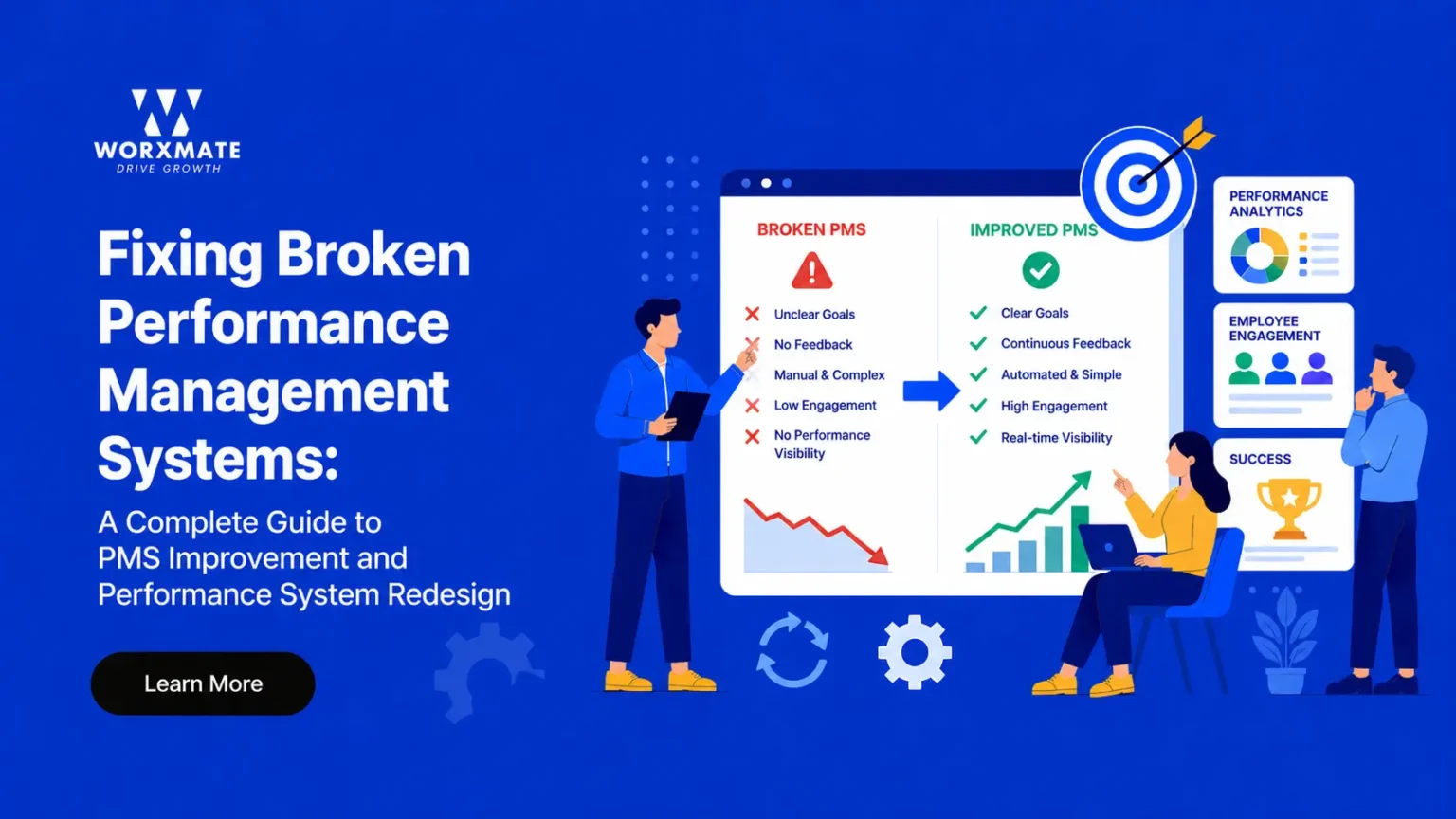
PMS Improvement: Redesigning broken performance management systems requires shifting from rigid annual reviews to continuous, real-time feedback. By deploying agile employee performance software, modern organizations seamlessly align strategic priorities with daily frontline execution, reducing administrative overhead by 50% while driving measurable employee engagement and operational growth.
Key Takeaways from Adobe’s Success
Performance management systems (PMS) are frameworks organizations use to monitor, evaluate, and improve employee performance aligned with business goals. When these systems become outdated or ineffective, they waste valuable time, demotivate employees, and hinder organizational growth. PMS improvement and performance system redesign involve transforming traditional annual review processes into continuous, real-time feedback systems that emphasize employee development, clear goal-setting, and meaningful conversations. This shift helps organizations boost engagement, reduce turnover, and align individual performance with strategic objectives.
Introduction: The Performance Management Crisis
Your performance management system should be your organization’s engine for growth. Instead, it’s probably draining thousands of hours annually while frustrating both managers and employees.
Research reveals a startling reality: 58% of executives believe their current performance management approach drives neither employee engagement nor high performance. Even more concerning, traditional annual reviews consume massive resources while delivering minimal value. Companies are wasting countless hours on processes that employees describe as “soul-crushing” rather than inspiring.
The good news? PMS improvement isn’t just possible—it’s becoming the competitive advantage that separates industry leaders from everyone else. Organizations that have embraced performance system redesign are seeing dramatic improvements: 90% report better engagement, 96% say processes are simpler, and 83% see higher-quality conversations between managers and employees.
If your organization still relies on once-a-year reviews, forced rankings, or outdated evaluation methods, you’re not alone. But you’re also leaving enormous potential on the table. Let’s explore how to fix what’s broken and build a performance management system that actually works.
Unlock Goal Clarity & Accelerate Employee Growth
Looking to drive goal clarity and employee growth? Discover how Worxmate’s AI-powered Performance Management Software can help.
Why Traditional Performance Management Systems Fail
Before diving into solutions, we need to understand what’s broken. Traditional performance management systems suffer from several critical flaws, prompting organizations to seek modern performance management approaches that align with agile business needs. Transitioning to continuous performance management ensures that feedback is timely and actionable:
- Time-Consuming Bureaucracy
Annual reviews require extensive paperwork, multiple meetings, and countless hours of preparation. Research shows these processes can consume 80,000 to 2 million hours per year for large organizations—equivalent to dozens of full-time employees doing nothing but performance reviews. - Outdated Annual Review Model
The once-a-year evaluation approach was designed in the 1970s for a completely different workplace. In today’s fast-paced business environment, waiting 12 months to provide feedback means missed opportunities for course correction and growth. - Demotivating Rankings and Ratings
Stack-ranking systems and forced distribution curves pit employees against each other rather than fostering collaboration. Studies show that ratings reveal more about the rater’s biases than the employee’s actual performance—a phenomenon called “idiosyncratic rater effect.” - Backward-Looking Focus
Traditional systems assess past performance rather than fuelling future development. They focus on what went wrong last year instead of how to improve next quarter. - Inconsistent and Biased Evaluations
Different managers apply wildly different standards, leading to unfair comparisons and frustrated employees who feel undervalued.
The Core Principles of PMS Improvement
Successful performance system redesign isn’t about tweaking your current process—it’s about reimagining how performance management should work. Here are the foundational principles:
- Shift from Annual to Continuous Feedback
Replace once-a-year reviews with ongoing conversations. Employees need real-time feedback when it matters most, not months after the fact. Weekly or bi-weekly check-ins create momentum and allow for immediate course corrections.
- Focus on Development Over Evaluation
Transform performance management from a judgmental process to a developmental one. The goal isn’t to label employees as “high” or “low” performers—it’s to help everyone improve and grow into their potential.
- Enable Two-Way Dialogue
Performance conversations should flow both directions. Employees need opportunities to provide upward feedback and shape their own development plans alongside their managers.
- Align Individual Goals with Business Objectives
Clear goal-setting using frameworks like OKRs (Objectives and Key Results) ensures everyone understands how their work contributes to organizational success. Goals should be transparent, measurable, and regularly updated.
- Leverage Technology and Data
Modern performance management platforms enable real-time tracking, facilitate feedback exchanges, and provide analytics that help identify patterns and opportunities for improvement.
Step-by-Step Guide to Performance System Redesign
Ready to transform your performance management approach? Follow this proven framework:
Step 1: Assess Your Current System
Before changing anything, understand what’s broken. Conduct surveys with managers and employees to identify pain points. Calculate how many hours your organization spends on performance management annually. Review turnover data and engagement scores to establish baseline metrics.
Step 2: Define Clear Objectives
What do you want your new system to achieve? Common goals include increased engagement, faster skill development, better alignment with business strategy, and reduced time burden on managers.
Step 3: Secure Leadership Buy-In
Performance system redesign requires support from the top. Present data showing the costs of your current system and the benefits of modernization. Share case studies from companies that have successfully transformed their approaches.
Step 4: Design Your New Framework
Create a system built around these elements:
- Ongoing check-ins (weekly or bi-weekly) between managers and employees
- Real-time feedback mechanisms that anyone can use anytime
- Simplified goal-setting with clear success metrics
- Development-focused conversations that explore career growth
- Recognition systems that celebrate achievements immediately
Step 5: Train Everyone Thoroughly
Managers need coaching on how to conduct effective check-ins, provide constructive feedback, and have developmental conversations. Employees should understand how to request feedback, set meaningful goals, and take ownership of their growth.
Step 6: Pilot with High-Performing Teams
Test your new approach with teams that are likely to embrace change. Gather feedback, identify challenges, and refine your process before rolling it out organization-wide.
Step 7: Roll Out Gradually
Implement in phases rather than changing everything overnight. Start with one department or business unit, learn from the experience, and expand systematically.
Step 8: Monitor and Iterate
Track key metrics like engagement scores, voluntary turnover, manager-employee conversation frequency, and goal achievement rates. Continuously refine your system based on feedback and data.
Case Study: How Adobe Revolutionized Performance Management Through Check-In
Adobe Systems provides one of the most compelling examples of successful performance system redesign. In 2012, the software giant made headlines by completely abolishing its traditional annual performance review system.
The Problem
Adobe’s former Chief Human Resources Officer, Donna Morris, recognized that their annual review process was fundamentally broken. The system required managers to spend an average of 17 hours per employee on reviews—totaling approximately 80,000 hours annually across the organization. Despite this massive time investment, employee surveys revealed that the process left people feeling demotivated rather than inspired. Even worse, voluntary attrition actually increased after review cycles.
The stack-ranking system created barriers to teamwork, with employees feeling pitted against each other rather than working collaboratively toward shared goals. Morris described the situation bluntly: “Ratings and rankings are a buzzkill for productivity and performance.”
The Solution: Check-In
Adobe replaced annual reviews with a continuous system called “Check-In”—inspired by pit stops in auto racing where teams quickly service vehicles to maintain peak performance. The Check-In framework consists of three core elements:
-
- Expectations: Managers and employees collaboratively set clear goals at the start of each year, documented in a concise one-page format that’s regularly reviewed and updated.
- Feedback: Rather than waiting for an annual review, employees and managers exchange real-time feedback continuously. This includes both upward and peer feedback, stored in a centralized dashboard.
- Growth and Development: Regular conversations focus on career aspirations, skill development, and creating pathways for advancement within Adobe.
The Results
The transformation yielded remarkable outcomes:
-
- 80,000+ hours saved annually that managers now invest in coaching and development
- 30% reduction in voluntary attrition as employees felt more valued and supported
- 50% increase in involuntary departures as managers addressed performance issues promptly rather than delaying difficult conversations
- 78% of employees reported their managers were open to feedback, a significant improvement
- Higher percentage of departures classified as “non-regrettable,” meaning Adobe retained the talent that mattered most
According to a McKinsey study, companies transitioning from annual reviews to continuous feedback systems saw a 15% improvement in employee performance and 20% increase in engagement—validating Adobe’s approach.
One Adobe employee captured the sentiment: “Check-in allows me to reflect on what I’ve done, who I want to be at the company, and gives me clarity on what I need to do to perform my best.”
Adobe’s experience demonstrates several critical principles for PMS improvement:
- Bold leadership matters: Donna Morris publicly committed to change before gaining executive approval, creating momentum that couldn’t be stopped
- Speed of implementation: Adobe rolled out Check-In across all 11,000 employees in just nine months
- Employee involvement: Hundreds of employees provided feedback during the design process, ensuring buy-in
- Continuous evolution: Adobe regularly updates Check-In based on employee needs, including introducing a digital dashboard to support remote work
- Focus on enablement: HR shifted from administering performance reviews to enabling managers and employees to have better conversations
Unlock Goal Clarity & Accelerate Employee Growth
Looking to drive goal clarity and employee growth? Discover how Worxmate’s AI-powered Performance Management Software can help.
How Worxmate Transforms Performance Management
While case studies inspire, implementation requires the right tools. Worxmate provides a comprehensive OKR and PMS platform designed specifically for modern continuous performance management.
Key Features for PMS Improvement
- Real-Time Goal Tracking
Set, monitor, and update objectives and key results continuously. Worxmate’s OKR framework ensures everyone knows what matters most and can track progress transparently across the organization. - Continuous Feedback System
Enable managers, peers, and team members to provide feedback anytime through an intuitive interface. No more waiting for annual review cycles—address issues and celebrate wins in the moment. - Check-In Management
Schedule and document regular one-on-one conversations between managers and employees. Worxmate provides structured templates while maintaining flexibility for meaningful dialogue. - Development Planning
Create personalized growth plans that align individual aspirations with organizational needs. Track skill development and career progression over time. - Performance Analytics
Access real-time dashboards showing engagement trends, goal achievement rates, and feedback patterns. Make data-driven decisions about talent development and recognition. - Integration Capabilities
Connect Worxmate with your existing HR systems, communication tools, and project management platforms for seamless workflows.
Why Worxmate Solves Your Performance Management Challenges
Unlike traditional performance management systems that add complexity, Worxmate simplifies the process while making it more effective. While legacy enterprise platforms like Lattice charge high starting costs ($11+/user/month plus mandatory platform fees) and offer clunky OKR integrations bolted onto legacy review cycles, Worxmate provides an agile, cost-effective alternative. Furthermore, Worxmate is built to support frontline and remote operational teams (such as Logistics, Healthcare, and IT) with native task tracking—a capability completely missing from traditional HR tools.
| Feature / Dimension | Worxmate.ai | Legacy Enterprise Platforms (e.g., Lattice) |
|---|---|---|
| Primary Philosophy | Agile, continuous performance integrated directly with daily execution. | Rigid, review-centric cycles bolted onto legacy HR databases. |
| AI Capabilities | Native AI-driven feedback coaching and automated OKR alignment. | Basic generative text templates with limited contextual intelligence. |
| Performance Management | Continuous 1:1 check-ins, real-time employee feedback, and agile performance reviews. | Heavy, administrative annual or semi-annual review cycles. |
| Goal-to-Task Link | Direct connection between strategic OKRs and daily frontline tasks. | Disconnected OKRs that exist in a separate silo from daily work. |
| Ease of Use | Lightweight, mobile-friendly interface optimized for deskless and remote teams. | Complex, desktop-heavy dashboards requiring extensive training. |
| Pricing Model | Highly cost-effective, transparent pricing (half the cost of enterprise bloat) with no hidden performance rating fees. | High starting costs ($11+/user/month) plus mandatory platform fees. |
| Best For | Mid-market companies, logistics, healthcare, IT, and frontline operations. | Corporate desk-bound enterprises with large HR administration budgets. |
The platform embodies the principles that leading companies like Adobe, GE, and Deloitte have proven successful:
- Replace annual reviews with continuous conversations
- Focus on future development rather than past evaluation
- Enable transparent goal-setting and tracking
- Facilitate two-way feedback between all organizational levels
- Save thousands of hours while improving outcomes
Organizations using Worxmate report faster implementation, higher adoption rates, and measurable improvements in engagement and performance alignment.
Take the First Step Toward Better Performance Management
Ready to fix your broken performance management system? Start your free trial of Worxmate today and discover how modern OKR and PMS tools can transform your organization’s approach to performance. Tracking a real-time confidence score helps identify at-risk targets before quarter-end. Surfacing operational blockers early ensures leadership can clear obstacles quickly. Seamless cascading ensures department milestones stay synchronized with company strategy. Strong goal alignment eliminates siloed efforts and connects daily work to strategic outcomes.
Sign Up for Worxmate | Schedule a Demo | Explore Features
Don’t let outdated processes hold your organization back. Join the performance management revolution with Worxmate.


Written by
An OKR Coach with 20+ years of implementation experience, Madhusudan has guided over 50 organisations through successful OKR transformations, training more than 500 leaders. Learn more about Worxmate.
Frequently Asked Questions
Mid-market companies are migrating due to high starting costs ($11+/user/month), mandatory platform fees, and clunky OKR integrations that feel bolted onto legacy review cycles rather than driving daily execution.
Worxmate offers a highly cost-effective alternative, combining continuous performance management and OKRs for about half the total investment of legacy enterprise platforms, with zero hidden platform fees.
Yes. Unlike desktop-heavy legacy tools, Worxmate features a mobile-friendly interface and native task tracking designed specifically for frontline and remote operational teams in Logistics, Healthcare, and IT.
Combining OKRs and performance management ensures that daily tasks and strategic priorities are directly linked to employee reviews, eliminating silos and ensuring everyone works toward the same business outcomes.
By replacing heavy annual reviews with lightweight, continuous 1:1 check-ins and real-time feedback, managers save thousands of hours annually while addressing performance issues in real time.
Traditional reviews are backward-looking, time-consuming, and often biased. They focus on past mistakes rather than future development, leading to demotivated employees and high voluntary attrition.
Worxmate features an intuitive, real-time feedback system where peers, managers, and team members can exchange feedback instantly, storing insights in a centralized dashboard for holistic reviews.
Absolutely. Worxmate is specifically optimized for operational environments where frontline task tracking, clear milestones, and agile goal-setting are critical to success.
Most mid-market organizations can fully migrate and roll out Worxmate within a few weeks, supported by our streamlined onboarding and native integration capabilities.
Yes, Worxmate integrates seamlessly with popular HR systems, communication platforms like Slack and Teams, and project management tools to ensure frictionless workflows.