 WORXMATE
Quick Answer
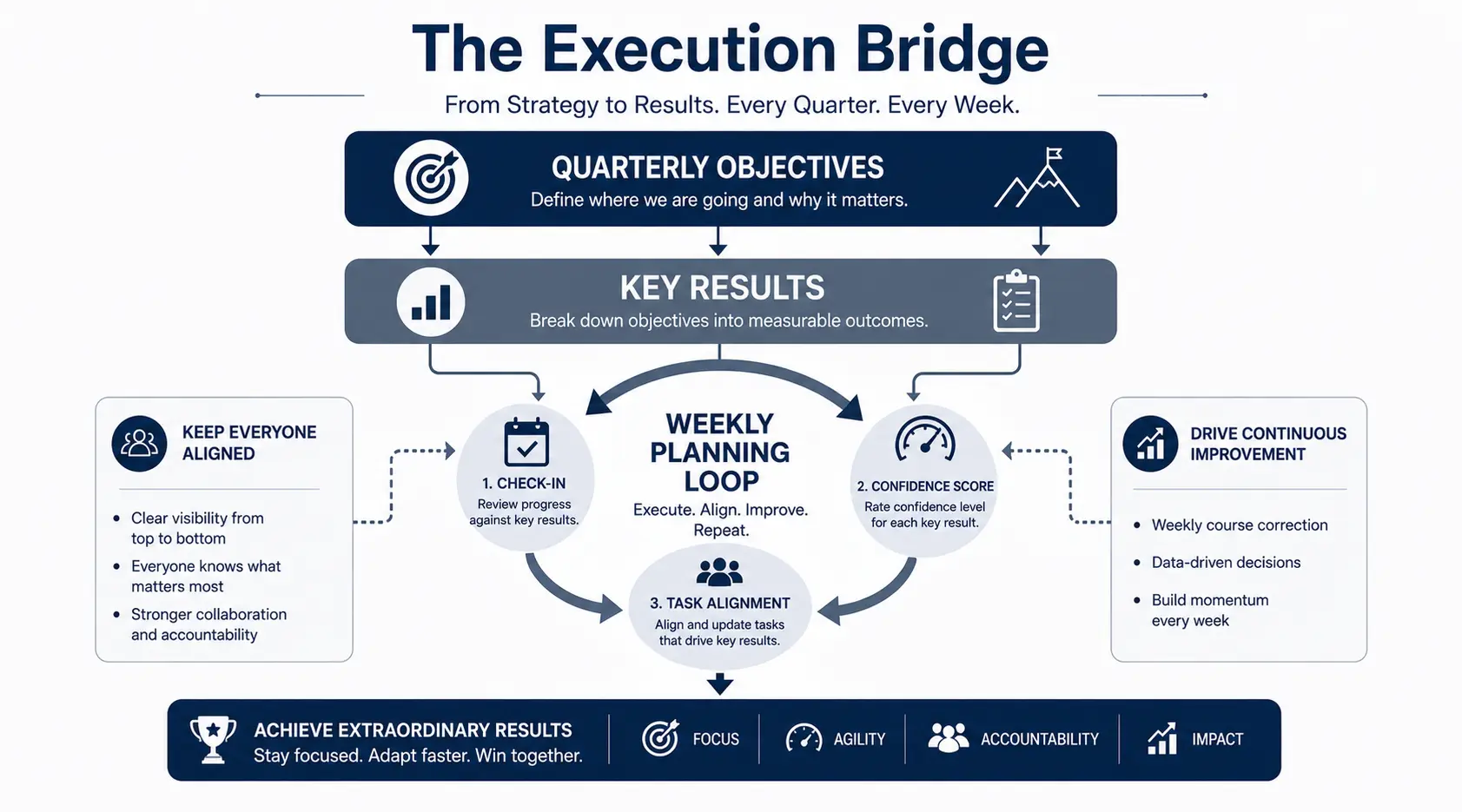
OKR software with weekly planning bridges the gap between high-level quarterly objectives and daily execution by integrating weekly check-ins, confidence scoring, and task alignment. This ensures strategy remains active rather than static, driving an Execution Maturity Rate of 30-40% in organizations that move beyond simple goal-setting to consistent weekly operational rhythms.
The “Coaching Cliff” is the exact moment an OKR program dies. It happens when the C-suite stops talking about the strategy and the middle management layer realizes that nobody is checking the numbers until the end of the quarter. I have seen this play out in a 70,000-person IT services organization where the leadership team spent three months drafting perfect “outcomes,” only to watch the entire program evaporate because they lacked OKR software with weekly planning capabilities. Without a weekly rhythm, an OKR is just a wish list with a deadline.
In my experience, the disconnect between strategy vs tactics is not a failure of intent; it is a failure of infrastructure. When a leader tells me their OKRs are “on track” but cannot show me the last three weekly confidence score changes, I know the program is already failing. Genuine OKR software with weekly planning does not just store goals; it forces the conversation about what is happening right now to move those goals. If you are only looking at your OKRs four times a year, you are not running an OKR program; you are running a legacy appraisal cycle with newer terminology.
The transition from output to outcome thinking cannot happen in a single quarter regardless of seniority. It is a 12-month journey. This is why I measure success not by how many goals are “green,” but by the Execution Maturity Rate of the leadership team. Most organizations start at a 5-15% maturity rate in their first cycle. Those that use OKR software with weekly planning to anchor their Monday morning meetings see that number climb to 30-40% within a year. They stop asking “what did you do?” and start asking “how did what you do move the Key Result?”
By The Numbers
Execution Maturity Rate: Organizations using weekly planning move from a 5-15% maturity rate to 30-40% within 12 months of consistent coaching.
The Practitioner Perspective: Why Weekly Planning is Non-Negotiable
An OKR Coach with 20+ years of implementation experience across 50+ implementations knows that the “set and forget” trap is the most expensive mistake a CEO can make. I have sat in war rooms with APAC retail companies where the CEO could not name three clear priorities in 45 minutes. The fix was not a better slide deck; it was a structural shift to weekly accountability. When you implement OKR software with weekly planning, you are installing an early warning system for your strategy.
Most leaders treat OKRs as a reporting requirement for HR. This is a systemic failure. When OKRs are owned by HR, they become an appraisal tool. When they are owned by the CEO’s office and managed through OKR software with weekly planning, they become a strategy execution engine. The weekly rhythm is what prevents “at-risk” goals from becoming “failed” goals. If a team waits until week 10 to admit a Key Result is lagging, the quarter is already lost. A weekly check-in identifies that lag in week 2, giving the team 10 weeks to pivot.
Across the 500+ leaders I have trained, the most common pain point is the “Friday afternoon scramble.” This is when managers try to remember what they did all week to update a static spreadsheet. Dedicated OKR software with weekly planning eliminates this by connecting daily tasks to quarterly outcomes. It turns the check-in from a data-entry chore into a strategic review. You are no longer measuring the quantity of work; you are measuring the velocity of the outcome.
Field Note
Alignment is agreement between teams on what matters. You cannot create this in a tool; you can only display it once the agreement exists through weekly planning cycles.
The Problem: The Execution Gap in Quarterly-Only OKRs
The execution gap is the space between the strategy defined in the boardroom and the work happening at the desk. Without OKR software with weekly planning, this gap is filled with “busy work” that feels productive but moves nothing. I recently coached a European fintech startup that had 40 written OKRs but zero progress after six weeks. Why? Because their teams were focused on weekly “sprints” that had no data-link to the quarterly Key Results. They were running fast in the wrong direction.
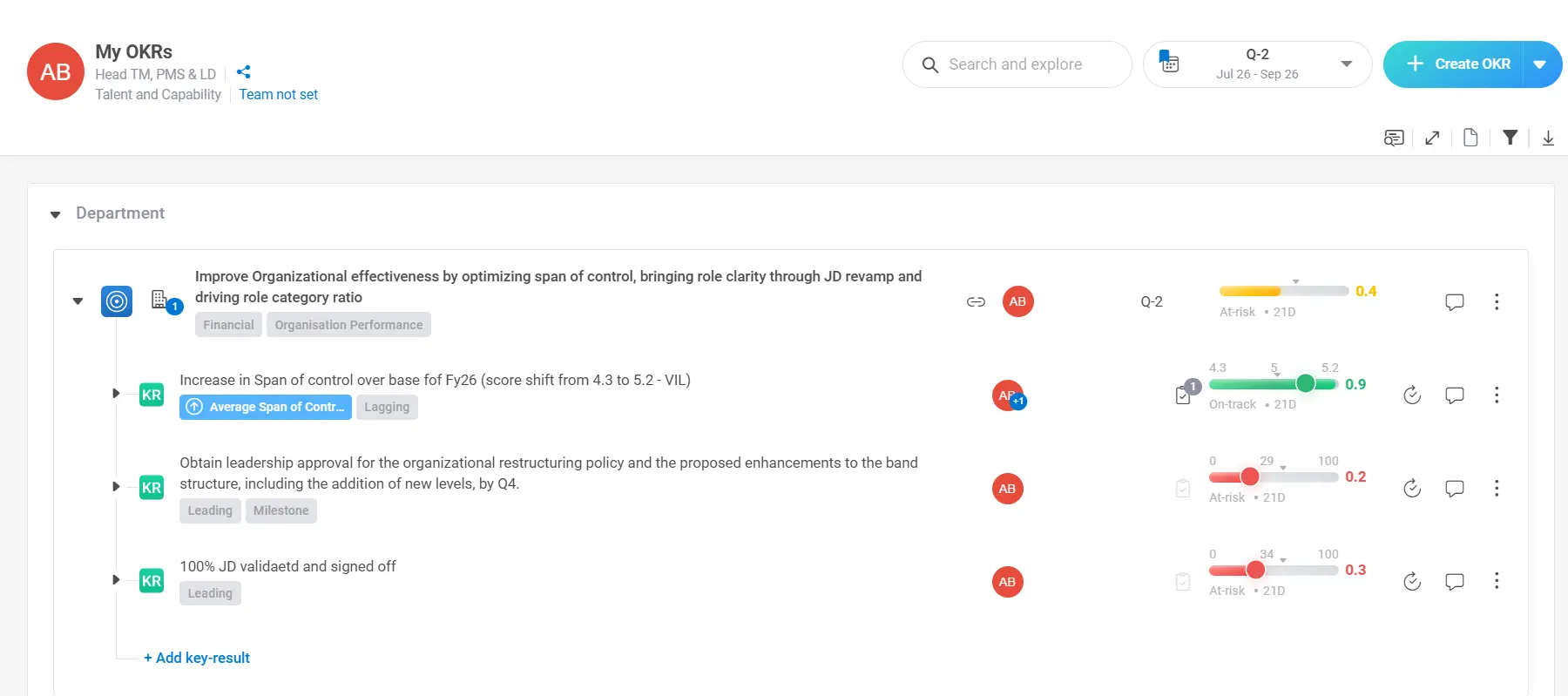
This is where the distinction between okr software and a task manager becomes critical. A task manager tells you what is done. OKR software with weekly planning tells you if what is done actually mattered. When a team uses a tool like Worxmate AI, they are forced to provide a confidence score every week. If the confidence score drops from 0.8 to 0.4, the software flags it immediately. This is the “at-risk” signal that prevents strategic drift.
The pain for a Strategy Head or Chief of Staff is the manual labor of chasing updates. If you are spending your Sundays consolidating Excel sheets for a Monday MBR, your system is broken. A robust OKR software with weekly planning automates this collection. It provides a real-time view of the OKR Cascade Velocity, showing exactly where the strategy is stalling. Without this, you are flying blind, relying on gut feel and “manager’s intuition” rather than hard execution data.
10 Best OKR Software with Weekly Planning for 2026
Choosing the right OKR software with weekly planning requires looking past the feature list and into the execution philosophy. Some tools are built for HR compliance; others are built for business velocity. Below are the 10 tools that currently lead the market in bridging the gap between quarterly goals and weekly actions.
1. Worxmate AI
Worxmate AI is built on the DEEP AI framework (Define, Execute, Evaluate, Plan). Unlike generic tools, it uses Execute OKR check-in software to automate the weekly rhythm. It doesn’t just ask for a number; it uses Orbit AI to detect burnout risk and engagement decline based on check-in patterns. For a CEO, this is the ultimate OKR software with weekly planning because it provides a “Third Eye” into the organization’s execution health. It is particularly effective for okr examples for bfsi companies in india where regulatory compliance and execution precision are paramount.
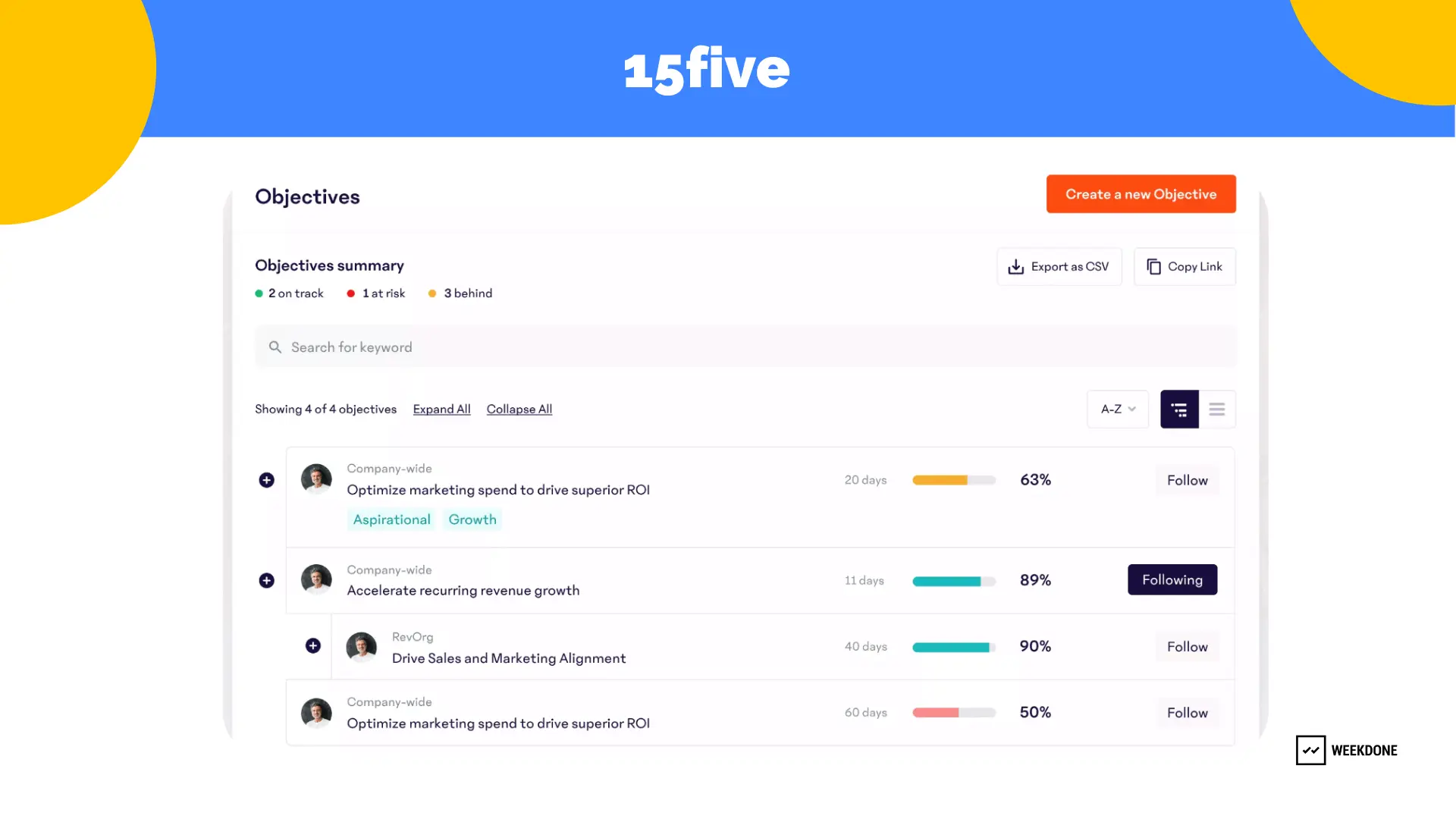
2. Weekdone
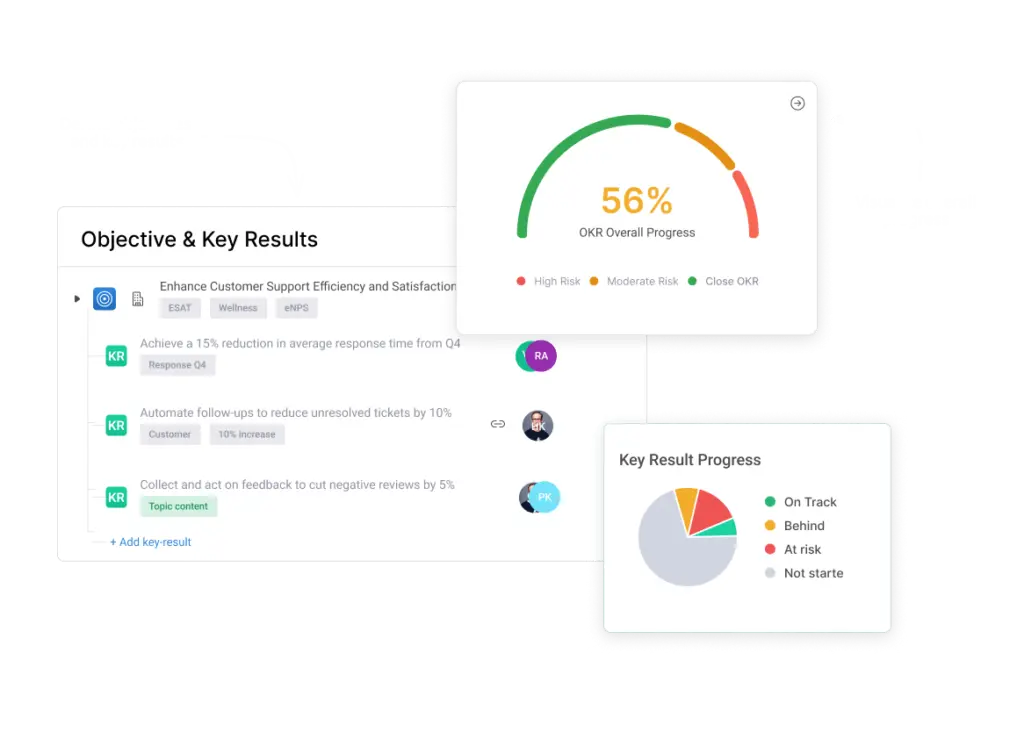
Weekdone is perhaps the “purest” OKR software with weekly planning on this list. It is built specifically around the PPP (Plans, Progress, Problems) methodology. It forces teams to report what they planned to do, what they actually achieved, and what is blocking them. While it lacks the deep AI insights of Worxmate, it is a solid choice for smaller teams that need a simple, disciplined weekly cadence.
3. Profit.co
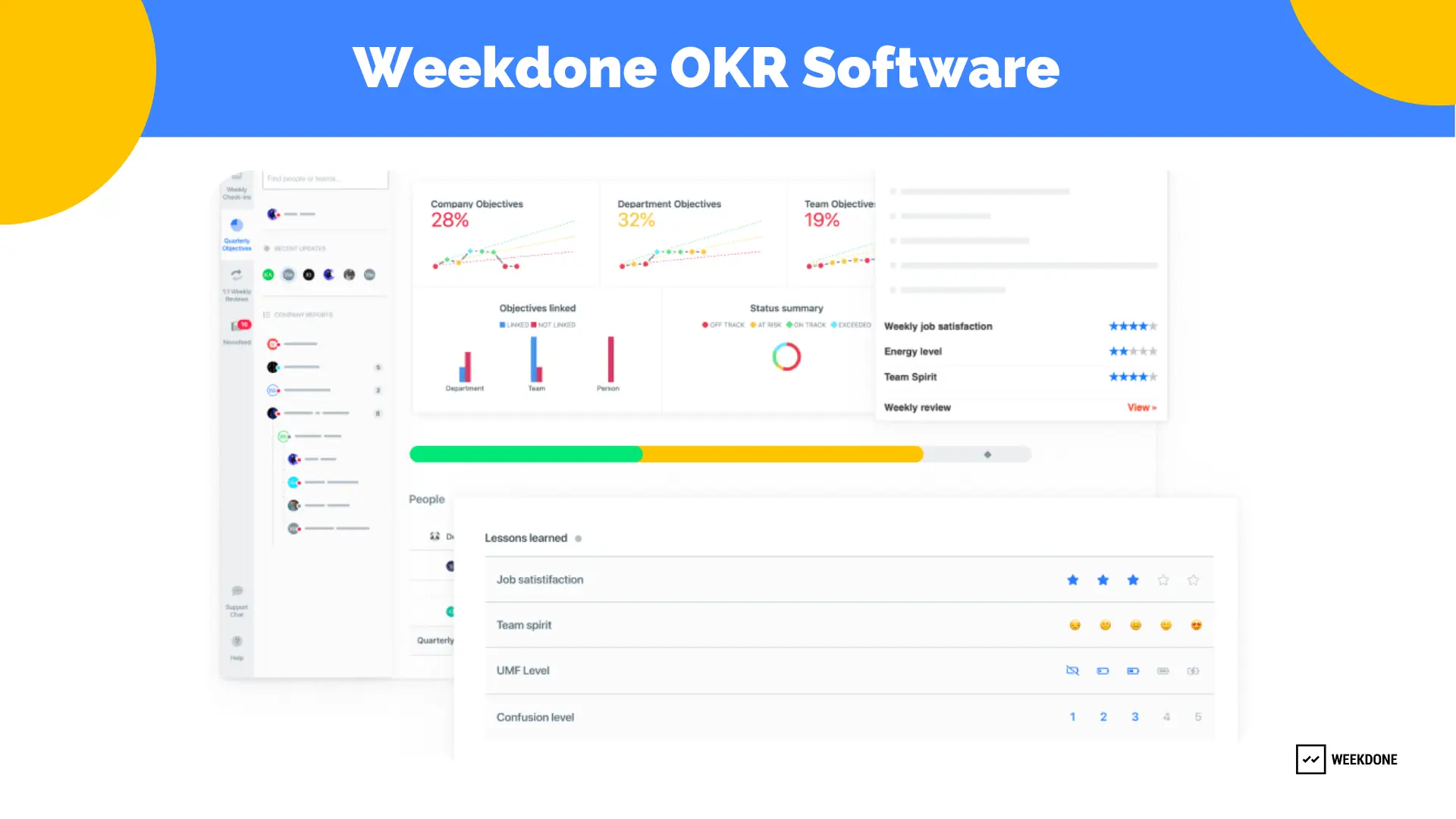
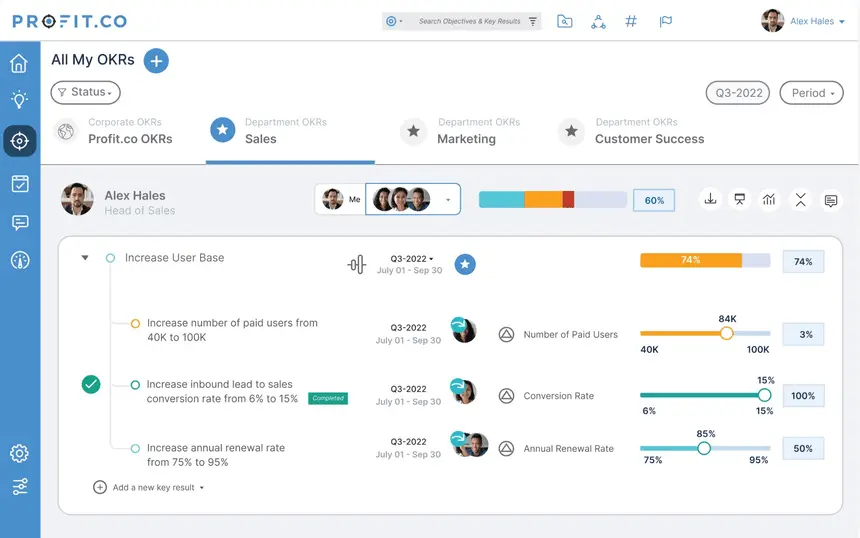
Profit.co offers a highly customizable environment for OKRs. Its strength as an OKR software with weekly planning lies in its “Reflect” feature, which encourages teams to look back at the week’s performance before planning the next. It is a comprehensive tool, though it can sometimes feel overwhelming for organizations that haven’t yet reached a high Execution Maturity Rate.
4. Quantive (formerly Gtmhub)
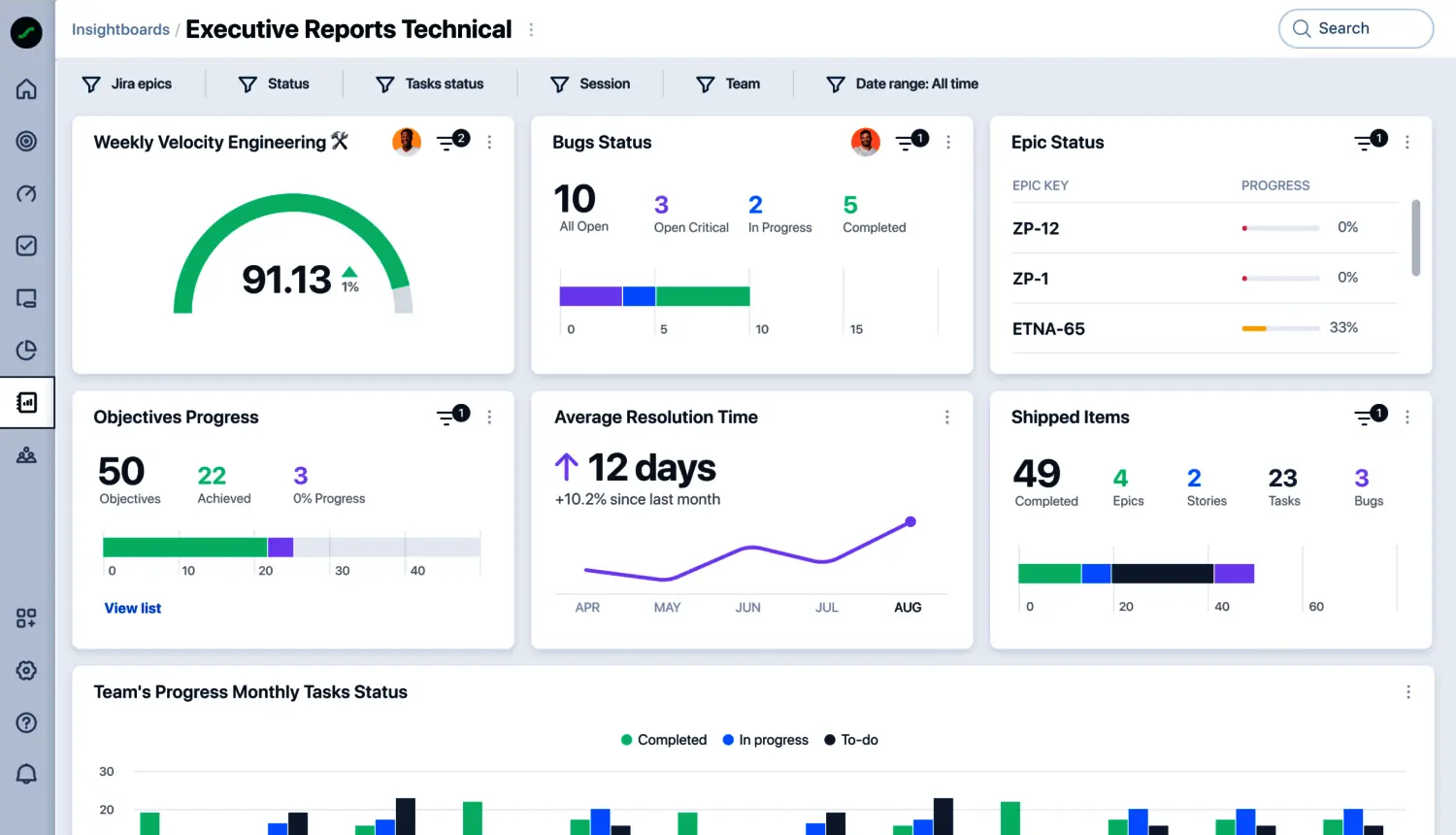
Quantive is the “big data” player in the OKR space. It excels at connecting OKRs to live data sources (like Salesforce or Jira). As an OKR software with weekly planning, it allows for automated Key Result updates. However, the risk with Quantive is that teams stop talking because the data updates itself. Without the manual “confidence score” conversation, the weekly planning can become a passive exercise.
5. Viva Goals (Microsoft)
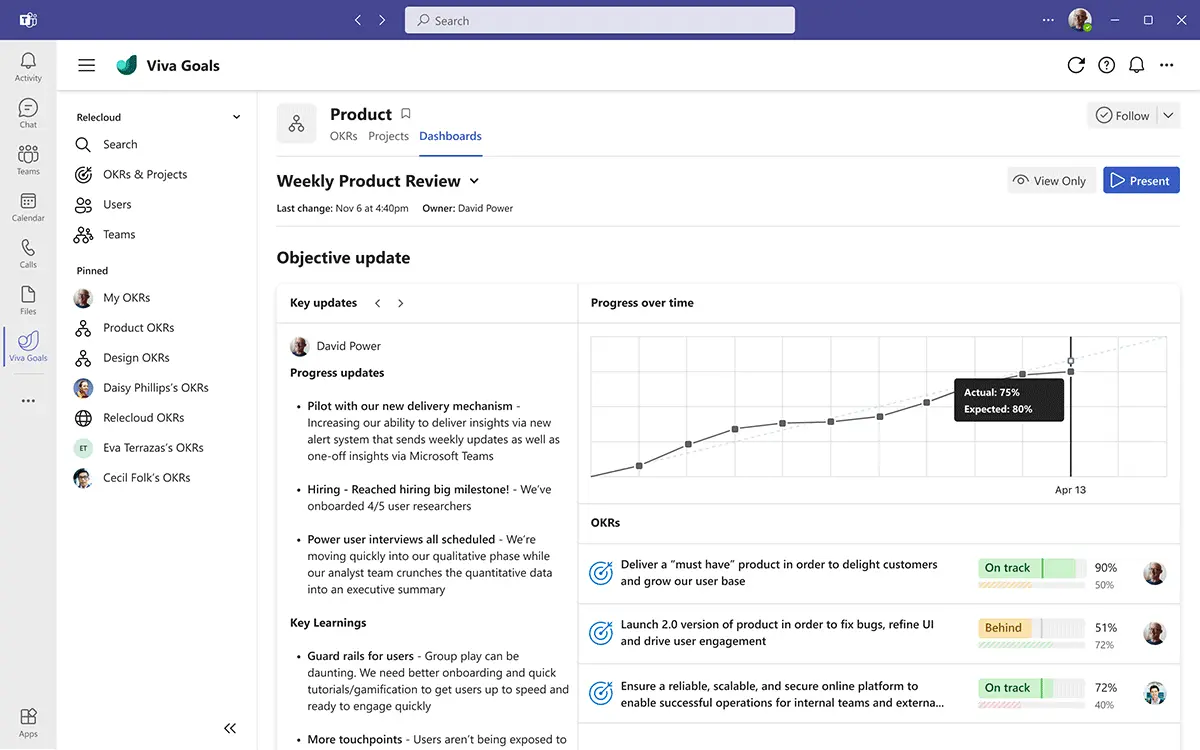
For organizations already deep in the Microsoft ecosystem, Viva Goals is the logical OKR software with weekly planning. It integrates directly into MS Teams, making weekly check-ins part of the existing chat workflow. It is excellent for visibility, though it often requires significant configuration to move beyond basic goal tracking into genuine execution intelligence.
6. Betterworks
Betterworks focuses heavily on the “CFR” (Conversations, Feedback, and Recognition) model. It is a strong OKR software with weekly planning for organizations that want to tie performance management closely to OKRs. You can see how it stacks up in this worxmate vs betterworks comparison, particularly regarding how AI handles at-risk detection.
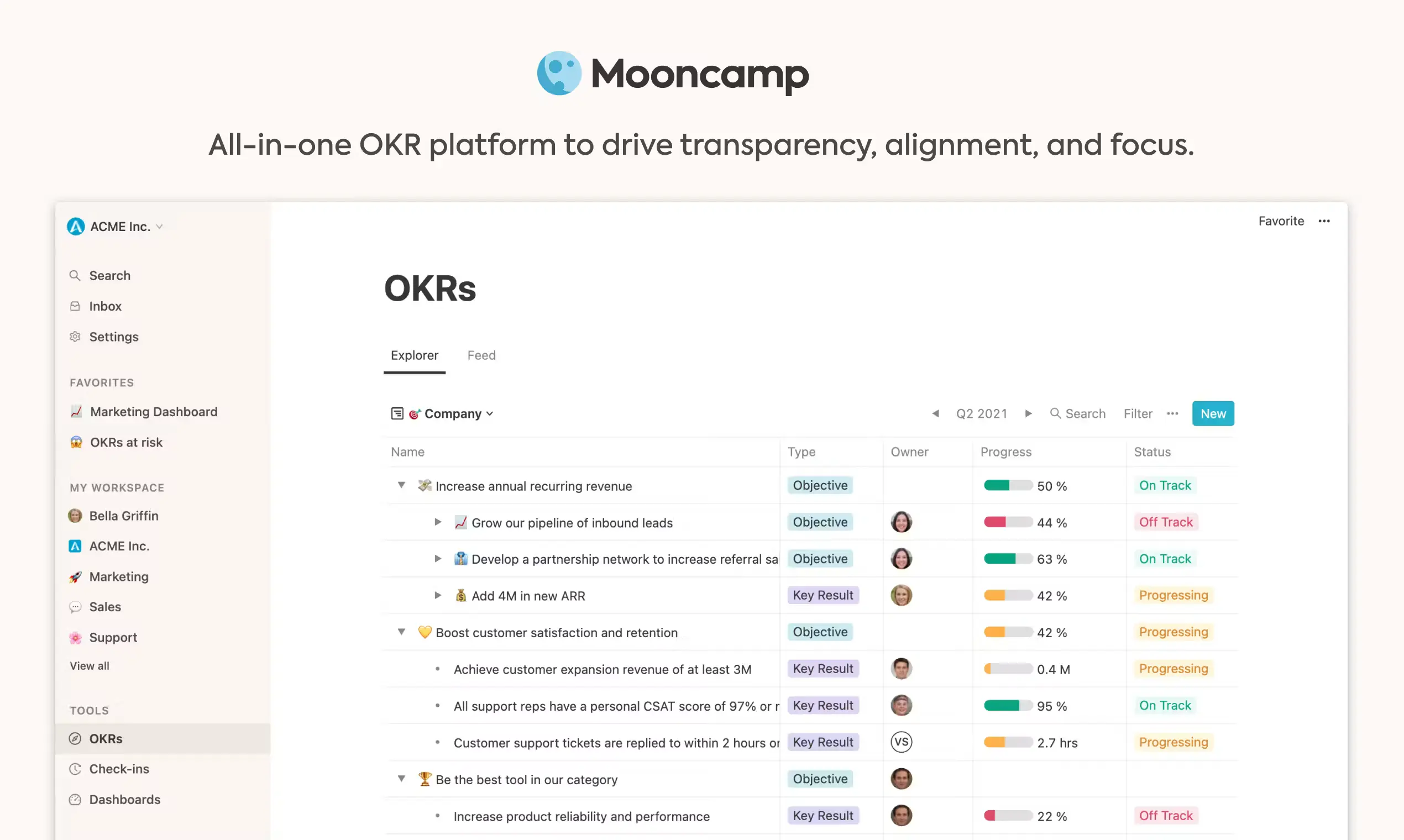
7. Mooncamp
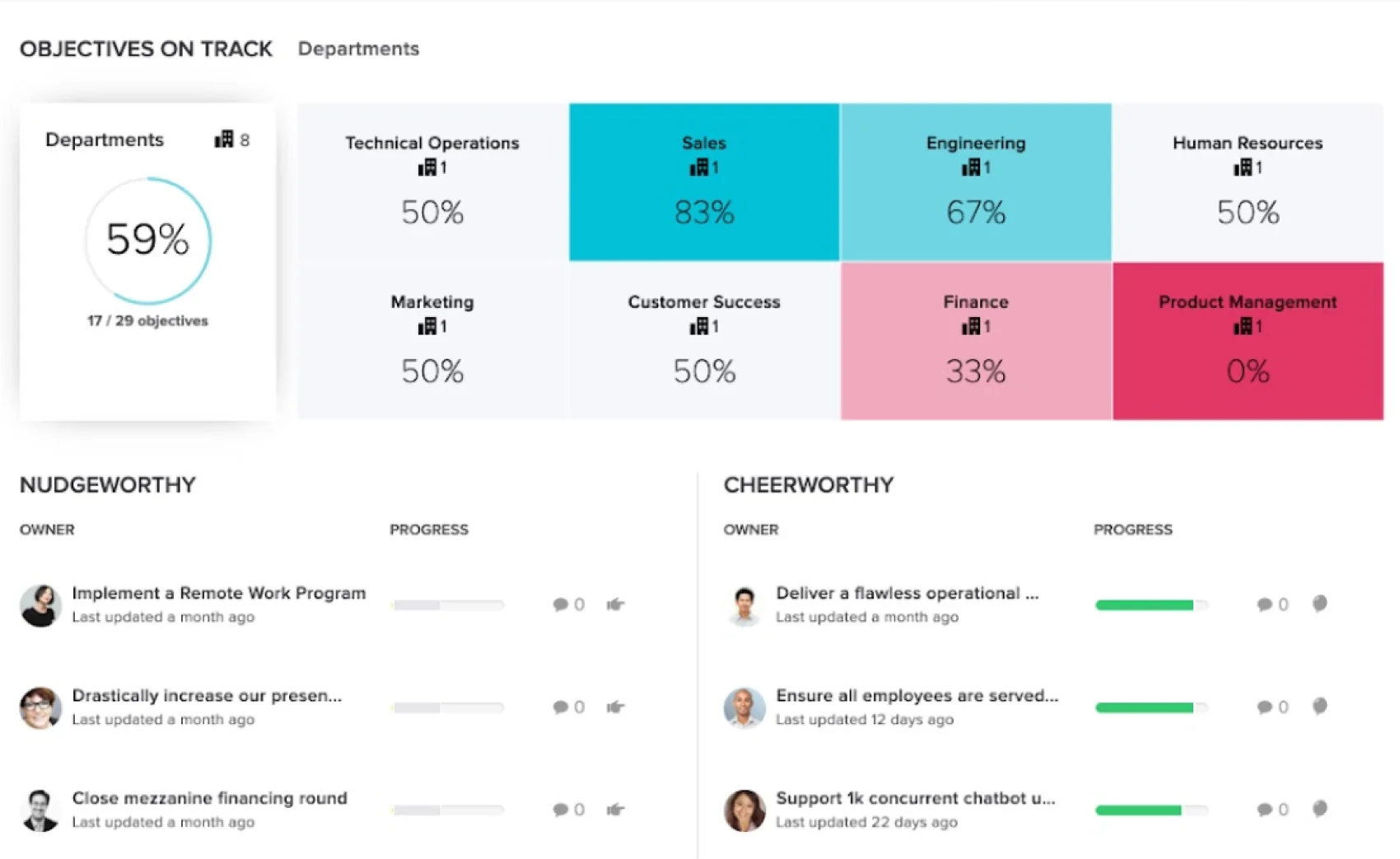
Mooncamp is a highly flexible, “Notion-like” OKR software with weekly planning. It allows teams to build their own check-in templates. This is great for creative teams or personal okrs for designers, but it can lead to a lack of standardization in larger organizations. See the worxmate vs mooncamp breakdown for more on flexibility vs. structured execution.
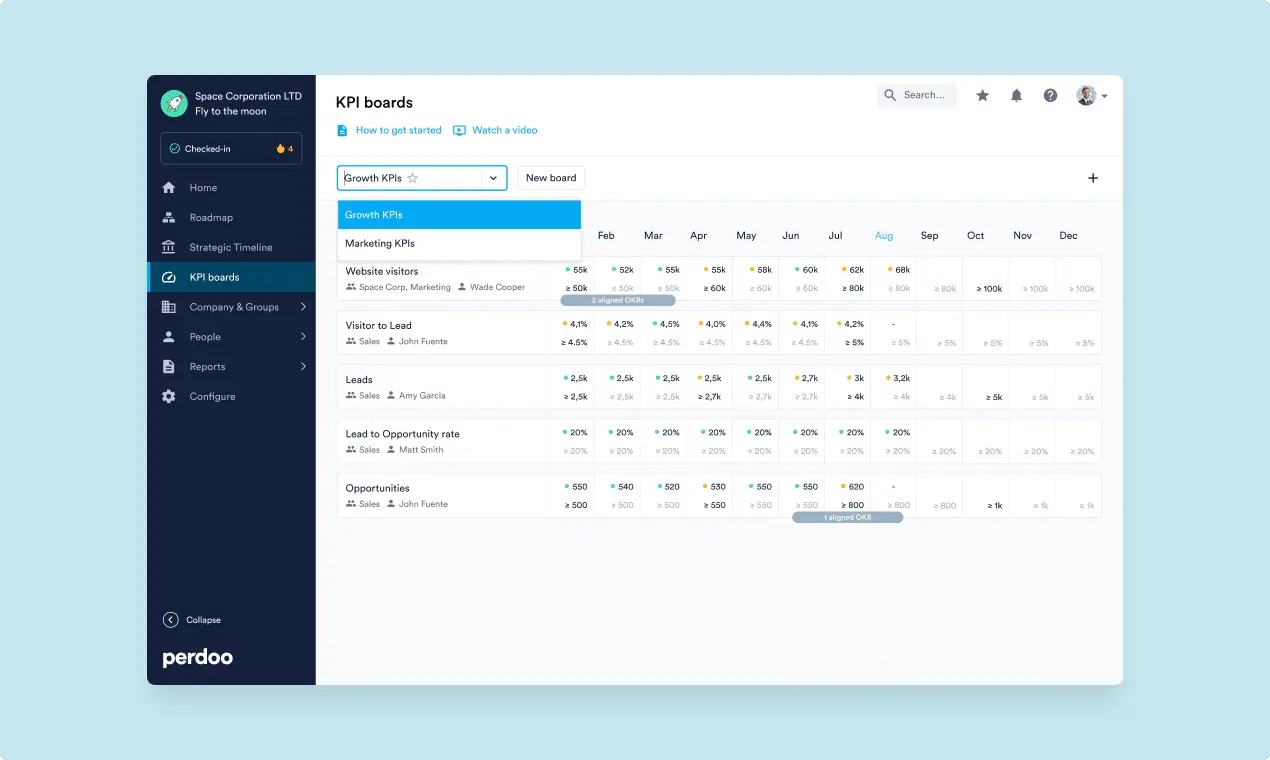
8. Perdoo
Perdoo is built around the concept of “Strategies” and “Resources.” It is a clean, intuitive OKR software with weekly planning that helps teams see how their weekly tasks contribute to the broader strategy. It is particularly good for startups that need to maintain a lean focus on a few critical outcomes.
9. Lattice
Lattice is primarily a performance management platform that has added a strong OKR module. It is a good OKR software with weekly planning for HR-led organizations. However, as a practitioner, I often warn that Lattice can lead to OKRs being treated as “appraisals” rather than “execution,” which can stifle ambition and lead to safe, easy-to-hit goals.
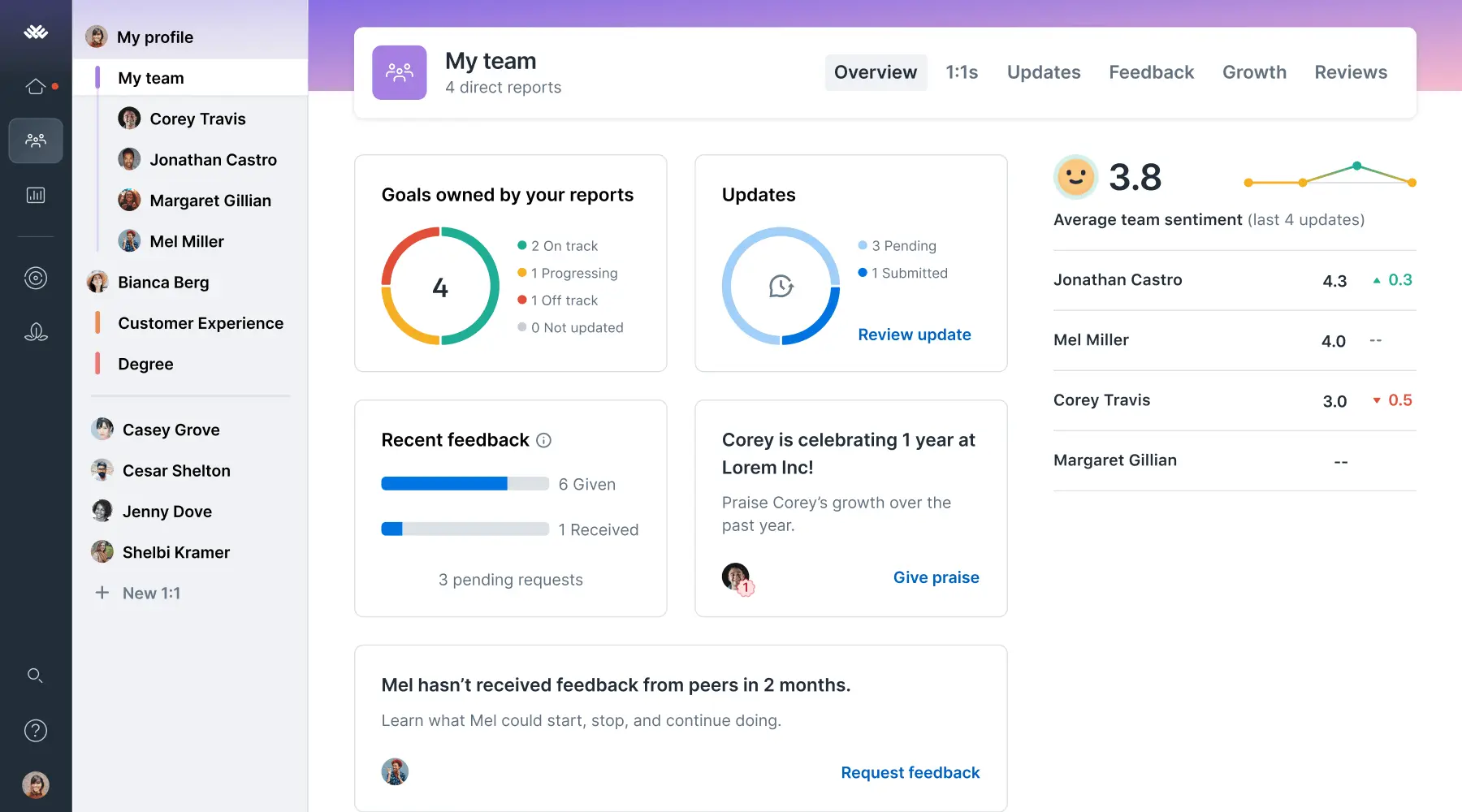
10. 15Five
15Five started as a weekly check-in tool and evolved into an OKR platform. This makes it a very natural OKR software with weekly planning. Its “High Five” and “1-on-1” features ensure that the weekly conversation is about more than just numbers. It is excellent for culture-building, though it may lack the strategic depth required by a okr software for ctos managing complex technical roadmaps.
Execution Maturity Rate: First Cycle vs 12 Months of Coaching
Comparison Matrix: Selecting Your OKR Software with Weekly Planning
Not all OKR software with weekly planning is created equal. The table below compares the top contenders based on their ability to drive execution, rather than just store data. When evaluating these, ask: “Does this tool tell me if we are moving the business, or just if we completed the process?” This is the core of what is okr in a high-performance context.
The Framework: How DEEP AI Powers Weekly Planning
The reason most OKR software with weekly planning fails is that it lacks a structured methodology. At Worxmate, we use the DEEP AI framework to ensure that the software serves the strategy, not the other way around. This framework is what allows us to move an organization’s Alignment Index from “claimed” to “real.” According to research by Harvard Business Review, the vast majority of employees cannot name their company’s top priorities. DEEP AI solves this through systemic repetition.
- Define: Using the Define AI OKR writing tool, we ensure that every goal is a genuine outcome. If you start with bad goals, no amount of weekly planning will save you. We look for real okr examples that are ambitious but measurable.
- Execute: This is where OKR software with weekly planning lives. The Execute OKR check-in software prompts every team member for a weekly update. It asks for the confidence score, the progress, and the blockers. This is the heartbeat of the organization.
- Evaluate: At the end of the cycle, we don’t just look at the score. We look at the execution data. Did we have a high Execution Confidence Index that turned out to be false? This is where we identify rating inflation drift.
- Plan: We use the learnings to plan the next cycle. This is how we achieve the 30-40% Execution Maturity Rate. It is a loop of continuous organizational learning.
For a CEO, the most valuable part of this framework is the Axis AI business performance intelligence. It aggregates all the weekly planning data to give you a single view of the execution gap. If you are a leader in a complex sector, such as okr software usa markets or high-growth tech, this visibility is the difference between hitting your annual target and missing it by 20%.
By The Numbers
Weekly Engagement: Organizations that move from monthly to weekly check-ins see a 2.5x increase in goal attainment velocity.
Field Observation: The “Friday Signal” vs. The “Monday Reality”
In my 135+ HR leader conversations, I have noticed a recurring pattern: the “Friday Signal.” This is the artificial boost in activity that happens right before a weekend or a monthly review. It is a sign of a low-maturity culture. When you implement OKR software with weekly planning, you replace the Friday Signal with the Monday Reality. The team starts the week by looking at the blockers identified in the previous week’s check-in.
I saw this transform a 1,500-employee IT services organization. They were struggling with qa engineering okrs that were constantly delayed. By moving to a weekly planning rhythm, the QA leads realized that their “blockers” were actually dependencies on the Dev team that weren’t being surfaced until it was too late. The OKR software with weekly planning made these dependencies visible in week 2. They didn’t work harder; they worked with better timing.
This is also where Orbit AI employee performance intelligence becomes a “Third Eye.” It monitors the Burnout Risk and Attrition Trigger signals. If a high-performer’s weekly check-ins start becoming shorter, less frequent, or more pessimistic, the system flags it. This isn’t about micromanagement; it’s about support. It allows HR to move from being a “process referee” to a “strategic partner.”
“The real ROI metric of an OKR program is Execution Maturity Rate, not goal completion rate. In a typical first cycle it sits between 5% and 15%. In organisations coached consistently over 12 months, it reaches 30% to 40%.”
Why HRIS and Task Managers are Not the Answer
A common mistake is trying to use an HRIS (like Darwinbox or Zoho) as an OKR software with weekly planning. HRIS platforms are built for compliance and records. They are excellent at telling you who works for whom, but they are terrible at telling you what those people are actually achieving. When you force OKRs into an HRIS, they become part of the “appraisal” cycle. People stop being honest about their confidence scores because they fear it will affect their bonus. This is how you get “Rating Inflation Drift.”
Similarly, a task manager (like Jira or Asana) is not an OKR tool. Task managers track the KPI to OKRconversion of activity, but they don’t track the outcome. You can complete 100 tasks and still move your Key Result by 0%. OKR software with weekly planning sits above the task layer. It asks: “We did these 100 tasks; did they have the impact we expected?” If the answer is no, the weekly planning session is where you stop doing those tasks and try something else.
This is why the Tiered Accountability Model is so effective. It weights OKRs differently by level: 100% for the organization, 40% for the department, and 20% for the individual. This ensures that everyone is looking at the same North Star, but their weekly planning is focused on the levers they can actually pull. Without dedicated OKR software with weekly planning, this level of alignment is impossible to maintain at scale.
OKR Execution Maturity Framework 2026
Download our comprehensive benchmarking scorecard to measure your organization’s actual execution maturity against 50+ global implementations.
What I’d Tell a client: The Path to 40% Maturity
If you are looking for OKR software with weekly planning, you are already ahead of the 85% of companies that treat OKRs as a quarterly paperwork exercise. But the software is only the infrastructure. The coaching is the capability. You need both, and in the right order. Don’t start by training 5,000 people. Start by installing the weekly rhythm in your leadership team. If the CEO doesn’t do a weekly check-in, nobody else will either.
The real value of OKR software with weekly planning is that it makes the invisible visible. It shows you the fear of failure that leads to “safe” goals. It shows you the silos where teams are working at cross-purposes. And it shows you the high performers who are burning out because they are carrying the weight of the strategy alone. When you have that data every Monday morning, you aren’t just managing; you are leading with precision.
My take is simple: stop looking for a tool that just “tracks” goals. Look for a tool that “drives” them. Look for OKR software with weekly planning that uses AI to surface the signals you are currently missing. Because in the gap between your quarterly goals and your weekly actions, your company’s future is being decided every single day.
The Platform: For organizations ready to automate their execution rhythm and gain AI-driven insights into their performance health, explore our OKR Software, check our Pricing, or Get a Demo today.
The Consulting: If you recognize that the tool is only half the battle and need expert guidance to build a high-maturity execution culture, our OKR Consulting services provide the hands-on coaching required to reach a 40% Execution Maturity Rate.


Written by
An OKR Coach with 20+ years of implementation experience, Madhusudan has guided over 50 organisations through successful OKR transformations, training more than 500 leaders. Learn more about Worxmate.