 WORXMATE
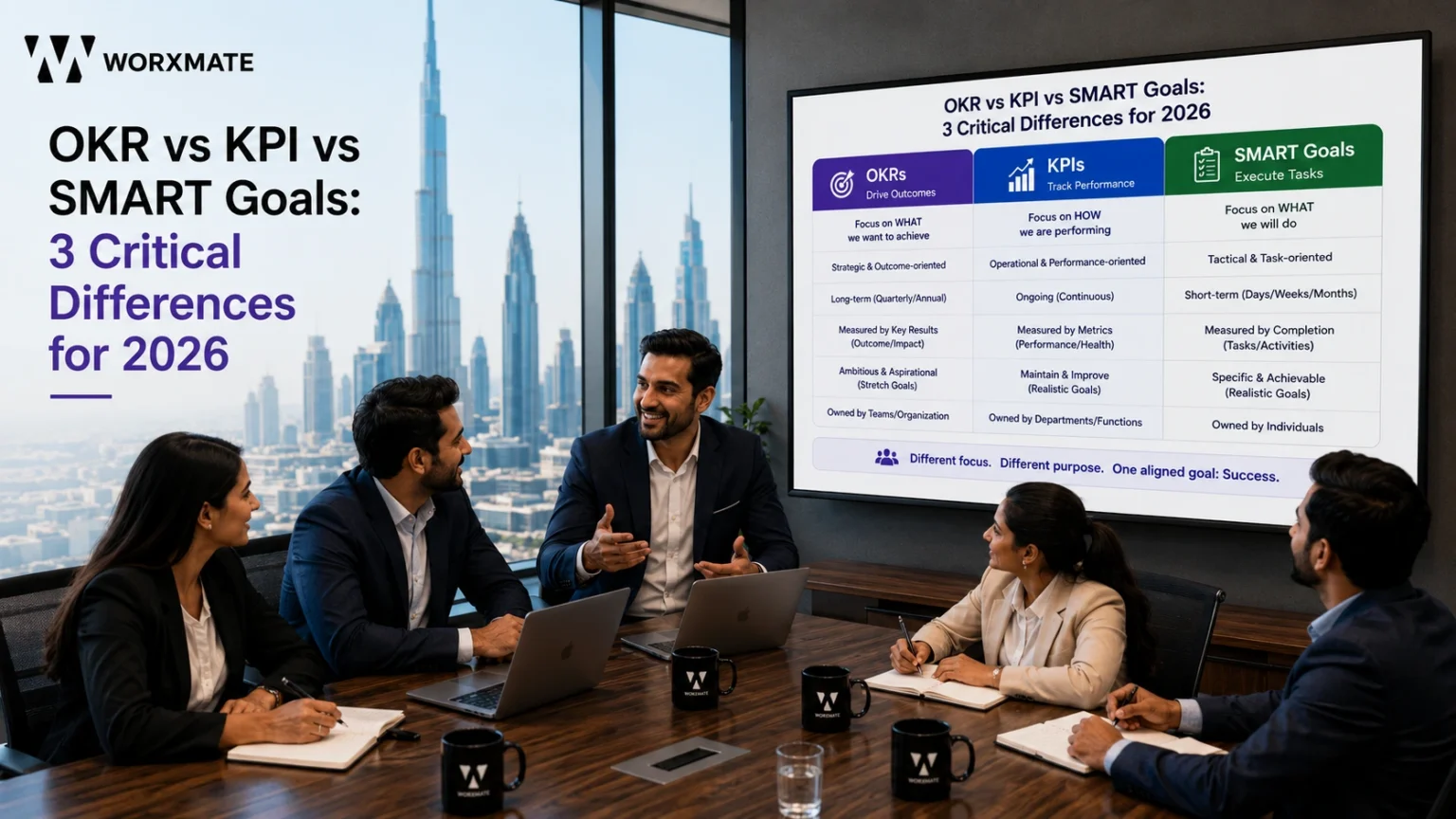
OKR vs KPI vs SMART Goals: OKRs drive strategic transformation, KPIs monitor operational health, and SMART goals structure individual task execution. Deploying these frameworks through a unified performance management platform bridges the gap between high-level vision and daily employee accountability.
I once walked into a quarterly business review where the CEO was visibly frustrated. His leadership team was presenting a sea of green dashboards, celebrating “completed” projects and “achieved” targets. Yet, the company’s market share was flat, customer churn was creeping up, and the new product launch was seeing dismal adoption. Everyone was busy, everyone was hitting their numbers, but nothing seemed to move the needle on the actual business outcomes. The problem wasn’t a lack of effort; it was a fundamental misunderstanding of what they were trying to achieve and how they were measuring it. They were using a mix of OKRs, KPIs, and SMART goals, but without a clear distinction or purpose for each, the entire system became a performance mirage.
This scenario isn’t unique. It plays out in boardrooms and team meetings across industries. Leaders implement OKRs because it’s the “in” thing, track KPIs because they always have, and ask teams to set SMART goals for everything. The result is often a muddled mess: strategic objectives get diluted into operational tasks, critical health metrics are mistaken for growth drivers, and individual performance becomes disconnected from organisational impact. The underlying issue is a lack of clarity on the distinct roles these powerful tools play in driving strategy execution and managing ongoing performance. Without this clarity, you’re not just inefficient; you’re building a system that actively obscures whether your people are moving the business forward or just completing tasks.
My Approach to Goal-Setting Frameworks
Why Modern AI Automation Outperforms Static Spreadsheets
Traditional goal tracking often relies on static spreadsheets and manual updates, leaving leaders blind to emerging execution gaps until a quarter has already failed. Modern organizations require predictive intelligence that flags lagging OKRs and operational health anomalies before they derail business outcomes.
By leveraging an advanced performance management platform, teams can automate check-in rhythms, synthesize qualitative check-in updates, and forecast completion probabilities in real time.
As an OKR Coach with over 20 years of experience across 50+ implementations, I’ve seen firsthand how organisations either thrive or falter based on their approach to goal setting. My work involves guiding leaders through the complexities of strategy execution, translating high-level vision into measurable outcomes. This isn’t theoretical consulting; it’s about being in the war room, coaching teams through their first genuine outcome-driven Key Results, and helping C-suites connect their strategic priorities to daily work.
I’ve worked with everything from a 70,000-person IT services organisation to a European fintech startup, navigating the unique challenges of each. My perspective is grounded in the practical realities of what works and what doesn’t when you’re trying to shift an entire culture towards genuine performance. This includes understanding the nuances of how different goal-setting frameworks, like OKRs, KPIs, and SMART goals, should be deployed to avoid common pitfalls and actually drive results.
The Costly Confusion: When OKRs, KPIs, and SMART Goals Collide
The core problem isn’t that any of these frameworks are inherently bad; it’s that they are often used interchangeably or without a clear understanding of their distinct purposes. This leads to several systemic failures:
- Strategic Drift: When OKRs are treated like a to-do list, or KPIs are mistaken for strategic objectives, the organisation loses its strategic compass. Teams focus on outputs or maintaining status quo rather than pursuing ambitious outcomes.
- Misaligned Effort: Without clear distinctions, individual and team efforts become scattered. People might be “busy” hitting their local SMART goals or maintaining green KPIs, but these activities don’t necessarily contribute to the overarching strategic OKRs. This is where the execution gap widens.
- Measurement Paralysis: Trying to track everything as an OKR, KPI, or SMART goal results in an overwhelming number of metrics. Teams spend more time reporting than executing, and leadership struggles to identify what truly matters. This often manifests as manual, always-behind reporting that fails to provide real-time signals.
- Burnout and Frustration: Employees become cynical when their hard work on “achieved” goals doesn’t translate into visible business impact or recognition. Leaders become frustrated when their strategic initiatives fail to gain traction despite apparent compliance with goal-setting processes.
Consider the APAC retail company whose CEO couldn’t name three clear priorities in a 45-minute meeting. Their problem wasn’t a lack of goals; it was a deluge of undifferentiated “important” items, a mix of operational metrics, project milestones, and vague aspirations. Without clear boundaries between what was a strategic outcome (OKR), what was an operational health metric (KPI), and what was a task-level objective (SMART goal), true alignment was impossible. This is where a proper understanding of when to use KPI vs OKR becomes critical, as these are often the most confused.
Execution Maturity Rate: In a typical first OKR cycle, only 5-15% of leaders can independently write genuine outcome-driven goals. With 12 months of consistent coaching, this rate reaches 30-40%, demonstrating a significant shift from output to outcome thinking.
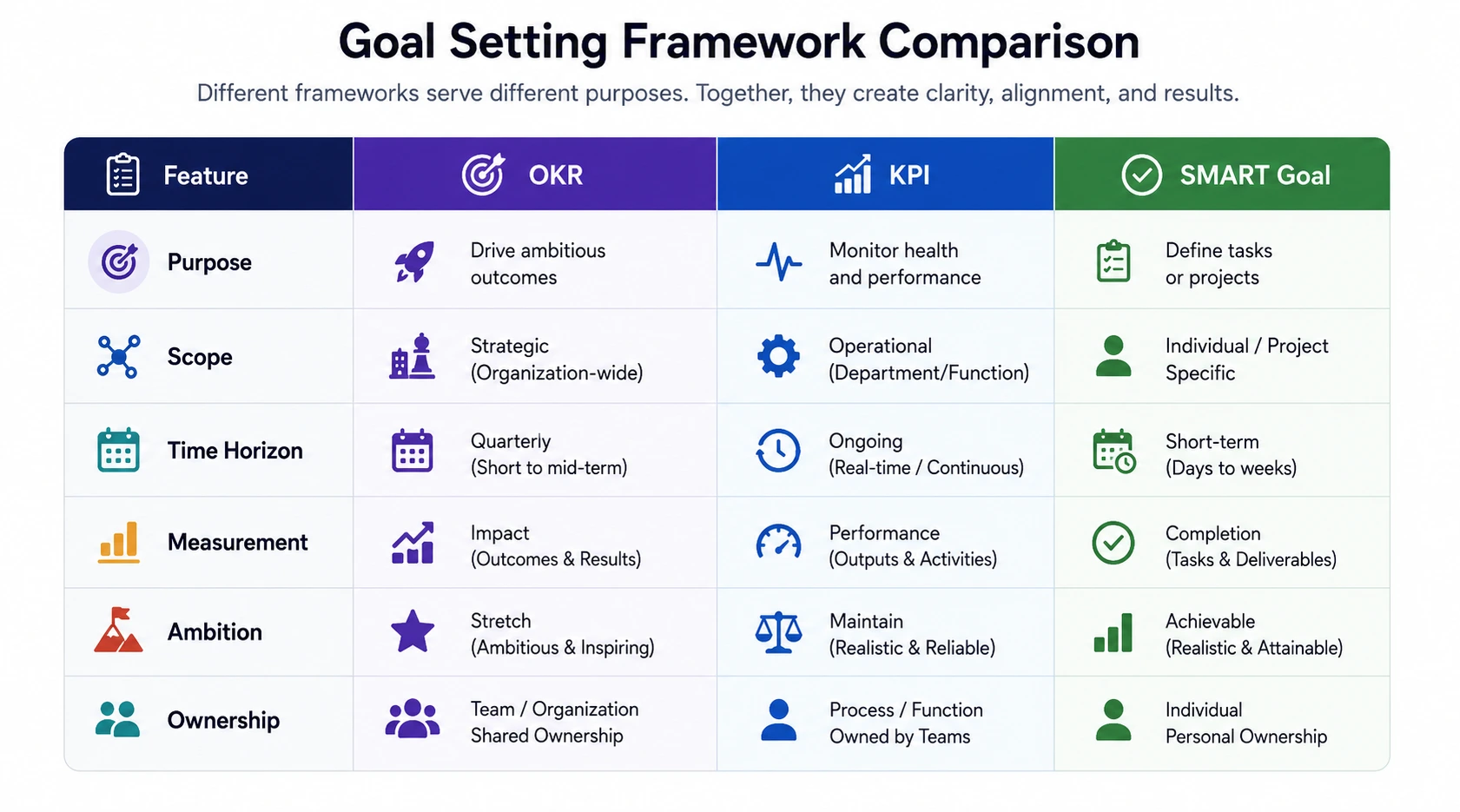
Defining the Distinct Roles: OKRs, KPIs, and SMART Goals
To cut through the confusion, we need to understand the unique purpose and application of each framework:
OKRs: Driving Ambitious, Outcome-Focused Strategy Execution
OKRs are about moving the needle on your most critical strategic priorities. They answer: “Where do we want to go, and how will we know we’re getting there?”
- Objective: A qualitative, inspirational, and time-bound goal. It describes what you want to achieve. Example: “Become the market leader in sustainable energy solutions.”
- Key Results: Quantitative, measurable outcomes that define how you will know if you’ve achieved the Objective. They measure impact, not activity. Example: “Increase market share from 10% to 18% in target regions” or “Reduce customer acquisition cost by 25%.”
OKRs are inherently ambitious, often referred to as “stretch goals.” Failure to achieve 100% isn’t a sign of poor performance but a learning opportunity. The real ROI metric of an OKR program is Execution Maturity Rate, not goal completion rate. In a typical first cycle, it sits between 5% and 15%. In organisations coached consistently over 12 months, it reaches 30% to 40%. This indicates a shift in thinking, not just ticking boxes.
“Alignment is agreement between teams on what matters, why it matters, and how each team’s work connects to the teams around them. You cannot set that in a tool. You can display it. You cannot create it.”
KPIs: Monitoring Operational Health and Efficiency
KPIs are your vital signs. They tell you: “Are we healthy? Are we performing efficiently?” They monitor ongoing processes and provide a snapshot of current performance. KPIs are not typically about driving new strategic initiatives but rather about maintaining and improving existing ones.
- Purpose: To track the performance of critical business functions, processes, or projects against a set benchmark.
- Examples: “Website conversion rate,” “Customer retention rate,” “Average handling time for support tickets,” “Employee turnover rate.”
KPIs are usually set with a clear target that indicates success or failure in maintaining a desired state. They are essential for operational management and for understanding the baseline from which OKRs might launch. If your customer retention KPI is consistently below 80%, an OKR might be “Improve customer loyalty,” with Key Results focused on specific initiatives to move that KPI.
OKR Execution Maturity Framework 2026
Benchmark your organisation’s OKR execution maturity and identify specific areas for improvement, from goal definition to strategic alignment.
SMART Goals: Structuring Individual Tasks and Projects
SMART goals are a tactical framework for defining clear, actionable objectives at the individual or project level. They ensure clarity and accountability for specific deliverables.
- Specific: What exactly needs to be achieved?
- Measurable: How will progress be tracked and success defined?
- Achievable: Is the goal realistic given available resources and time?
- Relevant: Does the goal align with broader objectives and the individual’s role?
- Time-bound: What is the deadline for completion?
SMART goals are excellent for project management, individual development plans, or defining the specific activities that contribute to a Key Result. For example, if a Key Result is “Increase customer engagement score by 15%,” a team might set a SMART goal: “Launch a new in-app tutorial series by end of Q2, resulting in a 20% increase in feature usage for new users.”
The transition from output to outcome thinking cannot happen in a single quarter, even for senior leaders. It’s a 12-month journey requiring consistent coaching and reinforcement, which is why Execution Maturity Rate is measured across a year, not 90 days. Expect teams to raise 15-20 product support queries per day in week one if the program wasn’t chosen, signaling adoption challenges.
How to Integrate and Apply These Frameworks Effectively
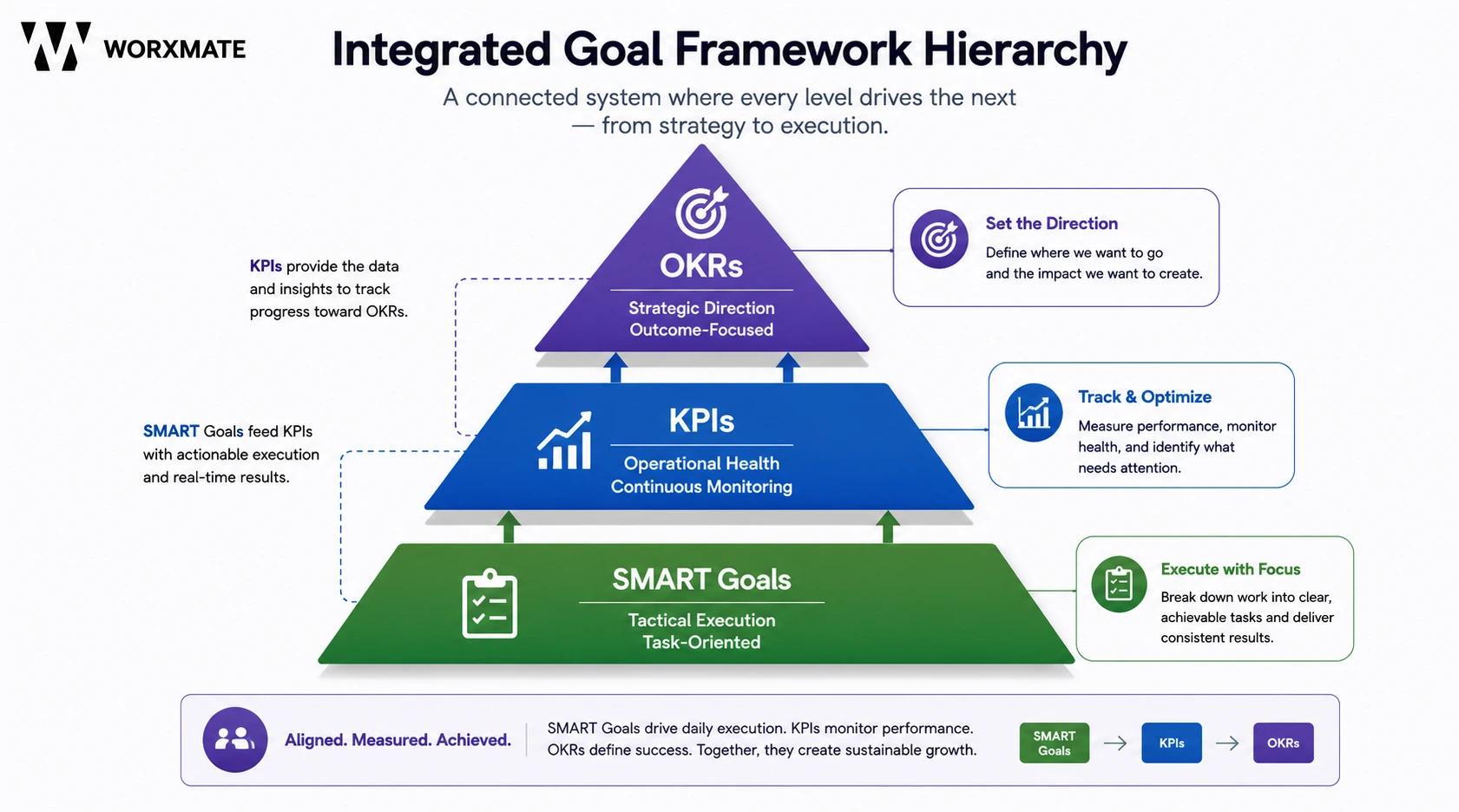
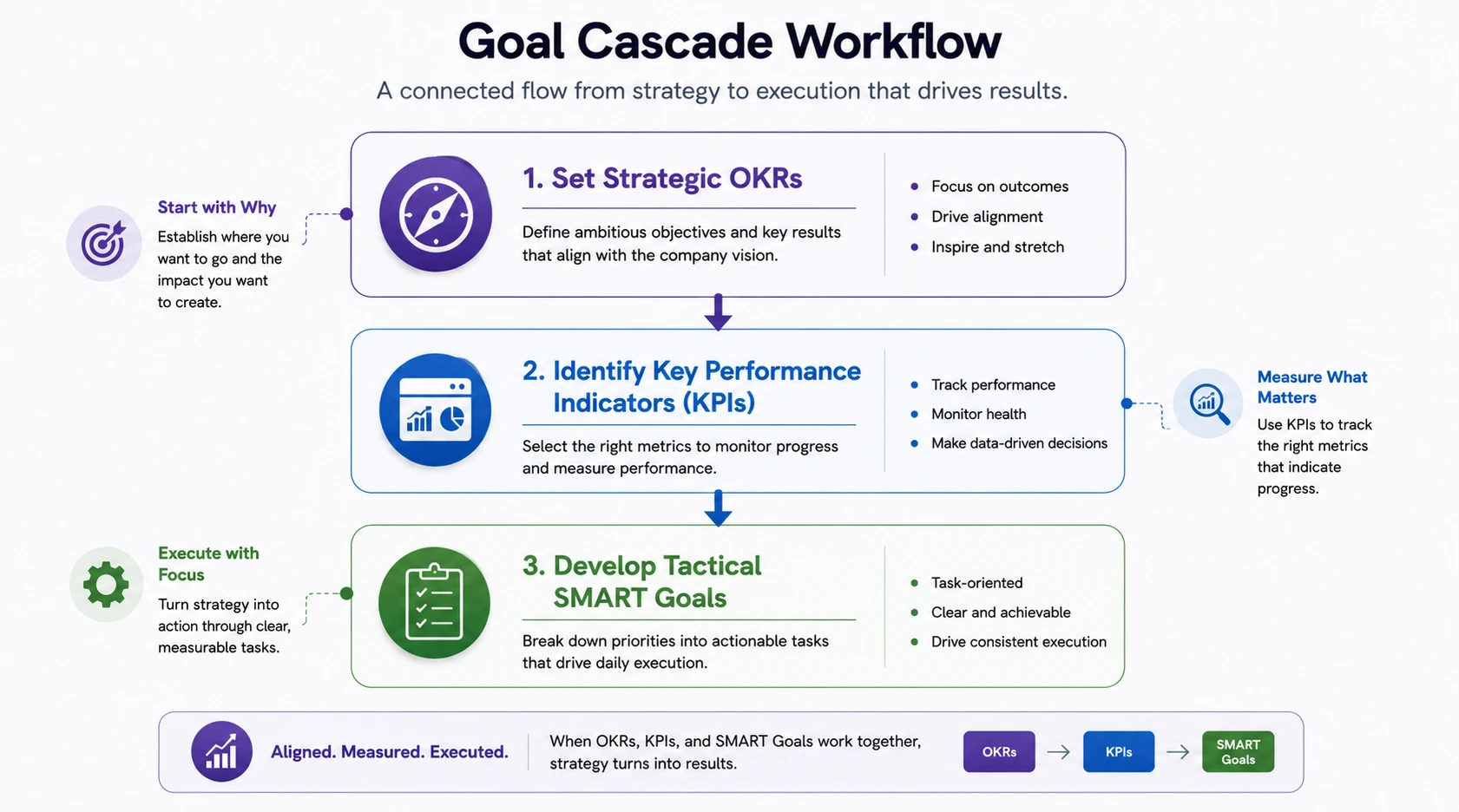
The key is not to choose one over the others but to understand how they fit together in a cohesive strategy execution system. Think of it as a hierarchy:
- OKRs at the Top: These define your strategic priorities and desired outcomes for a specific period (typically quarterly). They are your North Star.
- KPIs as Health Monitors: These continuously track the performance of your core operations and processes. They tell you if your existing systems are stable and efficient, providing context for your OKRs. If a KPI is consistently red, it might trigger an OKR to address that systemic issue.
- SMART Goals as Tactical Drivers: These are the specific projects, initiatives, or tasks that individuals and teams undertake to move the Key Results of your OKRs. They provide clarity on the “what” and “when” of the work that contributes to outcomes.
This integrated approach is embedded in frameworks like DEEP AI (Define, Execute, Evaluate, Plan). For instance, the ‘Define’ stage uses AI-assisted goal writing to ensure OKRs are outcome-driven. The ‘Execute’ stage tracks progress against those OKRs and uses automated check-ins. ‘Evaluate’ leverages data-backed retrospectives, and ‘Plan’ feeds organisational learning back into the next cycle. This holistic system ensures that OKRs are truly driving strategic change, supported by healthy operations (KPIs) and clear individual contributions (SMART goals).
For example, a European fintech startup struggled with genuine outcome-thinking. Their “Key Results” were often just lists of features to ship. Through repeated “so what” questioning during coaching sessions and fostering cross-functional Key Result co-ownership between Product and Commercial teams, they began to shift. Their OKRs focused on increasing customer lifetime value, their KPIs monitored transaction success rates and fraud detection, and individual SMART goals detailed the specific product features or marketing campaigns needed to achieve those Key Results. This distinction allowed them to move from simply shipping code to genuinely impacting business outcomes, a critical step in the transition from outputs to outcomes.
Goal Framework Focus: Strategic vs Operational vs Tactical
This integrated approach allows organisations to leverage the strengths of each framework without their weaknesses creating confusion. It provides clarity on what to measure, how to measure it, and how each piece contributes to the larger strategic picture. The result is a more focused, agile, and accountable organisation.
What This Looks Like in Practice: A Cohesive System
In a recent engagement with an 8,000+ employee energy and utility company in the Middle East, the leadership team faced scattered strategic ownership. Different departments were tracking their own versions of success, leading to significant cross-functional friction and delayed strategic projects. Their “OKRs” were often just departmental KPIs — a confusion What Matters describes well: OKRs work as leading indicators of direction, while KPIs are lagging measures of health and their “KPIs” were sometimes aspirational statements.
Our solution involved a coordinated leadership alignment program, starting with 1:1 coaching for the C-suite, not just group training. We clarified that OKRs were for their 2-3 most critical business priorities each quarter, driving new value. KPIs were for monitoring the stability and efficiency of their vast operational infrastructure – things like network uptime and customer service response times. SMART goals were then used by project teams to define the specific deliverables for new initiatives that directly impacted the OKRs. For instance, an OKR to “Significantly reduce energy waste across key facilities” had Key Results like “Reduce average facility energy consumption by 10%.” This was then supported by SMART goals for the engineering team: “Implement smart grid sensors in 5 pilot facilities by Q3, achieving 95% data accuracy.”
This structured differentiation brought immediate clarity. Leaders could finally see how their teams’ efforts connected directly to strategic outcomes, rather than just operational maintenance. The conversations in monthly business reviews shifted from reporting on activities to discussing strategic impact and learning from both successes and failures. This clarity, driven by distinct uses of OKR software, KPIs, and SMART goals, transformed their execution velocity.
My Take: Choose Wisely, Integrate Thoughtfully
The choice between OKR vs KPI vs SMART goals is not an either/or proposition. It’s about understanding their unique strengths and integrating them into a coherent system that serves your organisation’s strategic ambition and operational reality. OKRs drive strategic change and growth, KPIs monitor the health of your ongoing business, and SMART goals provide the tactical clarity for individual execution. When used correctly, they create a powerful, transparent, and accountable framework for performance. The software is the infrastructure. The coaching is the capability. You need both, and in the right order. If you’re still evaluating which infrastructure fits your organisation, I broke down all of them in Best OKR Software 2026 reviewed after running 50+ real implementations, not from a features checklist. It’ll save you the demo calls that don’t matter. Regular check-ins maintain momentum and keep strategic priorities front of mind. Tracking a real-time confidence score helps identify at-risk targets before quarter-end. Surfacing operational blockers early ensures leadership can clear obstacles quickly. Seamless cascading ensures department milestones stay synchronized with company strategy. Strong goal alignment eliminates siloed efforts and connects daily work to strategic outcomes.
If you’re looking for the right infrastructure to manage your OKRs, KPIs, and SMART goals effectively, explore our OKR software, review our pricing, or get a demo to see it in action.
If your challenge lies in building the internal capability to define, cascade, and execute these goals effectively, our OKR consulting services can provide the hands-on coaching and strategic guidance your leadership team needs to make it stick.

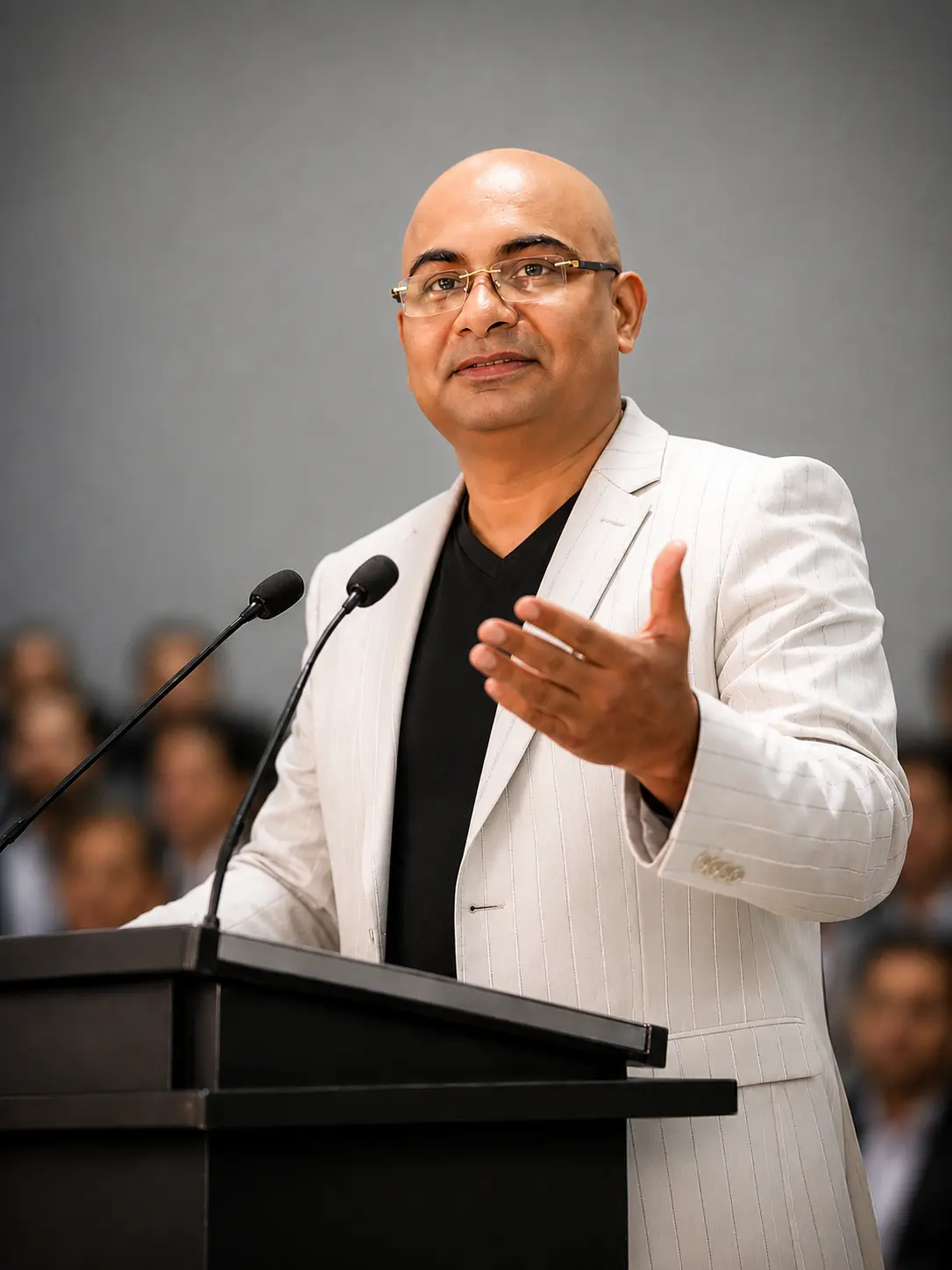
Written by
An OKR Coach with 20+ years of implementation experience, Madhusudan has guided over 50 organisations through successful OKR transformations, training more than 500 leaders. Learn more about Worxmate.