WORXMATE
Objectives and Key Results (OKRs) have gained immense popularity as a goal-setting framework that drives alignment, focus, and engagement within organizations.
However, despite their potential, many OKR implementations fall short of expectations. Implementing OKRs can feel like assembling furniture.
It looks straightforward, but if you miss a step, you’ll end up with a wobbly chair (or, in this case, a wobbly strategy). Here’s a guide to help you avoid common OKR pitfalls and keep your company’s goals on solid ground.
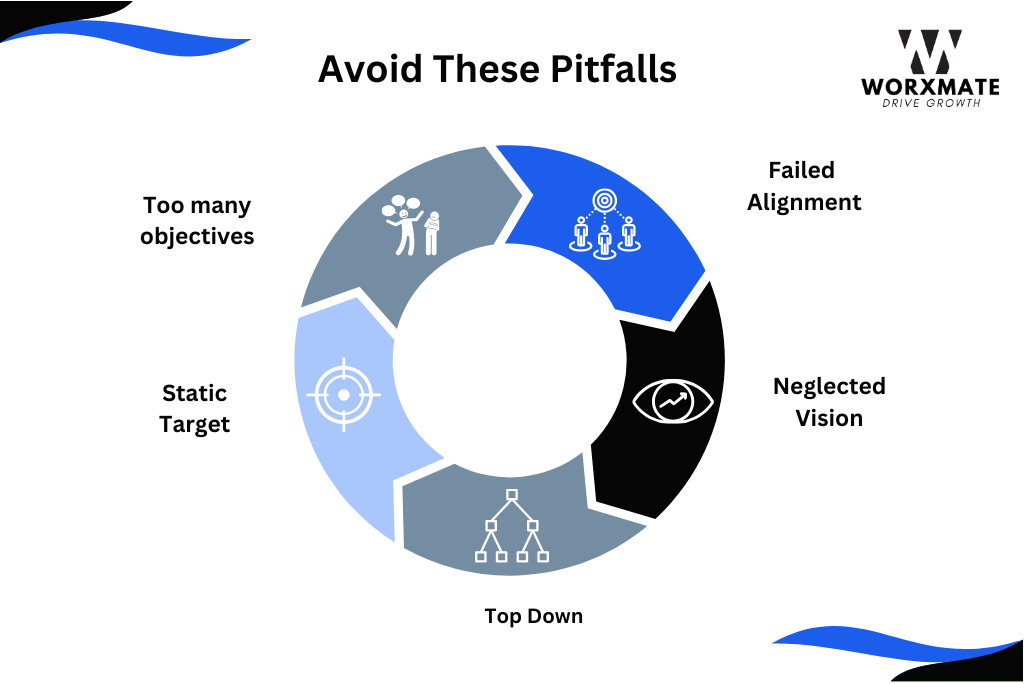
1. Only Using a Top-Down Approach for Setting OKRs
Reason for Failure: A purely top-down approach can lead to disengagement and a lack of ownership among employees. When goals are imposed without input, it can result in misalignment and lack of motivation.
The reason behind OKR implementation failure is largely due to the lack of understanding and buy-in from all levels of the organization. When employees and managers do not fully grasp the purpose and mechanics of OKRs, they are less likely to commit to the process.
How to Avoid:
- Involve All Levels: Encourage a collaborative approach where input is gathered from different levels of the organization. This promotes buy-in and ensures that OKRs are relevant to everyone involved.
- Empower Teams: Allow teams to set their own OKRs in alignment with the company’s strategic goals. This fosters a sense of ownership and accountability.
2. Setting Too Many OKRs per Cycle
Reason for Failure: Setting too many OKRs can overwhelm teams and dilute focus. It becomes challenging to prioritize and allocate resources effectively.
Rather than channelling their efforts into a few high-impact objectives, team members are spread thin across numerous goals. This scenario often results in mediocre performance across many areas rather than excellence in a few.
How to Avoid:
- Limit the Number: Focus on a few critical OKRs per cycle. Typically, 3-5 OKRs per team or individual are manageable and effective. Simplifying objectives can lead to more substantial accomplishments and better overall performance.
- Prioritize Goals: Choose OKRs that have the highest potential impact on the organization’s strategic objectives. Prioritize the most critical objectives that will have the highest impact on the organization’s goals.
Achieve Your Goals Faster
See how Worxmate can help your team set clear goals and achieve faster results. Book your free demo today and experience the power of AI-driven OKRs in action.
3. Failing to Create Alignment Between Teams
Reason for Failure: Without a coordinated approach, resources are often wasted, and opportunities for synergy and collaboration are missed.
Lack of alignment between teams can lead to fragmented efforts and inefficiencies. Teams working in isolation may not contribute effectively to overall organizational goals.
Each team may pursue its own objectives without a clear understanding of how these objectives fit into the larger organizational goals. This lack of cohesion can result in redundant or conflicting work, reducing overall productivity and effectiveness.
How to Avoid:
- Cross-Functional Collaboration: Encourage collaboration between different teams through regular cross-functional meetings, joint projects, and shared goals. This fosters a sense of unity and helps teams understand how their work intersects and supports other areas of the business.
- Regular Communication: Maintain open and transparent communication channels to keep everyone informed about the organization’s goals, progress, and any changes in strategy. Transparency fosters trust and helps teams stay aligned with the broader objectives.
4. Neglecting vision and purpose
Reason for Failure: Objectives are meant to articulate the vision and purpose behind the results. When organizations focus only on results, they may lose sight of the bigger picture.
Prioritizing immediate results can lead to short-term thinking. Teams might focus on quick wins that boost metrics but do not contribute to sustainable growth or long-term success. Meaningful objectives ensure that efforts are directed towards enduring improvements and strategic priorities.
How to Avoid:
- Balance Objectives and Results: Maintain a balanced approach by giving equal importance to both objectives and results. While results are crucial for measuring success, objectives provide the necessary context and direction.
- Encourage Long-Term Thinking: Encourage teams to consider the broader implications of their work and focus on sustainable growth and improvement rather than short-term gains while emphasizing the importance of quality in achieving results.
5. Treating OKRs as static targets
Reason for Failure: When OKRs are treated as static, teams may become rigid and inflexible. This rigidity can prevent teams from adapting to new information, market changes, or unexpected challenges.
By viewing OKRs as dynamic guides, organizations can stay agile and responsive, adjusting as needed to stay on course.
How to avoid:
- Communicate the Dynamic Nature of OKRs: Clearly communicate to all team members that OKRs are dynamic and subject to change. Ensure that everyone understands the importance of adaptability and is aware of the processes for reviewing and updating OKRs.
- Regularly Review and Adjust: Schedule regular check-ins to review OKRs and assess their relevance and progress. Use these check-ins to make necessary adjustments based on new information, changing circumstances, and feedback.
Embracing OKRs can be a game-changer for your organization, turning ambitious goals into achieved milestones and fostering a culture of focused productivity.
But as we’ve explored, there are common traps that can derail even the best-intentioned OKR initiatives. To ensure your OKRs lead you to success and not frustration, keep these tips in mind:
- Keep It Manageable: Avoid setting too many OKRs. Focus on a few, impactful goals that can truly drive change.
- Align and Conquer: Ensure all teams are rowing in the same direction. Alignment is key to preventing isolated efforts and maximizing efficiency.
- Balance the Equation: Don’t just chase results; make sure your objectives are meaningful and inspiring. They’re the “why†behind your “what.â€
- Stay Agile: Treat OKRs as living documents that can adapt to changing circumstances. Flexibility will keep you resilient and responsive.
Imagine your organization as a well-oiled machine, with each team working in harmony towards a common vision. By setting thoughtful, aligned, and adaptable OKRs, you’ll not only achieve your goals but also create a motivated and engaged workforce ready to tackle any challenge.
So, get ready to harness the power of OKRs and steer your organization towards unparalleled success. Remember, the journey is just as important as the destination, and with the right approach, your path to achieving great things will be both exciting and rewarding.
Avoid OKR Pitfalls & Achieve Success! 🚀
Streamline goal-setting with Worxmate’s OKR software. Track progress, stay aligned, and drive results effortlessly. Get started today!


Written by
An OKR Coach with 20+ years of implementation experience, Madhusudan has guided over 50 organisations through successful OKR transformations, training more than 500 leaders. Learn more about Worxmate.