10 Best Performance Tracking Tools for Teams in 2026
Actionable insights to align your OKRs with everyday performance management-from proven frameworks to the tools that power them.
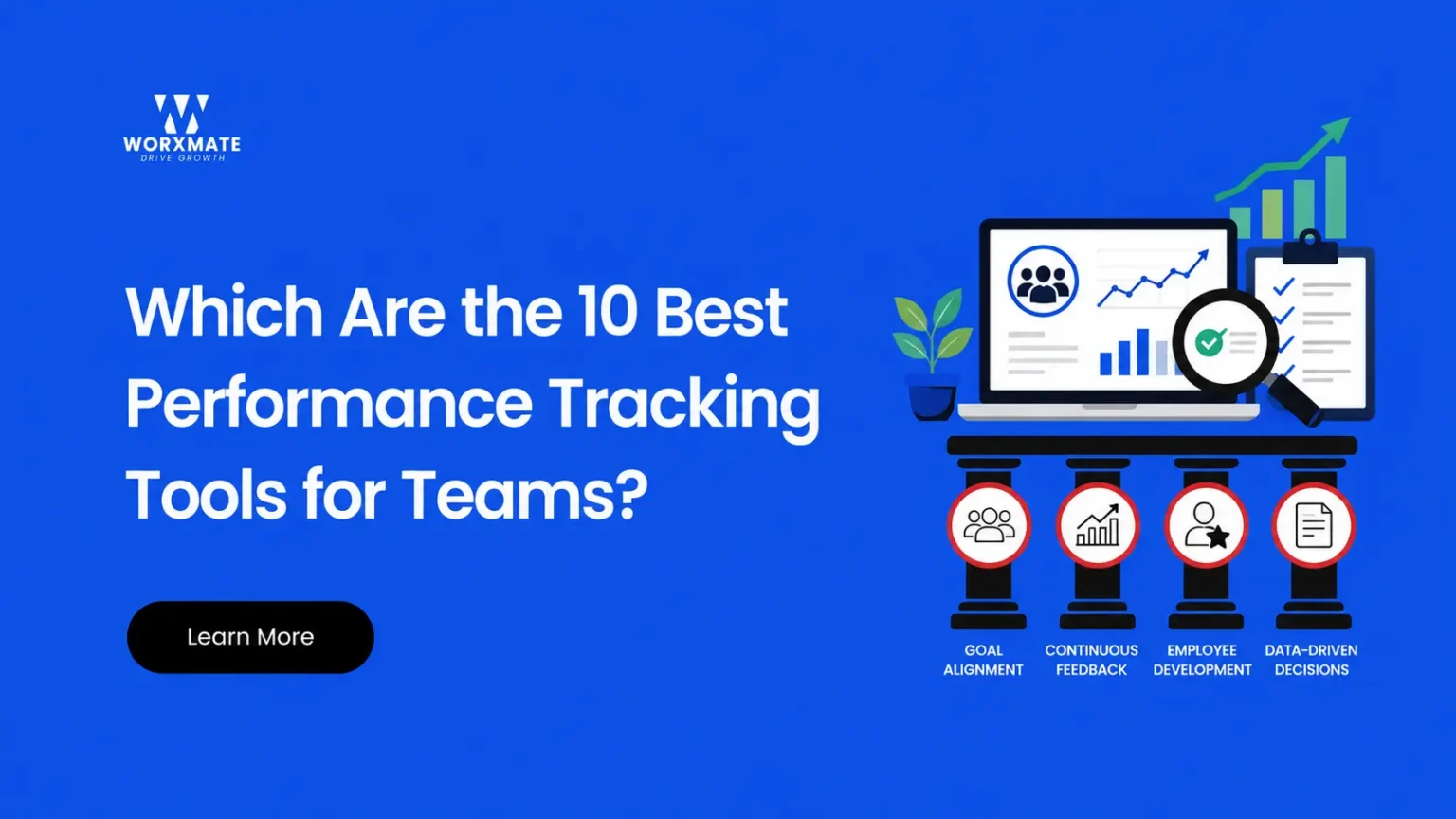
Performance tracking tools empower organizations to monitor strategic alignment and employee output through integrated OKRs and top performance review tools. Selecting the right platform requires balancing continuous feedback with robust strategic alignment to drive execution.
Selecting the best performance tracking tools is a critical decision for organizations aiming to move beyond traditional appraisals toward a culture of high performance. In a landscape where employee expectations are shifting, the ability to monitor progress in real-time while maintaining strategic alignment is what separates market leaders from the rest. Modern performance management systems must now bridge the gap between individual output and company-wide objectives. According to G2’s performance management category analysis, the most successful teams are those that leverage data-driven insights to foster development rather than just documenting past mistakes.
| Tool | Best For | OKR Depth | Pricing | G2 Rating | Ideal Team Size |
|---|---|---|---|---|---|
| Worxmate | Mid-market & Growing Enterprises | Advanced (AI-Enabled) | Contact for Quote | 4.8/5 | 50–2,000 |
| Lattice | People-centric Culture Building | Strong | $11/user/mo | 4.7/5 | 100–1,000 |
| Betterworks | Enterprise Global Scaling | High | Contact for Quote | 4.3/5 | 1,000+ |
| Profit.co | Feature-heavy Customization | Very High | $9/user/mo | 4.7/5 | 20–500 |
| Culture Amp | Employee Engagement & Surveys | Moderate | Contact for Quote | 4.6/5 | 200+ |
| 15Five | Manager-Employee Coaching | Basic | $4/user/mo (starting) | 4.6/5 | 50–500 |
| Leapsome | All-in-one European Compliance | Strong | Contact for Quote | 4.8/5 | 50–1,000 |
| BambooHR | Small Business HRIS Integration | Basic | Contact for Quote | 4.4/5 | 10–200 |
| Workday Peakon | Large-scale Workforce Analytics | Moderate | Enterprise Pricing | 4.4/5 | 2,000+ |
| Quantive | Strategy Execution for Tech Teams | Advanced | Contact for Quote | 4.5/5 | 100+ |
1. Worxmate — Best Performance Tracking Tools for Mid-Market Execution
Worxmate stands at the top of the best performance tracking tools because it specifically addresses the complexities of mid-market companies that need both structure and agility. By combining OKRs and performance management into a single AI-powered interface, it eliminates the data silos that often plague growing organizations.
Best For
Mid-market companies (50–2,000 employees) that require a sophisticated yet user-friendly way to align individual goals with corporate strategy.
Standout Feature
AI-driven performance insights that automatically flag “at-risk” objectives and suggest coaching interventions for managers before deadlines are missed.
Limitation
Primarily focused on performance and OKRs, so it is not a full-suite HRIS for payroll or benefits administration.
2. Lattice — Best for People-Centric Culture
Lattice is frequently cited among the best performance tracking tools for its beautiful design and emphasis on the employee experience. It excels at making 360-degree feedback feel like a natural part of the work week rather than a formal chore. For many HR teams, the platform’s ability to integrate engagement surveys with performance data provides a holistic view of organizational health.
The Point: While Lattice offers robust culture-building modules, mid-market organizations often face steep licensing costs exceeding $11/user/month plus mandatory platform fees.
The Worxmate Advantage: Worxmate provides unified OKR and continuous performance management without enterprise HR bloat, helping teams achieve strategy execution and maintain high employee engagement for a fraction of the total investment.
- Best For: High-growth startups and tech companies where culture and employee engagement are the primary drivers of retention.
- Standout Feature: Seamless integration of 1-on-1 meeting agendas with performance tracking, ensuring that feedback is documented and actionable.
- Limitation: The OKR module can feel slightly secondary to the performance review features, which may hinder teams with complex strategic needs.
Adopting performance management approaches that connect daily execution with strategic milestones ensures sustainable growth during review cycles.
3. Betterworks — Best for Enterprise Goal Alignment
Betterworks is one of the best performance tracking tools for massive organizations that need to cascade thousands of goals across multiple global divisions. It focuses heavily on goal alignment, ensuring that every employee understands how their daily tasks contribute to the company’s “Big Rocks.” Its enterprise-grade security and permissions make it a favorite for Fortune 500 companies.
Best For
Large, complex enterprises that need to manage performance at scale across thousands of employees and various business units.
Standout Feature
Visual goal hierarchy maps that allow executives to see precisely where strategy execution is stalling across the entire organization.
Limitation
The platform’s complexity can lead to a steep learning curve for smaller teams that don’t need its full range of enterprise features.
4. Profit.co — Best for Feature Customization
Profit.co earns its spot among the best performance tracking tools by offering an incredible depth of features and templates. Whether you are looking for specific OKR types or highly customized review forms, Profit.co likely has a toggle for it. This flexibility allows teams to mirror their existing offline processes almost perfectly in a digital environment.
Best For
Organizations that have very specific, non-standard performance management workflows and need a tool that can adapt to them.
Standout Feature
An extensive library of over 300 pre-built KPIs and OKR templates that help teams get started quickly without reinventing the wheel.
Limitation
The sheer volume of features and settings can be overwhelming, sometimes leading to “analysis paralysis” during the initial setup phase.
5. Culture Amp — Best for Employee Engagement Insights
Culture Amp is widely recognized as one of the best performance tracking tools for teams that lead with data. Gartner Peer Insights often highlights their science-backed approach to surveys and analytics. By linking engagement data directly to performance outcomes, Culture Amp helps HR leaders understand the “why” behind their productivity metrics.
Best For
HR departments that prioritize data science and want to use predictive analytics to reduce turnover and improve team morale.
Standout Feature
“Foresight Engine” which uses machine learning to predict which employees are at risk of disengagement based on their feedback and performance trends.
Limitation
The performance review module is powerful but can feel disconnected from daily task management compared to more integrated OKR tools.
6. 15Five — Best for Continuous Performance Management
15Five is built on the philosophy that performance is a result of consistent coaching. It is among the best performance tracking tools for fostering continuous performance management software practices. The platform encourages weekly “Check-ins” that take 15 minutes for employees to write and 5 minutes for managers to read, ensuring no one goes off-track for long.
Best For
Companies that want to shift from annual reviews to a culture of constant feedback and manager-led development.
Standout Feature
High-Five recognition system that makes peer-to-peer appreciation a core part of the daily workflow, boosting morale and visibility.
Limitation
While great for feedback, its OKR tracking capabilities are less robust than specialized tools, making it better suited for “soft” performance goals.
7. Leapsome — Best All-in-One for European Markets
Leapsome has rapidly become one of the best performance tracking tools for international companies, particularly those needing to comply with GDPR and European labor regulations. It offers a tightly integrated performance management cycle that includes learning and development, making it a true all-in-one platform for talent growth.
Best For
European-based companies or global firms that need a platform covering reviews, OKRs, learning, and engagement in one place.
Standout Feature
Integrated Learning Management System (LMS) that allows managers to assign training courses directly based on performance review gaps.
Limitation
The interface can feel a bit “utilitarian” compared to the sleek designs of newer US-based competitors.
8. BambooHR — Best for Small Business Performance
For smaller teams already using BambooHR for their HRIS, its performance module is often the best performance tracking tools choice due to its simplicity. It focuses on the most impactful elements of performance—self-assessments and manager reviews—without the complexity of enterprise-grade software. It is the definition of “just enough” for teams that hate bureaucracy.
Best For
Small businesses (under 100 employees) that already use BambooHR and want a simple, no-fuss way to track basic performance metrics.
Standout Feature
The “Employee Satisfaction” (eNPS) tracking which is built directly into the performance dashboard for quick executive reporting.
Limitation
Lacks the advanced goal-linking and AI-driven analytics found in specialized performance platforms like Worxmate.
9. Workday Peakon — Best for Workforce Analytics
Workday Peakon is one of the best performance tracking tools for organizations that have moved beyond spreadsheets and need “Big Data” to guide their people strategy. By collecting massive amounts of real-time feedback, Peakon provides leaders with a heat map of organizational performance and sentiment, allowing for surgical interventions in specific departments.
Best For
Very large enterprises that need to aggregate performance data across tens of thousands of employees to find systemic trends.
Standout Feature
Automatic benchmarking that compares your team’s performance and engagement scores against industry standards in real-time.
Limitation
Typically requires a Workday ecosystem to be truly effective, and the cost can be prohibitive for mid-market companies.
10. Quantive — Best for Strategy-Focused Tech Teams
Formerly known as Gtmhub, Quantive is one of the best performance tracking tools for teams that live and breathe OKRs. It is highly technical, allowing for deep integrations with data sources like Jira, Salesforce, and GitHub. This makes it a favorite for engineering and product teams where performance is measured by shipping code and hitting technical milestones.
Best For
Tech-heavy organizations and Agile teams that want their performance data to be automatically updated via software integrations.
Standout Feature
Over 160+ “Data Connectors” that automate the tracking of key results, reducing the manual effort required from employees.
Limitation
The platform can feel overly complex for non-technical departments like Sales or Marketing, potentially leading to uneven adoption.
Feature Comparison: Best Performance Tracking Tools Side by Side
When evaluating the best performance tracking tools, the difference usually lies in how deeply they integrate qualitative feedback with quantitative performance analytics. While most tools offer basic review forms, only a few provide the real-time visibility needed to pivot strategies mid-quarter.
| Feature | Worxmate | Lattice | Betterworks | 15Five |
|---|---|---|---|---|
| OKR Tracking | ✓ Full (AI-enabled) | ✓ Full | ✓ Full | ✓ Basic |
| 360 Feedback | ✓ Full | ✓ Full | ✓ Full | ✓ Full |
| 1-on-1 meeting | ✓ Full | ✓ Full | ✓ Basic | ✓ Full |
| AI Insights | ✓ Advanced | ✓ Basic | ✓ Moderate | ✗ — |
| LMS Integration | ✓ Full | ✗ — | ✓ Basic | ✗ — |
| Customizable Reviews | ✓ Full | ✓ Full | ✓ Full | ✓ Moderate |
| Mobile App | ✓ Full | ✓ Full | ✓ Full | ✓ Full |
| Real-time Dashboards | ✓ Advanced | ✓ Full | ✓ Full | ✓ Moderate |
How to Choose the Right Tool from This List
Choosing the best performance tracking tools requires a clear understanding of your organization’s maturity and specific pain points. If your primary goal is outcome-driven performance management, you need a tool that prioritizes OKR alignment over simple checklist reviews. According to Capterra’s buyer research, the most common mistake is over-buying features that the team is not yet ready to adopt. Start by defining whether you need a tool to fix a “culture problem” (Lattice/15Five) or an “execution problem” (Worxmate/Betterworks).
The Verdict: Best Performance Tracking Tools
The best performance tracking tools are no longer just digital filing cabinets for HR documents; they are the engines that drive organizational clarity and employee growth. While every tool on this list offers unique strengths, the modern buyer must prioritize a platform that balances ease of use with the analytical depth required to make strategic decisions. In an era of hybrid work and rapid market shifts, the ability to see progress in real-time is the ultimate competitive advantage.
For mid-market organizations, Worxmate offers the most balanced approach to strategy and talent, while Lattice remains a strong choice for culture-first startups. Enterprises should look toward Betterworks for global scale. To ensure your choice drives real value, focus on tools that enable performance management software success by linking daily work to long-term vision. This directly accelerates measurable key results across the entire organization. Regular check-ins maintain momentum and keep strategic priorities front of mind. Tracking a real-time confidence score helps identify at-risk targets before quarter-end. Surfacing operational blockers early ensures leadership can clear obstacles quickly. Seamless cascading ensures department milestones stay synchronized with company strategy.
👉 Book a demo with Worxmate and see why it leads this list for mid-market OKR execution and performance tracking.


Written by
An OKR Coach with 20+ years of implementation experience, Madhusudan has guided over 50 organisations through successful OKR transformations, training more than 500 leaders. Learn more about Worxmate.
Frequently Asked Questions
Performance tracking tools emphasize continuous feedback, real-time 1:1 check-ins, and dynamic OKR alignment rather than static, once-a-year appraisals.
Legacy platforms often involve high mandatory platform fees, rigid review cycles, and complex administrative bloat that slow down agile strategy execution.
Worxmate combines advanced AI-driven OKRs with continuous performance reviews at a lower total cost of ownership, avoiding mandatory enterprise platform add-ons.
Yes, modern platforms like Worxmate offer robust operational task tracking and mobile accessibility suitable for logistics, healthcare, and remote tech teams.
Pricing generally ranges from $4 to over $11 per user per month, with many enterprise solutions requiring custom quotes and mandatory platform setup fees.
OKRs define strategic priorities and measurable key results, while continuous performance management provides the weekly check-ins and coaching needed to achieve them.
AI automates progress tracking, flags at-risk objectives, suggests managerial coaching interventions, and delivers real-time analytics to executive leaders.
Implementation typically spans 2 to 4 weeks depending on HRIS integrations, employee count, and the complexity of customized review templates.
Not necessarily. Many dedicated platforms focus exclusively on performance, goals, and feedback, integrating smoothly with existing payroll and core HRIS tools.
Evaluate your team size, budget, integration requirements, and whether your primary objective is fixing an engagement culture problem or an execution problem.