 WORXMATE
Quick Answer
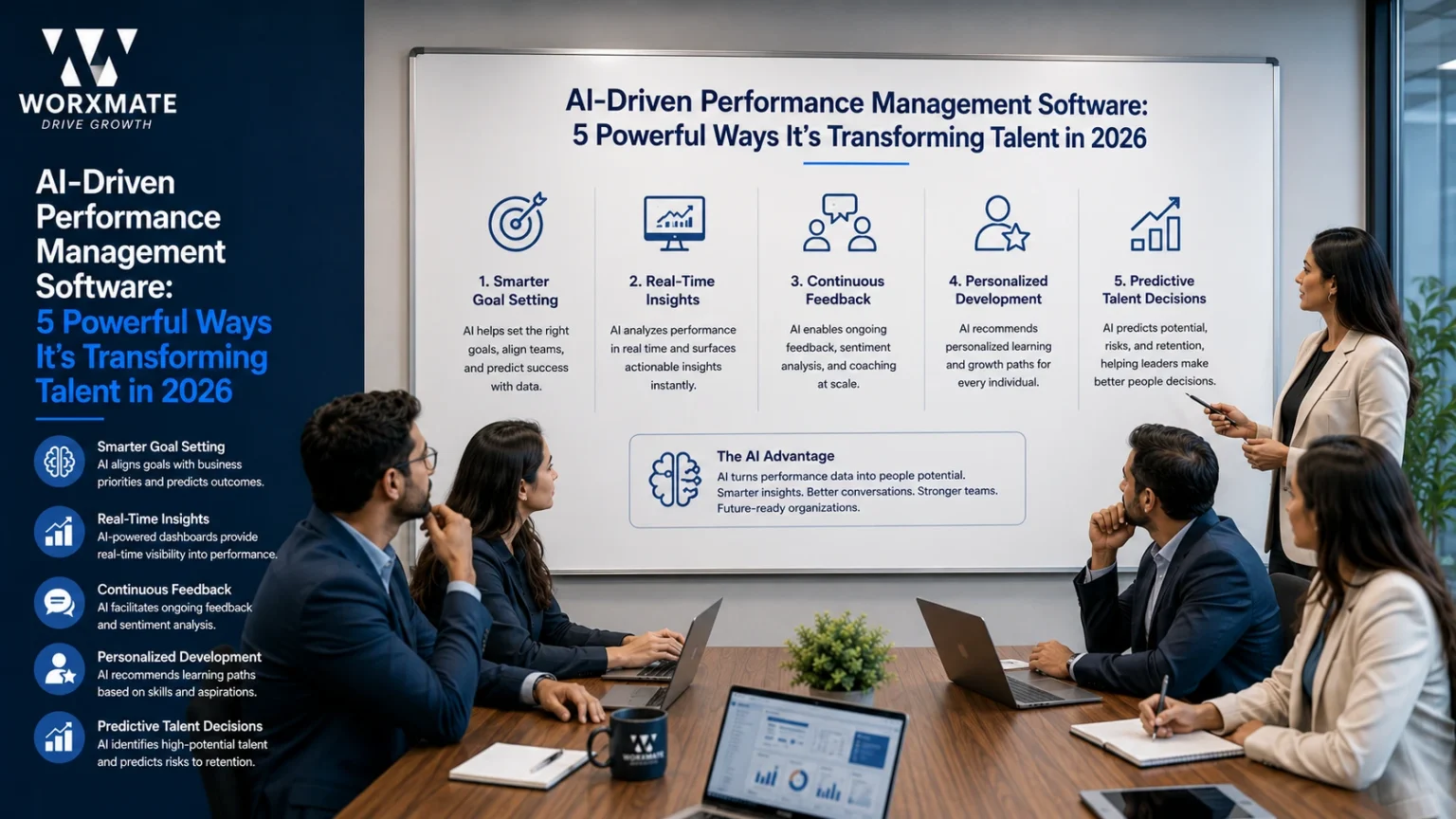
AI-driven performance management software uses machine learning to analyze employee data – goals, feedback, project completions, sentiment – and turn it into continuous, bias-reduced, predictive insight instead of one anxiety-inducing annual review. It matters because it helps organizations catch flight risk early, cut manager admin time, and make people decisions based on evidence rather than gut feeling. Platforms like Worxmate go further with three specialized AI models – Orbit, Axis, and Nexus – built on the DEEP AI framework.
The Future of Work is Here: How AI Driven Performance Management Software Transforms Talent
Remember the dread of the annual performance review? That once-a-year, anxiety-inducing meeting based on hazy memories and biased perceptions? That era is over. Today, forward-thinking organizations are trading dusty paperwork and subjective judgments for dynamic, data-driven insights powered by AI driven performance management software.
This intelligent technology is revolutionizing how we develop, evaluate, and engage our most valuable asset: our people. It’s not about replacing managers with robots; it’s about empowering leaders with unprecedented clarity. By leveraging continuous data, intelligent performance management systems provide real-time feedback, remove bias, and predict future talent needs. Let’s explore how this innovation is creating a fairer, more productive, and future-ready workplace.
This 2026 update goes further into how ai driven performance management software compares to a plain-appraisal system, what “good” ROI actually looks like on this category of tool, and how Worxmate’s Orbit AI, Axis AI, and Nexus AI models put these capabilities into practice. If you’re short on time, the quick answer above covers the essentials.
What is AI Driven Performance Management Software?
AI driven performance management software is a platform that uses artificial intelligence and machine learning algorithms to automate, enhance, and add predictive intelligence to the employee performance management cycle. Unlike traditional systems that are manual and retrospective, an AI PMS is continuous, real-time, and forward-looking.
It integrates data from various sources-project management tools, peer feedback, customer satisfaction scores, and even communication patterns-to build a holistic view of performance. The core promise? Moving from judging past performance to actively shaping future success.
Key Capabilities of an Intelligent Performance Management System
- Continuous Feedback & Check-ins: Facilitates ongoing conversations instead of annual reviews.
- Bias Detection & Mitigation: Flags potentially biased language in feedback and calibrates ratings across teams.
- Skill & Competency Gap Analysis: Identifies individual and organizational skill shortages.
- Predictive Analytics: The engine of predictive PMS, forecasting flight risks, high-potential employees, and future performance trends.
- Personalized Development Recommendations: Suggests tailored training, mentors, and growth paths for each employee.
Unlock Goal Clarity & Accelerate Employee Growth
Looking to drive goal clarity and employee growth? Discover how Worxmate’s AI-powered Performance Management Software can help.
AI Driven Performance Management Software vs. a Plain Appraisal System
A question worth answering before you shop: is your gap really a software gap, or a process gap? The performance management system vs appraisal software distinction matters here specifically because AI adds the most value to the continuous side of the process, not the once-a-year form. If your organization is still running a single annual appraisal system with no data feeding into it between cycles, AI has very little to work with – garbage in, garbage out applies just as much to machine learning as it does to spreadsheets.
| Dimension | Traditional Appraisal Software | AI-Driven PMS |
|---|---|---|
| Data input | One form, once or twice a year | Continuous signals: check-ins, OKRs, peer feedback |
| Bias handling | Manual, inconsistent | Automated language flagging + calibration |
| Orientation | Backward-looking | Predictive and forward-looking |
| Manager effort | High during review season | Distributed, lighter year-round |
For a deeper primer on this shift, see our guide to AI in performance management systems and how it makes reviews smarter and fairer, plus our overview of continuous performance management software if you’re still on an annual-only model.
The Tangible Benefits: Why Make the Shift?
Adopting an AI-powered system isn’t just a tech upgrade; it’s a strategic cultural shift with measurable returns.
- Boosted Employee Engagement: Gallup consistently finds that employees who receive regular feedback are more engaged. AI tools make frequent, meaningful feedback effortless and expected. For additional research on employee engagement and workplace practices, see Gallup’s employee engagement resources.
- Objective & Fair Evaluations: By relying on aggregated data points, these systems reduce the “recency bias” and “halo effect” that plague human-led reviews.
- Increased Manager Effectiveness: AI frees managers from administrative burdens, providing them with actionable insights to coach their teams effectively.
- Proactive Talent Retention: Predictive PMS can analyze behavioral patterns and engagement data to identify employees at high risk of leaving, allowing for proactive intervention.
- Data-Driven Strategic Decisions: HR and leadership gain clear insights into workforce capabilities, informing succession planning and hiring strategies.
One benefit worth calling out on its own: how performance management software reduces manager workload. Managers typically lose the equivalent of several full workdays each quarter to manual review prep – time AI-assisted evidence-gathering gives back almost entirely.
Metric vs. Measure: Why Your AI Model Is Only as Good as What You Feed It
AI-driven insight is only trustworthy if the underlying data is sound, and that starts with a distinction most HR teams skip past: metric vs measure. A measure is a raw data point (tickets closed, hours logged). A metric is that data point given context and meaning (tickets closed per sprint, weighted by complexity). Feed an AI model raw measures without context, and it will confidently produce misleading predictions – fast typists will look like top performers, and thoughtful problem-solvers will look slow.
- Prefer outcome metrics over activity measures wherever the AI model is asked to predict performance, not just log it
- Check that performance metrics feeding the model are normalized across roles – a support engineer and a sales rep shouldn’t be scored on the same raw scale
- Review model inputs quarterly; a metric that made sense at 20 employees can quietly become noise at 200
A Real-World Success Story: Unilever’s AI-Powered Transformation
Global consumer goods giant Unilever provides a powerful case study in deploying AI driven performance management software at scale. Faced with the challenge of assessing over 30,000 graduate applicants annually, they turned to AI. While initially for hiring, the principles bled into performance management.
- The Challenge: Traditional hiring was slow, costly, and potentially biased. They needed a system to efficiently and fairly identify top talent who would thrive in their culture.
- The AI Solution: Unilever partnered with Pymetrics to use gamified assessments and HireVue for AI-powered video interviews. The algorithms assessed candidates for cognitive and emotional traits predictive of success at Unilever, traits defined by their own high-performer data.
- The Result: The company reported a significant reduction in hiring time-from 4 months to just 4 weeks-and a much more diverse candidate pool. The key learning? The AI was trained on what makes a successful Unilever employee, creating a data model for potential. This same logic is now applied internally. By analyzing the data of current high performers, Unilever’s intelligent performance management systems can help identify internal talent for mobility, predict future leadership potential, and recommend personalized development, creating a dynamic internal talent marketplace.
As a Deloitte insights report on the future of work notes, leading companies are using such tools to “create a more equitable, efficient, and effective system for evaluating and developing talent.”
Unlock Goal Clarity & Accelerate Employee Growth
Looking to drive goal clarity and employee growth? Discover how Worxmate’s AI-powered Performance Management Software can help.
Legacy Appraisal Methods AI Driven Performance Management Software Is Replacing
It helps to see exactly which older practices AI is displacing, because several are still common in mid-sized companies. Modern performance appraisal methods have moved decisively away from the following:
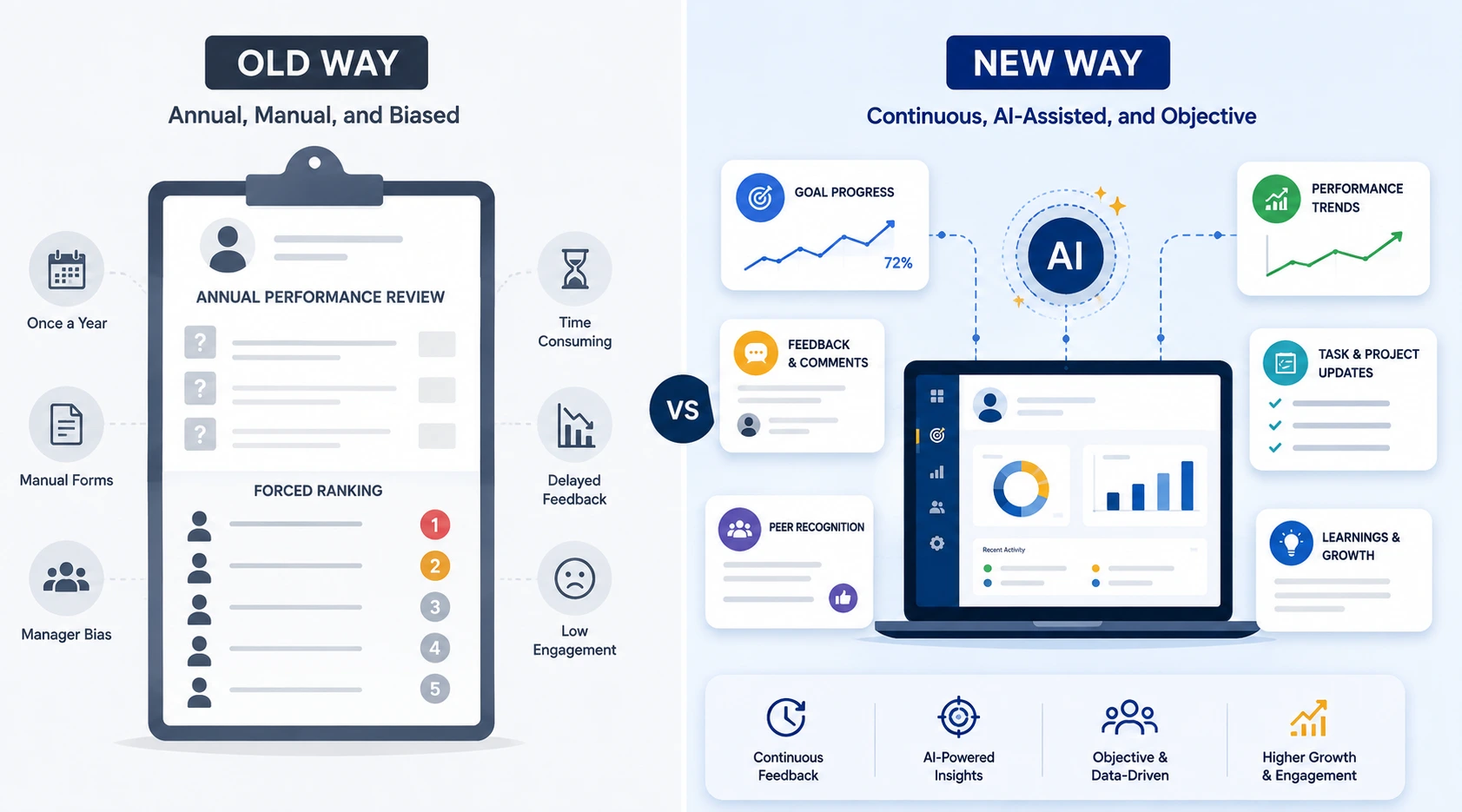
- The single annual appraisal – replaced by continuous check-ins the AI model can actually learn from
- Forced ranking – a look at bell curve appraisal pros and cons shows why AI-driven, evidence-based scoring is steadily replacing it
- Manager-memory-only appraisal systems with no data trail between reviews
If you want the full picture of how the appraisal process itself is evolving – not just the AI layer on top – our companion guide on the performance appraisal system covers the human side of this shift in detail.
Choosing the Right AI PMS: What to Look For
Not all platforms are created equal. When evaluating AI driven performance management software, consider these critical features:
- Transparent & Ethical AI: The system must explain how it arrives at its insights. Avoid “black box” algorithms. Look for vendors committed to ethical AI and bias auditing.
- Seamless Integrations: It should connect effortlessly with your existing HRIS (like Workday or SAP SuccessFactors), communication tools (like Slack or Teams), and productivity suites.
- Predictive PMS Capabilities: Ensure it goes beyond reporting the past. Can it model future scenarios, like the impact of a training program or the risk of team attrition?
- User-Friendly Experience: For company-wide adoption, the interface must be intuitive and valuable for both employees and managers, not just HR.
- Robust Data Security & Privacy: Employee performance data is highly sensitive. Ensure the vendor complies with global regulations (like GDPR) and has enterprise-grade security.
Legacy Appraisal Methods AI Driven Performance Management Software Is Replacing
It helps to see exactly which older practices AI is displacing, because several are still common in mid-sized companies. Modern performance appraisal methods have moved decisively away from the following:
- The single annual appraisal – replaced by continuous check-ins the AI model can actually learn from
- Forced ranking – a look at bell curve appraisal pros and cons shows why AI-driven, evidence-based scoring is steadily replacing it
- Manager-memory-only appraisal systems with no data trail between reviews
If you want the full picture of how the appraisal process itself is evolving – not just the AI layer on top – our companion guide on the performance appraisal system covers the human side of this shift in detail.
Conclusion: Elevate Your People Strategy with Worxmate
The transition to AI driven performance management software is no longer a futuristic concept-it’s a present-day imperative for building a resilient, high-performing organization. It’s about creating a culture where feedback is constant, growth is personalized, and decisions are informed by data, not guesswork.
This is exactly why we built Worxmate. We understand that modern teams need more than a static review module. Worxmate’s integrated OKR & PMS features are designed with intelligent insights at their core.
Our platform helps you set aligned Objectives and Key Results (OKRs), while our intelligent performance management tools provide continuous feedback loops, highlight progress, and analyze contributions objectively. Worxmate surfaces the insights you need to have meaningful career conversations, recognize achievements in real-time, and strategically develop every team member.
Ready to leave outdated reviews behind and build a future-ready workforce?


Written by
An OKR Coach with 20+ years of implementation experience, Madhusudan has guided over 50 organisations through successful OKR transformations, training more than 500 leaders. Learn more about Worxmate.