7 Ways to Build Performance Management Frameworks That Work
Actionable insights to align your OKRs with everyday performance management-from proven frameworks to the tools that power them.
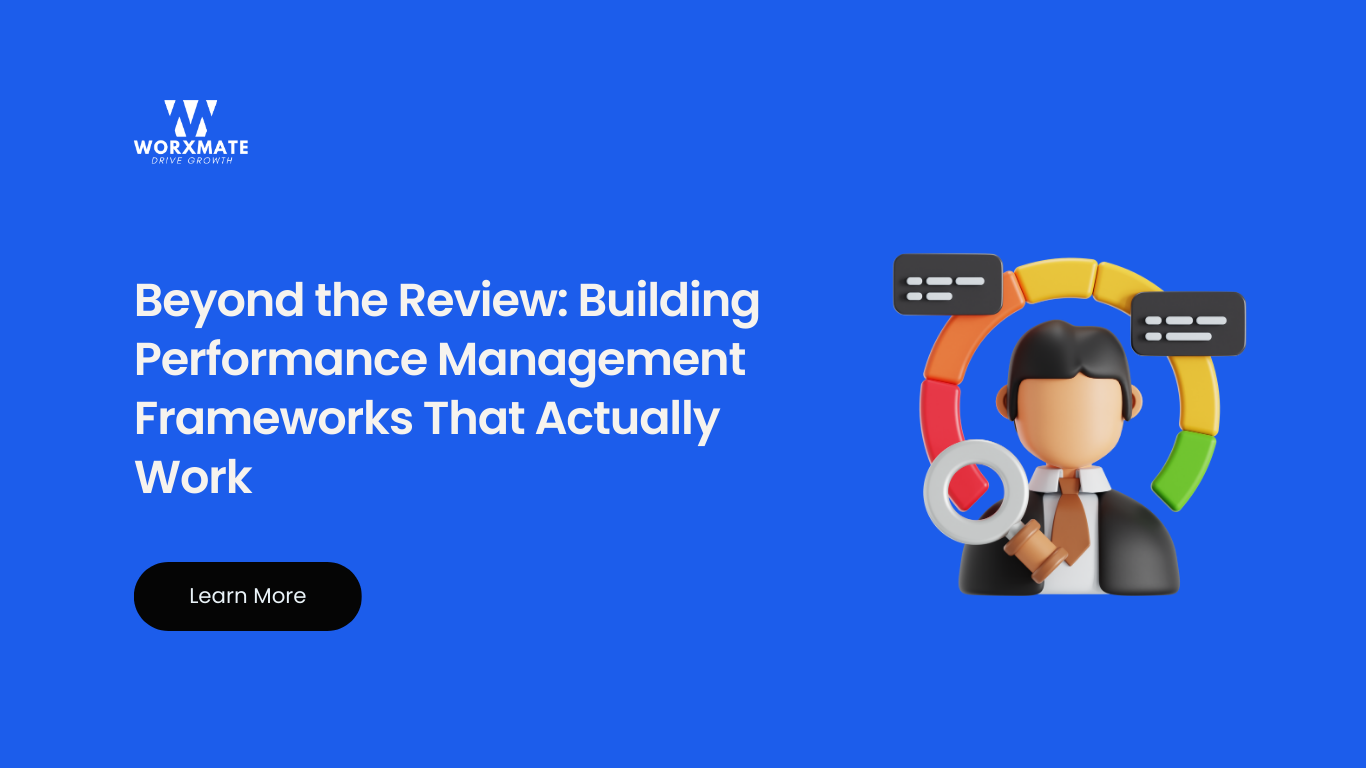
Performance Management Framework: A structured system of goals, feedback loops, and development cadences designed to align individual efforts with business outcomes. Effective frameworks replace archaic annual appraisal cycles with employee performance software that supports continuous feedback and agile growth.
Performance management frameworks are the structured processes organizations use to align individual employee goals with broader company strategy, assess progress, and foster development. When executed correctly, they create clarity, boost engagement, and drive business outcomes. However, many frameworks fail because they rely on outdated annual reviews and lack continuous feedback, making them feel like bureaucratic chores rather than growth catalysts.
Let’s be honest: when was the last time you heard someone genuinely excited about their company’s annual performance review? For most employees, the phrase “performance management” conjures images of stressful paperwork, recency-biased ratings, and awkward conversations. Yet, when done right, a solid performance management framework is the engine that drives employee growth, strategic alignment, and business success.
The difference between a framework that fuels your company and one that frustrates your people lies in its design and execution. In today’s fast-paced work environment, static, once-a-year models are rapidly becoming extinct. Leaders are now searching for dynamic approaches that foster continuous feedback and agility. This article explores why traditional systems crumble, how industry giants are fixing them, and how you can build a framework that turns low productivity into high performance.
Why Performance Management Frameworks Fail
Even with the best intentions, many performance management frameworks fail to deliver results. According to recent research, a significant number of organizations are looking to change their systems because current models feel outdated. But why do these well-laid plans go wrong?
The Annual Review Trap
The most common pitfall is the reliance on the traditional annual review. Waiting 12 months to tell an employee how they’ve performed is not management; it’s a historical recap. By then, the moment for course correction has long passed. This backward-looking approach does little to improve current performance and often leaves employees confused about how to grow.
Lack of Continuous Feedback
Frameworks crumble when feedback is a one-way street that opens once a year. Employees working in low-productivity teams often cite a lack of real-time coaching. Without regular check-ins, small issues snowball into major roadblocks, and engagement plummets.
Inconsistent Execution
A framework is only as good as the managers who implement it. If leaders aren’t trained to have meaningful development conversations, the process becomes a tick-box exercise. As organizations scale, this inconsistency leads to siloed teams and unclear expectations, where “good performance” means different things in different departments.
Fixing Ineffective Performance Management Frameworks
So, how do you fix a broken system? The shift begins by moving from a culture of judgment to a culture of development, integrating robust performance management approaches that align operational execution with team milestones.
Embrace Continuous Performance Management
High-performing organizations are replacing annual reviews with continuous performance management. This model emphasizes frequent, informal check-ins and ongoing feedback. Companies like Adobe pioneered the “Check-in” model, abandoning ratings in favor of regular dialogues between managers and employees about expectations and development. This approach supports agility, which is essential for remote or rapidly changing teams.
Leverage Technology and Data
Fixing ineffective performance management frameworks requires the right tools. Technology automates workflow, tracks real-time goal progress, and provides analytics that help leaders spot bottlenecks early. Data eliminates the guesswork, allowing for objective evaluations based on evidence rather than opinion.
Achieve Your Goals Faster
See how Worxmate can help your team set clear goals and achieve faster results. Book your free demo today and experience the power of AI-driven OKRs in action.
Case Study: Deloitte’s Shift to Performance Snapshots
When discussing real-world success in revamping performance management, Deloitte stands as a prime example. Recognizing that its previous system consumed 2 million hours a year and still failed to drive engagement, Deloitte knew it needed a radical change.
Deloitte moved away from cumbersome annual reviews to a model based on frequent performance snapshots. Instead of rating employees on a dozen competencies, they simplified the process. Managers are now asked four future-focused questions about what they would do with a team member, shifting the focus from past performance to potential.
The results were profound. By treating performance management as a continuous process rather than an event, Deloitte found a direct correlation between the frequency of conversations and team member engagement. As leaders from Deloitte noted in a Harvard Business Review article, frequent discussions about near-future work are essential for unlocking the best performance from people. This case proves that simplifying the process and focusing on forward-looking dialogue can transform a bureaucratic necessity into a strategic advantage.
Performance Management Frameworks to Improve Employee Engagement
To truly improve employee engagement, your framework must make employees feel seen and valued. The data supports this: Gartner found that in a “human-centric work model,” employees are nearly four times more likely to be high-performing.
Strength-Based Approaches
Instead of obsessing over fixing weaknesses, frameworks like the one used by Energize focus on identifying and leveraging individual strengths. By using assessment tools to align tasks with natural talents, they saw dramatic boosts in engagement and retention. When people do what they do best every day, engagement soars.
Incorporating 360-Degree Feedback
To reduce bias and provide rounded insights, successful companies incorporate 360-degree feedback. Gathering input from peers, direct reports, and managers creates a holistic view of an employee’s impact, fostering a culture of collaboration and mutual respect.
Linking Compensation to Performance Management Frameworks
One of the most delicate balancing acts is linking compensation to performance management frameworks. While it’s logical that great work deserves reward, tying variable pay too tightly to rigid ratings can backfire.
The Risk of Stacked Ranking
Systems like stacked ranking, where employees are graded on a curve, can create toxic internal competition. A Harvard Business Review case study on Gestrava Technology Corporation highlights the anxiety such systems cause. An employee rated “Exceeds Expectations” felt demoralized simply because a forced curve prevented him from getting the top rating, despite stellar feedback from colleagues.
A Better Way: Separate Development from Pay
To avoid this, many experts suggest separating the developmental conversation from the compensation conversation. When employees discuss their growth and salary simultaneously, they become defensive and less open to constructive feedback. Leading frameworks conduct check-ins throughout the year for development, while compensation is decided in a separate, data-driven calibration session at year-end.
Performance Management Frameworks for Low Productivity Teams
For low productivity teams, a robust framework acts as a revival roadmap. The key is clarity. When teams don’t know what success looks like, they can’t achieve it.
Goal Setting with OKRs
The Objectives and Key Results (OKRs) framework, popularized by Google, is a powerful tool for lagging teams. OKRs connect company strategy to team objectives, ensuring everyone knows exactly how their work contributes to the bigger picture. This transparency turns ambiguity into focused action.
Competency-Based Development
Sometimes low productivity stems from a skills gap. A competency-based framework defines the specific behaviors and skills required for each role. By mapping performance against these competencies, managers can identify precise areas for upskilling and training, directly targeting the root cause of underperformance.
How Worxmate Helps Build a High-Performance Culture
Navigating the shift from an outdated review system to a dynamic performance culture is complex, but you don’t have to do it alone. Worxmate provides the digital infrastructure to make your chosen framework succeed.
Our platform is designed to solve the exact problems discussed in this article. Worxmate’s OKR & PMS features allow you to seamlessly connect company-wide objectives to individual tasks, ensuring alignment and transparency. We facilitate a continuous feedback culture by enabling real-time check-ins and peer recognition, moving you away from the dreaded annual review. By automating workflows and providing clear analytics, Worxmate empowers your managers to make fair, data-driven decisions, whether they are linking compensation to performance or identifying development opportunities for low productivity teams. This directly accelerates measurable key results across the entire organization. Tracking a real-time confidence score helps identify at-risk targets before quarter-end. Surfacing operational blockers early ensures leadership can clear obstacles quickly. Seamless cascading ensures department milestones stay synchronized with company strategy. Strong goal alignment eliminates siloed efforts and connects daily work to strategic outcomes.
Ready to stop managing performance and start empowering growth?
Discover how Worxmate can transform your performance management framework today. Schedule a platform walkthrough!


Written by
An OKR Coach with 20+ years of implementation experience, Madhusudan has guided over 50 organisations through successful OKR transformations, training more than 500 leaders. Learn more about Worxmate.
Frequently Asked Questions
A performance management framework is a systematic approach organizations use to set goals, track progress, deliver ongoing feedback, and evaluate employee contributions in alignment with overarching strategic priorities.
Annual reviews rely on recency bias, take place too infrequently to enable course correction, and create a high-stakes, stressful environment that discourages genuine developmental dialogue.
Objectives and Key Results (OKRs) provide clear, measurable targets that connect high-level company strategy directly to individual and team daily workflows, driving transparency and focus.
Experts recommend separating developmental check-ins from compensation reviews to prevent employees from becoming defensive and to ensure more objective, data-driven pay calibration.
Continuous performance management replaces yearly events with regular check-ins, real-time peer feedback, and agile goal adjustments throughout the entire work cycle.
By establishing crystal-clear expectations, utilizing OKRs for alignment, conducting frequent check-ins, and identifying specific skill gaps through competency-based frameworks.
Modern software automates workflows, tracks real-time progress, eliminates administrative friction, and supplies leaders with actionable analytics for objective decision-making.
360-degree feedback gathers developmental input from managers, peers, and direct reports to provide a well-rounded and unbiased perspective on an employee’s organizational impact.
High-performing organizations typically conduct bi-weekly or monthly 1:1 check-ins to maintain momentum, address roadblocks immediately, and adapt to changing priorities.
Worxmate unites OKRs, continuous feedback, and performance reviews into a single agile platform, helping mid-market and enterprise teams drive strategic alignment without administrative bloat.