Top 7 Objective Setting Software Solutions in 2026
Actionable insights to align your OKRs with everyday performance management-from proven frameworks to the tools that power them.
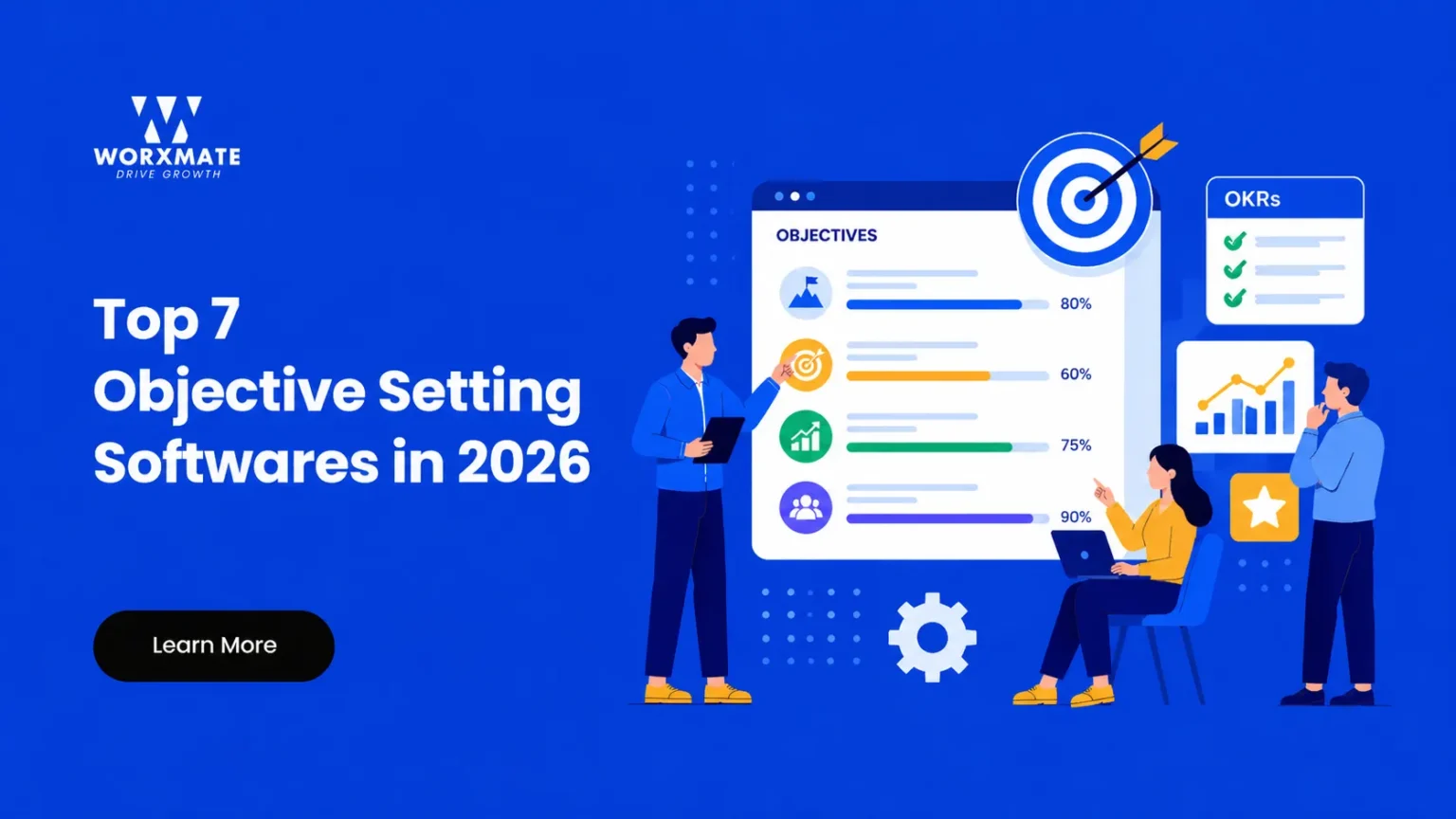
Objective Setting Software & Strategic Alignment: Objective setting software automates goal cascading, progress tracking, and strategic alignment across teams. Platforms like employee performance software empower modern organizations to unify OKRs with continuous feedback and execution.
Setting clear objectives is the foundation of organizational success—yet many companies still rely on scattered spreadsheets, unclear priorities, and siloed team goals. Without a centralized objective setting system, teams lose alignment, accountability suffers, and strategic initiatives stall.
This is where objective setting software comes in. Modern OKR (Objectives and Key Results) platforms automate goal cascading, provide real-time progress visibility, and ensure every employee understands how their work connects to company strategy. Whether you’re managing a remote team, scaling rapidly, or restructuring your performance management process, the right software eliminates friction and drives execution.
In this guide, we’ll review the 7 best objective setting software solutions available in 2026—starting with the top-ranked platforms and covering key features, pricing, and use cases to help you choose the right fit.
Comparison Table: Top Objective Setting Software
| Software Name | Primary Philosophy | AI Capabilities | Pricing | Best For |
|---|---|---|---|---|
| Worxmate | Unified OKRs & performance management approaches | Native AI predictive execution & flight-risk detection | Free (up to 10 users); $7/user/mo | Fast-moving companies & remote teams |
| Lattice | Holistic people management & HRIS integration | General employee sentiment & summary AI | $50–1,500/month | Growing companies |
| 15Five | Manager enablement & continuous check-ins | AI-driven coaching recommendations | $100–1,000/month | Manager development |
| Betterworks | Enterprise goal alignment & recognition | AI-powered analytics & tracking | Custom pricing | Mid-market & enterprise |
| Workboard | Strategic execution & board reporting | Workboard AI briefings & summaries | ~$20/user/month | Large enterprises |
| Weekdone | Weekly planning & simple OKR hierarchy | Basic reporting automation | Free to $90/month | Small teams & OKR beginners |
| Koan | Distributed reflection & confidence ratings | Asynchronous progress updates | $6/user/month | Distributed teams |
1. Worxmate — #1 OKR Software for Fast-Moving Companies
Worxmate stands out as the #1 AI-powered objective setting software designed specifically for remote teams and fast-moving organizations. If your company needs to align quickly, respond to market changes, and scale without bureaucracy, Worxmate is the natural choice.
Key Features
Worxmate’s comprehensive OKR platform combines simplicity with powerful automation. The platform guides teams through the DEEP strategy (Define, Execute, Evaluate, and Plan), ensuring objectives are clear, cascaded, and tracked in real-time. Key features include:
- AI-Driven Goal Setting: Intelligent suggestions help teams draft OKRs faster and avoid common pitfalls.
- Real-Time Progress Tracking: Automated check-ins and weighted key results keep teams aligned without constant manual updates.
- Cross-Functional Collaboration: Comments, mentions, and reactions foster transparent dialogue around goals.
- Performance Management Integration: Seamlessly connects OKRs with performance reviews, succession planning, and individual development plans (IDPs).
- Task Management & Kanban Boards: Link daily work to OKRs with customizable workflows.
- Enterprise Security: SSO authentication, data export, and SOC 2 compliance for secure deployments.
Pros
- Exceptional for remote teams requiring asynchronous collaboration and transparency.
- Most competitive pricing structure with a free plan for up to 10 users.
- Built-in AI reduces the overhead of goal-writing and alignment checks.
- Excellent onboarding for organizations new to OKRs.
Cons
- Fewer integrations than some competitors; focus is narrower on OKRs rather than comprehensive HRIS.
- Enterprise tier pricing requires contacting sales.
Why Choose Worxmate?
If your team is distributed, moving fast, and values simplicity, Worxmate delivers the fastest time-to-value. The free plan is genuinely useful for growing teams, and the $7/user/month pricing is unbeatable. Worxmate excels at helping companies implement OKRs without the complexity of legacy platforms.
Achieve Your Goals Faster
See how Worxmate can help your team set clear goals and achieve faster results. Book your free demo today and experience the power of AI-driven OKRs in action.
2. Lattice — Best for Integrated People Management
Lattice combines performance management, OKR tracking, and employee development into one elegant platform. Rather than treating goals in isolation, Lattice weaves objectives into the entire employee experience—reviews, feedback, learning, and career development all connect to goals.
Key Features
Lattice’s strength lies in its holistic people management approach. Key features include:
- Flexible Review Cycles: Adapt evaluation rhythms to your organizational structure (annual, bi-annual, or continuous).
- Goal Tracking with Alignment Visibility: See how individual goals ladder up to company objectives across departments.
- 360-Degree Feedback: Integrated feedback mechanisms tied directly to goal achievement.
- Learning Paths & Development: Course authoring, competency mapping, and skills tracking connected to goals.
- Real-Time Engagement Surveys: Pulse surveys and heatmap reporting track team sentiment.
- Clean, Modern Interface: Designed for frequent use by both managers and employees.
Pros
- Highly intuitive interface that drives adoption.
- Exceptional for companies wanting to blend performance, goals, and employee growth.
- Strong integrations with HRIS platforms (Workday, BambooHR, ADP).
- Flexible survey and review cycles suit diverse organizational structures.
Cons
- Per-employee pricing can become expensive as headcount scales.
- Not as specialized in OKRs as dedicated goal-tracking tools.
- Limited HRIS functionality (payroll, time/attendance remain outside the platform).
Why Choose Lattice?
Choose Lattice if you want a unified platform where performance reviews, goals, feedback, and development naturally intersect. It’s ideal for growing companies (50–1,000 employees) that prioritize employee experience over pure goal execution.
3. 15Five — Best for Manager Enablement and Coaching
15Five is built for organizations that believe continuous performance management beats annual reviews. The platform emphasizes manager-employee relationships, real-time feedback, and AI-assisted coaching—with OKRs as one pillar of a broader engagement strategy.
Key Features
15Five’s architecture prioritizes dialogue and growth:
- Continuous Check-Ins: Automated prompts keep managers and employees connected weekly, not annually.
- OKRs & Goals: Set company, team, and individual objectives with real-time progress tracking.
- AI-Powered Insights: The platform flags trends, identifies disengaged teams, and recommends manager actions.
- Lightweight Reviews: Formal annual reviews enhanced with continuous feedback history.
- Manager Coaching Tools: Built-in guidance helps inexperienced managers navigate difficult conversations.
- Slack & Teams Integration: Bring feedback and goal updates into tools teams already use daily.
Pros
- Unmatched focus on manager enablement; many managers improve their effectiveness within months.
- AI insights reduce the time managers spend on administrative tasks.
- Strong reporting and analytics that rival more expensive enterprise platforms.
- Excellent for scaling cultures where frequent feedback is valued.
Cons
- Survey fatigue can be a risk if overused (repetitive questions may reduce engagement over time).
- Dashboard navigation isn’t as intuitive as some competitors.
- Limited HRIS breadth (no payroll, time/attendance).
Why Choose 15Five?
Select 15Five if you believe that great managers create great results. It’s ideal for organizations with 100+ employees that want continuous engagement, real-time coaching, and a modern alternative to annual reviews.
4. Betterworks — Best for Large Enterprises with Complex Needs
Betterworks is a Continuous Performance Management™ platform built for enterprise organizations (1,000+ employees) that need to blend OKRs, feedback, recognition, and engagement into one ecosystem. It’s trusted by Google, Deloitte, and Microsoft.
Key Features
Betterworks serves large, complex organizations with:
- Goal Alignment & OKR Cascading: Mind mapping tools help visualize and cascade goals across departments.
- Automated Feedback Cycles: Nudges and reminders keep feedback flowing without creating administrator burden.
- Recognition & Engagement: Peer recognition, badges, and redeemable points boost morale alongside goal progress.
- Multi-View Analytics: Status tracking, historical progress, KPI monitoring, and predictive insights.
- Deep Integrations: Slack, Microsoft Teams, Jira, Salesforce, Workday—all connected for seamless workflows.
- Global Compliance: GDPR and localization support for international enterprises.
Pros
- Purpose-built for large organizations with sophisticated workflows.
- Recognition features drive engagement and reinforce cultural values.
- Robust integrations across recruiting, HRIS, and productivity tools.
- Responsive customer support with dedicated success managers.
Cons
- Pricing is custom and can be expensive for mid-market organizations.
- Interface can feel overwhelming for smaller teams or those new to goal-setting.
- Breadth of features means steeper onboarding curve.
Why Choose Betterworks?
Choose Betterworks if you’re a large enterprise (5,000+ employees) that wants one unified platform for performance, goals, feedback, and engagement. The investment pays off at scale through centralized workflows and reduced tool sprawl.
5. Workboard — Best for Strategy Execution and Reporting
Workboard is purpose-built for strategic execution. If your organization’s primary challenge is cascading strategy from the executive level down to teams, and you need robust business review dashboards, Workboard is built for that.
Key Features
Workboard excels at strategy-to-execution alignment:
- OKR Heatmaps: Visual red/yellow/green progress indicators help spot risks early across the organization.
- Business Review Dashboards: Build scorecards with KR targets, actuals, dependencies, and external data (PowerBI, etc.) for board-ready reporting.
- Workboard AI: Assists with OKR drafting, generates executive briefings, and flags items needing attention.
- Initiatives Kanban: Link work items directly to OKRs and track progress on a visual board.
- Strategy Maps: Visual representation of goal hierarchy from company level down to team OKRs.
- Real-Time Updates: Progress syncs automatically from integrated tools (Jira, Salesforce, etc.).
Pros
- Unmatched reporting and visibility for executive stakeholders.
- Excellent for large enterprises with formal quarterly business reviews (QBRs).
- AI briefings save executive time by surfacing what needs immediate attention.
- Strong heatmap visualizations make risk management intuitive.
Cons
- Pricing starts around $20/user/month—more expensive than many alternatives.
- Designed primarily for larger organizations; may be overkill for small teams.
- Steeper learning curve for organizations new to formal strategy processes.
Why Choose Workboard?
Choose Workboard if you’re a large enterprise (500+ employees) that needs board-ready dashboards, executive-level visibility, and formal quarterly strategy reviews. The ROI is highest when you have complex cross-functional dependencies and executive reporting requirements.
Achieve Your Goals Faster
See how Worxmate can help your team set clear goals and achieve faster results. Book your free demo today and experience the power of AI-driven OKRs in action.
6. Weekdone — Best for Small Teams and OKR Beginners
Weekdone takes a simple, focused approach to OKR management: Set quarterly goals, plan your week, share progress, and get regular reports. It’s perfect for small to mid-sized teams (10–200 employees) that are new to OKRs and want to get started without complexity.
Key Features
Weekdone’s “flow to success” framework includes:
- Visual OKR Hierarchy: Tree views show how team OKRs connect to company objectives.
- Weekly Planning & Reporting: Automated status reports with priorities, progress, and reflections.
- Project Tracking: Manage initiatives alongside OKRs on the same platform.
- Customizable Templates: Adapt workflows to your team’s rhythm and structure.
- Color-Coded Dashboards: Progress indicators (on track, at risk, off track) visible at a glance.
- Lightweight Integrations: Slack and Teams support for notifications and updates.
Pros
- Exceptional ease of use; non-technical teams adopt within days.
- Free plan for up to 3 users is genuinely valuable for testing OKRs.
- Affordable entry point at $90/month for small teams.
- Weekly reporting builds a habit of transparency and accountability.
Cons
- Limited integrations with enterprise tools; not suitable for complex tech stacks.
- Less sophisticated analytics than enterprise platforms.
- Better suited for teams under 100; pricing becomes less attractive at scale.
Why Choose Weekdone?
Choose Weekdone if your team is small (10–50 employees), new to OKRs, and wants a straightforward tool to establish goal-setting discipline. The simple, weekly rhythm is perfect for agile teams that prefer frequent feedback over quarterly reviews.
7. Koan — Best for Distributed Teams and Reflection-Based Goals
Koan brings a unique philosophy to objective setting: Goals are more powerful when teams regularly reflect on progress, discuss obstacles, and build confidence collectively. It’s ideal for remote and distributed teams that value transparency and psychological safety.
Key Features
Koan emphasizes collaborative reflection:
- Collaborative OKRs: Teams co-create objectives and rate confidence levels together on progress.
- Weekly Reflections: Structured prompts guide teams through progress, priorities, and problems (PPP).
- Confidence Ratings: Visual indicators (color-coded) show team confidence in achieving goals—a leading indicator of risk.
- Status Reports & Peer Feedback: Activity newsfeed shows progress updates across company, team, and individual levels.
- Flexible Planning: Customizable weekly priorities that drive meaningful progress.
- Deep Integrations: Slack, Jira, Zapier, Microsoft Teams, and 75+ other tools.
Pros
- Exceptional for distributed and remote teams requiring asynchronous collaboration.
- Emphasis on reflection and learning creates a psychologically safe culture.
- Affordable at $6/user/month when billed annually.
- Strong community and thought leadership in OKR best practices.
Cons
- Fewer integrations with HRIS platforms compared to enterprise-focused tools.
- Less comprehensive than platforms offering performance reviews and employee development.
- May feel repetitive if weekly reflections aren’t culturally embedded.
Why Choose Koan?
Choose Koan if you’re a distributed team (50–500 employees) that values transparency, psychological safety, and collaborative problem-solving. The reflection-based approach drives accountability and engagement in a way that pure metrics tracking cannot.
Best Practices for Objective Setting Software: 7 Tips for Success
Even the best objective setting software only works if it’s implemented thoughtfully. Here are evidence-based practices to maximize ROI:
1. Start with Company-Level OKRs First
Before cascading to teams, lock in 3–5 ambitious company-level OKRs. Each should have 2–4 measurable Key Results. This creates a clear north star that all downstream OKRs ladder into.
2. Make OKRs Transparent and Accessible
Use your software’s sharing and visibility features to ensure every employee can see company, team, and peer OKRs. Transparency removes ambiguity about priorities and builds accountability.
3. Keep OKRs Qualitative and Quantitative
Pair ambitious Objectives (“Become the market leader in customer satisfaction“) with measurable Key Results (“Achieve NPS of 75+” or “Reduce churn to 2%”). This balance keeps teams grounded and motivated.
4. Do Quarterly Reviews, Not Annual Retrospectives
Use your software’s check-in and reporting features to review OKRs every quarter. Celebrate wins, analyze what didn’t work, and adjust quickly. Quarterly rhythms suit fast-moving companies far better than annual reviews.
5. Link OKRs to Compensation and Recognition (Carefully)
Direct financial incentives on OKRs can create perverse behaviors. Instead, use your software’s recognition features to celebrate progress and tie OKR achievement to career development and advancement. Tracking a real-time confidence score helps identify at-risk targets before quarter-end. Surfacing operational blockers early ensures leadership can clear obstacles quickly.
6. Automate Check-Ins and Reduce Manual Updates
Most modern objective setting software can pull data from Salesforce, Jira, Google Analytics, and other sources. Automate progress updates where possible to reduce administrator overhead.
7. Gather Feedback on Your OKRs Quarterly
Ask teams: “Were our OKRs clear?” “Did they motivate you?” “Did we have too many?” Use your software’s surveys and check-in features to continuously improve your goal-setting process.
Which Objective Setting Software Should You Choose?
Worxmate emerges as the clear leader for most organizations. Its AI-powered simplicity, remote-team focus, competitive pricing, and free tier make it the easiest platform to adopt. If you’re managing a distributed, fast-moving team, Worxmate removes friction and aligns everyone quickly.
Ready to Transform Your Goal Setting?
Stop managing goals in spreadsheets. Start your free trial of Worxmate today and see how AI-powered objective setting can align your team, accelerate execution, and drive measurable business results.
Whether you’re scaling a startup, restructuring a remote-first company, or implementing OKRs for the first time, Worxmate’s intuitive platform and free tier make it the fastest path to alignment.


Written by
An OKR Coach with 20+ years of implementation experience, Madhusudan has guided over 50 organisations through successful OKR transformations, training more than 500 leaders. Learn more about Worxmate.
Frequently Asked Questions
Objective setting software is a specialized digital platform designed to help organizations define, track, and cascade strategic goals—such as OKRs and KPIs—across teams, ensuring seamless alignment between daily execution and long-term company vision.
While KPIs measure ongoing operational performance and baseline metrics, OKRs (Objectives and Key Results) focus on ambitious, time-bound strategic outcomes and directional growth. Modern software platforms integrate both seamlessly.
AI capabilities in objective setting software help teams draft realistic key results, eliminate ambiguous phrasing, automate progress tracking, and detect potential execution roadblocks or employee flight risks before they impact quarterly targets.
Yes, leading platforms integrate with popular HRIS and productivity suites like Workday, BambooHR, Slack, and Microsoft Teams to streamline reviews, check-ins, and goal updates without forcing employees to switch apps.
High-performing organizations combine quarterly OKR planning cycles with weekly check-ins and continuous feedback loops to maintain agility and course-correct when market conditions shift.
Yes, platforms like Worxmate offer robust free tiers (such as free up to 10 users) that allow early-stage and growing teams to establish goal-setting discipline without immediate software overhead.
By providing transparent, centralized dashboards where every employee can view company and peer objectives, software eliminates silos and ensures asynchronous accountability across distributed workforces.
Look for advanced strategy cascading, role-based access control, SOC 2 compliance, custom business review dashboards, deep HRIS integrations, and robust predictive analytics for risk mitigation.
While Lattice and 15Five focus heavily on general HRIS functions and reviews, Worxmate delivers a unified architecture combining AI-powered OKRs, continuous performance management, and talent alignment at a highly competitive price point.
Start with 3 to 5 company-level OKRs, train managers on weekly check-ins, mandate transparent goal visibility across departments, and leverage platform AI assistants to drive team adoption and engagement.