 WORXMATE
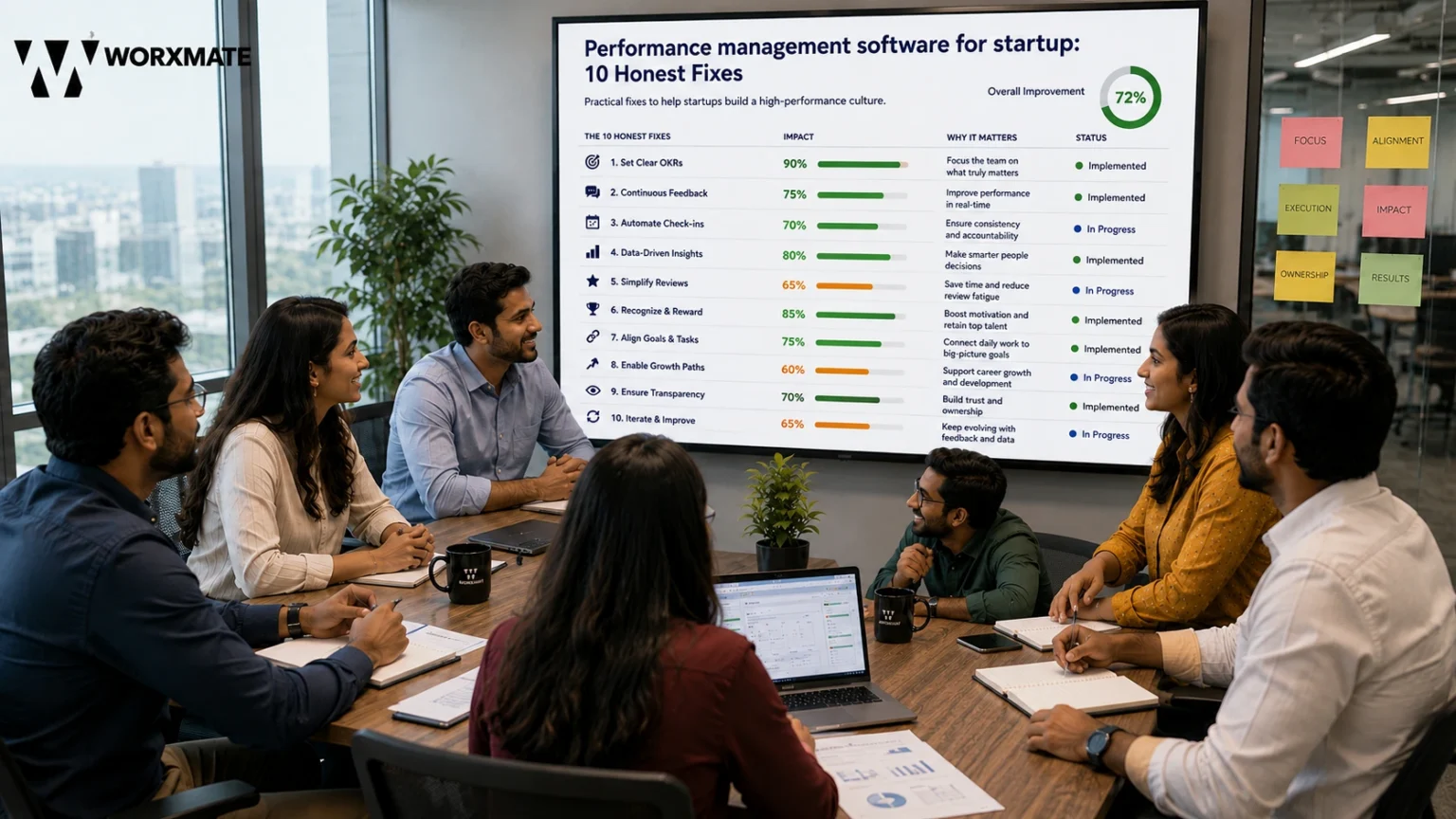
Performance management software for startup teams must combine agile top performance review tools with continuous OKR tracking. Utilizing performance management approaches centered on AI coaching eliminates administrative bloat and accelerates strategic execution.
A European fintech startup I coached reached genuine outcome-thinking only after three failed attempts at using a generic HRIS module. They were busy, but they weren’t moving the needle. The CEO could not name three clear priorities in 45 minutes because their performance data was buried in a system designed for compliance, not for speed. This is the “Startup Execution Gap“: the moment when a founder realizes that hiring more people has actually slowed the company down because alignment has been replaced by activity.
Choosing the right performance management software for startup growth isn’t about finding a place to store annual reviews. It is about building a strategy execution engine. In my experience across 50+ implementations, the startups that survive the scale-up phase are those that move from “set and forget” goals to a weekly execution rhythm. They treat performance as a real-time signal, not a quarterly post-mortem.
Worxmate AI vs Lattice: Detailed Feature Breakdown
When migrating away from legacy enterprise HR tools, founders often compare Worxmate with Lattice. While Lattice excels in cultural surveys and engagement tracking, it carries high per-user base fees and treats OKRs as an add-on module rather than an execution engine.
| Evaluation Metric | Worxmate AI | Lattice |
|---|---|---|
| Primary Philosophy | Outcome-Driven Execution Engine | HR & Culture-First Platform |
| AI Capabilities | DEEP AI Goal & Coaching Assistant | Basic GenAI Summary Tools |
| Performance Management | Continuous Feedback & 1:1s | Annual & Quarterly Review Cycles |
| Goal-to-Task Link | Native Operational & Frontline Tracking | Bolted-on OKR Module |
| Ease of Use | High Adoption with Weekly Rhythm | Moderate Training Overhead |
| Pricing Model | Transparent ROI with Low TCO | High Per-User + Platform Fees |
| Best For | High-Growth & Operational Scaleups | Enterprise HR & Culture Teams |
| Platform | Core Strength | Execution DNA | Best For |
|---|---|---|---|
| Worxmate AI | DEEP AI + Coaching | High (Outcome-Driven) | High-Growth Scaleups |
| Lattice | People Management | Medium (HR-Centric) | Culture-First Teams |
| Tability | Automated Check-ins | High (Check-in Habit) | Small Agile Squads |
Why Performance Management Software for Startup Growth Often Fails
The most common structural mistake I see is HR owning the performance system in a startup. When HR owns it, the tool becomes an appraisal mechanism. When the CEO’s office owns it, it becomes an enterprise execution platform. In a startup, you don’t have the luxury of waiting six months to find out a team is misaligned. You need to see the at-risk signals in week three.
Most performance management software for startup competitors focus on the “what” (the goal) but ignore the “how” (the execution). This leads to the “Coaching Cliff,” where leadership sets ambitious targets, but middle management has no framework to track progress. We measure this through the Execution Maturity Rate. In a typical first cycle, this rate sits between 5-15%. Without a dedicated DEEP AI goal framework, it rarely improves, leaving the startup stuck in a cycle of missed targets and “busy-ness.”
30-40%
Execution Maturity Rate
The percentage of leaders who can independently write outcome-driven goals. Achieving this within 12 months requires both software and consistent coaching.
Alignment is agreement between teams, not a platform configuration. You can display an agreement once it exists in a tool like OKR software comparison guides suggest, but you cannot create it through a UI. Startups often buy software hoping it will solve their lack of strategy. It won’t. It will only make the lack of strategy more visible.
Top 10 Performance Management Software for Startup Comparison
When evaluating a performance management for startup alternative, you must look past the feature list. You need to know if the tool supports how to write OKRs that actually drive outcomes. Here is how the top 10 contenders stack up for high-growth environments.
1. Worxmate AI: The Execution Specialist
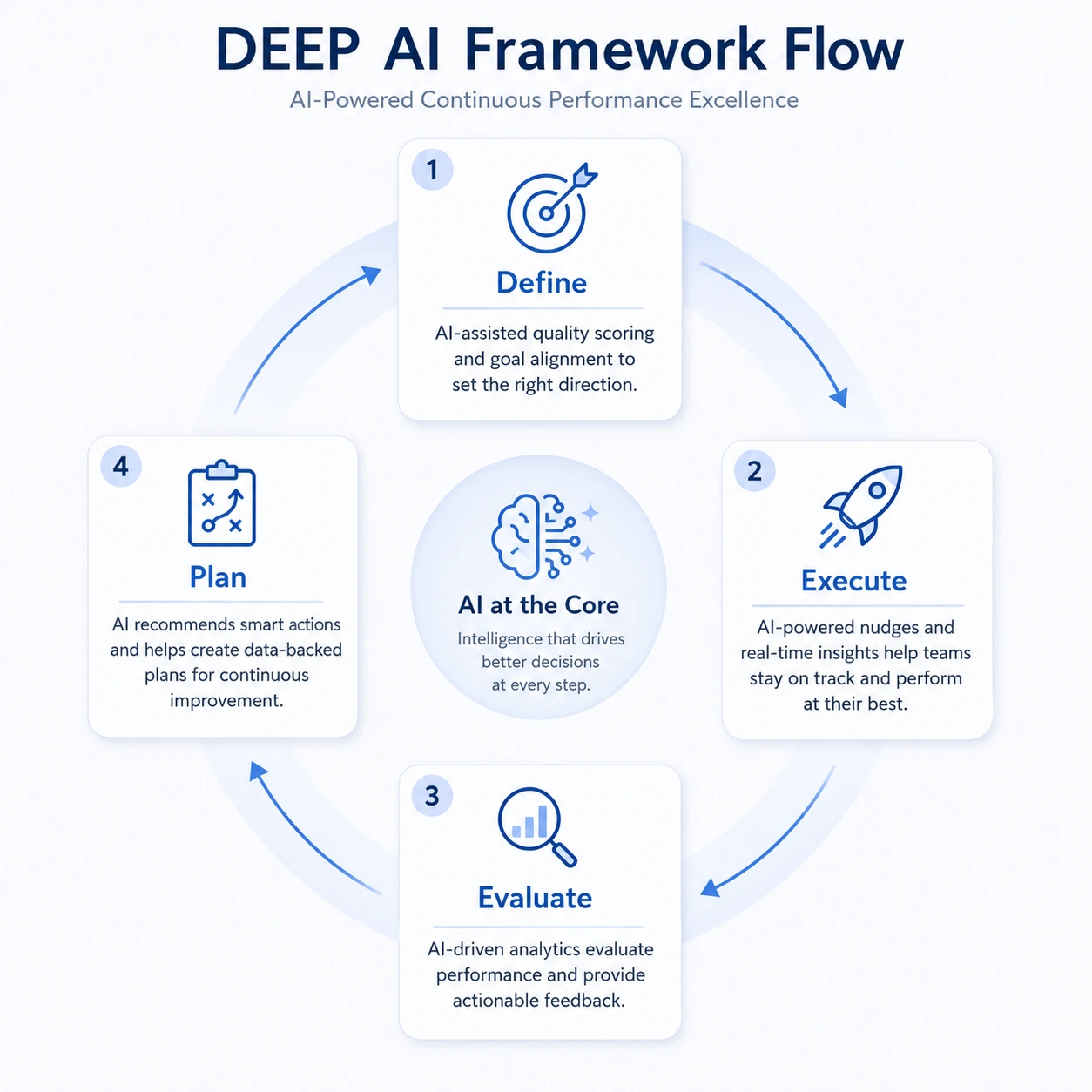
Worxmate isn’t just a tool; it’s a methodology built into an enterprise execution platform. By using the DEEP AI goal framework (Define, Execute, Evaluate, Plan), it forces the transition from output to outcome. The Define AI OKR writing tool ensures that every goal is high-quality before the cycle even begins. This is critical for startups where 15-20 queries per day in week one usually signal a looming adoption failure.
2. Lattice: The Culture Builder
Lattice is a strong performance management for startup competitors choice if your primary goal is employee engagement and 360-degree feedback. It excels at the “people” side of the house. However, for CEOs focused on hard execution, the OKR module can sometimes feel like an add-on to the HRIS features rather than the core engine.
3. Tability: The Habit Former
If your startup struggles with the “set and forget” syndrome, Tability is a fantastic performance management for startup alternative. It focuses almost exclusively on the check-in habit. It is lightweight and perfect for small teams, though it may lack the deep Orbit AI employee performance intelligence needed for complex, multi-layered organizations.
4. Leapsome: The Capability Developer
Leapsome combines performance reviews with learning and development. It is ideal for CHROs who want to build long-term talent capability. It provides a structured path for how to set OKRs while simultaneously identifying skills gaps.
5. Perdoo: The Strategy Mapper
Perdoo offers a visual strategy map that helps startups see how their work connects. It is a solid choice for founders who want a clear “line of sight” from the front line to the boardroom. Their OKR software pricing comparison is generally transparent, making it accessible for mid-stage startups.
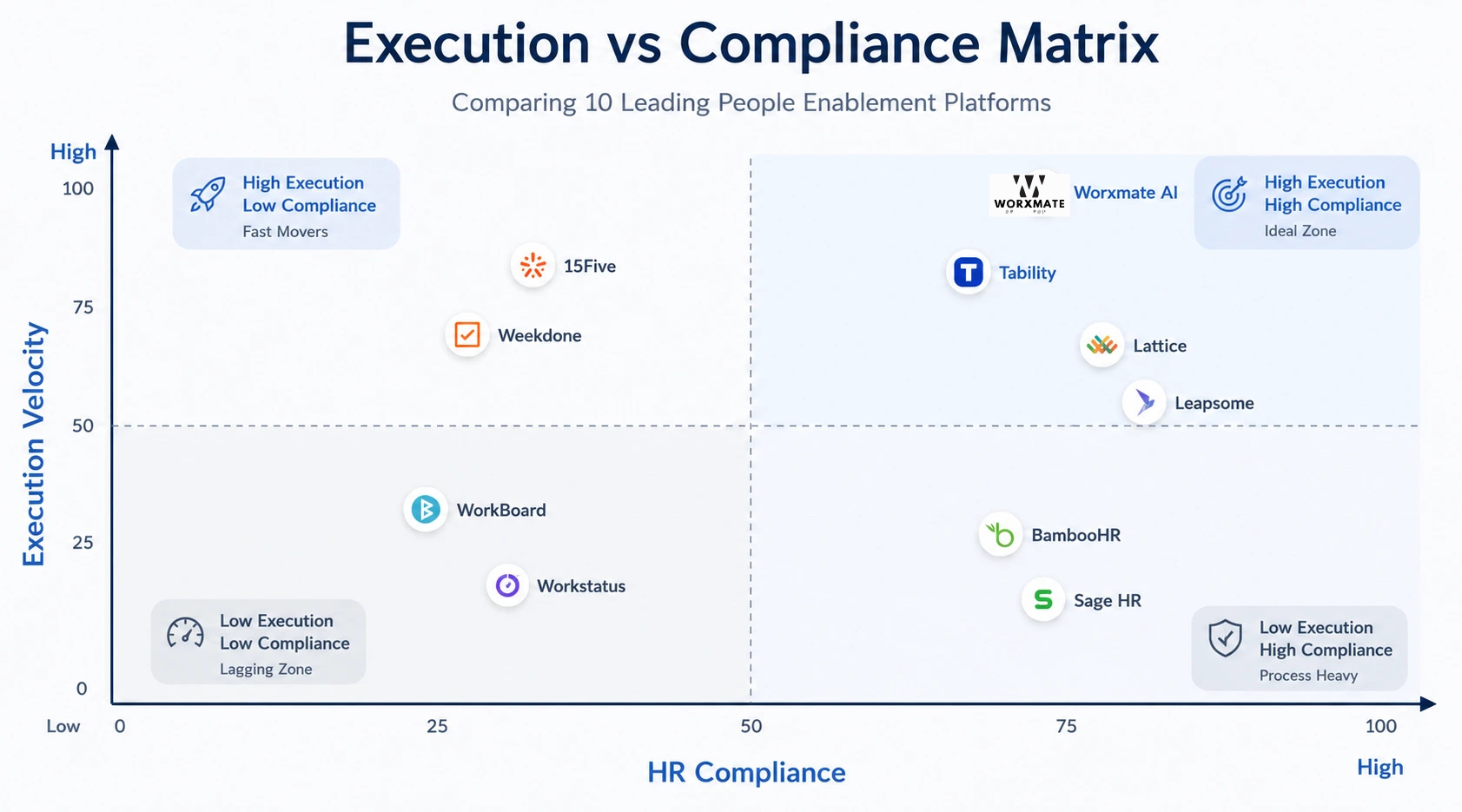
6. 15Five: The Manager Advocate
15Five is built around the manager-employee relationship. It is less about the enterprise execution platform and more about the weekly 1:1. For startups with a heavy focus on manager coaching, this is a top contender, though it requires high manager discipline to be effective.
7. Profit.co: The Feature Powerhouse
Profit.co is perhaps the most feature-complete tool on this list. It offers everything from OKRs to task management. The downside for a startup is the complexity; a 4-6 week implementation can be a lifetime in a fast-moving company. It is a powerful performance management for startup alternative for those with the internal bandwidth to manage it.
8. Weekdone: The Weekly Planner
Weekdone is one of the oldest players in the space. It focuses on the “PPP” (Plans, Progress, Problems) methodology. While the interface can feel dated compared to modern performance management software for startup options, its focus on weekly reporting is a disciplined approach to execution.
9. Koan (now Gtmhub/Quantive): The Data Integrator
Now part of the Quantive ecosystem, Koan was known for its simplicity and reflection features. As part of a larger enterprise execution platform, it now offers deep data integrations. This is best for startups that are already data-mature and want to automate their OKR vs KPI examples tracking.
10. Fellow: The Meeting Optimizer
Fellow approaches performance through the lens of meetings. Since most startup work happens in meetings, it integrates goals directly into agendas. It is a unique performance management for startup alternative that solves the “where did we record that goal?” problem by putting it where the conversation happens.
“OKRs owned by HR become a performance appraisal tool. OKRs owned by the CEO’s office become a strategy execution engine.”
The DEEP AI Goal Framework: Why Software Isn’t Enough
I have seen startups spend $50,000 on performance management software for startup licenses only to have the platform sit empty after 90 days. This happens because they lack a process. At Worxmate, we use the DEEP AI goal framework to ensure the software actually gets used. This framework maps to the four stages of a successful execution cycle:
- Define: Using the Define AI OKR writing tool to move from vague aspirations to good OKR examples.
- Execute: Implementing Execute OKR check-in software to maintain a weekly pulse.
- Evaluate: Using data-backed retrospectives to see why goals were missed.
- Plan: Learning from the previous cycle to set better targets for the next one.
In my conversations with 135+ HR leaders, the number one complaint is that employees find goal-setting “taxing.” By using AI to assist in the writing process, you reduce the friction of the first step. A leader who can write a high-quality key result in 2 minutes instead of 20 is a leader who will actually use the system.
Execution Adoption Score (After 12 Months)
92% Active Weekly Rhythm
38% Retention
12% Year-End Completion
OKR Software Pricing Comparison for Startups
For a startup, OKR software pricing comparison is often the deciding factor. However, the cheapest tool usually ends up being the most expensive in terms of lost productivity. Most tools charge on a per-user, per-month basis, ranging from $5 to $15. But you must also factor in the cost of “shelfware”- software that is paid for but not used.
When looking at performance management for startup competitors, ask about the implementation fee. Some platforms hide their true cost behind mandatory “success packages” that can run into the thousands. At Worxmate, we believe the ROI is found in the Execution Maturity Rate. If your team isn’t moving from 5-15% to 30-40% maturity within a year, the software is a sunk cost regardless of the sticker price.
Consider the difference between OKR software vs excel. Excel is free, but it has a sub-10% execution velocity because it lacks the automated triggers and Orbit AI employee performance intelligence that modern startups need to stay agile. For a scaling team, the manual labor of updating a spreadsheet is a hidden tax on your most expensive talent.
In my experience, startups that use AI-assisted goal writing see a 60% reduction in the time spent on cycle-planning. This allows the leadership team to focus on alignment = agreement rather than fixing typos in a spreadsheet.
Customizing Performance for Startup Functions
A performance management software for startup needs must be flexible enough to handle different departmental DNAs. A finance leader thinks in budget cycles, while a product leader thinks in sprints. If your enterprise execution platform forces everyone into the same rigid template, adoption will break.
For example, engineering OKR examples often focus on velocity and system reliability, whereas operations OKR examples might prioritize process efficiency. Even your CFO OKR examples need to be integrated into the same OKR dashboard India teams use to ensure that financial targets aren’t being hit at the expense of long-term growth.
This is where the DEEP AI goal framework shines. It allows for functional nuance while maintaining a unified execution language. Whether you are managing remote OKRs across time zones or specialized OKRs in Indian pharma startups, the underlying discipline remains the same: define the outcome, execute the rhythm, and evaluate the signal.
What I’d Tell a Founder
If you are looking for performance management software for startup success, stop looking at the feature list and start looking at the adoption signals. Does the tool help your managers run better 1:1s? Does it tell you which goals are at risk before the quarter ends? Does it connect OKR vs KPI examples into a single source of truth?
The software is the infrastructure. The coaching is the capability. You need both, and in the right order. Most performance management for startup competitors will sell you the tool and leave the culture to you. But as we’ve seen across 50+ implementations, the tool without the coaching is just a digital graveyard for your strategy. According to research from Harvard Business Review, the ability to execute strategy is a more significant competitive advantage than the strategy itself.
Choose a platform that scales with your Execution Maturity Rate. Start with the DEEP AI goal framework, build the weekly habit, and use Orbit AI employee performance intelligence to monitor the health of your organization. That is how you turn a startup into an enterprise.
The Startup Execution Report
Learn how 50+ startups scaled their execution maturity from 5% to 40%.
Next Steps for Your Startup
The transition from a small team to a structured organization is the most dangerous phase of a startup’s life. Your choice of performance management software for startup operations will either accelerate that transition or anchor you to old habits. Focus on tools that prioritize outcome-thinking and provide real-time visibility into your OKR dashboard India metrics.
Path 1: The Platform
If you are ready to move beyond spreadsheets and build a high-velocity execution engine, explore our OKR Software and Pricing. You can also Get a Demo to see the DEEP AI goal framework in action.
Path 2: The Consulting
If you recognize that your primary challenge is alignment and capability rather than just software, our OKR Consulting team can help you build the internal discipline needed to reach 40% Execution Maturity. This directly accelerates measurable key results across the entire organization. Regular check-ins maintain momentum and keep strategic priorities front of mind. Tracking a real-time confidence score helps identify at-risk targets before quarter-end. Surfacing operational blockers early ensures leadership can clear obstacles quickly. Seamless cascading ensures department milestones stay synchronized with company strategy. Strong goal alignment eliminates siloed efforts and connects daily work to strategic outcomes.
The software is the infrastructure. The coaching is the capability. You need both, and in the right order.


Written by
An OKR Coach with 20+ years of implementation experience, Madhusudan has guided over 50 organisations through successful OKR transformations, training more than 500 leaders. Learn more about Worxmate.