 WORXMATE
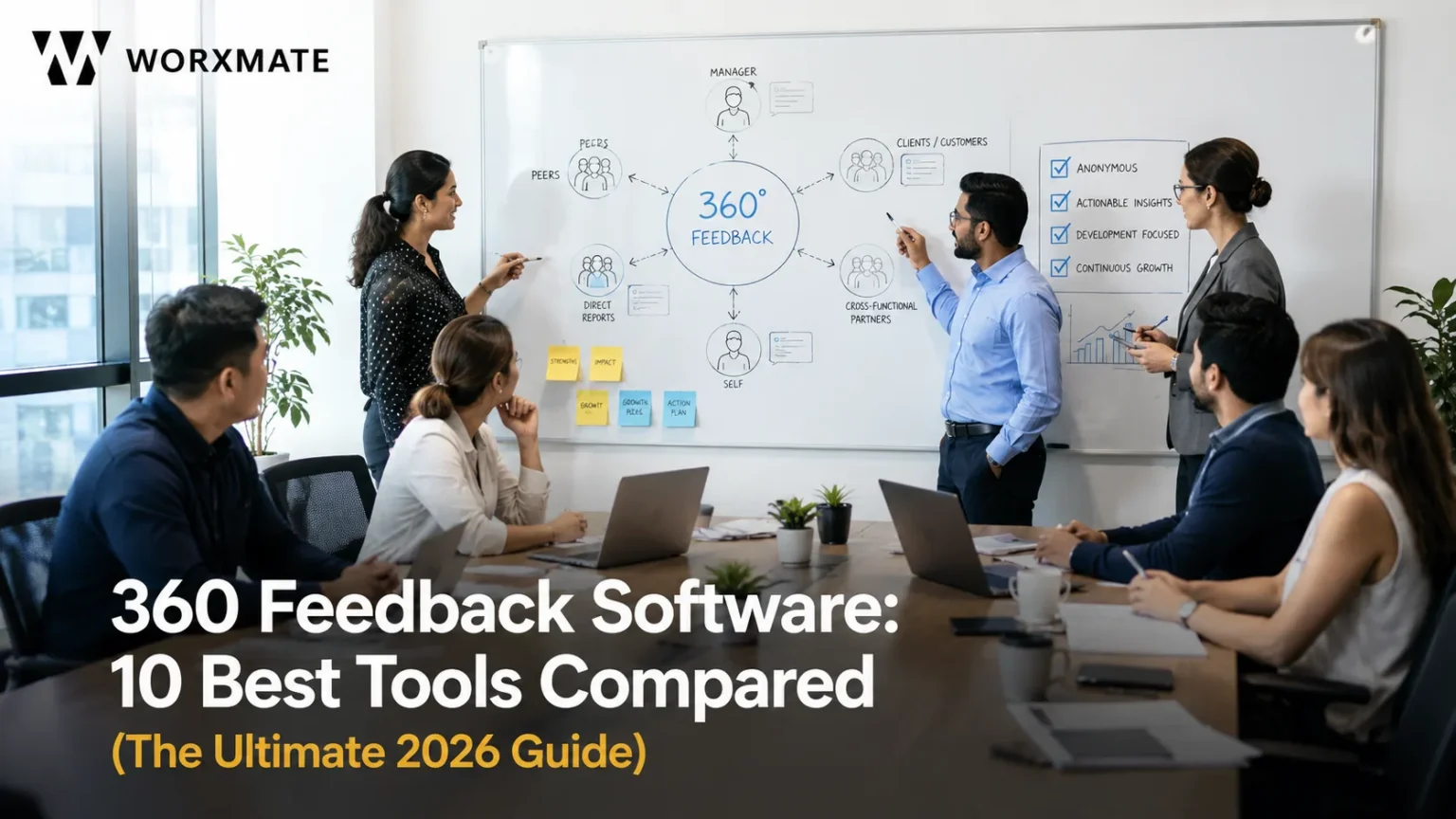
The best 360 feedback software in 2026 combines anonymous multi-rater collection, AI-driven sentiment analysis, and a direct link to goal or OKR data, not just a standalone survey engine. Worxmate, Culture Amp, Lattice, 15Five, and Leapsome lead the field for different reasons: Worxmate for teams that want 360 feedback wired into OKR execution, Culture Amp for deep people analytics, Lattice and 15Five for HR-led review cycles, and Leapsome for combined feedback plus L&D. Pricing typically runs $6 to $15 per user per month, with enterprise tiers priced on request. Pick based on who owns the process (HR vs business) and whether the feedback needs to change goals, not just ratings.
360 Feedback Software: 10 Best Tools Compared (2026)
I have sat in enough calibration rooms to know exactly what happens when 360 feedback software is chosen for the wrong reason. HR picks the tool with the prettiest survey builder. Six months later, the reports pile up in a shared drive, nobody reopens them at the next check-in, and the program quietly becomes “that thing we do once a year before appraisals.” The software wasn’t broken. It was never connected to anything the business was actually trying to move.
That is the gap most buyer’s guides never mention, because most buyer’s guides are written by people who have never had to defend a feedback budget to a CFO. I have. Across 135+ conversations with HR leaders in FinTech, Pharma, Retail, Manufacturing, and IT services, the pattern repeats: the 360 feedback software decision gets made on features, and the adoption failure gets discovered on the calendar three quarters later.
This guide ranks the ten platforms I would actually put in front of a client evaluating a 360 degree feedback tool, what each one is genuinely good at, where it falls short, and how to match your pick to your team’s size, industry, and existing performance stack. If you want the foundational explainer first, our piece on what 360-degree feedback actually is covers the process end to end. This article picks up from there and answers a narrower, harder question: which 360 feedback platform do you actually buy.
Why This Comparison Exists (and Why Most Get It Wrong)
An OKR Coach evaluating a 360 degree feedback system asks one question a typical HR software reviewer does not: does this tool tell leadership whether people are actually moving the business forward, or does it just confirm that a survey got completed? Most comparison articles compare survey builders. I compare execution signal.
The 360 feedback software category has split into two camps. One camp is standalone survey and review engines, built to collect and display ratings. The other camp is platforms that treat 360 feedback as one input into a bigger performance and goal-tracking system. If your organisation already runs OKRs or has any goal alignment discipline in place, the second camp will save you a rebuild in eighteen months. If HR runs the show independently of business strategy, a standalone tool may serve you fine, at least until the two systems inevitably need to talk to each other.
Core Capabilities to Expect from Any 360 Feedback Software
| Capability | What It Solves | Why It Matters |
|---|---|---|
| Anonymous multi-rater collection | Removes single-manager bias | Raises response honesty by 30–40% in most deployments I have seen |
| AI sentiment and theme analysis | Cuts manual read-through time | Turns 200 open-text comments into 5–6 actionable themes |
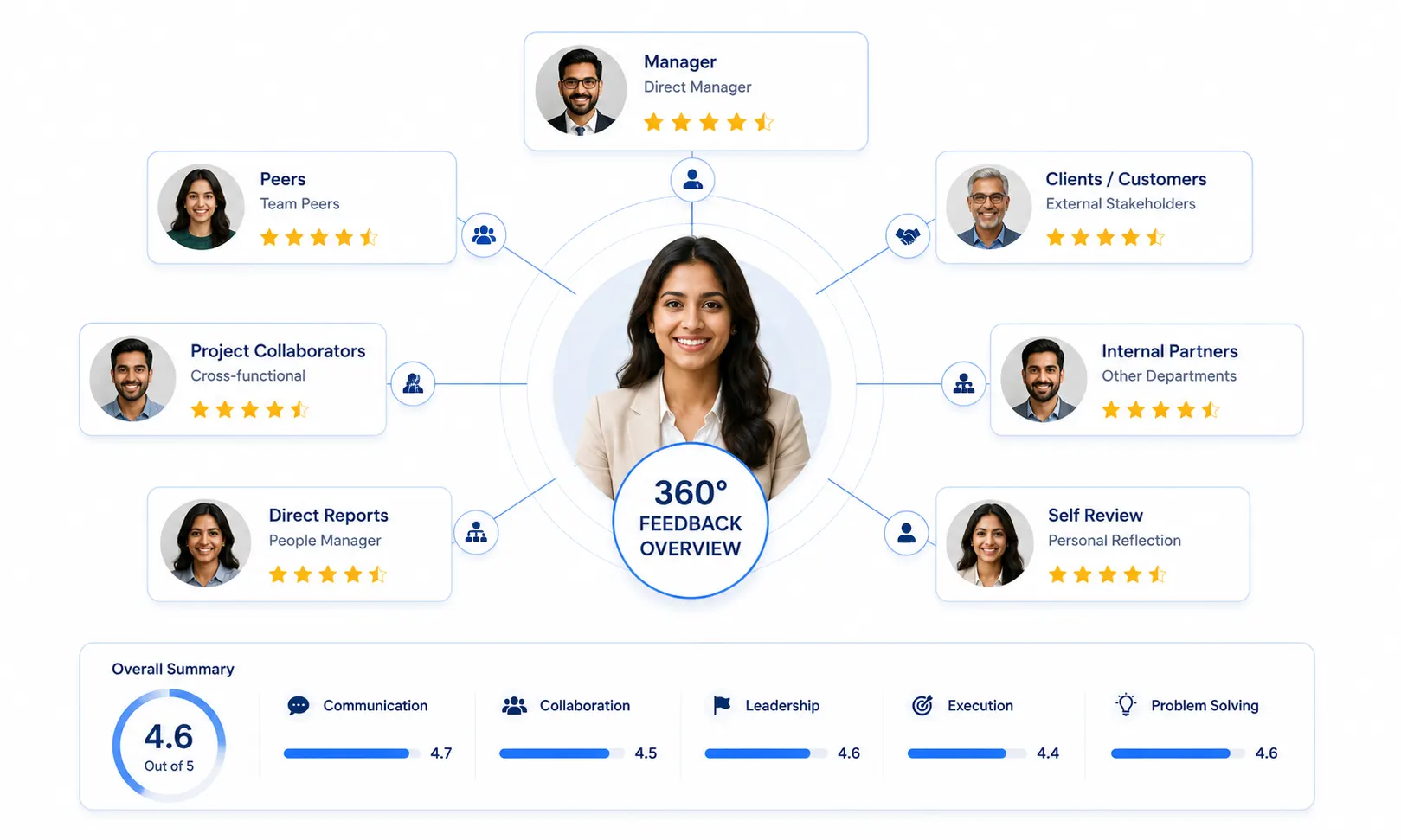
| Configurable rater groups | Matches raters to real working relationships | Prevents “generic peer” feedback that nobody trusts |
| Goal or OKR linkage | Connects behaviour feedback to business outcomes | Without it, feedback stays descriptive, never becomes developmental |
| Manager coaching workflows | Turns a report into a conversation | A PDF nobody discusses changes nothing |
These capabilities only matter if they translate into behaviour change. See real-world employee feedback examples and constructive feedback examples for what a good multi-rater comment actually looks like versus generic filler that wastes everyone’s time. Strong peer-to-peer feedback and real-time feedback practices outside the formal cycle also make the annual or quarterly 360 report far less of a surprise when it lands, and this comparison to 360-degree appraisal vs traditional performance review breaks down why the multi-rater format outperforms single-source appraisals on fairness alone.
The Evaluation Framework I Use With HR Leaders
Before ranking anything, I score every 360 review software candidate against the same seven parameters. This is the exact bar I use in client evaluations, not a marketing checklist:
- Anonymity and bias controls :- does the platform enforce minimum response thresholds before showing individual comments?
- Rater workflow friction :- how many clicks for a peer to submit honest feedback?
- AI and sentiment depth :- does it summarise themes, or just tally scores?
- Integration with goal/OKR data :- can feedback inform the next cycle’s objectives, or does it dead-end in a report?
- Reporting and manager enablement :- does a manager get a debrief script, or a spreadsheet?
- Pricing transparency :- is per-user cost published, or buried behind “contact sales”?
- Implementation speed :- days, or a multi-week configuration project?
Every platform below is scored against this bar, not against a features checklist a vendor wrote about itself. If you want a deeper primer on which numbers actually matter once the reports start coming in, our guide on performance management metrics and broader performance management frameworks is a useful companion to this evaluation bar.
Unlock Goal Clarity & Accelerate Employee Growth
Looking to drive goal clarity and employee growth? Discover how Worxmate’s AI-powered Performance Management Software can help.
The 10 Best 360 Feedback Software Platforms in 2026
1. Worxmate :- Best for 360 Feedback Tied to OKR Execution
Worxmate’s Performance Management Software runs multi-rater 360 feedback with full anonymity controls, minimum response thresholds, and configurable rater groups so peer, manager, and cross-functional input never gets mixed into a single generic score. What sets it apart is where the data goes after collection. Instead of sitting in a standalone report, the feedback feeds directly into the same goal data your teams are already tracking through OKR software, so a low score on “cross-functional communication” shows up next to the actual Key Result it is blocking, not three systems away from it.
The real differentiator is Orbit AI, Worxmate’s people intelligence model. It reads sentiment across feedback cycles, not just a single snapshot, and flags attrition risk, burnout signals, or disengagement patterns four to eight weeks before they would normally surface in a formal review. Axis AI extends that same intelligence layer to business performance signals, and Nexus AI applies it to organisational and structural patterns, so a 360 cycle stops being an isolated HR event and becomes one data stream feeding the DEEP AI framework across Define, Execute, Evaluate, and Plan.
In practice, this means a manager does not just receive a PDF at the end of a cycle. They get a debrief that already connects behaviour feedback to the goal it is affecting, with an AI-generated summary of the themes instead of forty paragraphs of raw comments to read manually.
Fastest fit: teams already running OKRs who are tired of feedback living in a separate silo from execution data, and organisations where the CEO or Strategy Head, not just HR, wants visibility into how feedback patterns are affecting business outcomes.
Not the right fit: organisations that want a pure survey tool with no goal-tracking ambition, or teams that have not yet adopted any structured goal-setting framework and are not ready to connect the two.
2. Culture Amp :- Best for People Analytics Depth
Culture Amp built its reputation on engagement surveys before extending into 360 feedback and performance reviews, and that survey-first heritage still shows in how the platform is architected. The analytics layer is genuinely strong. It benchmarks your results against a large cross-industry dataset, which is useful if leadership wants to know not just how a leader scored internally, but how that score compares to similar roles at similar-sized organisations elsewhere.
The trade-off is configuration weight. Getting a full 360 cycle live on Culture Amp usually takes several weeks of setup work, custom question banks, rater group logic, and reporting templates that need to be built out before the first cycle can run. For a team wanting to launch a pilot cycle inside two weeks, this is a real friction point. OKR or goal linkage is also limited compared to purpose-built execution platforms; feedback data largely stays within Culture Amp’s own reporting environment rather than flowing into a broader goal-tracking system.
Best fit: Organisations with a dedicated People Analytics function that wants deep benchmarking and is prepared to invest the setup time upfront.
See our detailed Alternative to Culture Amp for a full side-by-side on pricing, implementation timeline, and where each platform is the stronger pick.
3. Lattice :- Best for HR-Led Review Cycles
Lattice bundles 360 feedback into a broader performance management suite alongside engagement surveys, 1:1 tracking, and compensation planning, and it works well specifically when HR owns and drives the program end to end. The interface is polished, manager training resources are strong, and the review cycle workflow is genuinely well built for HR teams running a traditional appraisal calendar.
Where it creates friction is ownership. When a CEO or Strategy Head wants feedback data to inform business-level OKRs rather than HR-cycle ratings, Lattice tends to absorb that feedback into an HR rhythm rather than a business execution rhythm. The platform was not built around the assumption that a business leader outside HR would be the primary consumer of the feedback data, so getting it to surface inside a strategy conversation usually means manual export and reformatting.
Best fit: Organisations where HR is the clear and sole owner of the performance process, and where the goal is a well-run, well-documented review cycle rather than tight goal integration.
Full breakdown here: Alternative to Lattice.
4. 15Five :- Best for Weekly Check-In Culture
15Five pairs weekly pulse check-ins with periodic 360-style reviews, and its real strength is habit formation. The weekly rhythm keeps manager-employee conversations happening consistently, which means by the time a formal 360 cycle runs, there is already a foundation of ongoing dialogue rather than a cold-start conversation once a year.
It performs best in organisations where a strong manager-employee check-in culture already exists, or where building that habit is the primary goal. Cascade depth for larger, matrixed organisations is limited, though; the platform is built around a fairly flat manager-to-report structure, and once you introduce cross-functional rater groups, complex reporting lines, or multi-level cascades, the configuration options start to feel thin compared to platforms built specifically for that complexity.
Best fit: Small to mid-sized teams that want to build a check-in habit and layer 360 feedback on top of it, rather than large enterprises with complex org structures.
See the full comparison: Alternative to 15Five.
5. Leapsome :- Best for Feedback Plus L&D Integration
Leapsome connects 360 feedback results directly to learning and development recommendations, which is its clearest point of differentiation. When a feedback cycle surfaces a skills gap, the platform can route that finding into a structured learning path rather than leaving the connection for a manager to make manually. This makes it a strong pick for CHROs who need the feedback loop to feed skill-building plans, not just performance ratings sitting in a report.
It is not the fastest path to pure OKR execution discipline if that is the primary goal. Goal-tracking exists in the platform, but it is built more as a complement to the L&D and engagement modules than as the central execution engine the way a dedicated OKR platform would be.
Best fit: Organisations where the L&D function is closely tied to performance management, and where the immediate priority after a 360 cycle is building targeted development plans rather than adjusting business OKRs.
Comparison: Alternative to Leapsome.
6. Betterworks :- Best for Large Enterprise Manager Effectiveness
Betterworks is built for scale, with strong manager-effectiveness tooling designed specifically for large enterprise headcounts, thousands of employees, multiple business units, and layered reporting structures. The platform’s strength shows in how it handles calibration governance and manager coaching workflows at that scale, areas where lighter tools tend to break down.
The trade-off is accessibility. There is no self-serve path. Expect a longer procurement cycle involving vendor demos, security review, and a formal implementation project, with a timeline measured in months rather than weeks. For a team that wants to run a first pilot cycle quickly, this is a meaningful barrier.
Best fit: Enterprise organisations with 2,000-plus employees, a dedicated HR technology team, and the internal capacity to run a multi-month implementation project.
See: Alternative to Betterworks.
7. Qualtrics EmployeeXM :- Best for Enterprise Survey Infrastructure
Qualtrics offers the deepest survey and psychometric engineering of any platform in this list. If your organisation needs a standardised global 360 program running consistently across dozens of countries, multiple languages, and regulated industries with specific compliance requirements, the underlying survey architecture is built to handle that level of rigor in a way most competitors are not.
That same depth is also its limitation for most buyers. It is heavily configuration-driven, typically requiring a dedicated survey or people analytics specialist to manage effectively, and priced for enterprise budgets rather than mid-market teams looking for a fast cycle-one deployment. A 200-person organisation evaluating Qualtrics is usually paying for capability it will not use.
Best fit: Large, regulated, multi-country enterprises that need standardised survey infrastructure across regions, not fast deployment or tight goal integration.
8. Trakstar :- Best Affordable Standalone 360 Tool
Trakstar is a dedicated, lower-cost multi-rater feedback tool without the broader performance-suite ambitions of the platforms above it. It does one thing, 360 feedback collection and reporting, and does it without the added cost of engagement surveys, L&D modules, or compensation planning tools bundled in that a smaller team will never touch.
It is a reasonable fit for smaller teams that specifically want a 360 cycle without paying for an entire performance management system they will not use fully. The trade-off is that AI theme analysis, goal integration, and advanced reporting are all thinner than on the platforms built with a broader execution ambition, which is a fair trade if 360 feedback is genuinely the only thing you need this budget line for right now.
Best fit: Small teams running their first 360 cycle on a limited budget, with no immediate need to connect feedback to a broader goal or OKR system.
9. SurveySparrow 360 :- Best for Simple, Fast Rollouts
SurveySparrow’s 360 module prioritises a fast, conversational survey experience and quick setup over depth. Raters get a chat-style interface rather than a traditional long-form survey, which tends to increase completion rates, particularly among employees who find standard survey forms tedious to fill out.
The cost of that simplicity is depth. AI theme analysis and goal integration are noticeably lighter than on execution-focused platforms, and reporting stays fairly basic. It is a good tool for a first pilot cycle where the priority is simply getting a 360 process running and proving the concept internally. Teams tend to outgrow it once they want the feedback wired into a bigger performance picture, at which point a migration to a more integrated platform usually follows.
Best fit: Organisations running their very first 360 pilot who want maximum rater participation with minimum setup effort.
10. Zoho People :- Best If You Already Run Zoho HRIS
Zoho People includes a 360 feedback module inside its broader HRIS suite, alongside payroll, attendance, and core HR record-keeping. For organisations already standardised on Zoho for HR operations, the convenience of having feedback live in the same system as everything else is real, and the bundled pricing can make it an attractive add-on rather than a separate purchase decision.
The caution is a category one, not a Zoho-specific criticism. HRIS platforms treat 360 feedback as one feature among many HR workflows, not as the product’s core focus. Every engineering decision at an HRIS company is weighed against a dozen other HR priorities, payroll compliance, leave management, and attendance tracking among them, so depth of rater configuration and AI analysis on the feedback module trails purpose-built alternatives that exist to do this one thing well.
Best fit: organisations already fully committed to the Zoho ecosystem that want a basic 360 process without adding another vendor to the stack, and that are not looking for advanced AI analysis or OKR integration.
Side-by-Side Comparison Table
| Platform | Best For | AI Sentiment Analysis | OKR/Goal Integration | Starting Price |
|---|---|---|---|---|
| Worxmate | 360 feedback tied to OKR execution | Yes (Orbit AI) | Native | See pricing |
| Culture Amp | People analytics depth | Partial | Limited | Contact sales |
| Lattice | HR-led review cycles | Partial | Moderate | ~$11/user/mo |
| 15Five | Weekly check-in culture | Partial | Moderate | ~$8/user/mo |
| Leapsome | Feedback + L&D | Yes | Moderate | ~$8/user/mo |
| Betterworks | Enterprise manager effectiveness | Partial | Moderate | Contact sales |
| Qualtrics EmployeeXM | Enterprise survey infrastructure | Yes | Limited | Contact sales |
| Trakstar | Affordable standalone tool | No | None | ~$6/user/mo |
| SurveySparrow 360 | Fast, simple rollouts | No | None | ~$5/user/mo |
| Zoho People | Existing Zoho HRIS users | No | Limited | ~$1.5/user/mo (bundled) |
Pricing shown as approximate market ranges as of publication; confirm current figures directly with each vendor. For a broader shortlist beyond this list, our roundups of HR performance management tools and best performance tracking tools cover adjacent categories worth cross-checking before you commit.
Pricing shown as approximate market ranges as of publication; confirm current figures directly with each vendor. For a broader shortlist beyond this list, our roundups of HR performance management tools and best performance tracking tools cover adjacent categories worth cross-checking before you commit.
360 Feedback Software for Small Business vs Enterprise
The 360 feedback software for small business conversation is different from the enterprise one, and most comparison lists flatten the two together. A 40-person startup does not need psychometric benchmarking or a six-week configuration project; it needs a fast cycle, a handful of well-chosen raters, and a manager who can turn the report into a real conversation within a week. That is the case for best 360 feedback tools for startups prioritising speed of deployment over analytics depth.
360 feedback software for enterprise is a different buying decision entirely. At 2,000+ employees, you are weighing global rollout consistency, regional compliance, SSO and HRIS integration, and calibration governance across dozens of business units. This is where platforms like Qualtrics or Betterworks earn their complexity. For enterprise teams already running structured performance management at scale, the priority shifts from “how fast can we launch” to “how consistently can we govern this across every region.”
360 Feedback Software Pricing: What You Should Actually Budget
360 feedback software pricing typically clusters into three bands. Standalone survey tools like Trakstar or SurveySparrow run $5 to $7 per user per month. Mid-market performance suites with 360 built in, Lattice, 15Five, Leapsome, run $8 to $12 per user per month. Enterprise platforms with dedicated implementation support are priced on request and usually land well above per-user list rates once services are included.
| Tier | Typical Price Range | What You Get | Best Fit |
|---|---|---|---|
| Standalone survey tools | $5–$7/user/mo | Basic multi-rater collection | Small teams, first pilot |
| Mid-market performance suites | $8–$12/user/mo | 360 + reviews + check-ins | 50–500 employees |
| Enterprise platforms | Custom, contact sales | Global rollout, compliance, dedicated CSM | 2,000+ employees |
Worxmate’s own OKR software pricing page breaks down tiered plans that bundle 360 feedback into the broader performance and OKR stack rather than pricing it as a separate module, which is worth checking before you assume you need a fourth tool in your HR stack. If budget is the binding constraint this cycle, our list of free performance management tools is worth a look before you commit to a paid tier, and saas performance management pricing and performance review tool pricing both go deeper into how vendors structure their tiers.
Unlock Goal Clarity & Accelerate Employee Growth
Looking to drive goal clarity and employee growth? Discover how Worxmate’s AI-powered Performance Management Software can help.
AI-Powered 360 Feedback Software: What “AI” Actually Means Here
Every vendor now claims AI-powered 360 feedback software, and most of that claim means one thing: a language model summarises open-text comments into themes so a manager does not have to read 40 paragraphs of qualitative feedback manually. That is genuinely useful and saves real hours. Fewer platforms go further into sentiment trend detection across cycles, and fewer still connect that sentiment to a business signal like flight risk or engagement decline. Worxmate’s Orbit AI does the latter explicitly, naming six specific signals, including Burnout Risk and Top Performer Flight Risk, drawn directly from feedback and check-in patterns rather than a single annual survey. Read more on AI-driven performance management software and AI in performance management systems if you want the broader picture beyond 360 specifically, and continuous feedback software for how AI-assisted feedback fits into an always-on cycle rather than a once-a-year event.
360 Feedback Software India: What’s Different Here
Demand for 360 feedback software India has grown faster than most global vendors have adapted for. Indian mid-market and IT services organisations need INR pricing, data residency clarity, and support for compressed appraisal calendars tied to the Indian financial year. Global enterprise tools frequently under-serve this segment; you end up paying US-list pricing for a rollout that needs local calibration norms and language support. Our guide on performance management software for Indian companies covers the local buying considerations in more depth, and if OKRs sit alongside your 360 program, our best OKR software in India roundup is a useful companion read.
Should You Start With a 360 Feedback Software Free Trial?
Almost every platform on this list offers some version of a 360 feedback software free trial or a sandboxed demo cycle, and I would push back on skipping it. Run the trial with a real business scenario, not a demo dataset the vendor provides. Pick one live team, run one genuine cycle, and watch how many support queries the raters generate in week one. If that number climbs past 15 to 20 queries per day, the tool has more friction than your team’s current feedback literacy can absorb, and that mismatch will not fix itself with a customer success call later. Book a 360 feedback software demo directly rather than relying on a canned product tour; a live walkthrough against your own org chart surfaces friction points a scripted demo never will.
How to Choose 360 Feedback Software: The Questions That Actually Matter
Most buyers ask “which features do we need.” The better question, and the one I ask every HR leader I coach through this decision, is “who is going to own the follow-up conversation, and does the software make that conversation easier or harder.”
I worked with a 1,500-person IT services organisation where the 360 program had technically been “live” for two years. Reports generated. Scores calculated. Nobody had ever had a single structured conversation off the back of one. The software wasn’t the problem. The organisation had bought a report generator and expected it to produce a coaching culture. When we rebuilt the process, the fix wasn’t a new platform, it was wiring the feedback data into the same check-in rhythm the teams already used for goal tracking, so a low score on “cross-functional communication” showed up next to the actual OKR it was blocking.
“The software is the infrastructure. The coaching is the capability. You need both, and in the right order.”
That is the single filter I would apply before anything else on this list: how to choose 360 feedback software starts with asking whether your organisation has the coaching capability to act on what the software surfaces. If the answer is no, buy the simplest tool that gets a cycle running, and invest the difference in manager training instead of platform features nobody will use.
360 Feedback Software Integrated With OKRs
360 feedback software integrated with OKRs solves a specific, recurring failure I see across almost every organisation I coach: feedback data and goal data live in two separate systems, reviewed by two separate teams, on two separate calendars. A manager reads a 360 report in March and reviews OKR progress in April, and nobody connects the two conversations. When feedback and goals share the same data layer, a pattern like “consistently rated low on delegation” can be tied directly to a specific, at-risk Key Result the same person owns, and the development plan writes itself instead of getting invented from scratch in a debrief meeting. Our DEEP AI framework was built specifically to close that gap between behaviour feedback and business execution data, and our 360-degree feedback report template shows what that connected output should actually look like on paper before you build or buy anything. Feedback tied to goals also needs to be tied to the day-to-day work itself; our task management platform links individual tasks back to the same OKRs a 360 report should be informing.

360 Feedback Software vs Performance Management Software
The 360 feedback software vs performance management software question comes up in nearly every evaluation call I sit in on. 360 feedback is a data collection method; performance management is the operating system that decides what happens with that data. A dedicated 360 tool tells you what six peers think about someone’s collaboration skills. A full performance management system takes that same input and connects it to goals, calibration, development plans, and compensation decisions. Buying only a 360 tool without a performance management layer around it is how you end up with reports nobody revisits. See our detailed breakdown of performance management system vs appraisal software for the fuller category distinction, OKR vs PMS software for where goal-tracking and performance management diverge, and continuous performance management software for how the two should ideally work together across a full cycle.
360 Feedback Tool for Remote Teams
A 360 feedback tool for remote teams needs to solve a problem in-office tools never had to: managers genuinely do not see the majority of a remote employee’s daily collaboration, which makes peer and cross-functional rater input more important, not less. Anonymity controls also carry more weight in distributed teams, where a small number of frequent collaborators can make comments identifiable if the platform does not enforce minimum response thresholds properly. If your teams are fully distributed, prioritise this over almost every other criterion on the evaluation list above. Pair it with the broader employee engagement tools your remote teams already rely on so feedback collection does not become one more disconnected app in an already fragmented remote toolkit.
Self-Hosted vs Cloud 360 Feedback Software
The self-hosted vs cloud 360 feedback software decision has mostly been settled by regulated industries. Cloud platforms dominate the market for good reason: faster deployment, continuous feature updates, and no internal infrastructure burden. Self-hosted options still exist for organisations with strict data residency or compliance mandates, typically in government, defence, or heavily regulated financial services, but they trade deployment speed and AI feature velocity for that control. For the vast majority of buyers reading this comparison, cloud is the right default.
Where This Leaves You
Ten platforms, seven evaluation parameters, one honest conclusion: there is no universal “best” 360 feedback software, only the right fit for how your organisation actually runs performance conversations today. If HR owns the process independently and just needs clean survey infrastructure, several tools on this list will serve you well. If you need 360 feedback to change what teams actually do next quarter, not just what they are rated on, the software has to talk to your goal data, not sit next to it.
The Platform Path If you are ready to run a 360 cycle that feeds directly into OKR execution rather than a standalone HR report, Worxmate’s Performance Management Software and OKR software are built around exactly this connection. Book a demo to see a live cycle.
The Consulting Path If the real gap is not the tool but the coaching muscle to act on what feedback surfaces, our OKR consulting team runs that capability-building work directly, industry by industry, leader by leader. Either path should show up in your performance management software ROI within two to three cycles, not eighteen months.


Written by
An OKR Coach with 20+ years of implementation experience, Madhusudan has guided over 50 organisations through successful OKR transformations, training more than 500 leaders. Learn more about Worxmate.
