 WORXMATE

What is an OKR framework for GCC teams? An OKR framework for GCC teams is a seven-step operating model that ties a Global Capability Centre’s quarterly goals to the parent company’s strategy. Agree two or three priorities with headquarters, check the org structure, cascade across three levels, write outcome-driven Key Results, set a cadence that survives time zones, govern through one shared dashboard, and coach below the C-suite. Run in that order, it moves a GCC from cost centre metrics to value centre outcomes in about 12 months.
- Best fit: GCCs in India reporting to a global head office, including captive and in-house centres.
- Biggest risk: copying the parent company’s OKRs into the centre without agreeing what the centre owns.
- Proof it is working: the Execution Maturity Rate rises from 5-15% in cycle one towards 30-40% after a well-coached year.
Six to eight senior leaders sat around one table, and every one of them had sharp, well-argued thinking about where the business should go. None of it added up to a shared priority. That was a $45 billion Middle East energy and utility company, not a GCC. I remember it because it is the room I walk into whenever I sit with a GCC leadership team, with one extra complication: half the strategy lives in a head office you cannot walk into. That is why an OKR framework for GCC leaders cannot be copied from a generic template. It has to be designed around the reporting line, the time zones and the pressure to prove value every quarter.
I have spent 20+ years in strategy execution and 10+ years implementing OKRs across 50+ organisations. The pattern I see consistently is that a GCC is asked to behave like a product company while being measured like a vendor. This guide is the OKR framework for GCCs in India that I would hand a new centre head on day one, and it works as an OKR framework for Global Capability Centres anywhere else too. If you want the wider theory, our OKR framework article covers it. If you want the business case, OKRs for GCCs in India makes it. This page is about design: how to build a GCC OKR framework that survives contact with a real quarter.
Why an OKR framework for GCC teams breaks before the first Objective is written
Three breaks show up in almost every centre I look at.
Two strategies, one centre. Headquarters sets the global strategy. The centre head also carries a local mandate: hiring, attrition, site growth, leadership bench. A framework that cascades from only one side produces goals the other side quietly ignores. This is the strategy execution gap in its purest form, and a sound organizational strategy framework has to name both sides before it names a single Key Result.
Cost centre metrics survive inside value centre ambitions. Headcount, utilisation and ticket speed stay on the dashboard because headquarters has always asked for them. Then the same leaders are told to own products. Nobody removes the old numbers, so the new goals compete with them and lose.
Time zones turn cadence into theatre. A review scheduled at 8 pm India time for a 9 am Pacific audience gets attended and not owned.
The okr vs kpi in gcc debate sits underneath all three. KPIs tell headquarters the centre is healthy. OKRs tell headquarters the centre is changing. You need both, which is why I treat OKR vs KPI as a design decision and not a philosophical one: KPIs stay as the health layer, and each Objective carries at least one outcome Key Result that a KPI cannot give you.
GCC maturity model: where your centre sits today
Before any step, I place the centre on the OKR framework for GCC maturity model below. It decides how ambitious the first cycle should be, and it keeps the okr for gcc transformation from cost centre to value centre honest about timing.
| Stage | What headquarters expects | Typical measures | What the OKR framework must do |
|---|---|---|---|
| 1. Cost centre | Lower cost, stable delivery | Headcount, utilisation, ticket speed | Keep KPIs as the health layer. Add one outcome Key Result per Objective |
| 2. Service partner | Predictable delivery plus quality | SLA adherence, defect rates, stakeholder scores | Introduce shared Key Results with HQ teams. Build okr for gcc stakeholder satisfaction into every cycle |
| 3. Value centre | Owns products, ideas and capabilities | Product ownership, release velocity, capability depth | Run outcome-led goals. Add okr for gcc innovation and capability building and okr for gcc business outcomes |

Most centres I see sit at stage 1 or 2 and are being measured as if they were at stage 3. The honest answer is that the move takes longer than leaders hope. The shift from output thinking to outcome thinking cannot happen in three months, regardless of seniority. In a typical first cycle, only 5-15% of leaders can write a genuine outcome-driven goal without help. In a well-coached programme running for 12 months, the Execution Maturity Rate reaches 30-40%. That is the number I track, and it is why the OKR Execution Maturity Framework 2026 is worth reading before you commit to a timeline.
Step 1: Agree two or three priorities with headquarters first
In that Middle East energy company, the instinct was to hire a large consulting firm for a four to eight week SWOT exercise. I pushed for the opposite. Go agile, brainstorm for one week, and agree the two or three things that, if left undone, would hurt business performance most. That reframe was the first intervention, and everything we built afterwards depended on it. If you want to see how that engagement style works in the region, our OKR consulting in the Middle East page explains it.
Here is how to align gcc okrs with global headquarters using the same logic. Put the centre head and the headquarters functional head in one conversation and ask a single question: if the centre could only deliver three things this year, which three? Write them on one page. That page is your OKR framework for GCC reporting to global HQ. Everything else cascades from it, which is what gcc okr cascading from parent company actually means. The top of the cascade is the parent company’s Objectives, not the centre’s wish list.
“You cannot set alignment in a tool. You can display it. You cannot create it.”
Alignment is agreement between teams on what matters, why it matters and how each team’s work connects to the teams around them. If headquarters and the centre have not agreed, goal alignment on a dashboard is a record of a disagreement. Settle it in the room first.
Step 2: Check the org structure against the strategy
Org structure is an OKR pre-condition, not background detail. If the structure does not reflect where the strategy needs the centre to go, you are cascading goals into a broken architecture, and the cascade embeds the problem instead of exposing it.
For a GCC this question has sharper edges. Who owns the outcome: the headquarters function or the centre? Are dotted lines to HQ real decision rights or courtesy titles? In an okr framework for multi-site gcc, I insist on one owner per Objective, with each site contributing Key Results rather than duplicating Objectives. The same logic applies whether you call the entity an okr framework for captive centres or an okr framework for global in-house centres. The names differ. The ownership question does not.
This is where Nexus AI earns its place: it gives the structural view that tells you whether the cascade you are looking at is a real agreement or a display of one. If you suspect the gap, run the organisation performance audit before a single Objective is written.
Is your GCC structure built to deliver the strategy?
Find where the gap sits between headquarters’ priorities and your centre’s structure before you write a single OKR.
Step 3: Design the cascade across three levels
Keep the cascade to three OKR levels. More than that and you rebuild the bureaucracy you were trying to escape.
| Level | Owner | How many | What it answers | Example Objective |
|---|---|---|---|---|
| Parent-company link | Centre head with HQ functional head | 2-3 | What must the centre deliver for the group? | Make the global onboarding platform faster to change |
| GCC leadership team | Each function head | 3-4 per leader | How does each function carry the link? | Take end-to-end ownership of the onboarding roadmap |
| Delivery teams | Team leads | 2-3 per team | What changes in the product or process this quarter? | Cut post-release defects in the onboarding journey |
The second row is your okr framework for gcc leadership team, and the third is your okr framework for gcc delivery teams. I use this shape as an okr cascading framework and an okr alignment framework at once, and it holds for any okr framework for enterprises or okr framework for large organisations running several sites. If your parent sits in the US or UK, compare the variants in OKR framework for US tech and OKR frameworks for UK businesses.
The highest-impact move at this level is a shared Key Result. When an HQ product lead and a GCC engineering head co-own one Key Result, neither can escape the dependency. Browse shared OKR examples for the pattern, then work through cross-team alignment and cross-functional team alignment for the mechanics. For a wider view of how the layers connect, see OKR alignment.

Step 4: Write outcome-driven goals, not delivery metrics
In a multi-billion dollar mining engineering group, I worked with the Middle East and Europe division’s leadership team. They were not struggling. They were growing, while new entrants ate into their market share. The moment that changed the room came when they saw how on-time service delivery and machine quality fed sales, renewals and regional expansion. We went from output vs outcome into leading indicators and lagging indicators, because most industrial leaders think in KPIs, and KPIs only describe where you stand.
A GCC leader needs the same chain: a daily action in Pune or Hyderabad that connects to a group-level goal. If you cannot draw it, the Key Result is a task list. Output Key Results are not wrong. The confusion about them is. Know which type you are writing and make sure every output serves a visible outcome.
| Who | Output-style goal | GCCs inherit | Outcome-led Key Result |
|---|---|---|---|
| OKR examples for GCC heads | Grow the centre to 5,000 people | Own three global product roadmaps end to end by Q4 | |
| OKR examples for GCC leaders | Hit 98% SLA across all towers | Cut repeat incidents on the top five services by 30% | |
| OKR examples for GCC engineering teams | Ship 40 features | Reduce post-release critical defects by 35% while keeping a fortnightly release rhythm | |
| OKR examples for GCC HR and talent | Hire 300 engineers | Cut regretted attrition among top performers from 14% to 9% | |
| GCC OKR examples for delivery and operations | Close 10,000 tickets | Reduce ticket volume per active user by 25% through root-cause fixes |
These numbers are illustrative, not benchmarks. Use them to see the shift in thinking, then write your own with how to write OKRs. The okr for gcc talent and attrition row matters more than most heads expect: attrition is the quiet scoreboard HQ reads.
I keep the okr template for gcc to one page: one Objective, three Key Results, one leading indicator, one named HQ dependency and one owner. If it needs more than a page, it is two OKRs. That is the okr framework template I would start with, and the okr framework examples above show how it looks in practice. Sort every Key Result using aspirational vs committed OKRs so headquarters knows which commitments are real.
Industry changes the emphasis, not the shape. An okr framework for gcc in bfsi leans on regulatory turnaround and risk (see OKR examples for BFSI companies in India). An okr framework for gcc in technology leans on release velocity and platform ownership (see engineering OKR examples). An okr framework for gcc in pharma and healthcare leans on compliance and data cycle time (see OKR examples for pharma). An okr framework for gcc in retail and manufacturing leans on supply chain and store-level analytics (see OKRs for manufacturing). If your centre serves Indian IT delivery, read OKRs for Indian IT companies too.
Achieve Your Goals Faster
See how Worxmate can help your team set clear goals and achieve faster results. Book your free demo today and experience the power of AI-driven OKRs in action.
Step 5: Set a cadence that survives time zones
Cadence is where good frameworks quietly die. The okr cadence for gcc with global time zones has one rule: asynchronous first, live only where a decision is needed.
| Rhythm | Frequency | Time zone rule | Output |
|---|---|---|---|
| Quarterly planning | Once a quarter | One joint call in the overlap window | Locked Objectives and owners |
| Weekly OKR check-ins | Weekly | Written, in local time | Confidence score and blockers |
| OKR mid-quarter review | Around week 6 | Live, with HQ present | Re-forecast and resource calls |
| Quarter-end OKR scoring system and OKR retrospective | Once a quarter | Live, one hour | Lessons carried to next cycle |
The calendar needs a decision. For a quarterly okr calendar for gcc india, you will meet the Indian financial year (April to March) on one side and the parent company’s calendar on the other. My rule for aligning gcc okr cycle with parent company fiscal year is simple: the parent’s calendar drives the OKR cycle, and you report Indian statutory numbers separately. Our guides on OKR planning for India and OKR planning for Indian financial year walk through both options, and how to implement OKRs in India covers the wider rollout.
Most GCC engineering teams already run sprints, so okr and agile need a clear division: the OKR sets the why, the sprint sets the how. Link both through a simple okr roadmap and your OKR planning stays light. For the full loop, see a typical OKR cycle and the guide to OKR tracking.
Step 6: Build the governance model headquarters will trust
Headquarters trusts what it can read in two minutes. The gcc okr governance model I use has three rules: one owner per Objective, one scoring method and one dashboard. That is also my okr governance framework for any large organisation, because rules that need explaining do not survive a reorganisation.
The okr reporting to global leadership should be one page a quarter: Objectives, confidence, blockers, decisions needed. The okr dashboard for gcc leaders is where Axis AI fits, giving the business performance view a CEO or CFO reads in a monthly review. Pair it with real-time OKR dashboards and a defined set of OKR health indicators so a stalled Key Result surfaces in week three, not at the retrospective.
How to measure GCC success with OKRs? Track three things together: the outcomes your Key Results describe, the Execution Maturity Rate, and people signals. For the third, Orbit AI surfaces named signals such as Attrition Trigger and Top Performer Flight Risk, which feed your okr for gcc talent and attrition goals directly. Connect this to review cycles through OKRs and performance management, and if you are evaluating tooling for the people side, our guide to the best performance management software sets out how to compare options. Global performance management covers the multi-country angle.
One ownership point matters here. OKRs owned by HR become an appraisal tool. OKRs owned by the centre head’s office become a strategy execution engine. The same logic applies to okr for strategy execution across the whole centre, including okrs for digital transformation programmes that GCCs now run on behalf of the parent. Decide the owner before you launch.
How mature is your OKR execution today?
See where your centre sits on the Execution Maturity Rate and what to fix first before you scale the framework.
Step 7: Roll out with a pilot and coach below the C-suite
How to roll out OKRs in a GCC: start with one tower or product line, not 5,000 people. The okr implementation roadmap for gcc I recommend has three moves. In the first quarter, run top-down with 1:1 coaching for the leadership team. In the second, extend to a pilot tower and its managers. By the third, open a managed transition toward bottom-up as teams show they can write outcomes. Bottom-up is the right destination, not the right starting point.
That is my okr implementation framework for gcc in short, and it sits inside the broader okr implementation framework you already know. If you manage managers, the okr implementation framework for managers translates it for team leads.
Now the okr change management in gcc piece, which is where I see centres stumble. Two things matter. First, was this pushed or chosen? An announcement with a go-live date and a software login collapses between weeks four and six, because nobody answered what is in it for me. Second, fear of failure is an invisible blocker. Leaders write safe, easily completable Key Results because missing a stretch goal feels like poor performance. Say in the first session that this is a journey, not an assessment.
Watch for the common okr mistakes in gccs:
- Copying headquarters’ OKRs into the centre without agreeing what the centre owns.
- Leaving cost centre KPIs on the same dashboard with no outcome Key Results.
- Handing ownership to HR, so the programme becomes an appraisal exercise.
- Stopping the coaching at the C-suite. I call this the Coaching Cliff, and it is where most programmes die within a quarter.
Fifteen to twenty product queries a day in week one is a warning sign that the tool and the team’s OKR literacy are mismatched. For deeper reading, see why OKR implementation fails, the list of OKR challenges and OKR mistakes to avoid. If you want a case to compare against, elevating tech excellence through OKRs shows a tech organisation’s path.
Planning your GCC rollout?
The Strategic OKR Implementation guide walks through the pilot, the coaching sequence and the first three cycles in detail.
Where the platform fits: DEEP AI across the framework
Everything above is a discipline problem before it is a software problem. Once the discipline exists, the DEEP AI framework holds it in place across four stages. Define scores goal quality so output-disguised-as-outcome does not enter the system. Execute runs check-ins and at-risk detection across time zones. Evaluate turns check-in data into a real retrospective. Plan carries lessons into the next cycle.

Underneath it, Axis, Orbit and Nexus cover the business, people and organisation views described above. Pair them with integrations into the tools your teams already use. If you are comparing options, start with our guide to the best OKR software and the OKR software page.
What I’d tell a GCC head on day one
The software is the infrastructure. The coaching is the capability. You need both, and in the right order. Get the two or three priorities agreed with headquarters, check the structure, keep the cascade to three levels and measure the Execution Maturity Rate alongside your outcomes. The move from cost centre to value centre is earned one honest cycle at a time.
Path 1: the platform. If your leadership team already has clarity on its priorities, see the pricing page or book a demo to see how the cascade, check-ins and retrospectives are held in one place.
Path 2: the consulting. If the centre has not yet agreed its three priorities with headquarters, the platform is not the first problem. Start with OKR consulting in India and build the capability before you scale the tool.

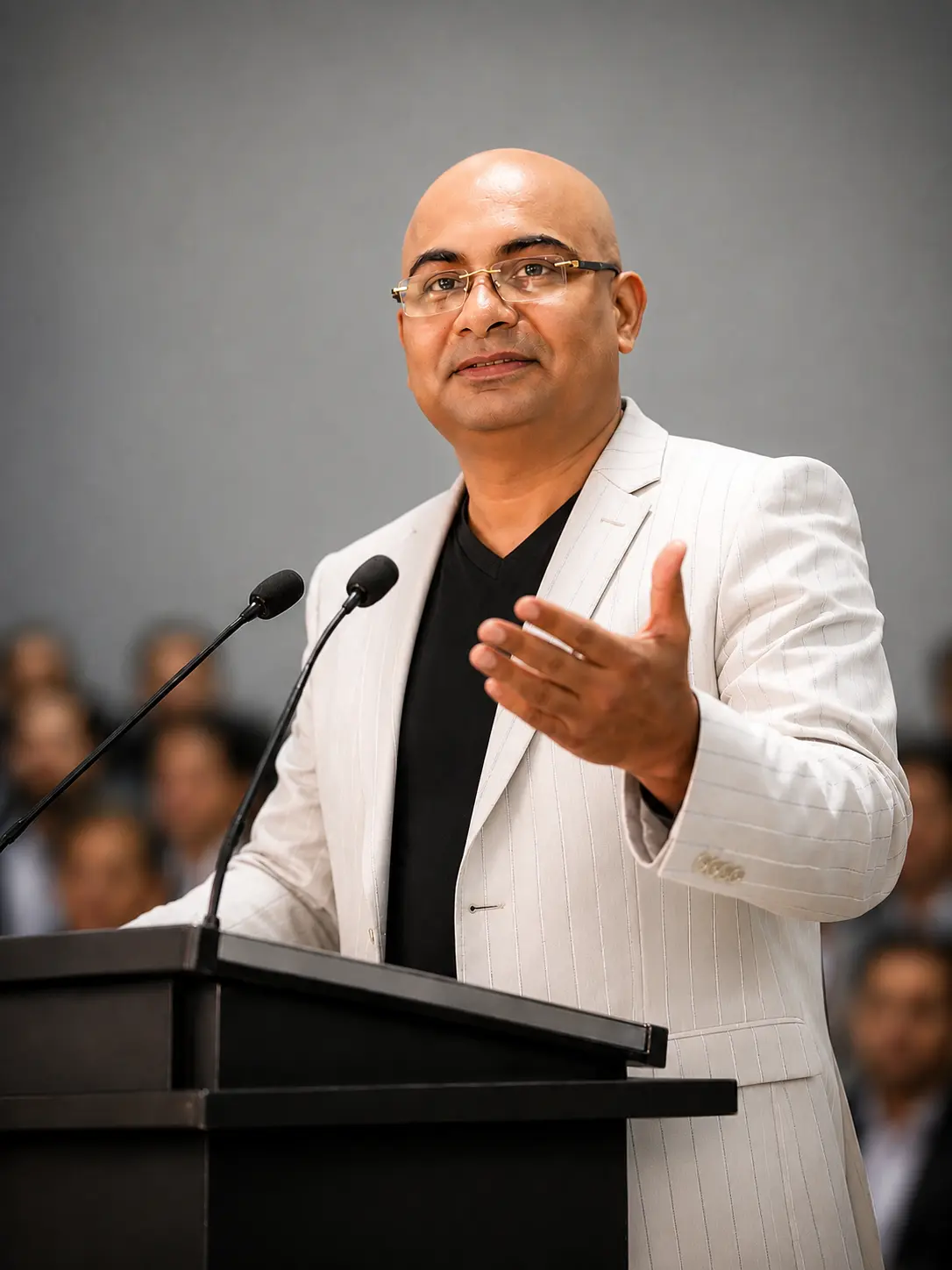
Written by
An OKR Coach with 20+ years of implementation experience, Madhusudan has guided over 50 organisations through successful OKR transformations, training more than 500 leaders. Learn more about Worxmate.